On This Page
Description
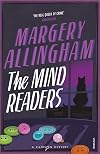
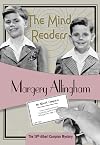
A mysterious invention causes mayhem in a coastal English village-from "my very favourite of the four Queens of Crime" (J. K. Rowling). The ancient hamlet of Saltey, once the haunt of smugglers, now hides a secret rich and mysterious enough to trap all who enter . . . and someone in town is willing to terrorize, murder, and raise the very devil to keep that secret to themselves. When a transistor thought to be the key to telepathic communication is found, Albert Campion is called to sort show more fact from fiction. But the device at the center of the mystery is in the possession of two schoolboys, and whether they stole it or invented it, there are others who will kill to get hold of it. "Allingham has a strong, well controlled sense of humour, a power of suggesting character with a few touches and an excellent English style. She has a sense of the fantastic, and is never dull" -Times Literary Supplement. show lessTags
Recommendations
































Member Recommendations

raizel In particular, see Earshot, episode 18 of 22, in which Buffy is able to read minds.
07
Member Reviews
Summary: When Amanda’s nephews, playing with telepathic devices, are nearly kidnapped, Campion gets involved in a deadly quest.
The Mind Readers reminded me of the fascination with telepathy and extra-sensory perception in the 1960’s. In this story, a mix of mystery and science fiction, Allingham explores the implications of being able to read the thoughts of others. It is perhaps needless to say that this ability is neither benign nor desirable in her portrayal. Only children can handle it, lacking the depth of experience to comprehend the swirl of thoughts and emotions in adult minds. For adults, it can be unsettling to deranging.
The story begins at the home of Canon Avril, where Albert and Amanda are visiting. They are awaiting a show more visit by Amanda’s nephews, Sam and Edward, on term break. What promises to be a pleasant time is upset when someone tries to kidnap the boys on the way from the station. It comes out that the boys have been playing with telepathic devices. When taped to the jugular, allow one to read other’s thoughts and communicate telepathically.
As it turns out, the boys’ father Martin has been working on this problem at a research facility at a remote location connected by a causeway on the coast. Martin turns up with Pagan Mayo, who assumes responsibility for the devices, even though it is apparent they know nothing about them. These devices produce results they have not been able to achieve. There is an international effort to harness this technology with the English and French chief rivals. When Pagan Mayo turns up dead, it is clear the rivalry is deadly.
By this point, Edward, the older of the boys, has disappeared. Yet from what he says before he leaves, he seems to know what he is doing. But what Is he doing, and is he safe from the murderous people who seem after the telepathic devices he and Sam had been experimenting with? Meanwhile. Campion has gone to the research facility to see if he can unravel the mystery of the devices while DS Luke hunts for Edward. Campion is on the island when Pagan is murdered. The head of the facility, Ludor puts it on lockdown. Campion’s becomes a murder target. But an old associate offers unexpected help.
As the story comes to a climax, we wonder who killed Mayo, where the devices came from, and what happened to them. Most of all, we wonder, “Where’s Edward?” and what does he know about all this? At a deeper level, Allingham raises the specter of a technology that people would kill for. And in the end, would we really want to know the hidden thoughts of others? And what would it be like to be in a crowd? Would you really want to know everyone’s thoughts, simultaneously? show less
The Mind Readers reminded me of the fascination with telepathy and extra-sensory perception in the 1960’s. In this story, a mix of mystery and science fiction, Allingham explores the implications of being able to read the thoughts of others. It is perhaps needless to say that this ability is neither benign nor desirable in her portrayal. Only children can handle it, lacking the depth of experience to comprehend the swirl of thoughts and emotions in adult minds. For adults, it can be unsettling to deranging.
The story begins at the home of Canon Avril, where Albert and Amanda are visiting. They are awaiting a show more visit by Amanda’s nephews, Sam and Edward, on term break. What promises to be a pleasant time is upset when someone tries to kidnap the boys on the way from the station. It comes out that the boys have been playing with telepathic devices. When taped to the jugular, allow one to read other’s thoughts and communicate telepathically.
As it turns out, the boys’ father Martin has been working on this problem at a research facility at a remote location connected by a causeway on the coast. Martin turns up with Pagan Mayo, who assumes responsibility for the devices, even though it is apparent they know nothing about them. These devices produce results they have not been able to achieve. There is an international effort to harness this technology with the English and French chief rivals. When Pagan Mayo turns up dead, it is clear the rivalry is deadly.
By this point, Edward, the older of the boys, has disappeared. Yet from what he says before he leaves, he seems to know what he is doing. But what Is he doing, and is he safe from the murderous people who seem after the telepathic devices he and Sam had been experimenting with? Meanwhile. Campion has gone to the research facility to see if he can unravel the mystery of the devices while DS Luke hunts for Edward. Campion is on the island when Pagan is murdered. The head of the facility, Ludor puts it on lockdown. Campion’s becomes a murder target. But an old associate offers unexpected help.
As the story comes to a climax, we wonder who killed Mayo, where the devices came from, and what happened to them. Most of all, we wonder, “Where’s Edward?” and what does he know about all this? At a deeper level, Allingham raises the specter of a technology that people would kill for. And in the end, would we really want to know the hidden thoughts of others? And what would it be like to be in a crowd? Would you really want to know everyone’s thoughts, simultaneously? show less
Okay... who predicted that the last Campion novel to be published while the author was still alive would be SCIENCE FICTION?!
The Campion series has never stuck to one clear genre. Yes, the stories always involve crime and yes there is always an element of mystery, but the series has strayed from crime capers to murder mysteries to thrillers, sometimes they are comedies sometimes they're not, one or two have toed the line with the supernatural but I don't think they ever crossed over, sometimes Campion is a detective or a spy or an adventurer... but science fiction is a new one.
In the latter Campion books, our hero doesn't even always show up for much of the story. Clearly Allingham found him difficult to write about in the post-war show more years as the novels became grittier and for the sixties she decided to try her hand at the popular genre of the decade - spy-fi. Campion at least is a main character in this book and we even get to see Amanda again although not enough. Honestly I just couldn't get over the fact that I was reading a science fiction novel now. There is one really great scene in which Campion finds himself stuck in a car with a murderer and is trying to buy himself time. But otherwise not a terrible lot happens. There is a mystery that could be easily solved if someone said 'you children, tell me what you're doing' but for some reason no one thinks to do that. In the end, the characters watch the climax and epilogue to the story unfold on TV which is not the most thrilling way to end a science fiction novel OR a mystery novel... or any kind of novel. I wondered whether it was supposed to be satire. show less
The Campion series has never stuck to one clear genre. Yes, the stories always involve crime and yes there is always an element of mystery, but the series has strayed from crime capers to murder mysteries to thrillers, sometimes they are comedies sometimes they're not, one or two have toed the line with the supernatural but I don't think they ever crossed over, sometimes Campion is a detective or a spy or an adventurer... but science fiction is a new one.
In the latter Campion books, our hero doesn't even always show up for much of the story. Clearly Allingham found him difficult to write about in the post-war show more years as the novels became grittier and for the sixties she decided to try her hand at the popular genre of the decade - spy-fi. Campion at least is a main character in this book and we even get to see Amanda again although not enough. Honestly I just couldn't get over the fact that I was reading a science fiction novel now. There is one really great scene in which Campion finds himself stuck in a car with a murderer and is trying to buy himself time. But otherwise not a terrible lot happens. There is a mystery that could be easily solved if someone said 'you children, tell me what you're doing' but for some reason no one thinks to do that. In the end, the characters watch the climax and epilogue to the story unfold on TV which is not the most thrilling way to end a science fiction novel OR a mystery novel... or any kind of novel. I wondered whether it was supposed to be satire. show less
I usually don't use this phrase, but this book has such terrible vibes. I was so stressed out reading it. I gave it a good 70–80 pages to redeem itself but ugh. Maybe it's a sign of the power of the writing that it evoked a strong feeling, but it's not very pleasant for the reader to be played upon like this.
I was dubious about The Mind-Readers; I didn't remember much about it. I apparently read through the Allinghams years ago (ten?) and never since – I hadn't thought it to be so long. My impression of MR was of an improbable, not to say idiotic, premise, and a slight reluctance to read it. Happily, I was mostly wrong. It was an improbable premise – but it was handled very nicely. This was written in the 60's, which I happily missed entirely but for four short oblivious months - 1965 to be exact. The Space Race was on, science was exploding in every direction, science fiction was coming to the fore – it seems like if someone had said "I have invented a device that will allow me to read minds" it wouldn't have been so very surprising. show more There was an element of World Criminal Conspiracy, which is something I despise, but I found the characters to be enjoyable, the suspense involved in the kidnapping (or was it?) to be well managed, and overall the book to be a lark. Not one of the best – but not bad. show less
I love the character of Albert Campion, but some of these stories just lose me completely. This is one I just didn't get. Great characters, but too convoluted for my taste.
The Mind Readers is the last book completely written by Margery Allingham; her husband finished up Cargo of Eagles (next in the series). So basically I've come to the end of the original Allinghams and it's a sad day. However, the good news is that I have each and every Campion story on my British reading room shelves (and all of the PBS dvds!) that I can read again if I so choose.
Although this particular edition was published in 1990, the original was written in 1965 -- during the Cold War, and the book's subject matter reflects the angst of the time. There are numerous references to postwar science, spying and ultimately, the biggest concern of all -- someone hitting the button without any warning to the other side. Although it was show more not received well at its original publication (and if you look on Amazon, by some of its modern-day readers), I liked it. I thought it was a fine story, and unlike the last few books in the series, Campion is not on the sidelines but in the thick of the action like when he first began.
The basic plot: Helena Ferris is the wife of scientist Martin Ferris, mother to young Sam, and a relative of Amanda Fitton (Mrs. Campion). As the story opens, she is supposed to picking up Sam and his cousin from the train, since they are due home at their half-term break. However, at the last minute, Martin's boss decides that no one will leave the island where the scientists are working. As a result, when the train stops, the boys are met by a woman who claims that she's been sent to pick them up. They walk with her until they notice a policeman, and start yelling that the woman is a spy and that she's trying to kidnap them. Later, when asked how they knew, they produce a device that they claim can read thoughts and feelings. Then, when Sam's cousin disappears, a series of events brings Campion into the picture in his role as an agent for British security.
The book is a fun read and yes, it's a bit far-fetched, but consider that in real life the CIA was experimenting with psychic abilities, and then it doesn't seem so crazy. Allingham has done a fine job not only with the plot, but with her characters (her forte) as well. There are bits of humor interjected throughout the novel, and a Campion that I haven't seen in a while -- no sending him off to the sidelines in this book!
Those readers who have been following the series will most likely enjoy this one; others who enjoy classic British mystery will definitely like it. Others who may find it interesting are readers who are interested in the Cold War era research programs in ESP and psychic abilities.
Overall, a very good, fun read. show less
Although this particular edition was published in 1990, the original was written in 1965 -- during the Cold War, and the book's subject matter reflects the angst of the time. There are numerous references to postwar science, spying and ultimately, the biggest concern of all -- someone hitting the button without any warning to the other side. Although it was show more not received well at its original publication (and if you look on Amazon, by some of its modern-day readers), I liked it. I thought it was a fine story, and unlike the last few books in the series, Campion is not on the sidelines but in the thick of the action like when he first began.
The basic plot: Helena Ferris is the wife of scientist Martin Ferris, mother to young Sam, and a relative of Amanda Fitton (Mrs. Campion). As the story opens, she is supposed to picking up Sam and his cousin from the train, since they are due home at their half-term break. However, at the last minute, Martin's boss decides that no one will leave the island where the scientists are working. As a result, when the train stops, the boys are met by a woman who claims that she's been sent to pick them up. They walk with her until they notice a policeman, and start yelling that the woman is a spy and that she's trying to kidnap them. Later, when asked how they knew, they produce a device that they claim can read thoughts and feelings. Then, when Sam's cousin disappears, a series of events brings Campion into the picture in his role as an agent for British security.
The book is a fun read and yes, it's a bit far-fetched, but consider that in real life the CIA was experimenting with psychic abilities, and then it doesn't seem so crazy. Allingham has done a fine job not only with the plot, but with her characters (her forte) as well. There are bits of humor interjected throughout the novel, and a Campion that I haven't seen in a while -- no sending him off to the sidelines in this book!
Those readers who have been following the series will most likely enjoy this one; others who enjoy classic British mystery will definitely like it. Others who may find it interesting are readers who are interested in the Cold War era research programs in ESP and psychic abilities.
Overall, a very good, fun read. show less
Sam Ferris and Edward Longfox, cousins, are on their way to London by train. They are coming home on holiday from school in the east country, and expect to be met by Sam’s mother at Liverpool station. Instead, a young lady shows up claiming to be from hospital and to take the boys to see Mrs. Ferris. Unnoticed by the adults, the boys exchange glances. As she takes them along, they pass a City policeman. One of the boys states to him the lady is trying to kidnap them. The lady takes off and so does a man who was waiting nearby. Somehow the two boys were able to communicate via a form of ESP — or was it the Nipponanium “iggy-tube” that each of them wore?
This book has a bit of futuristic sci-fi and espionage in it. Sam’s father show more is a scientist who works in a small, isolated village just off the coast. Communication is the field and the work is top secret. Sam lives with his parents in the village and goes to a boarding school in the east country.
Edward Longfox, Campion’s nephew, goes missing. This brings Campion into the case. There are questions of why the boy has disappeared. Is it connected with the “iggy-tube”? Has he been kidnapped? Has he left on his own and if who where and why.
The murder of one of the top scientists takes the case into the murder category. It also brings up the fact that a variety of parties have a big interest in the science of ESP and how the “iggy-tube” may play a part in its application.
This isn’t a simple read due to the many characters and plot lines that are interwoven. I found I had to take a few notes to keep it straight in my mind. Overall, it was a good read and not one to be rushed through.
Side Note – This was the last book written by Allingham. show less
This book has a bit of futuristic sci-fi and espionage in it. Sam’s father show more is a scientist who works in a small, isolated village just off the coast. Communication is the field and the work is top secret. Sam lives with his parents in the village and goes to a boarding school in the east country.
Edward Longfox, Campion’s nephew, goes missing. This brings Campion into the case. There are questions of why the boy has disappeared. Is it connected with the “iggy-tube”? Has he been kidnapped? Has he left on his own and if who where and why.
The murder of one of the top scientists takes the case into the murder category. It also brings up the fact that a variety of parties have a big interest in the science of ESP and how the “iggy-tube” may play a part in its application.
This isn’t a simple read due to the many characters and plot lines that are interwoven. I found I had to take a few notes to keep it straight in my mind. Overall, it was a good read and not one to be rushed through.
Side Note – This was the last book written by Allingham. show less
Members
- Recently Added By
Lists

Books Read in 2023
5,638 works; 147 members

Paranormal investigators and space detectives
274 works; 9 members
Author Information

131+ Works 20,360 Members
Margery Allingham, one of England's leading mystery writers, was born on May 20, 1904, in Ealing, a western suburb of London, but grew up in a remote village in Essex. Both of her parents were writers, and Margery carried on that tradition when she sold her first short story as an eight-year-old. At the Regent Street Polytechnic, she continued show more writing and studied drama and speech. While there, she wrote a verse play, Dido and Aeneas, in which she had a starring role during performances in London. At age 19, Allington published her first novel, Blackkerchief Dick. She wrote another novel, The White Cottage Mystery, before creating her most famous character, Albert Campion, in The Black Dudley Murder (published in England as The Crime at Black Dudley) in 1929. Allington went on to create twenty-eight more Campion mysteries, including several collections. She wrote more than 10 other novels, some under the pseudonym Maxwell March, as well as four novellas and sixty-four short stories. During World War II, Allingham served as First Aid Commandant for her district, organized the billeting and care of evacuees from London, and allowed her house to be turned into a temporary military base for eight officers and two hundred men of the Cameronians. The war greatly deepened Allingham's passion for her country, as evidenced in her later works. Allingham died of cancer on June 30, 1966. (Bowker Author Biography) show less
Series

Work Relationships
Is abridged in
Common Knowledge
- Canonical title
- The Mind Readers
- Original title
- The Mind Readers
- Original publication date
- 1965-06
- People/Characters
- Charles Luke; Hubert Avril; Albert Campion; Dorothy Warburton; Amanda Campion; Martin Ferris (show all 24); Helena Ferris; Merle Rawlins; Lord Ludor; Lord Feste; Pegg Braithwaite; Sam Ferris; Paggen Mayo; Melisande Mayo; Fred Arrnold; Edward Longfox; Henri Rubari; Maurice Gregoire; Drasil Vaughan-Jenner; Thos Knapp; Leonard Rafael; Giles Jury; Reginald Braithwaite; Tabard
- Important places
- London, England, UK
- Dedication
- To my technical advisers in gratitude for their astonishing new world and in the hope that I get this tale out before they do.
- First words
- The great city of London was once more her splendid self; mysterious as ever but bursting with new life.
- Quotations
- ‘As I see it, the word “private” is going plumb out of date.'
‘Proper little wizards me and my lot was; in fac', we was the only part of the general public who understood it at all. Anybody over thirty was too thick to take it in.' - Last words
- (Click to show. Warning: May contain spoilers.)‘I hate that damn kid,' he said.
Classifications
Statistics
- Members
- 579
- Popularity
- 50,981
- Reviews
- 15
- Rating
- (3.24)
- Languages
- Danish, English, French, German
- Media
- Paper, Audiobook, Ebook
- ISBNs
- 22
- ASINs
- 25