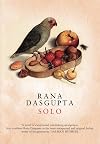
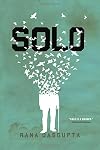
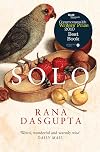
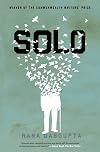
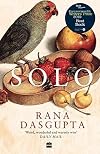
Solo
by Rana Dasgupta
On This Page
Description
A one-hundred-year-old blind Bulgarian looks back on a long life marked by fantasies about what could have been, from a dashed ambition to play the violin and interrupted scientific studies to idyllic children and the end of Communism.Tags
Recommendations











Member Reviews
Rating: 5* of five
The Publisher Says: With an imaginative audacity and lyrical brilliance that puts him in the company of David Mitchell and Alexander Hemon, Rana Dasgupta paints a portrait of a century though the story of a hundred-year-old blind Bulgarian man in a first novel that announces the arrival of an exhilarating new voice in fiction.
In the first movement of Solo we meet Ulrich, the son of a railroad engineer, who has two great passions: the violin and chemistry. Denied the first by his father, he leaves for the Berlin of Einstein and Fritz Haber to study the latter. His studies are cut short when his father’s fortune evaporates, and he must return to Sofia to look after his parents. He never leaves Bulgaria again. Except in show more his daydreams--and it is those dreams we enter in the volatile second half of the book. In a radical leap from past to present, from life lived to life imagined, Dasgupta follows Ulrich’s fantasy children, born of communism but making their way into a post-communist world of celebrity and violence.
Intertwining science and heartbreak, the old world and the new, the real and imagined, Solo is a virtuoso work.
My Review: It's very tough to reduce this book to a synopsis. Ulrich, born in the dawning years of the 20th century in Sofia, Bulgaria, is the thwarted and stunted son of a Germanophile railway engineer. His Philistine father and dreamy mother battle their lives away, not listening or hearing or caring; they end up deaf. Ulrich ends up unable to feel, to engage with life, or to make sense of the world. His wife and son vanish; his career grows ever thicker and more ungainly to fill the space; then, one day, it too vanishes. What he is left with, after a lifetime of failure and eventual blindness, is...space. He is a void encompassed by flesh. He is one hundred when we meet him. His slow, exquisite dis-integration is the resolution of the story of his life...it is the final act of a mind unable to bear frictionless, affectless existence one more second.
It is beautiful. Rana Dasgupta, the author of Solo, is only now forty. I hate his skinny ass. This is the book James Joyce would've written if he'd ever found his way past the success of the tedious and pretentious Ulysses. And here this guy with a short story collection under his belt unrolls this gorgeous Caucasian carpet of a book before he's forty! Hate is so mild a term for the envious longing and shivering, ecstatic loathing that possesses me as I read his sentences, and twine myself about his fractal geometry of a story.
Rather than try to make things clear to you myself, let me quote to you from pp334-335 of the book:
"'He was like the other half of myself,' says Boris...Ulrich says, 'You haven't lost {him}, you know. I don't know if it helps to say that. I lost a friend once myself, and I know how it goes.
'He'll find his way inside you, and you'll carry him onward. Behind your heartbeat, you'll hear another one, faint and out of step. People will say you are speaking his opinons, or your hair has turned like his.
'There are no more facts about him -- that part is over. Now is the time for essential things...Gradually you'll grow older than him, and love him as your son.
'You'll live astride the line that separates life from death. You'll become experienced in the wisdom of grief. You won't wait until people die to grieve for them; you'll give them their grief while they are still alive, for then judgment falls away, and there remains only the miracle of being.'"
In reading that passage again, I feel like Annie Dillard's bell..."it was as though I had lived my entire life as a bell and never known it until I was struck"...and I finally unraveled the book I'd read: Meditation on failure and grief? No; not that; a more subtle and wonderful thing: Like "The Love Song of J. Alfred Prufrock", a shout in the face of closed minds to open, to live, to exist fully if only for one gleaming moment.
This work is licensed under a Creative Commons Attribution-NonCommercial-ShareAlike 3.0 Unported License. show less
The Publisher Says: With an imaginative audacity and lyrical brilliance that puts him in the company of David Mitchell and Alexander Hemon, Rana Dasgupta paints a portrait of a century though the story of a hundred-year-old blind Bulgarian man in a first novel that announces the arrival of an exhilarating new voice in fiction.
In the first movement of Solo we meet Ulrich, the son of a railroad engineer, who has two great passions: the violin and chemistry. Denied the first by his father, he leaves for the Berlin of Einstein and Fritz Haber to study the latter. His studies are cut short when his father’s fortune evaporates, and he must return to Sofia to look after his parents. He never leaves Bulgaria again. Except in show more his daydreams--and it is those dreams we enter in the volatile second half of the book. In a radical leap from past to present, from life lived to life imagined, Dasgupta follows Ulrich’s fantasy children, born of communism but making their way into a post-communist world of celebrity and violence.
Intertwining science and heartbreak, the old world and the new, the real and imagined, Solo is a virtuoso work.
My Review: It's very tough to reduce this book to a synopsis. Ulrich, born in the dawning years of the 20th century in Sofia, Bulgaria, is the thwarted and stunted son of a Germanophile railway engineer. His Philistine father and dreamy mother battle their lives away, not listening or hearing or caring; they end up deaf. Ulrich ends up unable to feel, to engage with life, or to make sense of the world. His wife and son vanish; his career grows ever thicker and more ungainly to fill the space; then, one day, it too vanishes. What he is left with, after a lifetime of failure and eventual blindness, is...space. He is a void encompassed by flesh. He is one hundred when we meet him. His slow, exquisite dis-integration is the resolution of the story of his life...it is the final act of a mind unable to bear frictionless, affectless existence one more second.
It is beautiful. Rana Dasgupta, the author of Solo, is only now forty. I hate his skinny ass. This is the book James Joyce would've written if he'd ever found his way past the success of the tedious and pretentious Ulysses. And here this guy with a short story collection under his belt unrolls this gorgeous Caucasian carpet of a book before he's forty! Hate is so mild a term for the envious longing and shivering, ecstatic loathing that possesses me as I read his sentences, and twine myself about his fractal geometry of a story.
Rather than try to make things clear to you myself, let me quote to you from pp334-335 of the book:
"'He was like the other half of myself,' says Boris...Ulrich says, 'You haven't lost {him}, you know. I don't know if it helps to say that. I lost a friend once myself, and I know how it goes.
'He'll find his way inside you, and you'll carry him onward. Behind your heartbeat, you'll hear another one, faint and out of step. People will say you are speaking his opinons, or your hair has turned like his.
'There are no more facts about him -- that part is over. Now is the time for essential things...Gradually you'll grow older than him, and love him as your son.
'You'll live astride the line that separates life from death. You'll become experienced in the wisdom of grief. You won't wait until people die to grieve for them; you'll give them their grief while they are still alive, for then judgment falls away, and there remains only the miracle of being.'"
In reading that passage again, I feel like Annie Dillard's bell..."it was as though I had lived my entire life as a bell and never known it until I was struck"...and I finally unraveled the book I'd read: Meditation on failure and grief? No; not that; a more subtle and wonderful thing: Like "The Love Song of J. Alfred Prufrock", a shout in the face of closed minds to open, to live, to exist fully if only for one gleaming moment.
This work is licensed under a Creative Commons Attribution-NonCommercial-ShareAlike 3.0 Unported License. show less
Solo, Rana Dasgupta's beautiful and fantastical prize winning novel, addresses themes like thwarted destiny and the ways in which historical events shape individual lives, and looks for inspiration to 20th-century science and the ascendancy of Communism in early 20th-century eastern Europe. Dasgupta's main character is Ulrich, who, blind and 100 years old, is living alone in a shabby apartment in Sofia, Bulgaria. The first half of the novel consists of chronologically ordered recollections spanning his long life, while the second half is devoted to his accumulated daydreams. In the first of these two "movements" we follow Ulrich's story, from boyhood to old age. In vivid and thoughtful prose, Dasgupta portrays the singular environment show more from which Ulrich emerges: his cultured Sofia boyhood in which curiosity is encouraged--the genteel life that falls on hard times--friends and family lost to war and political upheaval--intellectual ambitions thwarted by official corruption and mismanagement. In the end we find an old man whose opportunities for happiness and fulfillment have been lost, but who lives on, apparently without bitterness. The second movement--the daydreams--is largely the story of a music producer who discovers a Bulgarian musician and makes him a star, only to lose control of this prize performer, whose passion and creativity cannot be contained within the boundaries of a recording contract. The links uniting the two halves of the novel are tenuous (Ulrich makes cameo appearances in his own daydreams), but a case can be made that in Solo, Dasgupta argues simply that we must pursue our dreams at any cost. Ulrich ponders whether or not his life has been a failure, but realizes at the end that the importance of each life resides not in individual triumphs but in the contribution to the collective. In Solo Rana Dasgupta has written elegantly and eloquently about human aspiration and the craving to leave behind evidence of our existence. show less
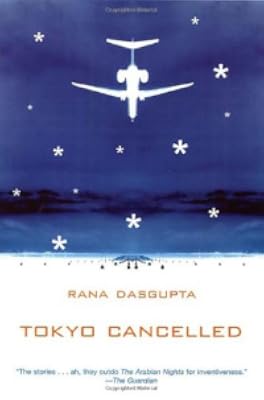
I read Dasgupta’s first novel 'Tokyo cancelled' back in 2007 and it was one of the most original debuts I’ve read in recent years; it has really stayed with me. I've been looking forward to his second novel – and it didn’t disappoint either. Solo is the story of one man, his life and his daydreams, and is a novel in two distinct ‘movements’.
In the first, we meet Ulrich – a Bulgarian. Now blind and 100 years old, he is reliant on his neighbour to look after him, and all he has left in life is to muse about his long life, and dream. As a young man, Ulrich has the potential to become a talented musician, but his father hates music and burns his violin. Ulrich turns to science, goes to Berlin to study; and as a student he was show more there to pick up Einstein’s dropped papers. But his studies and a romance with a Czech scientist Clara are thwarted having to return home to Sofia where his father is ill. There he falls for Magdelena, the sister of his late best friend Boris who had been executed for sedition. They marry and have a child, but it doesn’t last. Magdelena is not content with Ulrich being an accountant in a leather factory and leaves him to go to the USA, taking his son with him. Ulrich ends up then working as a small cog in a barium chloride factory in the chemical industry burgeoning under Communist control.
Feeling stifled in his life, Ulrich is worried about the effects of chemistry, he tells his mother ... “A long time ago, Boris and I had a debate about chemistry. I said it was the science of life, and he said it brought only death. Now I see that our views were simply two halves of the same thing.”
By the time Communism ends, chemistry has ruined his homeland. “Bulgarian sheep had miscarriages and died, and the cows went mad. Children were born with cancers and deformities. Like all his compatriots, Ulrich had become chemical himself, his blood a solution of cadmium, lead, zinc and copper.”
Ulrich’s life story ends for now with musings about daydreams which leads into the second movement of this book. We meet a new cast of characters: Boris, a Bulgarian musican inspired by the Gypsy tradition, Georgian Khatuna – a girl who knows what she wants and will stop at nothing to get it – her younger poet brother Irakli, and ‘Plastic’ Munari – a top record producer in New York. Their stories start off separately – reminiscent in style of those in Tokyo cancelled, then gradually entwine as Boris is discovered by Plastic who is discovered by Khatuna and the circle is completed by Ulrich writing himself into their story.
Bulgaria’s story too comes to life. The author cleverly blends in fact with fiction to make the industrial hotpot of Eastern Europe under its successive waves of rule feel very real. It also resonates with chemistry – not just the physical chemistry of science but the emotional chemistry of failed relationships and thwarted ambition. If chemistry is the glue of this sweeping novel, then music is the spirit, always in the ether somewhere – particularly the folk music of the Gypsy violins. Its sweeping scale and dazzling descriptive prose makes up for the slight jarring between the two halves. I loved it. show less
In the first, we meet Ulrich – a Bulgarian. Now blind and 100 years old, he is reliant on his neighbour to look after him, and all he has left in life is to muse about his long life, and dream. As a young man, Ulrich has the potential to become a talented musician, but his father hates music and burns his violin. Ulrich turns to science, goes to Berlin to study; and as a student he was show more there to pick up Einstein’s dropped papers. But his studies and a romance with a Czech scientist Clara are thwarted having to return home to Sofia where his father is ill. There he falls for Magdelena, the sister of his late best friend Boris who had been executed for sedition. They marry and have a child, but it doesn’t last. Magdelena is not content with Ulrich being an accountant in a leather factory and leaves him to go to the USA, taking his son with him. Ulrich ends up then working as a small cog in a barium chloride factory in the chemical industry burgeoning under Communist control.
Feeling stifled in his life, Ulrich is worried about the effects of chemistry, he tells his mother ... “A long time ago, Boris and I had a debate about chemistry. I said it was the science of life, and he said it brought only death. Now I see that our views were simply two halves of the same thing.”
By the time Communism ends, chemistry has ruined his homeland. “Bulgarian sheep had miscarriages and died, and the cows went mad. Children were born with cancers and deformities. Like all his compatriots, Ulrich had become chemical himself, his blood a solution of cadmium, lead, zinc and copper.”
Ulrich’s life story ends for now with musings about daydreams which leads into the second movement of this book. We meet a new cast of characters: Boris, a Bulgarian musican inspired by the Gypsy tradition, Georgian Khatuna – a girl who knows what she wants and will stop at nothing to get it – her younger poet brother Irakli, and ‘Plastic’ Munari – a top record producer in New York. Their stories start off separately – reminiscent in style of those in Tokyo cancelled, then gradually entwine as Boris is discovered by Plastic who is discovered by Khatuna and the circle is completed by Ulrich writing himself into their story.
Bulgaria’s story too comes to life. The author cleverly blends in fact with fiction to make the industrial hotpot of Eastern Europe under its successive waves of rule feel very real. It also resonates with chemistry – not just the physical chemistry of science but the emotional chemistry of failed relationships and thwarted ambition. If chemistry is the glue of this sweeping novel, then music is the spirit, always in the ether somewhere – particularly the folk music of the Gypsy violins. Its sweeping scale and dazzling descriptive prose makes up for the slight jarring between the two halves. I loved it. show less
The Chinese saying – or curse – “May you live in interesting times”, appropriately defines the canvas that Rana Dasgupta’s Solo is painted on. The horrors of war, epic corruption and anarchy in early twentieth century Bulgaria, has created a blasted, cursed landscape in this corner of eastern Europe.
The novel opens with Ulrich, a centenarian who has witnessed his native Bulgaria under the rule of the Tsars, through the Second World War as an ally to Nazi Germany and into the Communist era when Bulgaria was mined and polluted to provide resources for the Soviet empire.
Early in his life Ulrich is forced to abandon his dream of becoming a musician when it is forbidden by his father, a railway engineer, who throws his violin in show more the fire. He goes to Berlin to study chemistry but must abandon his studies and return to Sofia when his family loses everything and the suppression of dissent destroys whatever dreams and ambition he still had.
The second “movement” of Solo is a narrative crafted from the daydreams Ulrich has fostered during the sad collapse of his life and ambition. When he is left old and blind with nothing, he has imagined a world of impossible ambition and fortune that from the beginning is doomed to collapse.
He imagines Boris, an extraordinary violinist that has lived alone in an abandoned town with his vegetables and pigs; Khatuna, an impossibly beautiful and ruthless woman who will do anything to leave behind the poverty of her childhood; Irakli, Khatuna’s younger brother, a withdrawn poet who develops an obsessive relationship with Boris.
Most of this section takes place in post-communist Georgia , controlled by wealthy oligarchs with massive security. Later, Boris is discovered by international music producer ‘Plastic’ Munari and whisked off to fame and fortune in twenty-first century New York, along with Khatuna and Irakli. Ulrich himself appears in these final bittersweet scenes.
Solo mixes realism and fantasy in a blend that is always compelling and often wonderfully transcendent. show less
The novel opens with Ulrich, a centenarian who has witnessed his native Bulgaria under the rule of the Tsars, through the Second World War as an ally to Nazi Germany and into the Communist era when Bulgaria was mined and polluted to provide resources for the Soviet empire.
Early in his life Ulrich is forced to abandon his dream of becoming a musician when it is forbidden by his father, a railway engineer, who throws his violin in show more the fire. He goes to Berlin to study chemistry but must abandon his studies and return to Sofia when his family loses everything and the suppression of dissent destroys whatever dreams and ambition he still had.
The second “movement” of Solo is a narrative crafted from the daydreams Ulrich has fostered during the sad collapse of his life and ambition. When he is left old and blind with nothing, he has imagined a world of impossible ambition and fortune that from the beginning is doomed to collapse.
He imagines Boris, an extraordinary violinist that has lived alone in an abandoned town with his vegetables and pigs; Khatuna, an impossibly beautiful and ruthless woman who will do anything to leave behind the poverty of her childhood; Irakli, Khatuna’s younger brother, a withdrawn poet who develops an obsessive relationship with Boris.
Most of this section takes place in post-communist Georgia , controlled by wealthy oligarchs with massive security. Later, Boris is discovered by international music producer ‘Plastic’ Munari and whisked off to fame and fortune in twenty-first century New York, along with Khatuna and Irakli. Ulrich himself appears in these final bittersweet scenes.
Solo mixes realism and fantasy in a blend that is always compelling and often wonderfully transcendent. show less
 This review was written for LibraryThing Early Reviewers.
I am going to be brutally honest with this review even though I am in the minority and feel really, really stupid. This book left me shaking my head and sitting with my mouth gaping asking myself, “What just happened?” Although the writing was stunningly beautiful, I didn’t get this book at all. If I hadn’t had to write a review for an ER book, I probably wouldn’t have finished it.
It’s divided into two parts which the author refers to as Movements because music plays an important role in the book. The first part worked well for me. A one hundred year old Bulgarian man, blinded in a chemical accident, is looking back over his life in the Socialist/Communist country. He has had a rough time of it what with his father show more destroying his dream to become a violinist and then ruining his plans for a career in chemistry when the money runs out for his education at a Berlin university, forcing him to return home, leaving behind the woman he loves. Back home, he accepts a job in a leather factory as an accountant, settles for a marriage with a woman who isn’t the one he loves, has a son, and then loses both after a divorce and remarriage which sends them to the U.S. All very well done and beautifully written; extensively researched history of Bulgaria that held my interest right to the end of the First Movement.
The second part of the book introduces a completely new set of characters. There is no transition to help you figure out how these individuals are connected to the Bulgarian man, Ulrich. As a matter of fact, we start out with them in Georgia, and it takes a hundred pages before there is a hint that they are somehow connected to the first story. Then all of a sudden Ulrich, who is blind, appears again and seems to be driving around New York City. By looking at some other reviews, because I was so frustrated and tired of throwing the book across the room, I discovered that the characters in this movement are creations of Ulrich’s daydreams. Really?? Wow! That’s a surprise. And therein was my problem with the book: a total disconnect between the two movements. Additionally, the writing in the second part did not seem to be the same luscious prose that appeared in the first book. Granted, the characters are young and the dialogue was that of young people, but I missed the narrative stream that dominated the first book. Therefore, I find it impossible to recommend this book but please remember that I am in the minority. Most people here on LT liked/loved it so it may be something about me that made this book fall flat. show less
It’s divided into two parts which the author refers to as Movements because music plays an important role in the book. The first part worked well for me. A one hundred year old Bulgarian man, blinded in a chemical accident, is looking back over his life in the Socialist/Communist country. He has had a rough time of it what with his father show more destroying his dream to become a violinist and then ruining his plans for a career in chemistry when the money runs out for his education at a Berlin university, forcing him to return home, leaving behind the woman he loves. Back home, he accepts a job in a leather factory as an accountant, settles for a marriage with a woman who isn’t the one he loves, has a son, and then loses both after a divorce and remarriage which sends them to the U.S. All very well done and beautifully written; extensively researched history of Bulgaria that held my interest right to the end of the First Movement.
The second part of the book introduces a completely new set of characters. There is no transition to help you figure out how these individuals are connected to the Bulgarian man, Ulrich. As a matter of fact, we start out with them in Georgia, and it takes a hundred pages before there is a hint that they are somehow connected to the first story. Then all of a sudden Ulrich, who is blind, appears again and seems to be driving around New York City. By looking at some other reviews, because I was so frustrated and tired of throwing the book across the room, I discovered that the characters in this movement are creations of Ulrich’s daydreams. Really?? Wow! That’s a surprise. And therein was my problem with the book: a total disconnect between the two movements. Additionally, the writing in the second part did not seem to be the same luscious prose that appeared in the first book. Granted, the characters are young and the dialogue was that of young people, but I missed the narrative stream that dominated the first book. Therefore, I find it impossible to recommend this book but please remember that I am in the minority. Most people here on LT liked/loved it so it may be something about me that made this book fall flat. show less
This review was written for LibraryThing Early Reviewers.What would we like our lives to be like if we had a choice and control in situations? This book is divided into 2 parts. The first covers the life of Ulrich, 100 years old, now blind due to an accident with a jar of acid in his workshop after he retired, as he sits and listens to the world outside his apartment. His memories from his childhood in Bulgaria, his relationship with his parents, his friends through his youth, his passion for chemistry and jazz music in Berlin, and later on his life in Bulgaria under Soviet rule. His memories provide vivid descriptions of a century's worth of experiences, but what strikes the reader most is the deep loneliness that governs his life.
But he is really lonely? For Ulrich spends a fair portion of show more his time living in his daydreams. In his daydreams, he has a different life. In his daydreams, his best friend fulfills his destiny as a famous musician instead of being executed for being a revolutionary. In his daydreams, he has a loving family and is successful. His life in daydreams covers the 2nd part of this book.
Should we feel sorry for Ulrich because his fantasy life is a complete polar opposite to the harsh and drab loneliness of reality? Or do we sympathize and feel glad that he has a form of escape that is colorful and rich?
Whatever the decision, what's clear is the author's ability to deliver detailed scenes and the thoughts and emotions of his characters vividly and lyrically. show less
But he is really lonely? For Ulrich spends a fair portion of show more his time living in his daydreams. In his daydreams, he has a different life. In his daydreams, his best friend fulfills his destiny as a famous musician instead of being executed for being a revolutionary. In his daydreams, he has a loving family and is successful. His life in daydreams covers the 2nd part of this book.
Should we feel sorry for Ulrich because his fantasy life is a complete polar opposite to the harsh and drab loneliness of reality? Or do we sympathize and feel glad that he has a form of escape that is colorful and rich?
Whatever the decision, what's clear is the author's ability to deliver detailed scenes and the thoughts and emotions of his characters vividly and lyrically. show less
This review was written for LibraryThing Early Reviewers.Rana Dasgupta’s second novel is a quick read, but it has a great deal of depth. Divided into two “movements,” it begins with the story of Ulrich, a blind centenarian living in Bulgaria. The first movement, “Life,” comprises the story of Ulrich’s life; several important historical events are encompassed including two World Wars and the rise of communism in Bulgaria. Ulrich begins as a young boy with dreams—first of playing the violin, and then of being a chemist—but reality intervenes. He is forced away from his studies in Berlin by his once-prosperous family’s increasingly desperate financial situation, which leads him to return to Bulgaria and to a life far different than what he had imagined.
In the second movement, show more “Daydreams,” the tone of the novel changes drastically. The pace becomes more urgent, and there is a decidedly more modern style to the prose. The transition is abrupt as we move from the now-blind, elderly Ulrich’s lonely world into his much more colorful daydreams. In these daydreams he imagines children never born, and lives never lived. This second half is rich with symbolism and themes that connect all the characters together. There is a rich literary feel to this portion, and this is likely a book that could be read over and over, discovering something new each time.
This is a novel that has a lot to say about the nature of reality. The distinction between reality and fantasy often blurs, and Ulrich presents a compelling argument about whether reality is truly more valid or real than what we imagine. The writing makes it quite easy to forget at times that the second part of the novel are just Ulrich's daydreams; they come to feel as real to the reader as to Ulrich. A very gripping and thought-provoking read. show less
In the second movement, show more “Daydreams,” the tone of the novel changes drastically. The pace becomes more urgent, and there is a decidedly more modern style to the prose. The transition is abrupt as we move from the now-blind, elderly Ulrich’s lonely world into his much more colorful daydreams. In these daydreams he imagines children never born, and lives never lived. This second half is rich with symbolism and themes that connect all the characters together. There is a rich literary feel to this portion, and this is likely a book that could be read over and over, discovering something new each time.
This is a novel that has a lot to say about the nature of reality. The distinction between reality and fantasy often blurs, and Ulrich presents a compelling argument about whether reality is truly more valid or real than what we imagine. The writing makes it quite easy to forget at times that the second part of the novel are just Ulrich's daydreams; they come to feel as real to the reader as to Ulrich. A very gripping and thought-provoking read. show less
Members
- Recently Added By
Published Reviews
ThingScore 100
In Solo – which is ultimately a meditation on what it means to measure success, failure and time itself – Rana Dasgupta, ... , has created a work that is both literary and compelling, a prize-worthy feat indeed.
added by lkernagh
Solo is mannered in its strangeness, but utterly unforgettable in its humanity. It hums the inner and outer melodies of a life lived solo, until it becomes a discordant symphony of the human condition. This lifts it from a freak show to the kind of "philharmonic" novel that reminds us why we will always need to tell the extraordinary stories of people's ordinary lives. So that, like Ulrich, we show more can sift through those hundred years when "the world itself has become nonsense", and see more deeply into the "great black ocean of forgotten things". show less
added by kidzdoc
WHAT a delight to find a novelist unfazed by the 21st century, confidently tracing the wrong turnings of the past 100 years, soaring insightfully over the mess of global developments that constitute the quagmire of today.
What a delight to read a fiction writer fully astute about life, love, culture and politics, catching in his cross-hairs ideologies, sciences, personal relationships, the show more terrors of ageing, the madness of music, organised crime, family tragedies -- even the novel genre itself -- examining them with dazzling clarity. show less
What a delight to read a fiction writer fully astute about life, love, culture and politics, catching in his cross-hairs ideologies, sciences, personal relationships, the show more terrors of ageing, the madness of music, organised crime, family tragedies -- even the novel genre itself -- examining them with dazzling clarity. show less
added by kidzdoc
Lists

A Novel Cure
742 works; 23 members
Author Information

8+ Works 861 Members
Awards and Honors
Awards
Distinctions
Common Knowledge
- Canonical title*
- Solo
- Original title
- Solo
- Original publication date
- 2009
- People/Characters
- Ulrich ; Khatuna; Boris; Irakli; Plastic Munari; Kakha
- Important places
- Sofia, Bulgaria; Berlin, Germany; New York, USA
- Dedication
- for my darling Monica
- First words
- The man has woken suddenly, in the dead zone of the night.
- Quotations
- But now he does not know what it means for a life to suceed or fail. How can a dog fail its life, or a tree? A life is just a quanitity; and he can no more see failure in it than he can see failure in a pile of earth, or a bu... (show all)cket of water. Failure and success are foreign terms to such blind matter.
- Last words
- (Click to show. Warning: May contain spoilers.)At last the van turns into the port, and Ulrich can see it no more.
- Original language*
- Englisch
*Some information comes from Common Knowledge in other languages. Click "Edit" for more information.
Classifications
Statistics
- Members
- 322
- Popularity
- 98,692
- Reviews
- 30
- Rating
- (3.70)
- Languages
- 12 — Bosnian, Czech, Dutch, English, French, German, Greek, Italian, Norwegian, Serbian, Spanish, Turkish
- Media
- Paper, Ebook
- ISBNs
- 26
- ASINs
- 5