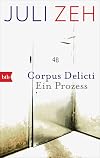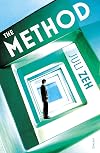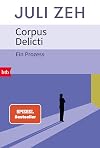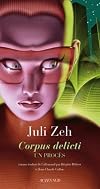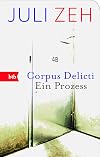
The Method
by Juli Zeh
On This Page
Description
The government knows your medical data, your sleep patterns and exercise is mandatory. Good health is your highest civic duty. But what happens when you rebel against this controlling regime? Mia Holl lives in a state governed by The Method, where good health is the highest duty of the citizen. Everyone must submit medical data and sleep records to the authorities on a monthly basis, and regular exercise is mandatory. Mia is young and beautiful, a successful scientist who is outwardly show more obedient but with an intellect that marks her as subversive. Convinced that her brother has been wrongfully convicted of a terrible crime, Mia comes up against the full force of a regime determined to control every aspect of its citizens' lives. show lessTags
Recommendations
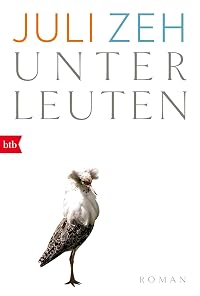
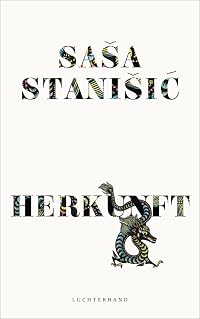



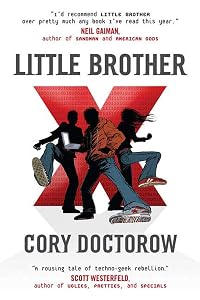
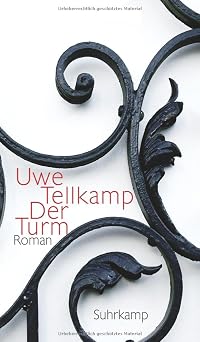












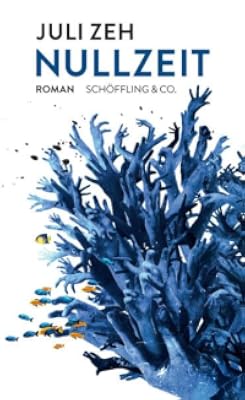



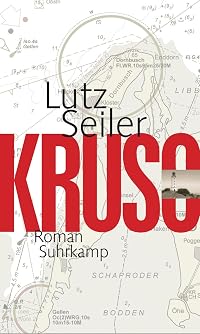




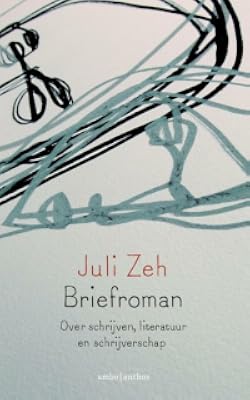

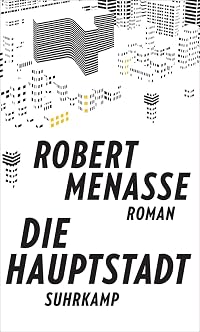












Member Recommendations

Member Reviews
‘The Method’ is a thoughtful utopia/dystopia, originally titled ‘Corpus Delicti’. I don’t understand why the Latin title was changed when the novel was translated from German to English, but no matter. I found it enjoyable and thought-provoking. The titular oppressive regime insists that human health is the of the state and the responsibility of the individual. Thus citizens have to take mandatory exercise, eat protein tubes, and avoid cigarettes, alcohol, and caffeine. Careful monitoring ensures that infractions are swiftly identified and prosecuted.
Interestingly (to me), the Method’s world has also addressed the harm that pollution causes to human health. Thus electricity is generated by renewables, industry has been show more curtailed, and bicycles are the preferred mode of transport. This brought to mind another novel, [b:Intrusion|13189396|Intrusion|Ken MacLeod|https://images.gr-assets.com/books/1329901274s/13189396.jpg|18370451], in which climate change and environmental damage have likewise been addressed and left a similar legacy of personal intrusion from government. Both novels appear to carry the message that, in Europe at least, dealing with the extent of reorganisation required by climate change necessitates the loss of personal liberty. Neither novel concentrates on these ends, however, both focus rather the lost autonomy of the body, in both cases the female body. These similarities are doubtless coincidental; they struck me as interesting nonetheless.
Anyway, ‘The Method’ revolves around Mia Holl, a biologist whose brother has committed suicide after being convicted of rape and murder. Mia believes in her brother’s innocence and her attempts to deal with the tragedy bring her into repeated contact with the legal system. (Although Mia is a good protagonist, my favourite character was the ideal inamorata.) Quite a lot of the book is set in courts of law, and the vast majority of it involves characters talking to one another. This is definitely not a thriller, more a digressive discussion about the actions of humans within systems. It comes to no firm conclusions, which is not surprising, but produces some lovely quotes along the way. I found the translation to be very stylish, if that is the right word, almost Saki-esque. Examples of note:
Mia’s sarcasm is excellent throughout. Her interactions with the political system and media (personified by Kramer) are well-done and sometimes harrowing. I liked ‘The Method’ a lot. It echoes famous dystopias of the 20th century and refuses any neat or simplistic answers to the questions that it raises. show less
Interestingly (to me), the Method’s world has also addressed the harm that pollution causes to human health. Thus electricity is generated by renewables, industry has been show more curtailed, and bicycles are the preferred mode of transport. This brought to mind another novel, [b:Intrusion|13189396|Intrusion|Ken MacLeod|https://images.gr-assets.com/books/1329901274s/13189396.jpg|18370451], in which climate change and environmental damage have likewise been addressed and left a similar legacy of personal intrusion from government. Both novels appear to carry the message that, in Europe at least, dealing with the extent of reorganisation required by climate change necessitates the loss of personal liberty. Neither novel concentrates on these ends, however, both focus rather the lost autonomy of the body, in both cases the female body. These similarities are doubtless coincidental; they struck me as interesting nonetheless.
Anyway, ‘The Method’ revolves around Mia Holl, a biologist whose brother has committed suicide after being convicted of rape and murder. Mia believes in her brother’s innocence and her attempts to deal with the tragedy bring her into repeated contact with the legal system. (Although Mia is a good protagonist, my favourite character was the ideal inamorata.) Quite a lot of the book is set in courts of law, and the vast majority of it involves characters talking to one another. This is definitely not a thriller, more a digressive discussion about the actions of humans within systems. It comes to no firm conclusions, which is not surprising, but produces some lovely quotes along the way. I found the translation to be very stylish, if that is the right word, almost Saki-esque. Examples of note:
”I suppose your face is like a label,” said Mia pensively. “You can stick it to whatever opinion you like.”
“Who says it wasn’t?” says Mia, swaying as the Earth hits a pothole.
Mia’s sarcasm is excellent throughout. Her interactions with the political system and media (personified by Kramer) are well-done and sometimes harrowing. I liked ‘The Method’ a lot. It echoes famous dystopias of the 20th century and refuses any neat or simplistic answers to the questions that it raises. show less
Part political thriller, part crime story and part speculative fiction, The Method is a futuristic system designed to ensure people are healthy and pain free and, by the mid 21st Century, it’s not optional: maintaining physical health is a virtue, and failure to do so is a crime.
Mia Holl’s brother was an anarchist who rebelled against the super-scrubbed and fascistic nanny state: when he was convicted – on the basis of DNA evidence – of the rape/murder of a girlfriend, Mia was convinced he was framed.
She tries to avenge him by bringing down the state but is arrested as a subversive: there are no soft answers or easy solutions in this well imagined and plausible tale of sanitary neurosis.
Mia Holl’s brother was an anarchist who rebelled against the super-scrubbed and fascistic nanny state: when he was convicted – on the basis of DNA evidence – of the rape/murder of a girlfriend, Mia was convinced he was framed.
She tries to avenge him by bringing down the state but is arrested as a subversive: there are no soft answers or easy solutions in this well imagined and plausible tale of sanitary neurosis.
Jung, attraktiv, begabt und unabhängig: Das ist Mia Holl, eine Frau von dreißig Jahren, die sich vor einem Schwurgericht verantworten muss. Zur Last gelegt wird ihr ein Zuviel an Liebe (zu ihrem Bruder), ein Zuviel an Verstand (sie denkt naturwissenschaftlich) und ein Übermaß an geistiger Unabhängigkeit. In einer Gesellschaft, in der die Sorge um den Körper alle geistigen Werte verdrängt hat, reicht dies aus, um als gefährliches Subjekt eingestuft zu werden. Juli Zeh entwirft in Corpus Delicti das spannende Science-Fiction-Szenario einer Gesundheitsdiktatur irgendwann im 21. Jahrhundert, in der Gesundheit zur höchsten Bürgerpflicht geworden ist.
August book club read. It's a speculative fiction novel set in the future where all illnesses have been made extinct and health and hygiene are valued above all and monitored by the government. The programme for health and hygiene is called "the method" and encompasses everything. The main character ignores the rules, talks to invisible friends and gets into trouble big time. The ending is the absolute mind fuck and pretty brilliant, if depressing, but that's how I prefer my endings.
I wish that this book about ideas was better crafted. It's a great idea, but there are too many speeches and not enough world building to make this really work. I'm not sure of the politics of the author. Are we supposed to side with anarchist beliefs of the brother, or not? It isn't clear in the end.
Quite well-written but didactic and lacking an engaging story.
The SF element is a barely sketched pretext for musings on personal liberty and public responsibility. I found it dull.
The SF element is a barely sketched pretext for musings on personal liberty and public responsibility. I found it dull.
Dystopie über Gesundheit als Leitbild, interpoliert von aktuellen Quantified-Self-Trends und zur Staatssache gemacht.
Members
- Recently Added By
Lists

Favorite Science Fiction by Women Authors
737 works; 202 members

Best Science Fiction Originally Published in a Language Other Than English
449 works; 34 members

Books Read in 2023
5,547 works; 145 members

Speculative Fiction from around the World
610 works; 18 members

Books Read in 2016
4,666 works; 199 members

IMPAC Dublin Literary Award 2014 longlist
150 works; 3 members
Author Information

39+ Works 3,300 Members
Some Editions
Awards and Honors
Awards
Notable Lists
Series
Belongs to Publisher Series
btb (74066)
Work Relationships
Has as a student's study guide
Common Knowledge
- Canonical title
- The Method
- Original title
- Corpus Delicti: Ein Prozess
- Alternate titles*
- Corpus delicti : een proces
- Original publication date
- 2009; 2012 (translation) (translation)
- People/Characters
- Mia Holl; Moritz Holl; Heinrich Kramer; Lutz Rosentreter; The ideal lover
- Important places
- Germany
- First words*
- Gesundheit ist ein Zustand des vollkommenen körperlichen, geistigen und sozialen Wohlbefindens - und nicht die bloße Abwesenheit von Krankheit.
- Last words*
- (Click to show. Warning: May contain spoilers.)Denn erst jetzt ist sie - erst jetzt ist das Spiel - erst jetzt ist wirklich alles zu Ende.
- Original language
- German
*Some information comes from Common Knowledge in other languages. Click "Edit" for more information.
Classifications
Statistics
- Members
- 388
- Popularity
- 80,551
- Reviews
- 19
- Rating
- (3.50)
- Languages
- 12 — Danish, Dutch, English, French, German, Italian, Polish, Portuguese, Croatian, Spanish, Swedish, Turkish
- Media
- Paper, Audiobook, Ebook
- ISBNs
- 29
- ASINs
- 6