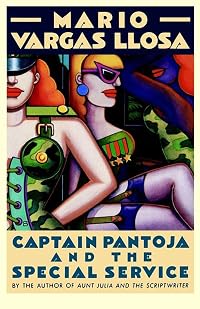
Captain Pantoja and the Special Service
by Mario Vargas Llosa
On This Page
Description
This delightful farce opens as the prim and proper Captain Pantoja learns he is to be sent to Peru's Amazon frontier on a secret mission for the army to provide females for the amorous recruits. Side-splitting complications arise as world of Captain Pantoja's remarkable achievements start to spread."Tags
Recommendations




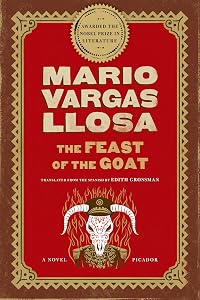
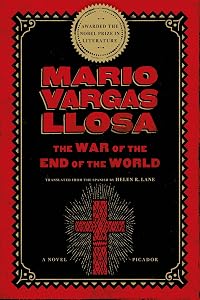























Member Recommendations
Oct326 Due romanzi di Vargas Llosa da cui le forze armate non escono affatto bene, ma di tono molto diverso: "La città e i cani" ritrae in modo spietatamente autentico tutta la brutalità della vita in un collegio militare, mentre "Pantaleón" mette spassosamente in ridicolo l'organizzazione e la vita nell'esercito.
Member Reviews
Régóta várólistás volt ez a könyv, végül az aktuális molyklub erotikus témája adta meg az utolsó lökést, hogy kézbe vegyem. Fülledt mondjuk legfeljebb az éghajlat volt benne, egyébként gondolom, azért került rá a címke, mert szexről van szó benne (a katonáknak prostituáltakat szerveznek, mert különben a környékbeli lányokat-asszonyokat zaklatják). Legtöbbször csak utalnak rá, talán két helyen van kicsit konkrétabb leírás, de azokban sincs semmi erotikus. (Vagy csak nekem hűti le azonnal a szöveget, ha a felnőtt férfi a „fülecskéjét”* akarja harapdáltatni, és egyébként is gyerekeskedik. A másik helyen – a legvégén, ha valaki olvasta, szerintem tudja, mire gondolok – is csak show more minimális utalás van arra, hogy mi fog következni, de egészen máson van a hangsúly – lelőném a poént, ha ezt részletesebben leírnám).
Nem olvastam még mást a szerzőtől, úgyhogy nem tudom, ez mennyire sajátja minden művében, de igazán egyedinek találtam a bekezdésenként váltakozó képeket. Minden egyéb tagolás nélkül, a következő bekezdésben válaszoló szereplőről csak pár mondat után derül ki, hogy nem az előzőre reagál, nem annak a jelenetnek a folytatását olvassuk. Először csak kapkodtam a fejem, de bele lehetett jönni: olyan volt, mint egy sűrű vágásokkal operáló film, csak villantak egymás után a snittek, és ha felvette az ember a ritmust, kifejezetten élvezetes volt.
Az ilyen szokatlanul gyors váltásokkal megírt szövegen kívül katonai jelentésekből, levelekből, valamint egy rádióműsor leiratából és egy újság különkiadásából áll a regény. Gyakorlatilag nincs is klasszikus próza (azt hiszem), mégis tökéletesen összeállt a történet. A merev katonai nyelvezettel, a feleség lánytestvéréhez írt levelének zavartan kuncogó körülírásaival, a médiamegjelenésekben szintén a ki nem mondhatósággal elkerüli a szexualitással kapcsolatos nyelv problémáját, amely ugyan nem tudom, a spanyolban létezik-e, de a magyarban általános fordítói probléma a semleges kifejezések hiánya (angolról is, de ha megnyúznak se tudok példát mondani).
Nagyon tetszett a Kínai Porfirio akcentusa (r helyett l): szuperül végigvitt, értelmezést nem zavaró megoldás született, ha valaki csak utánozta, azt is rögtön érzékeltük. Remek fordítói döntés.
Érdekes volt a másik szál, egy vallási szekta kialakulásának sokszor gyomorforgató eseményei, és ahogy a két „problémás helyzet” (a szekta durvulása és térhódítása és a hölgyvendég szolgálat sikere és terjeszkedése) párhuzamosan eszkalálódik,majd végül összekapcsolódva ér tragikus véget. Könnyen olvasható, hümmöghetünk egy sort az emberi természeten is, abszolút élvezhető volt (csak nem úgy).
*A spanyol nyelvben talán nem üt ennyire vissza a becézgetés, nekem a felnőtt férfit Pantitának szólítás is nagyon idegen volt. (Persze ahol lehet egy egész országot Velencécskének nevezni Venezuela, ez biztos nem olyan szokatlan.) show less
Nem olvastam még mást a szerzőtől, úgyhogy nem tudom, ez mennyire sajátja minden művében, de igazán egyedinek találtam a bekezdésenként váltakozó képeket. Minden egyéb tagolás nélkül, a következő bekezdésben válaszoló szereplőről csak pár mondat után derül ki, hogy nem az előzőre reagál, nem annak a jelenetnek a folytatását olvassuk. Először csak kapkodtam a fejem, de bele lehetett jönni: olyan volt, mint egy sűrű vágásokkal operáló film, csak villantak egymás után a snittek, és ha felvette az ember a ritmust, kifejezetten élvezetes volt.
Az ilyen szokatlanul gyors váltásokkal megírt szövegen kívül katonai jelentésekből, levelekből, valamint egy rádióműsor leiratából és egy újság különkiadásából áll a regény. Gyakorlatilag nincs is klasszikus próza (azt hiszem), mégis tökéletesen összeállt a történet. A merev katonai nyelvezettel, a feleség lánytestvéréhez írt levelének zavartan kuncogó körülírásaival, a médiamegjelenésekben szintén a ki nem mondhatósággal elkerüli a szexualitással kapcsolatos nyelv problémáját, amely ugyan nem tudom, a spanyolban létezik-e, de a magyarban általános fordítói probléma a semleges kifejezések hiánya (angolról is, de ha megnyúznak se tudok példát mondani).
Nagyon tetszett a Kínai Porfirio akcentusa (r helyett l): szuperül végigvitt, értelmezést nem zavaró megoldás született, ha valaki csak utánozta, azt is rögtön érzékeltük. Remek fordítói döntés.
Érdekes volt a másik szál, egy vallási szekta kialakulásának sokszor gyomorforgató eseményei, és ahogy a két „problémás helyzet” (a szekta durvulása és térhódítása és a hölgyvendég szolgálat sikere és terjeszkedése) párhuzamosan eszkalálódik,
*A spanyol nyelvben talán nem üt ennyire vissza a becézgetés, nekem a felnőtt férfit Pantitának szólítás is nagyon idegen volt. (Persze ahol lehet egy egész országot Velencécskének nevezni Venezuela, ez biztos nem olyan szokatlan.) show less
The kaleidoscopic nature of the first chapter is a challenge to read; sudden shifts in character/location/storyline are almost dizzying. I think I might hate this novel. Chapter 2 consists of two formal military dispatch reports written by the main character. Chapter 3 contains a long letter written by the main character’s wife followed by what seems to me to be a surreal dream sequence about a hemorrhoidectomy. And by the end of the 3rd chapter I am completely captivated by this satirical farce set in Iquitos, Peru in the 1950’s. I’m glad I persevered. I would like to visit Peru, although not necessarily Iquitos.
I feel quite disappointed with this book. This is my second book by Vargas Llosa, and after “The War of the End of the World”, I had higher expectations for it. Maybe is unfair of me to compare the two books, which are quite different in nature – TWOTEOTW is a historical epic, while Pantaleon… is a humorous satire. But, although the humour was excellent at times, the writing became tiresome. I particularly don’t like books written as a sequence of letters and journal entries, and maybe this is my bias against it, but even the chapters written as dialogues which were engaging at first for the amount of imaginary that they contained became tedious and repetitive by the end of the book.
I have not yet given up on Vargas Llosa. I show more will try and read more of his work, as I have a feeling I just happened to read one of the lesser of his works. show less
I have not yet given up on Vargas Llosa. I show more will try and read more of his work, as I have a feeling I just happened to read one of the lesser of his works. show less
One of Mario Vargas Llosa's earlier novels, at first it appears to be a light farce, albeit an extremely well written one, but it evolves and develops into something much deeper and more moving.
The story is about the straitlaced logistics officer Captain Pantoja who is assigned to set up mobile brothels in the Amazon to divert the troops from pursuing (and often raping) local women. Captain Pantoja brings his astonishing efficiency to the task, with such steps as surveys about how often men need the services, timing how long it takes, experimenting with factors that can reduce the time, and using all of this to calculate the resources he will need and how to deploy them. All of this grows well beyond his initial imagination as he show more becomes increasingly embroiled in the world.
The chapters are organized in a number of different ways. The opening and some subsequent chapters are a shifting, multiple perspective dialogue where almost every paragraph is in quotation marks but they narrate a series of conversations, often shifting back and forth, not just one. Some of the other chapters are letters or radio broadcasts And many of the other chapters are in the form of military dispatches, hilarious for the precision and military jargon around prostitution and other aspects of sex. Some is particularly farcical, like the prostitutes creating a "Hymn" for the group, called the "special service," that refers to the Peruvian Army but not the Navy. Given the Navy's support for the operation, they are upset and want themselves named in the "hymn" as well. This leads to a series of letters, apologies, and ultimately the problem being rectified. As such, Captain Pantoja and the Special Service has a comfortable place in the satire of military life from Catch-22 to MASH.
But it ultimately transcends it and does so much more, particularly with the character of Captain Pantoja and how he treats the prostitutes with dignity, creates an esprit de corps like in the Army, and makes them feel patriotic--all of which he does in the face of significant pressure by just about everyone to the contrary.
Also of some interest is that many of Vargas Llosa's subsequent books are in here in some form or another. This is most clear with Brother Francisco, a renegade religious figure who develops a following in the Amazon--prefiguring the Counselor in The War of the End of the World. And Iquitos, the wild Amazonian city, plays a big role here--like it does in The Dream of the Celt. And finally the story itself seems like something Pedro Camacho from Aunt Julia and the Scriptwriter would have dreamed up, including a character (the assistant to the madam) who is reminiscent of Camacho himself. show less
The story is about the straitlaced logistics officer Captain Pantoja who is assigned to set up mobile brothels in the Amazon to divert the troops from pursuing (and often raping) local women. Captain Pantoja brings his astonishing efficiency to the task, with such steps as surveys about how often men need the services, timing how long it takes, experimenting with factors that can reduce the time, and using all of this to calculate the resources he will need and how to deploy them. All of this grows well beyond his initial imagination as he show more becomes increasingly embroiled in the world.
The chapters are organized in a number of different ways. The opening and some subsequent chapters are a shifting, multiple perspective dialogue where almost every paragraph is in quotation marks but they narrate a series of conversations, often shifting back and forth, not just one. Some of the other chapters are letters or radio broadcasts And many of the other chapters are in the form of military dispatches, hilarious for the precision and military jargon around prostitution and other aspects of sex. Some is particularly farcical, like the prostitutes creating a "Hymn" for the group, called the "special service," that refers to the Peruvian Army but not the Navy. Given the Navy's support for the operation, they are upset and want themselves named in the "hymn" as well. This leads to a series of letters, apologies, and ultimately the problem being rectified. As such, Captain Pantoja and the Special Service has a comfortable place in the satire of military life from Catch-22 to MASH.
But it ultimately transcends it and does so much more, particularly with the character of Captain Pantoja and how he treats the prostitutes with dignity, creates an esprit de corps like in the Army, and makes them feel patriotic--all of which he does in the face of significant pressure by just about everyone to the contrary.
Also of some interest is that many of Vargas Llosa's subsequent books are in here in some form or another. This is most clear with Brother Francisco, a renegade religious figure who develops a following in the Amazon--prefiguring the Counselor in The War of the End of the World. And Iquitos, the wild Amazonian city, plays a big role here--like it does in The Dream of the Celt. And finally the story itself seems like something Pedro Camacho from Aunt Julia and the Scriptwriter would have dreamed up, including a character (the assistant to the madam) who is reminiscent of Camacho himself. show less
Régóta várólistás volt ez a könyv, végül az aktuális molyklub erotikus témája adta meg az utolsó lökést, hogy kézbe vegyem. Fülledt mondjuk legfeljebb az éghajlat volt benne, egyébként gondolom, azért került rá a címke, mert szexről van szó benne (a katonáknak prostituáltakat szerveznek, mert különben a környékbeli lányokat-asszonyokat zaklatják). Legtöbbször csak utalnak rá, talán két helyen van kicsit konkrétabb leírás, de azokban sincs semmi erotikus. (Vagy csak nekem hűti le azonnal a szöveget, ha a felnőtt férfi a „fülecskéjét”* akarja harapdáltatni, és egyébként is gyerekeskedik. A másik helyen – a legvégén, ha valaki olvasta, szerintem tudja, mire gondolok – is csak show more minimális utalás van arra, hogy mi fog következni, de egészen máson van a hangsúly – lelőném a poént, ha ezt részletesebben leírnám).
Nem olvastam még mást a szerzőtől, úgyhogy nem tudom, ez mennyire sajátja minden művében, de igazán egyedinek találtam a bekezdésenként váltakozó képeket. Minden egyéb tagolás nélkül, a következő bekezdésben válaszoló szereplőről csak pár mondat után derül ki, hogy nem az előzőre reagál, nem annak a jelenetnek a folytatását olvassuk. Először csak kapkodtam a fejem, de bele lehetett jönni: olyan volt, mint egy sűrű vágásokkal operáló film, csak villantak egymás után a snittek, és ha felvette az ember a ritmust, kifejezetten élvezetes volt.
Az ilyen szokatlanul gyors váltásokkal megírt szövegen kívül katonai jelentésekből, levelekből, valamint egy rádióműsor leiratából és egy újság különkiadásából áll a regény. Gyakorlatilag nincs is klasszikus próza (azt hiszem), mégis tökéletesen összeállt a történet. A merev katonai nyelvezettel, a feleség lánytestvéréhez írt levelének zavartan kuncogó körülírásaival, a médiamegjelenésekben szintén a ki nem mondhatósággal elkerüli a szexualitással kapcsolatos nyelv problémáját, amely ugyan nem tudom, a spanyolban létezik-e, de a magyarban általános fordítói probléma a semleges kifejezések hiánya (angolról is, de ha megnyúznak se tudok példát mondani).
Nagyon tetszett a Kínai Porfirio akcentusa (r helyett l): szuperül végigvitt, értelmezést nem zavaró megoldás született, ha valaki csak utánozta, azt is rögtön érzékeltük. Remek fordítói döntés.
Érdekes volt a másik szál, egy vallási szekta kialakulásának sokszor gyomorforgató eseményei, és ahogy a két „problémás helyzet” (a szekta durvulása és térhódítása és a hölgyvendég szolgálat sikere és terjeszkedése) párhuzamosan eszkalálódik,majd végül összekapcsolódva ér tragikus véget. Könnyen olvasható, hümmöghetünk egy sort az emberi természeten is, abszolút élvezhető volt (csak nem úgy).
*A spanyol nyelvben talán nem üt ennyire vissza a becézgetés, nekem a felnőtt férfit Pantitának szólítás is nagyon idegen volt. (Persze ahol lehet egy egész országot Velencécskének nevezni Venezuela, ez biztos nem olyan szokatlan.) show less
Nem olvastam még mást a szerzőtől, úgyhogy nem tudom, ez mennyire sajátja minden művében, de igazán egyedinek találtam a bekezdésenként váltakozó képeket. Minden egyéb tagolás nélkül, a következő bekezdésben válaszoló szereplőről csak pár mondat után derül ki, hogy nem az előzőre reagál, nem annak a jelenetnek a folytatását olvassuk. Először csak kapkodtam a fejem, de bele lehetett jönni: olyan volt, mint egy sűrű vágásokkal operáló film, csak villantak egymás után a snittek, és ha felvette az ember a ritmust, kifejezetten élvezetes volt.
Az ilyen szokatlanul gyors váltásokkal megírt szövegen kívül katonai jelentésekből, levelekből, valamint egy rádióműsor leiratából és egy újság különkiadásából áll a regény. Gyakorlatilag nincs is klasszikus próza (azt hiszem), mégis tökéletesen összeállt a történet. A merev katonai nyelvezettel, a feleség lánytestvéréhez írt levelének zavartan kuncogó körülírásaival, a médiamegjelenésekben szintén a ki nem mondhatósággal elkerüli a szexualitással kapcsolatos nyelv problémáját, amely ugyan nem tudom, a spanyolban létezik-e, de a magyarban általános fordítói probléma a semleges kifejezések hiánya (angolról is, de ha megnyúznak se tudok példát mondani).
Nagyon tetszett a Kínai Porfirio akcentusa (r helyett l): szuperül végigvitt, értelmezést nem zavaró megoldás született, ha valaki csak utánozta, azt is rögtön érzékeltük. Remek fordítói döntés.
Érdekes volt a másik szál, egy vallási szekta kialakulásának sokszor gyomorforgató eseményei, és ahogy a két „problémás helyzet” (a szekta durvulása és térhódítása és a hölgyvendég szolgálat sikere és terjeszkedése) párhuzamosan eszkalálódik,
*A spanyol nyelvben talán nem üt ennyire vissza a becézgetés, nekem a felnőtt férfit Pantitának szólítás is nagyon idegen volt. (Persze ahol lehet egy egész országot Velencécskének nevezni Venezuela, ez biztos nem olyan szokatlan.) show less
One of Mario Vargas Llosa's earlier novels, at first it appears to be a light farce, albeit an extremely well written one, but it evolves and develops into something much deeper and more moving.
The story is about the straitlaced logistics officer Captain Pantoja who is assigned to set up mobile brothels in the Amazon to divert the troops from pursuing (and often raping) local women. Captain Pantoja brings his astonishing efficiency to the task, with such steps as surveys about how often men need the services, timing how long it takes, experimenting with factors that can reduce the time, and using all of this to calculate the resources he will need and how to deploy them. All of this grows well beyond his initial imagination as he show more becomes increasingly embroiled in the world.
The chapters are organized in a number of different ways. The opening and some subsequent chapters are a shifting, multiple perspective dialogue where almost every paragraph is in quotation marks but they narrate a series of conversations, often shifting back and forth, not just one. Some of the other chapters are letters or radio broadcasts And many of the other chapters are in the form of military dispatches, hilarious for the precision and military jargon around prostitution and other aspects of sex. Some is particularly farcical, like the prostitutes creating a "Hymn" for the group, called the "special service," that refers to the Peruvian Army but not the Navy. Given the Navy's support for the operation, they are upset and want themselves named in the "hymn" as well. This leads to a series of letters, apologies, and ultimately the problem being rectified. As such, Captain Pantoja and the Special Service has a comfortable place in the satire of military life from Catch-22 to MASH.
But it ultimately transcends it and does so much more, particularly with the character of Captain Pantoja and how he treats the prostitutes with dignity, creates an esprit de corps like in the Army, and makes them feel patriotic--all of which he does in the face of significant pressure by just about everyone to the contrary.
Also of some interest is that many of Vargas Llosa's subsequent books are in here in some form or another. This is most clear with Brother Francisco, a renegade religious figure who develops a following in the Amazon--prefiguring the Counselor in The War of the End of the World. And Iquitos, the wild Amazonian city, plays a big role here--like it does in The Dream of the Celt. And finally the story itself seems like something Pedro Camacho from Aunt Julia and the Scriptwriter would have dreamed up, including a character (the assistant to the madam) who is reminiscent of Camacho himself. show less
The story is about the straitlaced logistics officer Captain Pantoja who is assigned to set up mobile brothels in the Amazon to divert the troops from pursuing (and often raping) local women. Captain Pantoja brings his astonishing efficiency to the task, with such steps as surveys about how often men need the services, timing how long it takes, experimenting with factors that can reduce the time, and using all of this to calculate the resources he will need and how to deploy them. All of this grows well beyond his initial imagination as he show more becomes increasingly embroiled in the world.
The chapters are organized in a number of different ways. The opening and some subsequent chapters are a shifting, multiple perspective dialogue where almost every paragraph is in quotation marks but they narrate a series of conversations, often shifting back and forth, not just one. Some of the other chapters are letters or radio broadcasts And many of the other chapters are in the form of military dispatches, hilarious for the precision and military jargon around prostitution and other aspects of sex. Some is particularly farcical, like the prostitutes creating a "Hymn" for the group, called the "special service," that refers to the Peruvian Army but not the Navy. Given the Navy's support for the operation, they are upset and want themselves named in the "hymn" as well. This leads to a series of letters, apologies, and ultimately the problem being rectified. As such, Captain Pantoja and the Special Service has a comfortable place in the satire of military life from Catch-22 to MASH.
But it ultimately transcends it and does so much more, particularly with the character of Captain Pantoja and how he treats the prostitutes with dignity, creates an esprit de corps like in the Army, and makes them feel patriotic--all of which he does in the face of significant pressure by just about everyone to the contrary.
Also of some interest is that many of Vargas Llosa's subsequent books are in here in some form or another. This is most clear with Brother Francisco, a renegade religious figure who develops a following in the Amazon--prefiguring the Counselor in The War of the End of the World. And Iquitos, the wild Amazonian city, plays a big role here--like it does in The Dream of the Celt. And finally the story itself seems like something Pedro Camacho from Aunt Julia and the Scriptwriter would have dreamed up, including a character (the assistant to the madam) who is reminiscent of Camacho himself. show less
Captain Pantoja is ordered to Iquitos to deal with a military problem, he has to stop the frustrated servicemen jumping on the local women. His orders are to organise a brothel for the soldiers.
For this they need a captain with a clean record and good organisational skills. Pantoja applies his military ethos to the task in hand, making "Pantiland", as his enterprise becomes known, a great success. In keeping with his determination to treat the enterprise as a military mission, he organises the "special service", where "specialists" provide "services" for the soldiers, even giving the girls a uniform and painting the vehicles they use the colours of the service.
The Service becomes a victim of its own success, with it inevitably becoming show more public knowledge, known as “Pantiland”, its fame even reaching Brazil. The girls seem to enjoy working there as they are given protection, better wages and don't have to deal with pimps. Pantoja tries to maintain a professional distance between himself and the job, but the arrival of the Brazilian, a woman who has already driven 2 men to take their own lives, makes him waver in his resolve.
Pantoja begins to crack under the strain, not least as the Service is criticised by the good burghers of Iquitos and the clergy. His wife and mother find it hard not being able to socialise with the other military families.
A second thread is that of a religious cult, that of Brother Francisco and a spate of crucifixions. Even Pantoja's mother is caught up with their group.
Vargas Llosa mixes styles in the novel. The first is a narrative which weaves different conversations into one text. As with Aunt Julia and the Scriptwriter, the reader needs to giving the book their full attention, or they could become lost. The second is made up of Pantoja's reports and the responses to them, it is these which underline the humour of the book as Pantoja diligently tries to apply army norms to his work. The third is of the press, from Sinchi, the local D.J. And moral compass to newspaper articles. These combined are a multi-layered book, allowing the author to show the situation from different angles and highlighting the absurdity of the situation.
This is an amusing satire on army life in a remote posting, I just loved the euphemisms for prostitution, it made it even funnier. Good for those wanting an introduction to the Nobel Laureate's work. I have seen the most recent film version, which is faithful to Pantoja's story, but cut out most of the religious subplot, rather stressing the clashes between the locals and the military. show less
For this they need a captain with a clean record and good organisational skills. Pantoja applies his military ethos to the task in hand, making "Pantiland", as his enterprise becomes known, a great success. In keeping with his determination to treat the enterprise as a military mission, he organises the "special service", where "specialists" provide "services" for the soldiers, even giving the girls a uniform and painting the vehicles they use the colours of the service.
The Service becomes a victim of its own success, with it inevitably becoming show more public knowledge, known as “Pantiland”, its fame even reaching Brazil. The girls seem to enjoy working there as they are given protection, better wages and don't have to deal with pimps. Pantoja tries to maintain a professional distance between himself and the job, but the arrival of the Brazilian, a woman who has already driven 2 men to take their own lives, makes him waver in his resolve.
Pantoja begins to crack under the strain, not least as the Service is criticised by the good burghers of Iquitos and the clergy. His wife and mother find it hard not being able to socialise with the other military families.
A second thread is that of a religious cult, that of Brother Francisco and a spate of crucifixions. Even Pantoja's mother is caught up with their group.
Vargas Llosa mixes styles in the novel. The first is a narrative which weaves different conversations into one text. As with Aunt Julia and the Scriptwriter, the reader needs to giving the book their full attention, or they could become lost. The second is made up of Pantoja's reports and the responses to them, it is these which underline the humour of the book as Pantoja diligently tries to apply army norms to his work. The third is of the press, from Sinchi, the local D.J. And moral compass to newspaper articles. These combined are a multi-layered book, allowing the author to show the situation from different angles and highlighting the absurdity of the situation.
This is an amusing satire on army life in a remote posting, I just loved the euphemisms for prostitution, it made it even funnier. Good for those wanting an introduction to the Nobel Laureate's work. I have seen the most recent film version, which is faithful to Pantoja's story, but cut out most of the religious subplot, rather stressing the clashes between the locals and the military. show less
Members
- Recently Added By
Lists

1001 Books You Must Read Before You Die
1,448 works; 1,136 members

Nobel Price Winners
222 works; 20 members
Canon de la narrativa universal del s. XX (cicutadry)
499 works; 3 members
Author Information

397+ Works 34,688 Members
Mario Vargas Llosa was born in Arequipa, Peru on March 28, 1936. He studied literature and law at the National University of San Marcos and received a Ph.D from the University of Madrid in 1959. He is a writer, politician, and journalist. His works vary in genre from literary criticism and journalism to comedies, murder mysteries, historical show more novels, and political thrillers. His books include The Time of the Hero, The Green House, Conversation in the Cathedral, Aunt Julia and the Scriptwriter, The Feast of the Goat, and The War of the End of the World. He has received numerous awards including the Rómulo Gallegos International Novel Prize, the Premio Leopoldo Alas in 1959, the Premio Biblioteca Breve in 1962, the Premio Planeta in 1993, the Miguel de Cervantes Prize in 1994, the Jerusalem Prize in 1995, and the Nobel Prize in Literature in 2010. (Bowker Author Biography) show less
Awards and Honors
Series
Belongs to Publisher Series
Work Relationships
Is contained in
Has the adaptation
Common Knowledge
- Canonical title
- Captain Pantoja and the Special Service
- Original title
- Pantaleón y las visitadoras
- Alternate titles*
- 潘上尉与劳军女郎
- Original publication date
- 1973 (original Spanish) (original Spanish); 1978 (English: Kolovakos & Christ) (English: Kolovakos & Christ)
- Important places
- Latin America; South America; Peru
- Related movies
- Pantaleón y las visitadoras (2000 | IMDb); Pantaleón y las visitadoras (1975 | IMDb)
- Dedication
- To Jose Maria Gutierrez
- First words
- "Wake up, Panta"
- Last words
- (Click to show. Warning: May contain spoilers.)"Wake up, Panta"
- Blurbers
- Stone, Robert; Sokolov, Raymond A.
- Original language
- Spanish
- Canonical DDC/MDS
- 868.9935
*Some information comes from Common Knowledge in other languages. Click "Edit" for more information.
Classifications
- Genres
- General Fiction, Fiction and Literature
- DDC/MDS
- 868.9935 — Literature & rhetoric Spanish Literature Spanish miscellaneous writings Spanish language literature outside of Spain Hispanic South America Peru
- LCC
- PQ8498.32 .A65 — Language and Literature French, Italian, Spanish and Portuguese literatures Spanish literature Provincial, local, colonial, etc. Spanish America
- BISAC
Statistics
- Members
- 1,291
- Popularity
- 18,954
- Reviews
- 29
- Rating
- (3.83)
- Languages
- 29 — Arabic, Armenian, Bulgarian, Czech, Danish, Dutch, English, Estonian, French, German, Greek, Hungarian, Icelandic, Italian, Korean, Latvian, Norwegian (Bokmål), Polish, Romanian, Russian, Serbian, Slovak, Slovenian, Spanish, Swedish, Turkish, Portuguese (Portugal), Portuguese (Brazil), Chinese, simplified
- Media
- Paper, Audiobook, Ebook
- ISBNs
- 78
- ASINs
- 17