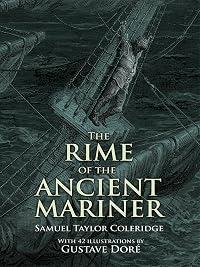
The Rime of the Ancient Mariner [poem]
by Samuel Taylor Coleridge
There is 1 current discussion about this work.
On This Page
Description
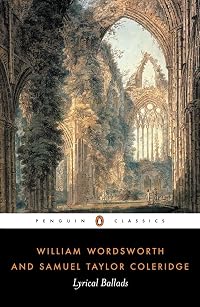
A mariner stops a man on his way to a wedding. The mariner then relates to the man all the events of a long sea voyage, arousing in his listener feeling of impatience, fear, fascination and bemusement.The Rime of the Ancient Mariner was published in the collection Lyrical Ballads (1798), which contributed significantly to the advent of modern poetry and the beginnings of British Romance literature.
.
Tags
Recommendations























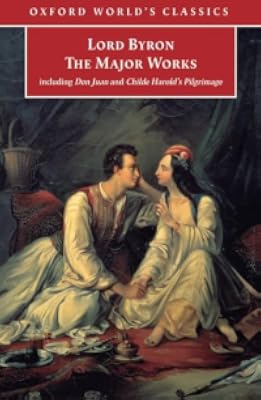

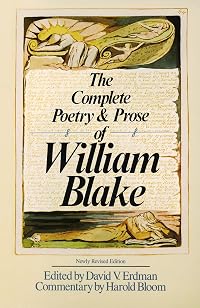

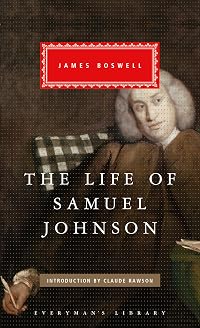
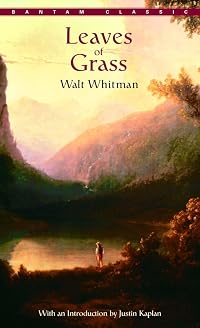


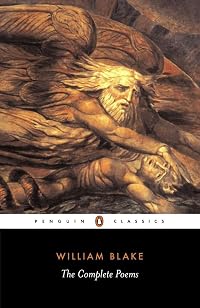


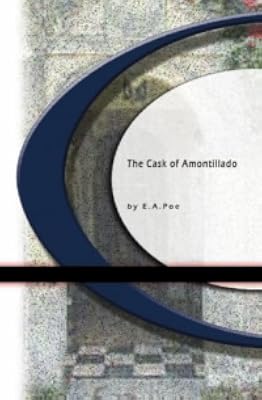


Member Recommendations
aulsmith For the story rather than the poetry.
Member Reviews
‘I closed my lids, and kept them close,
And the balls like pulses beat;
For the sky and the sea, and the sea and the sky
Lay dead like a load on my weary eye,
And the dead were at my feet.’
The Rime of the Ancient Mariner is, inarguably, one of the five or six most important poems ever recorded in the English language. And while Samuel Coleridge may have abhorred the Gothic excesses nourished to increasingly baroque heights during the years he was busy writing literary criticism, a younger Coleridge—perhaps, even, a more naïve and spiritually-aware Coleridge—managed to pen the only one of those five or six paramount poems to feature the supernatural as more than a passing reference: and certainly the only one to regard it with the show more mingled aura of terror, awe, and beauty that we have come to define as ‘Sublime.’ With this, Coleridge gave birth to Romantic literature (particularly the Romantic as we define it today: the Romantic as it breathes in the works of Mary Shelley, James Hogg, and—later—Poe, Hawthorne, and Melville).
The poem is so familiar, that I will avoid summarizing it in detail: suffice it to say that the story of the Ancient Mariner, who kills the albatross and is cursed to suffer at the hands of a Nature that is at turns mournful, spiteful, and furious, is one of the more archetypal scenarios in Romantic literature (and perhaps English literature, and popular culture, as a whole: the tale of the man who underestimates the forces that protect the natural world, and their contingent retribution, has been retold through lenses as diverse as comedy, horror, high fantasy, pulp adventure, and children’s television). Any underestimation of its impact, similar to Shakespeare, can be dispelled with examples of its gifts to popular culture and the popular lexicon: the notion of an ‘albatross hanging about one’s neck’ is a common enough allusion that it borders, nearly, on the cliché; meanwhile, lines like ‘Water, water, everywhere/Nor any drop to drink’ have become references so pervasive that many who have never even read the poem are aware of them. This parallels, say, the aggressive influence of a novel like Frankenstein on the popular imagination; unlike that novel, though, The Rime of the Ancient Mariner has not entered the zeitgeist through the vehicle of cinematic adaptation or references in a body of literature that bears little relation to it (although, coincidentally, Frankenstein makes numerous references to Coleridge’s poem, and is one of the earlier works of literature to truly embody the full scope of its impact—aside from operating as an extrapolation upon its central, supremely Romantic theme).
I have neatly avoided the relationship of Coleridge to Wordsworth, or The Rime of the Ancient Mariner’s inclusion in Lyrical Ballads: these details bear little relation to the concerns of this journal. I will, however, dwell for a moment on the initial details of the poem’s publication: as most are aware, the poem was originally presented without a gloss and utilizing the most arcane variety of spelling; this was corrected in a later publication (which has since become standard) largely because the format was not in keeping with Romantic ideals. That said, though, this return to an earlier, more esoteric device and the mysteries suggested by avoiding comment or explanation, are very much in keeping with the ethos of the Gothic, both as an extension of the Romantic imagination and a separate set of motifs. The Rime of the Ancient Mariner’s early concern with itself as a text, by utilizing a unique (and antique) format is both indebted to the early Gothic of Radcliffe, Beckford, and Walpole, and influential on the later Gothicism of the Shelleys, Maturin, and Poe. Reorganized, with gloss and modern spelling, the poem takes on a new, more obvious, concern with itself as a text, which in its own right has become influential on the ‘epic’ poetry of later authors.
Interspersed throughout this review (see the original post at therealmoftheunreal.blogspot.com) are several of Gustave Dore’s illustrations for The Rime of the Ancient Mariner: but this is only the tip of the iceberg: the weight of allusion to Coleridge’s masterpiece over the past two centuries has been so incredible that to list even a dozen of them here would take more space than is permissible; needless to say, the breadth of this fascination with The Rime of the Ancient Mariner is not relegated merely to fine art and literature: again and again, up to and including the present day, the poem resurfaces in allusions and analysis both obscure and immediate in forums as diverse as popular music, animated television, and even video games. Still, it must be said, the most impactful and haunting of these references and homages to Coleridge’s famous poetic conceit rest in those that have taken illustration as the nature of their devotions: Dore’s images, while possessing a value to art uniquely their own (and, in many ways, remaining the standard illustrations to Coleridge’s opus), are, as I said, merely the tip of the iceberg. And this, in my eyes, remains the measuring stick by which we judge the canonicity of a given work of literature: not merely how often it is read—nor by whom—nor the nature of its subject matter, nor its ability to stand as a document of its time and circumstances, but by the degree to which it propels Art, and hence Imagination, as a whole, towards higher and higher atmospheres: both by stimulating the creative faculties of other artists and by drawing forth these faculties in the minds of those who have not yet developed them.
The Rime of the Ancient Mariner is, indeed, one of the great works of English poetry; but it is also one of the great works of world literature in its entirety, standing confidently among works as diverse as The Arabian Nights, Hamlet, and the Bible as a major influence on the art of those who have yet to even experience it first-hand. And for this, Coleridge was a prophet—and a guide. show less
And the balls like pulses beat;
For the sky and the sea, and the sea and the sky
Lay dead like a load on my weary eye,
And the dead were at my feet.’
The Rime of the Ancient Mariner is, inarguably, one of the five or six most important poems ever recorded in the English language. And while Samuel Coleridge may have abhorred the Gothic excesses nourished to increasingly baroque heights during the years he was busy writing literary criticism, a younger Coleridge—perhaps, even, a more naïve and spiritually-aware Coleridge—managed to pen the only one of those five or six paramount poems to feature the supernatural as more than a passing reference: and certainly the only one to regard it with the show more mingled aura of terror, awe, and beauty that we have come to define as ‘Sublime.’ With this, Coleridge gave birth to Romantic literature (particularly the Romantic as we define it today: the Romantic as it breathes in the works of Mary Shelley, James Hogg, and—later—Poe, Hawthorne, and Melville).
The poem is so familiar, that I will avoid summarizing it in detail: suffice it to say that the story of the Ancient Mariner, who kills the albatross and is cursed to suffer at the hands of a Nature that is at turns mournful, spiteful, and furious, is one of the more archetypal scenarios in Romantic literature (and perhaps English literature, and popular culture, as a whole: the tale of the man who underestimates the forces that protect the natural world, and their contingent retribution, has been retold through lenses as diverse as comedy, horror, high fantasy, pulp adventure, and children’s television). Any underestimation of its impact, similar to Shakespeare, can be dispelled with examples of its gifts to popular culture and the popular lexicon: the notion of an ‘albatross hanging about one’s neck’ is a common enough allusion that it borders, nearly, on the cliché; meanwhile, lines like ‘Water, water, everywhere/Nor any drop to drink’ have become references so pervasive that many who have never even read the poem are aware of them. This parallels, say, the aggressive influence of a novel like Frankenstein on the popular imagination; unlike that novel, though, The Rime of the Ancient Mariner has not entered the zeitgeist through the vehicle of cinematic adaptation or references in a body of literature that bears little relation to it (although, coincidentally, Frankenstein makes numerous references to Coleridge’s poem, and is one of the earlier works of literature to truly embody the full scope of its impact—aside from operating as an extrapolation upon its central, supremely Romantic theme).
I have neatly avoided the relationship of Coleridge to Wordsworth, or The Rime of the Ancient Mariner’s inclusion in Lyrical Ballads: these details bear little relation to the concerns of this journal. I will, however, dwell for a moment on the initial details of the poem’s publication: as most are aware, the poem was originally presented without a gloss and utilizing the most arcane variety of spelling; this was corrected in a later publication (which has since become standard) largely because the format was not in keeping with Romantic ideals. That said, though, this return to an earlier, more esoteric device and the mysteries suggested by avoiding comment or explanation, are very much in keeping with the ethos of the Gothic, both as an extension of the Romantic imagination and a separate set of motifs. The Rime of the Ancient Mariner’s early concern with itself as a text, by utilizing a unique (and antique) format is both indebted to the early Gothic of Radcliffe, Beckford, and Walpole, and influential on the later Gothicism of the Shelleys, Maturin, and Poe. Reorganized, with gloss and modern spelling, the poem takes on a new, more obvious, concern with itself as a text, which in its own right has become influential on the ‘epic’ poetry of later authors.
Interspersed throughout this review (see the original post at therealmoftheunreal.blogspot.com) are several of Gustave Dore’s illustrations for The Rime of the Ancient Mariner: but this is only the tip of the iceberg: the weight of allusion to Coleridge’s masterpiece over the past two centuries has been so incredible that to list even a dozen of them here would take more space than is permissible; needless to say, the breadth of this fascination with The Rime of the Ancient Mariner is not relegated merely to fine art and literature: again and again, up to and including the present day, the poem resurfaces in allusions and analysis both obscure and immediate in forums as diverse as popular music, animated television, and even video games. Still, it must be said, the most impactful and haunting of these references and homages to Coleridge’s famous poetic conceit rest in those that have taken illustration as the nature of their devotions: Dore’s images, while possessing a value to art uniquely their own (and, in many ways, remaining the standard illustrations to Coleridge’s opus), are, as I said, merely the tip of the iceberg. And this, in my eyes, remains the measuring stick by which we judge the canonicity of a given work of literature: not merely how often it is read—nor by whom—nor the nature of its subject matter, nor its ability to stand as a document of its time and circumstances, but by the degree to which it propels Art, and hence Imagination, as a whole, towards higher and higher atmospheres: both by stimulating the creative faculties of other artists and by drawing forth these faculties in the minds of those who have not yet developed them.
The Rime of the Ancient Mariner is, indeed, one of the great works of English poetry; but it is also one of the great works of world literature in its entirety, standing confidently among works as diverse as The Arabian Nights, Hamlet, and the Bible as a major influence on the art of those who have yet to even experience it first-hand. And for this, Coleridge was a prophet—and a guide. show less
Already having an edition of The Rime of the Ancient Mariner illustrated by Gustave Doré, I bought this one for the illustrations by my favourite book illustrator, Mervyn Peake.
Where Doré beautifully catches the gothic mood of Coleridge's verse, Peake catches the macabre, tenebrous quality of the Mariner's feverish nightmare. In her introduction, Marina Warner tells of how Peake's commissioning editor found his illustration of the Night-mare Life-in-Death too horrifying for its intended 1940s British readership and her portrait was dropped from the first edition, though much reprinted since and included here.
Much as I love Peake's work, I wish for an edition printed on better quality paper to present them in the fashion they show more deserve.
As for the poem, what can I say that hasn't been said before and more eloquently? show less
Where Doré beautifully catches the gothic mood of Coleridge's verse, Peake catches the macabre, tenebrous quality of the Mariner's feverish nightmare. In her introduction, Marina Warner tells of how Peake's commissioning editor found his illustration of the Night-mare Life-in-Death too horrifying for its intended 1940s British readership and her portrait was dropped from the first edition, though much reprinted since and included here.
Much as I love Peake's work, I wish for an edition printed on better quality paper to present them in the fashion they show more deserve.
As for the poem, what can I say that hasn't been said before and more eloquently? show less
I mean, I guess it's "The Rime of the Ancient Mariner" by ST Coleridge, but more like it's "The Rime of the Ancient Mariner" by Doré, libretto by Coleridge. Either way it's great, and occasioned some great conversations between me and my son on thoughtlessness and doom.
Haunting and terrifying story. A poem, a story, a little of everything. Case in point. Don't take your life for granted. Some have it much worse than you. I feel that the author accomplished what many writers before him attempted to capture. He truly scares the crap out of you. Not for your sake but for the Mariners sake. STC truly brings out the chill in the fog and isolation of the world around us. I am an old sailor and I spent many nights out on deck during my off time thinking about this book and the character. It made my life experiences so much more realistic and enjoyable.
I really liked this. A foundational work of the English Romantic tradition, this is full of great language about sin, penance and the ghost ships and the supernatural.
Beautiful. I'm not a great understander of poetry. But there is some that is nearly overwhelming. "The Rime of the Ancient Mariner" is in that category. Although it was first published in 1798, its message (the "moral of the story" so to speak) is as relevant today as it was 217 years ago.
Basically a horror story--the awful power unleashed when a thoughtless man makes a single mistake against the spirit world. The images are as scary as any modern movie. Even more relevant now as a tale of despoiling the earth. Timeless!
Members
- Recently Added By
Lists

Folio Society
831 works; 51 members

Books I read in high school
52 works; 1 member
Put a Bird On It
75 works; 12 members

In Our Time books
4,934 works; 2 members

Books talked about in Pamela Dean's Tam Lin
74 works; 1 member

Books Read in 2025
4,091 works; 97 members

Recommended Reading : 600 Classics Reviewed, Editors of Salem Press, 2015
634 works; 6 members

Book Titles Mentioned In Newberry Medal And Honor Books
884 works; 3 members

Internationale Romantik
15 works; 1 member

Recommended Literary Books
111 works; 1 member

Greatest Books, allegedly
484 works; 9 members

water on the brain: maritime fiction
74 works; 18 members

How to Read a Book's Recommended Reading List
309 works; 10 members

Books Read in 2016
110 works; 1 member

A Reading List
100 works; 3 members
My Favourite Books
86 works; 5 members

Books Read in 2014
2,343 works; 89 members

18th Century
42 works; 12 members

Literary Works Read in College
316 works; 15 members

Merrill's English Texts
59 works; 3 members

Lovecraft's 'Supernatural Horror in Literature' Reading List
216 works; 8 members

The Top Ten: Writers Pick Their Favorite Books
240 works; 31 members

100 Books to Read in a Lifetime (That Are Older Than 200 Years)
415 works; 175 members

Mariners
1 work; 1 member

GreatBooks Worldview Academy Lists
133 works; 4 members

Books I've Read More Than Once
602 works; 49 members

Books Read in 2018
4,360 works; 110 members
Blue Pyramid 1,276 Best Books of All Time
1,248 works; 32 members

Literature which inspired Pop songs
85 works; 9 members

Books Read in 2016
4,666 works; 197 members
Favourite Books
1,819 works; 316 members

Books Read in 2017
4,249 works; 129 members
Favourite Poems
34 works; 1 member

Books Read in 2026
1,920 works; 66 members
Talk Discussions
Current Discussions
Folio Archives 372: The Rime of the Ancient Mariner by Samuel Taylor Coleridge – LIMITED EDITION 2010 in Folio Society Devotees (October 2025)
Past Discussions
Folio Archives 373: The Rime of the Ancient Mariner by Samuel Taylor Coleridge - 1994 in Folio Society Devotees (May 2024)
Author Information

Born in Ottery St. Mary, England, in 1772, Samuel Taylor Coleridge studied revolutionary ideas at Cambridge before leaving to enlist in the Dragoons. After his plans to start a communist society in the United States with his friend Robert Southey, later named poet laureate of England, were botched, Coleridge instead turned his attention to show more teaching and journalism in Bristol. Coleridge married Southey's sister-in-law Sara Fricker, and they moved to Nether Stowey, where they became close friends with William and Dorothy Wordsworth. From this friendship a new poetry emerged, one that focused on Neoclassic artificiality. In later years, their relationship became strained, partly due to Coleridge's moral collapse brought on by opium use, but more importantly because of his rejection of Wordworth's animistic views of nature. In 1809, Coleridge began a weekly paper, The Friend, and settled in London, writing and lecturing. In 1816, he published Kubla Kahn. Coleridge reported that he composed this brief fragment, considered by many to be one of the best poems ever written lyrically and metrically, while under the influence of opium, and that he mentally lost the remainder of the poem when he roused himself to answer an ill-timed knock at his door. Coleridge's The Rime of the Ancient Mariner, Christabel, and his sonnet Ozymandias are all respected as inventive and widely influential Romantic pieces. Coleridge's prose works, especially Biographia Literaria, were also broadly read in his day. Coleridge died in 1834. (Bowker Author Biography) show less
Some Editions
Awards and Honors
Awards
Series
Belongs to Publisher Series
Work Relationships
Is contained in
The Longman Anthology of British Literature, Volume 2A: The Romantics and Their Contemporaries (2nd Edition) by David Damrosch
2 Volumes: Prose and Poetry for Appreciation, Prose and Poetry for Enjoyment (The St. Thomas More Series) by Julian L. Maline (indirect)
The Ancient Mariner; Kubla Khan; Christabel (Coleridge); Sohrab and Rustum, and Other Poems (Arnold) by Samuel Taylor Coleridge
Has the adaptation
Inspired
Has as a commentary on the text
Common Knowledge
- Canonical title
- The Rime of the Ancient Mariner [poem]
- Original title
- The Rime of the Ancyent Marinere
- Alternate titles*
- Le Dit du vieux marin
- Original publication date
- 1798
- People/Characters
- Ancient Mariner; Wedding-Guest; Death; Life-in-Death
- Important places
- Antarctica; Equator; Pacific Ocean
- First words
- It is an ancient Mariner,
And he stoppeth one of three. - Last words
- (Click to show. Warning: May contain spoilers.)He went like one that hath been stunned,
And is of sense forlorn:
A sadder and a wiser man,
He rose the morrow morn. - Original language
- English
- Canonical DDC/MDS
- 821.72
- Disambiguation notice
- This work is for the standalone poem, The Rime of the Ancient Mariner. Please do not combine with poetry collections and anthologies, and please do not combine with abridged editions, such as Phoenix 60p., etc.
*Some information comes from Common Knowledge in other languages. Click "Edit" for more information.
Classifications
Statistics
- Members
- 2,755
- Popularity
- 6,675
- Reviews
- 42
- Rating
- (4.08)
- Languages
- 12 — Arabic, Catalan, Dutch, English, French, German, Italian, Spanish, Swedish, Turkish, Portuguese (Portugal), Portuguese (Brazil)
- Media
- Paper, Audiobook, Ebook
- ISBNs
- 144
- UPCs
- 5
- ASINs
- 105