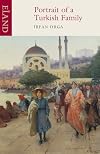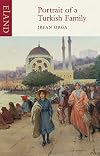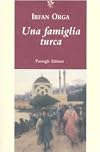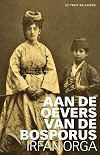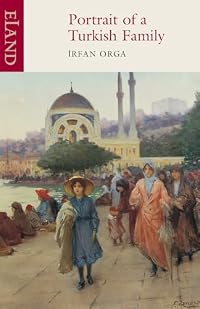
Portrait of a Turkish Family
by Irfan Orga
On This Page
Description
Irfan Orga was born into a prosperous family in the twilight of the Ottoman Empire. His mother was a beauty, married at thirteen, who lived in the seclusion of a harem, as befitted a Turkish woman of her class. His grandmother was an eccentric autocrat, determined at all costs to maintain her traditional habits. But the First World War changed everything. Death and financial disaster reigned, the Sultan was overthrown and Turkey became a republic. The family was forced to adapt to an show more unimaginably impoverished life. In 1941 Irfan Orga arrived in London, and seven years later he wrote this extraordinary story of his family's survival. show lessTags
Recommendations








Member Reviews
A tremendously beautiful and sad memoir; the author recalls his privileged Istanbul upbringing in the early 20th century. Servants, luxury, loving parents, holidays on a family estate, and visits to the Turkish Baths...all set amid beside the glittering Bosphorous.
Suddenly this was all ripped away with the onslaught of WW1....the men sent off to die, the women selling off their treasures and moving into lowly accommodation. As the family begin to starve, and his cosseted mother has to find factory work, the children are sent off to a charity school...
And things can never really be repaired thereafter....the boys forever feeling cast off; the mother suffering mental health problems from her privations. While the author made it through show more military school and flew for the Turkish Air Force, his later like in UK was beset by difficulties
Lovely writing. show less
Suddenly this was all ripped away with the onslaught of WW1....the men sent off to die, the women selling off their treasures and moving into lowly accommodation. As the family begin to starve, and his cosseted mother has to find factory work, the children are sent off to a charity school...
And things can never really be repaired thereafter....the boys forever feeling cast off; the mother suffering mental health problems from her privations. While the author made it through show more military school and flew for the Turkish Air Force, his later like in UK was beset by difficulties
Lovely writing. show less
http://shawjonathan.wordpress.com/2012/07/25/irfan-orgas-portrait-of-his-turkish...
This was my letting-go-of-Turkey read. The Galeri Kayseri English Bookshop within shouting distance of the Blue Mosque and Aya Sofya had evidently decided it was ideal for tourists wanting to read an Istanbul story, as there were big piles of it near the counter. They were right.
It's a memoir. Irfan Orga was born in 1908 into a wealthy family in Istanbul, then the capital of the Ottoman Empire. His mother, a great beauty who had married at 13, hardly ever went out into the world, and when she did she went veiled and chaperoned. His grandmother was the dominant personality of the household, and of the whole neighbourhood – an early chapter gives a richly show more comic account of five year old Irfan accompanying her on a trip to the Turkish baths. The family lived a blissfully entitled life within sight and sound of the Sea of Marmora (as he spells it) until the First World War, when Irfan's father, previously a successful businessman, was conscripted and killed. That, plus a fire that destroyed the family house and all their savings, completely overturned the family's fortunes, and what follows is a chronicle of terrible poverty and struggle. Nobody and no relationship emerges from the years of struggle unscathed, and the final scenes between Irfan and his mother
Meanwhile, Turkey itself was going through major upheaval: poverty was widespread, the Ottoman empire was defeated and in disarray, and by 1923 Kemal Atatürk had led the revolutionary forces to establish the Turkish Republic. The fez was banned and the introduced hat, seen by many as offensively Christian, led to violence in the streets. When Irfan's mother went out alone and unveiled, boys threw stones at her in the street. One day, in Ottoman Turkey, school students were beaten for arriving late at prayers; a few days later, in the secular Turkish Republic, the few who remained devout were likely to be beaten because prayers made them late for class.
The story of this family is heartbreaking, and though there is much hilarity and some high melodrama, the general trend is towards devastation and disintegration. Not that there's any nostalgia for the days of the Ottomans, but the human cost of the radical changes – political, cultural and economic – that happened in Turkey between 1914 and 1940 is made painfully real. An afterword by the author's son, Artes Orga, in 1988 makes it clear that the pain continued for the rest of his life. (He formed a liaison with a non-Turkish woman, whom he eventually married, and as this was somehow illegal he lived in exile, raising his son in a kind of cocoon of Turkishness in London. This book was a big hit, but he never really prospered or found contentment.) show less
This was my letting-go-of-Turkey read. The Galeri Kayseri English Bookshop within shouting distance of the Blue Mosque and Aya Sofya had evidently decided it was ideal for tourists wanting to read an Istanbul story, as there were big piles of it near the counter. They were right.
It's a memoir. Irfan Orga was born in 1908 into a wealthy family in Istanbul, then the capital of the Ottoman Empire. His mother, a great beauty who had married at 13, hardly ever went out into the world, and when she did she went veiled and chaperoned. His grandmother was the dominant personality of the household, and of the whole neighbourhood – an early chapter gives a richly show more comic account of five year old Irfan accompanying her on a trip to the Turkish baths. The family lived a blissfully entitled life within sight and sound of the Sea of Marmora (as he spells it) until the First World War, when Irfan's father, previously a successful businessman, was conscripted and killed. That, plus a fire that destroyed the family house and all their savings, completely overturned the family's fortunes, and what follows is a chronicle of terrible poverty and struggle. Nobody and no relationship emerges from the years of struggle unscathed, and the final scenes between Irfan and his mother
Meanwhile, Turkey itself was going through major upheaval: poverty was widespread, the Ottoman empire was defeated and in disarray, and by 1923 Kemal Atatürk had led the revolutionary forces to establish the Turkish Republic. The fez was banned and the introduced hat, seen by many as offensively Christian, led to violence in the streets. When Irfan's mother went out alone and unveiled, boys threw stones at her in the street. One day, in Ottoman Turkey, school students were beaten for arriving late at prayers; a few days later, in the secular Turkish Republic, the few who remained devout were likely to be beaten because prayers made them late for class.
The story of this family is heartbreaking, and though there is much hilarity and some high melodrama, the general trend is towards devastation and disintegration. Not that there's any nostalgia for the days of the Ottomans, but the human cost of the radical changes – political, cultural and economic – that happened in Turkey between 1914 and 1940 is made painfully real. An afterword by the author's son, Artes Orga, in 1988 makes it clear that the pain continued for the rest of his life. (He formed a liaison with a non-Turkish woman, whom he eventually married, and as this was somehow illegal he lived in exile, raising his son in a kind of cocoon of Turkishness in London. This book was a big hit, but he never really prospered or found contentment.) show less
I don't tend to go in for autobiographies; they tend to have stupid, long titles with subtitles and joke names and so forth, and they're often ghost written and useless. The Dennis Wise autobiography is a good example - a couple of pages read over someone's shoulder and that was more than enough for me.
It wasn't always that way though. In the past, autobiographies tended to be more literary affairs, and there is no better example than this 'Portrait of a Turkish Family.' It chronicles the early life and career of its author, and then is continued further by his son in an epilogue. This is very good writing (and, it turns out, was 'guided' in its English form by Orga's wife), and a fascinating exploration of Turkish life and culture in show more the years around Ataturk's coup. show less
It wasn't always that way though. In the past, autobiographies tended to be more literary affairs, and there is no better example than this 'Portrait of a Turkish Family.' It chronicles the early life and career of its author, and then is continued further by his son in an epilogue. This is very good writing (and, it turns out, was 'guided' in its English form by Orga's wife), and a fascinating exploration of Turkish life and culture in show more the years around Ataturk's coup. show less
I found the portrait of this “modern” Turkish family reminiscent of the family portrayed in Naguib Mahfouz’s Cairo Trilogy in that many of my preconceptions were totally inaccurate. The characters were vivid and heartbreaking. I appreciated the foreshadowing descriptions of what was coming, such as there will come a time I will eat grass because I am so hungry (paraphrased) as these helped me prepare for the awfulness that was to come. As tragedy built upon tragedy the sheer survival of the main character (the author fictionalized) became a startling miracle. The roots of modern-day Turkey are evident through the events narrated here.
Irfan Orga, born in 1908, starts his life at the end of the Ottoman empire and has to deal with a family thorn by de first world war. This has been a story of millions of people, thrown in to the turbulence of time we call de twentieth century.
Orga is a writer, a sensualist. You can taste the food, smell the streets and see the light shining into the windows (his mother made sure there windows where open). This is al very enjoyable when he describes about his happy memories, but it becomes difficult when the war starts. How hard it must have been to live as women and child. Where a government has orders all young man away with no backup or information. How hard for you as a reader to feel this.
This pain, the pain of survivors, hurts. It show more was difficult to read how the mother, the grandmother, Orga and his brother and sister all have the best intentions. All are trying so hard, and at the end, long after the war it is not enough to keep them together.
In this edition there was extra chapter written by Orga's son that summarizes Irfan’ life after the second world war in England... the initial pain caused by the stupid actions of nations, aristocrats, journalist and kings continues. As a Turkish soldier it was forbidden to date foreign women. During WWII Irfan felt in love with a English women. This relation continued and Irfan had to flee Turkey. In England he had an unhappy marriage in a country that was not his own.
This is al very pessimistic. Again, good intentions are not always enough to live a good life. Still, I would advice you to read this book. It brings you a perspective of life different from our own and at the same time it is a wonderful document that wars between empires and nations are experienced inside the four walls of a home. show less
Orga is a writer, a sensualist. You can taste the food, smell the streets and see the light shining into the windows (his mother made sure there windows where open). This is al very enjoyable when he describes about his happy memories, but it becomes difficult when the war starts. How hard it must have been to live as women and child. Where a government has orders all young man away with no backup or information. How hard for you as a reader to feel this.
This pain, the pain of survivors, hurts. It show more was difficult to read how the mother, the grandmother, Orga and his brother and sister all have the best intentions. All are trying so hard, and at the end, long after the war it is not enough to keep them together.
In this edition there was extra chapter written by Orga's son that summarizes Irfan’ life after the second world war in England... the initial pain caused by the stupid actions of nations, aristocrats, journalist and kings continues. As a Turkish soldier it was forbidden to date foreign women. During WWII Irfan felt in love with a English women. This relation continued and Irfan had to flee Turkey. In England he had an unhappy marriage in a country that was not his own.
This is al very pessimistic. Again, good intentions are not always enough to live a good life. Still, I would advice you to read this book. It brings you a perspective of life different from our own and at the same time it is a wonderful document that wars between empires and nations are experienced inside the four walls of a home. show less
A very gripping novel about the tragic family history of a young boy, later a young man, in Istanbul and other places of Turkey. All classic themes come by, father - son, mother - son, brothers, grandparents, all grief big and small. And then the first World War starts and all changes. And again a can of themes is opened: wealth, poverty, togetherness, religion, anxiety, ....
Near the end the story gets lengthy when the author tells about his own affairs in the military, while for me the depictions of the family, and especially the authors mother, are the best parts. The authors mother is a young beautiful wife at the start of the story and she gets confronted with the worst scenario in war. The relentless search for a new attitude, one show more would even say a new identity, after this tragic event is without doubt very courageous.
Masculin viewpoints by the author, with his cultural background, do prevent him from being completely aware, so it seems, of this journey his mother has to go. Only in the end comes pure sympathy but then it's too late.
Could have been written a bit more dense, a bit less selfcomplaining, and then it would have had more than the current 3,5 stars. Still very well worth your time. show less
Near the end the story gets lengthy when the author tells about his own affairs in the military, while for me the depictions of the family, and especially the authors mother, are the best parts. The authors mother is a young beautiful wife at the start of the story and she gets confronted with the worst scenario in war. The relentless search for a new attitude, one show more would even say a new identity, after this tragic event is without doubt very courageous.
Masculin viewpoints by the author, with his cultural background, do prevent him from being completely aware, so it seems, of this journey his mother has to go. Only in the end comes pure sympathy but then it's too late.
Could have been written a bit more dense, a bit less selfcomplaining, and then it would have had more than the current 3,5 stars. Still very well worth your time. show less
Het is een autobiografie in de vorm van een ontwikkelingsroman. En ja, het geeft een beeld van het Turkije van begin twintigste eeuw waarin de religieuze orthodoxie en de familie bepalen wat mag en niet kan. Met nadruk natuurlijk op het laatste. In het verhaal worden de aanloop en gevolgen van de eerste wereldoorlog op een aannemelijk wijze beschreven. Maar dat is het dan wel. De schrijver doet zijn best om de in het boek voorkomende familieleden een plaats te geven, maar laat de karakters uiteindelijk toch wat bungelen.
Zijn moeder bij voorbeeld, die in alle ellende toch overeind blijft, blijkt een vastberaden en moderne vrouw te zijn en verdient daardoor eigenlijk het middelpunt van de roman te zijn.
Misschien zou je het zo kunnen show more formuleren: de schrijver besloot zijn biografie te publiceren maar had beter die van zijn moeder kunnen schrijven. Nu verwatert het verhaal om gaandeweg oninteressant te worden. show less
Zijn moeder bij voorbeeld, die in alle ellende toch overeind blijft, blijkt een vastberaden en moderne vrouw te zijn en verdient daardoor eigenlijk het middelpunt van de roman te zijn.
Misschien zou je het zo kunnen show more formuleren: de schrijver besloot zijn biografie te publiceren maar had beter die van zijn moeder kunnen schrijven. Nu verwatert het verhaal om gaandeweg oninteressant te worden. show less
Nov 4, 2014 (Edited)Dutch
Members
- Recently Added By
Author Information

9+ Works 501 Members
Some Editions
Awards and Honors
Notable Lists
Series
Belongs to Publisher Series
De twintigste eeuw (25)
Common Knowledge
- Original title
- Portrait of a Turkish Family
- Original publication date
- 1950
- Important places
- Istanbul, Turkey
- Dedication
- To Margarete, my wife, with love
- First words
- Sono nato a Istanbul il 31 ottobre 1908, primogenito della mia famiglia.
I was born in Istanbul, on the 31st of October 1908. - Last words
- (Click to show. Warning: May contain spoilers.)Poi la lasciammo sola, un po' fuori da quella Istanbul che aveva tanto amato.
(Click to show. Warning: May contain spoilers.)Then we left her alone, a little outside the Istanbul she had loved.
Classifications
- Genres
- Biography & Memoir, Nonfiction
- DDC/MDS
- 956.1 — History & geography History of Asia Middle East Asia: Turkey, Iraq, Syria, Lebanon, Israel, Jordan Turkey (Anatolia)
- LCC
- DR432 .O7 — History of Europe, Asia, Africa and Oceania Balkan Peninsula History of Balkan Peninsula Turkey Antiquities. Social life and customs. Ethnography
- BISAC
Statistics
- Members
- 379
- Popularity
- 82,282
- Reviews
- 11
- Rating
- (3.68)
- Languages
- 7 — Dutch, English, French, Italian, Norwegian (Bokmål), Norwegian, Turkish
- Media
- Paper, Ebook
- ISBNs
- 14
- ASINs
- 5