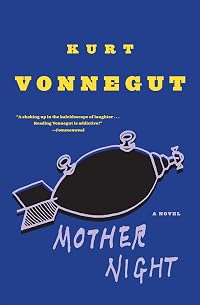
Mother Night
by Kurt Vonnegut
On This Page
Description
An American playwright living in pre-World War II Berlin becomes an allied spy within the Nazi Party. After the war, when he goes back to America, he is confronted by both Nazi haters and sympathizers.Tags
Recommendations
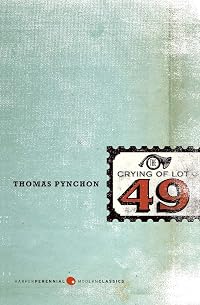
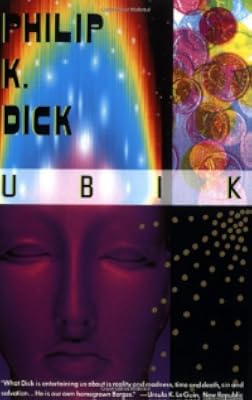
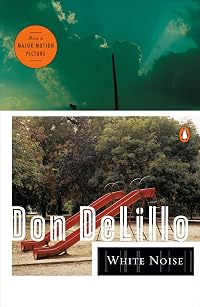
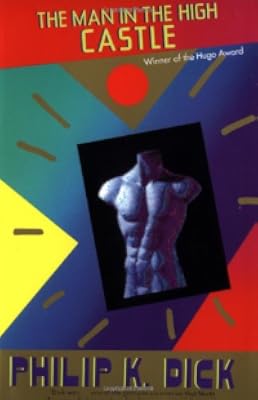





Member Recommendations
by weener
Member Reviews
One of Vonnegut's masterpieces as Howard W. Campbell, Nazi collaborator (or not), recounts the events that led up to his pending trial for war crimes. This has one of Vonnegut's greatest lines, "We are who we pretend to be, so we must be very careful who we pretend to be." Along with Slaughterhouse Five, this is probably Vonnegut's most serious work--not to say that it isn't also quite funny.
A propagandist (who was actually a spy, who was actually disinterested in everthing except his wife) recounts his war and post-war experiences before being tried as a war criminal. It's Vonnegut's writing that seems to be entirely effortless, yet brilliant, that blows me away. Short chapters and simple words are infused with incredible meaning. Here combined with a subject he understands very well (WWII) it's powerful stuff. Every character seems to be real *and* surreal. Also tiring to read, because of the subject, and I was glad to be done, but I don't wish I hadn't read it. "We are what we pretend to be, so we must be careful about what we pretend to be." Certainly.
Mother Night is written as the confessions of one Howard W. Campbell, Jr., a man held in prison in Israel in 1961 and soon to be on trial for having been a propagandist for the Nazis during WWII. He recounts his life before the war, when he was a playwright, during the war, when he hobnobbed with Nazi party officials and authored their vile messages, and after the war, when he escaped to America and lived in New York City for 15 years before being discovered. It may sound like a simple story and a subject that has been covered countless times, but Vonnegut both infuses this story with humanity as well as makes such dark observations about mankind at large that it’s a brilliant read.
One of the strengths of the novel comes from its show more honest portrayal of the layers of evil, from the Nazis who architected the Final Solution, to those in Germany who went along with the program and were complicit, to white supremacists in America and other countries before and after the war, to the Americans who unnecessarily fire bombed Dresden when the Germans were defeated, and to those who learned nothing from the war and doom humanity to a cycle of repetition.
Written in 1966, 21 years after Vonnegut had survived the Dresden bombing by hiding under a slaughterhouse, he admits in the introduction that if had been a German he probably would have ended up a Nazi. He doesn’t pretend that it’s some “other” country or group of people in the world that are the sole source of racism or violence. At the same time, through Howard W. Campbell, Jr., the people he condemns most are those who live in a state of cognitive dissonance by doing evil and yet thinking of themselves as good. The character writes, “Those whose orders I carried out in Germany were as ignorant and insane as Dr. Jones [an American white supremacist]. I knew it. God help me, I carried out their instructions anyway.”
One of the wrinkles is that Campbell was actually being used by the Americans to send spy messages, without having any idea as to what they are. A part of me resisted this component of the character, as I wanted him to be simply a stand-in for people in a country who “go along” with things they know are wrong. It does add a further shade of gray, however, and made me think that so many people just end up being puppets to those who would use them, when they would have just as happily led a simple life with the one they love. It never apologizes for him, but at the same time, through hate groups he encounters in America, Vonnegut points out the homegrown brand of fascist elements in America, which was certainly prescient.
The only off note in the book to me was the attitude of Dr. Epstein towards the Holocaust, after having “spent his childhood” in Auschwitz. It was just inconceivable to me that these words would come out of his mouth: “They [the Nazis and the war] belong to a period of insanity that should be forgotten as quickly as possible.”
Overall though, a great book, and I considered a higher rating.
Quotes:
From the introduction:
“We are what we pretend to be, so we must be careful about what we pretend to be.”
On America, this one certainly brought to mind 1/6/21:
“The Iron Guardsmen of the White Sons of the American Constitution [a hate group looking remarkably similar to the Proud Boys and their ilk] are going to get an impressive lecture on the illegality in this country of private armies, murder, mayhem, riots, treason, and the violent overthrow of the government.”
On authoritarians, bringing to mind Trump, Putin, et al:
“I have never seen a more sublime demonstration of the totalitarian mind, a mind which might be likened unto a system of gears where teeth have been filed off at random. Such snaggle-toothed thought machine, driven by a standard or even by a substandard libido, whirls with the jerky, noisy, gaudy pointlessness of a cuckoo clock in Hell. … The missing teeth, of course, are simple, obvious truths, truths available and comprehensible even to ten-year-olds, in most cases.”
On evil:
“’There are plenty of good reasons for fighting,’ I said, ‘but no good reason ever to hate without reservation, to imagine that God Almighty Himself hates with you, too. Where’s evil? It’s that large part of every man that wants to hate without limit, that wants to hate with God on his side. It’s that part of every man that finds all kinds of ugliness so attractive. It’s that part of an imbecile,’ I said, ‘that punishes and vilifies and makes war gladly.’”
On nations and war:
“Those imaginary lines [national boundaries] are as unreal to me as elves and pixies. I can’t believe that they mark the end or the beginning of anything of real concern to a human soul. Virtues and vices, pleasures and pains cross boundaries at will.”
“You’ve changed so,” she said.
“People should be changed by world wars,” I said, “else what are world wars for?”
On people:
“All people are insane,” he said. They will do anything at any time, and God help anybody who looks for reasons.”
And this one:
“I doubt if there has ever been a society that has been without strong and young people eager to experiment with homicide, provided no very awful penalties are attached to it.” show less
One of the strengths of the novel comes from its show more honest portrayal of the layers of evil, from the Nazis who architected the Final Solution, to those in Germany who went along with the program and were complicit, to white supremacists in America and other countries before and after the war, to the Americans who unnecessarily fire bombed Dresden when the Germans were defeated, and to those who learned nothing from the war and doom humanity to a cycle of repetition.
Written in 1966, 21 years after Vonnegut had survived the Dresden bombing by hiding under a slaughterhouse, he admits in the introduction that if had been a German he probably would have ended up a Nazi. He doesn’t pretend that it’s some “other” country or group of people in the world that are the sole source of racism or violence. At the same time, through Howard W. Campbell, Jr., the people he condemns most are those who live in a state of cognitive dissonance by doing evil and yet thinking of themselves as good. The character writes, “Those whose orders I carried out in Germany were as ignorant and insane as Dr. Jones [an American white supremacist]. I knew it. God help me, I carried out their instructions anyway.”
One of the wrinkles is that Campbell was actually being used by the Americans to send spy messages, without having any idea as to what they are. A part of me resisted this component of the character, as I wanted him to be simply a stand-in for people in a country who “go along” with things they know are wrong. It does add a further shade of gray, however, and made me think that so many people just end up being puppets to those who would use them, when they would have just as happily led a simple life with the one they love. It never apologizes for him, but at the same time, through hate groups he encounters in America, Vonnegut points out the homegrown brand of fascist elements in America, which was certainly prescient.
The only off note in the book to me was the attitude of Dr. Epstein towards the Holocaust, after having “spent his childhood” in Auschwitz. It was just inconceivable to me that these words would come out of his mouth: “They [the Nazis and the war] belong to a period of insanity that should be forgotten as quickly as possible.”
Overall though, a great book, and I considered a higher rating.
Quotes:
From the introduction:
“We are what we pretend to be, so we must be careful about what we pretend to be.”
On America, this one certainly brought to mind 1/6/21:
“The Iron Guardsmen of the White Sons of the American Constitution [a hate group looking remarkably similar to the Proud Boys and their ilk] are going to get an impressive lecture on the illegality in this country of private armies, murder, mayhem, riots, treason, and the violent overthrow of the government.”
On authoritarians, bringing to mind Trump, Putin, et al:
“I have never seen a more sublime demonstration of the totalitarian mind, a mind which might be likened unto a system of gears where teeth have been filed off at random. Such snaggle-toothed thought machine, driven by a standard or even by a substandard libido, whirls with the jerky, noisy, gaudy pointlessness of a cuckoo clock in Hell. … The missing teeth, of course, are simple, obvious truths, truths available and comprehensible even to ten-year-olds, in most cases.”
On evil:
“’There are plenty of good reasons for fighting,’ I said, ‘but no good reason ever to hate without reservation, to imagine that God Almighty Himself hates with you, too. Where’s evil? It’s that large part of every man that wants to hate without limit, that wants to hate with God on his side. It’s that part of every man that finds all kinds of ugliness so attractive. It’s that part of an imbecile,’ I said, ‘that punishes and vilifies and makes war gladly.’”
On nations and war:
“Those imaginary lines [national boundaries] are as unreal to me as elves and pixies. I can’t believe that they mark the end or the beginning of anything of real concern to a human soul. Virtues and vices, pleasures and pains cross boundaries at will.”
“You’ve changed so,” she said.
“People should be changed by world wars,” I said, “else what are world wars for?”
On people:
“All people are insane,” he said. They will do anything at any time, and God help anybody who looks for reasons.”
And this one:
“I doubt if there has ever been a society that has been without strong and young people eager to experiment with homicide, provided no very awful penalties are attached to it.” show less
"We are what we pretend to be, so we must be careful about what we pretend to be."
When we first meet Howard W. Campbell, Jr it is 1961 and he is sat in an Israeli jail awaiting trial for war crimes. The book is written in the form of his confession. Campbell is an American who in the years between the two World Wars moved and lived in Germany where he achieved some success as a playwright, writing plays that will feature his actress wife, Helga.
Throughout the war Campbell working for the Nazi party as a radio propagandist making daily inflammatory racist broadcasts. But unknown to the Nazis and the wider world, he had also been recruited to serve as an American spy, hesitations and speech mannerisms within his broadcasts contained show more coded information for the Allies.
He is highly successful. The Nazis never suspect him as being anything other than totally loyal, so much so that towards the end of the war, his father-in-law, the Berlin chief of police, informs him: "I realized that almost all the ideas that I hold now, that make me unashamed of anything I may have felt or done as a Nazi, come not from Hitler, not from Goebbels, not from Himmler -- but from you." Similarly whilst the Americans save him from hanging at the end of the war and allow him to relocate in New York, they can never admit that such a vilified figure actually worked for them.
Campbell describes the next fifteen years, alone in a New York loft apartment, as a purgatory worse than hell. He makes no real effort to hide his identity, even using his real name, which eventually leads to his address becoming known both to Israeli agents who want to take him back to their country and try him and to a neo-fascist group who want to venerate him as a hero.
Rather than the war years the real focus of this book are the events leading up to Campbell's 'capture'. Vonnegut's aim appears to be to portray the battle of personal identity, the difference between how we see ourselves and how the outside world sees us. However, employing his customary over the top and at times hilarious satire, he also attacks American racial and religious extremists, many of whom unfortunately still seem to present today. Vonnegut doesn't try to condone the Nazis or their actions, insteads he condemns extremism in ALL it's many forms.
"There are plenty of good reasons for fighting, but no good reason ever to hate without reservation, to imagine that God Almighty Himself hates with you, too. Where's evil? It's that large part of every man that wants to hate without limit, that wants to hate with God on his side." show less
When we first meet Howard W. Campbell, Jr it is 1961 and he is sat in an Israeli jail awaiting trial for war crimes. The book is written in the form of his confession. Campbell is an American who in the years between the two World Wars moved and lived in Germany where he achieved some success as a playwright, writing plays that will feature his actress wife, Helga.
Throughout the war Campbell working for the Nazi party as a radio propagandist making daily inflammatory racist broadcasts. But unknown to the Nazis and the wider world, he had also been recruited to serve as an American spy, hesitations and speech mannerisms within his broadcasts contained show more coded information for the Allies.
He is highly successful. The Nazis never suspect him as being anything other than totally loyal, so much so that towards the end of the war, his father-in-law, the Berlin chief of police, informs him: "I realized that almost all the ideas that I hold now, that make me unashamed of anything I may have felt or done as a Nazi, come not from Hitler, not from Goebbels, not from Himmler -- but from you." Similarly whilst the Americans save him from hanging at the end of the war and allow him to relocate in New York, they can never admit that such a vilified figure actually worked for them.
Campbell describes the next fifteen years, alone in a New York loft apartment, as a purgatory worse than hell. He makes no real effort to hide his identity, even using his real name, which eventually leads to his address becoming known both to Israeli agents who want to take him back to their country and try him and to a neo-fascist group who want to venerate him as a hero.
Rather than the war years the real focus of this book are the events leading up to Campbell's 'capture'. Vonnegut's aim appears to be to portray the battle of personal identity, the difference between how we see ourselves and how the outside world sees us. However, employing his customary over the top and at times hilarious satire, he also attacks American racial and religious extremists, many of whom unfortunately still seem to present today. Vonnegut doesn't try to condone the Nazis or their actions, insteads he condemns extremism in ALL it's many forms.
"There are plenty of good reasons for fighting, but no good reason ever to hate without reservation, to imagine that God Almighty Himself hates with you, too. Where's evil? It's that large part of every man that wants to hate without limit, that wants to hate with God on his side." show less
We are what we pretend to be, so we must be careful about what we pretend to be.
Howard W. Campbell Jr., the narrator of Vonnegut’s brilliant 1966 novel, pretends to be a Nazi — or as he puts it at the outset of his so-called confessions, “I am an American by birth, a Nazi by reputation, and a nationless person by inclination.” In Campbell’s version of his life story, he became a writer and broadcaster of Nazi propaganda out of expediency — his father-in-law was the chief of police in Berlin; Campbell and his German wife wanted to remain in Germany even after the war began in 1939; joining the Nazi cause was the easiest way to do that. His broadcasts were notoriously vile, filled with hatred and venom toward Jewish people and show more anyone else who did not conform to the Aryan ideal.
And that for me was the most upsetting thing about this story — that someone could spew such hatred, knowing it would have the most terrible consequences for its targets, without actually feeling strongly one way or the other about the truth of what he said and wrote. The hateful propaganda was a writing exercise, a way for Campbell to keep his creative juices flowing for when the war would end and he could resume his playwriting career. To freely disperse such hate without believing in it — is that not more horrific than the mad ravings of the true believer?
I’ve seen a number of references to this book recently as a sort of foretelling of the current political situation in the United States. As I began reading I expected to find that Campbell represented the people who stormed the US Capitol and tried to overthrow the government, but after reading it I’ve changed my mind. Campbell is the spitting image of every politician, from the very top down to state and local levels, who cynically perpetuated lies and conspiracy theories that they knew to be false, in order to rile up that mob and incite the insurrection. In the end, which is worse?
That's the question that's going to keep me up nights.
I had hoped, as a (propaganda) broadcaster, to be merely ludicrous, but this is a hard world to be ludicrous in, with so many human beings so reluctant to laugh, so incapable of thought, so eager to believe and snarl and hate show less
Howard W. Campbell Jr., the narrator of Vonnegut’s brilliant 1966 novel, pretends to be a Nazi — or as he puts it at the outset of his so-called confessions, “I am an American by birth, a Nazi by reputation, and a nationless person by inclination.” In Campbell’s version of his life story, he became a writer and broadcaster of Nazi propaganda out of expediency — his father-in-law was the chief of police in Berlin; Campbell and his German wife wanted to remain in Germany even after the war began in 1939; joining the Nazi cause was the easiest way to do that. His broadcasts were notoriously vile, filled with hatred and venom toward Jewish people and show more anyone else who did not conform to the Aryan ideal.
And that for me was the most upsetting thing about this story — that someone could spew such hatred, knowing it would have the most terrible consequences for its targets, without actually feeling strongly one way or the other about the truth of what he said and wrote. The hateful propaganda was a writing exercise, a way for Campbell to keep his creative juices flowing for when the war would end and he could resume his playwriting career. To freely disperse such hate without believing in it — is that not more horrific than the mad ravings of the true believer?
I’ve seen a number of references to this book recently as a sort of foretelling of the current political situation in the United States. As I began reading I expected to find that Campbell represented the people who stormed the US Capitol and tried to overthrow the government, but after reading it I’ve changed my mind. Campbell is the spitting image of every politician, from the very top down to state and local levels, who cynically perpetuated lies and conspiracy theories that they knew to be false, in order to rile up that mob and incite the insurrection. In the end, which is worse?
That's the question that's going to keep me up nights.
I had hoped, as a (propaganda) broadcaster, to be merely ludicrous, but this is a hard world to be ludicrous in, with so many human beings so reluctant to laugh, so incapable of thought, so eager to believe and snarl and hate show less
Published in 1961, Kurt Vonnegut’s novel Mother Night is presented in the format of a confession by Howard Campbell, an American who grew up in Germany. A successful playwright in Germany before World War II, Campbell became a well-known Nazi propagandist thanks to his radio broadcasts during the War. In reality, he was an American spy sending coded messages to the West to help the Allies’ cause –– the catch being that his activities would never be acknowledged by the American government.
Following the war, assisted in an escape from Germany, he settles in America. But his past comes back to haunt him when his identity is exposed and Israel begins to demand that he be sent to that country to face prosecution as a Nazi war show more criminal. In this novel, Vonnegut uses his trademark satirical prose to address the shades of gray associated with who should actually be charged with playing a part in the Holocaust.
The moral of this story is “be careful what you pretend to be.” Using gallows humor, Vonnegut presents in Campbell a character whom readers can sympathize with, but his ultimate decision on how to deal with the charges brought against him will take most by surprise. Mother Night examines how radical beliefs take hold and alter the minds of many in the support of hate. Campbell’s confession shows how a person who should consider themselves absolved from guilt still carries its heavy weight as they wonder whether they were, in fact, complicit. show less
Following the war, assisted in an escape from Germany, he settles in America. But his past comes back to haunt him when his identity is exposed and Israel begins to demand that he be sent to that country to face prosecution as a Nazi war show more criminal. In this novel, Vonnegut uses his trademark satirical prose to address the shades of gray associated with who should actually be charged with playing a part in the Holocaust.
The moral of this story is “be careful what you pretend to be.” Using gallows humor, Vonnegut presents in Campbell a character whom readers can sympathize with, but his ultimate decision on how to deal with the charges brought against him will take most by surprise. Mother Night examines how radical beliefs take hold and alter the minds of many in the support of hate. Campbell’s confession shows how a person who should consider themselves absolved from guilt still carries its heavy weight as they wonder whether they were, in fact, complicit. show less
Il nazismo e la sua propaganda raccontati con l'inimitabile stile surreale di Vonnegut, che crea un personaggio che è apparentemente tutto il male della propaganda nazista, mentre nella realtà è una spia americana che utilizza gli esaltati messaggi che confeziona per il regime per passare informazioni al governo americano.
Ma il filo del bene e del male, della realtà e della follia è come sempre tenuissimo, nella realtà come nei romanzi di Vonnegut, per cui il protagonista, per sapendo di essere una spia, si sente colpevole dei messaggi deliranti che confeziona per mestiere, fino al punto di chiedere di essere processato come criminale nazista.
Una follia solo apparente quella del personaggio di Vonnegut, sincero e bastardo quanto show more ciascuno di noi. show less
Ma il filo del bene e del male, della realtà e della follia è come sempre tenuissimo, nella realtà come nei romanzi di Vonnegut, per cui il protagonista, per sapendo di essere una spia, si sente colpevole dei messaggi deliranti che confeziona per mestiere, fino al punto di chiedere di essere processato come criminale nazista.
Una follia solo apparente quella del personaggio di Vonnegut, sincero e bastardo quanto show more ciascuno di noi. show less
Members
- Recently Added By
Lists

Top Five Books of 2013
1,562 works; 721 members

Recommend the 20 best books you've read in the last five years
2,168 works; 607 members

Top Five Books of 2014
1,064 works; 398 members

1960s, Best books published therein
254 works; 22 members

Top Five Books of 2015
811 works; 241 members

did I say that I didn't mean that (unreliable narrators)
34 works; 7 members

Best of American Literature
146 works; 9 members

SomethingAwful TBB BOTM
66 works; 2 members

Top 50 Favourite Books
50 works; 2 members

To Read Shortlist
20 works; 1 member

Books Read in 2015
3,299 works; 129 members

Books That Changed Our Perspective
423 works; 168 members

The Torchlight List
95 works; 1 member

THE WAR ROOM
813 works; 24 members
Vlogbrothers Book Recommendations
307 works; 4 members

Found manuscripts
35 works; 2 members

Blue Pyramid 1,276 Best Books of All Time
1,248 works; 32 members

Read
293 works; 4 members

War Literature
101 works; 19 members

Unread books
1,063 works; 87 members
Author Information

297+ Works 201,778 Members
The appeal of Kurt Vonnegut, especially to bright younger readers of the past few decades, may be attributed partly to the fact that he is one of the few writers who have successfully straddled the imaginary line between science-fiction/fantasy and "real literature." He was born in Indianapolis and attended Cornell University, but his college show more education was interrupted by World War II. Captured during the Battle of the Bulge and imprisoned in Dresden, he received a Purple Heart for what he calls a "ludicrously negligible wound." After the war he returned to Cornell and then earned his M.A. at the University of Chicago.He worked as a police reporter and in public relations before placing several short stories in the popular magazines and beginning his career as a novelist. His first novel, Player Piano (1952), is a highly credible account of a future mechanistic society in which people count for little and machines for much. The Sirens of Titan (1959), is the story of a playboy whisked off to Mars and outer space in order to learn some humbling lessons about Earth's modest function in the total scheme of things. Mother Night (1962) satirizes the Nazi mentality in its narrative about an American writer who broadcasts propaganda in Germany during the war as an Allied agent. Cat's Cradle (1963) makes use of some of Vonnegut's experiences in General Electric laboratories in its story about the discovery of a special kind of ice that destroys the world. God Bless You, Mr. Rosewater (1965) satirizes a benevolent foundation set up to foster the salvation of the world through love, an endeavor with, of course, disastrous results. Slaughterhouse-Five; or The Children's Crusade (1969) is the book that marked a turning point in Vonnegut's career. Based on his experiences in Dresden, it is the story of another Vonnegut surrogate named Billy Pilgrim who travels back and forth in time and becomes a kind of modern-day Everyman. The novel was something of a cult book during the Vietnam era for its antiwar sentiments. Breakfast of Champions (1973), the story of a Pontiac dealer who goes crazy after reading a science fiction novel by "Kilgore Trout," received generally unfavorable reviews but was a commercial success. Slapstick (1976), dedicated to the memory of Laurel and Hardy, is the somewhat wacky memoir of a 100-year-old ex-president who thinks he can solve society's problems by giving everyone a new middle name. In addition to his fiction, Vonnegut has published nonfiction on social problems and other topics, some of which is collected in Wampeters, Foma and Granfalloons (1974). He died from head injuries sustained in a fall on April 11, 2007. (Bowker Author Biography) show less
Some Editions
Awards and Honors
Awards
Notable Lists
Series
Belongs to Publisher Series
Work Relationships
Is contained in
The Sirens of Titan • Mother Night • Cat's Cradle • God Bless You, Mr. Rosewater • Slaughterhouse-Five by Kurt Vonnegut
Slaughterhouse-Five • The Sirens of Titan • Player Piano • Cat's Cradle • Breakfast of Champions • Mother Night by Kurt Vonnegut
Has the adaptation
Has as a study
Has as a student's study guide
Common Knowledge
- Canonical title*
- Madre notte
- Original title
- Mother Night
- Original publication date
- 1961
- People/Characters
- Howard W. Campbell, Jr.; Arnold Marx; Andor Gutman; Arpad Kovacs; Bernard Mengel; Rudolf Hoess (show all 26); Joseph Goebbels; Virginia Campbell; Abraham Epstein; Frank Wirtanen; Alvin Dobrowitz; Helga Noth; George Kraft; Bernard B. O'Hare; Lionel J.D. Jones; Patrick Keeley; August Krapptauer; Robert Sterling Wilson; Werner Noth; Resi Noth; Ian Westlake; Heinz Schildnecht; Lazlo Szombathy; Heinrich Himmler; Adolf Eichmann; Adolf Hitler
- Important places
- Jerusalem; Greenwich Village, New York, New York, USA; New York, New York, USA; Berlin, Germany; Wiesbaden, Hesse, Germany; Berlin Zoological Garden, Berlin, Germany
- Important events
- World War II; World War I; Holocaust
- Related movies
- Mother Night (1996 | IMDb)
- Epigraph
- Breathes there the man, with soul so dead,
Who never to himself hath said,
"This is my own, my native land!"
Whose heart hath ne'er within him
burn'd
As home his footsteps he hath turn'd
From w... (show all)andering on a foreign strand?
- Sir Walter Scott - Dedication
- To Mata Hari
- First words
- This is the only story of mine whose morals I know. (Introduction)
My name is Howard W. Campbell, Jr. - Quotations
- We are what we pretend to be, so we must be careful what we pretend to be.
Where's evil? It's that large part of every man that wants to hate without limit, that wants to hate with God on its side.
Campbell was a writer as well as a person accused of extremely serious crimes, a one-time playwright of moderate reputation. To say that he was a writer is to say that the demands of art alone were enough to make him lie, and... (show all) to lie without seeing any harm in it. To say that he was a playwright is to offer an even harsher warning to the reader, for no one is a better liar than a man who has warped lives and passions onto something as grotesquely artificial as a stage.
I had hoped, as a broadcaster, to be merely ludicrous, but this is a hard world to be ludicrous in, with so many human beings so reluctant to laugh, so incapable of thought, so eager to believe and snarl and hate. So many peo... (show all)ple wanted to believe me!
Say what you will about the sweet miracle of unquestioning faith, I consider a capacity for it terrifying and absolutely vile. - Last words
- (Click to show. Warning: May contain spoilers.)Goodbye, cruel world!
Auf wiedersehen? - Blurbers
- Greene, Graham
- Original language
- English
*Some information comes from Common Knowledge in other languages. Click "Edit" for more information.
Classifications
- Genres
- Fiction and Literature, General Fiction, Science Fiction, Historical Fiction
- DDC/MDS
- 813.54 — Literature & rhetoric American literature in English American fiction in English 1900-1999 1945-1999
- LCC
- PS3572 .O5 .M68 — Language and Literature American literature American literature Individual authors 1961-
- BISAC
Statistics
- Members
- 8,135
- Popularity
- 1,369
- Reviews
- 100
- Rating
- (4.10)
- Languages
- 19 — Catalan, Czech, Dutch, English, Estonian, Finnish, French, German, Hungarian, Italian, Japanese, Lithuanian, Norwegian (Bokmål), Polish, Russian, Slovenian, Spanish, Swedish, Turkish
- Media
- Paper, Audiobook, Ebook
- ISBNs
- 71
- ASINs
- 48