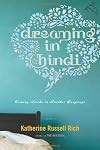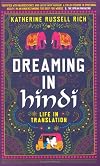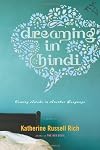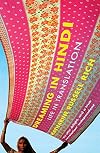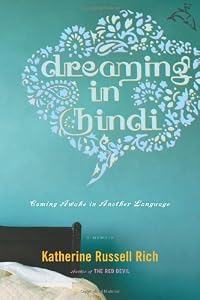
Dreaming in Hindi
by Katherine Russell Rich
On This Page
Description
An eye-opening and courageous memoir that explores what learning a new language can teach us about distant worlds and, ultimately, ourselves.After miraculously surviving a serious illness, Katherine Rich found herself at an impasse in her career as a magazine editor. She spontaneously accepted a freelance writing assignment to go to India, where she found herself thunderstruck by the place and the language, and before she knew it she was on her way to Udaipur, a city in the northwestern show more state of Rajasthan, in order to learn Hindi. Rich documents her experiences—ranging from the bizarre to the frightening to the unexpectedly exhilarating—using Hindi as the lens through which she is given a new perspective not only on India, but on the radical way the country and the language itself were changing her. Fascinated by the process, she went on to interview linguistics experts around the world, reporting back from the frontlines of the science wars on what happens in the brain when we learn a new language. She brings both of these experiences together seamlessly in Dreaming in Hindi, a remarkably unique and thoughtful account of self-discovery.
. show less
Tags
Recommendations

















Member Recommendations

Member Reviews
[Dreaming in Hindi] by [[Katherine Russell Rich]]
This book could be described as Japanland meets Dreaming in Chinese, two books I read earlier this year, and it is a category of book that I really enjoy -- a loose memoir of immersion in (rather than traveling through) a foreign culture, with its awkward and often misinterpreted personal interactions and language struggles. The author, at age 45, after surviving breast cancer (about which she wrote a previous book that I now want to read) and losing her job as a magazine editor, decided to learn Hindi. She began with instructors in the US, then applied to a school in India that required a prior two years of study, a qualification that she didn't remotely possess. She was accepted. (She show more learned later that the school was desperate for students.) This book is about her year in Udaipur, Rajastan, the teachers and other students at the school, the host family ("Though I continued to draw some lines, as on the evening I came home to find the Jains debating how much money I had in the bank. 'No, you misunderstand.' Dad 2 said when I refused to answer. 'We don't want to take your money. We just really, really, really want to know.' he said, as all ten family members nodded emphatically, in unison."), an assortment of other people in the city who became friends, and the language. The language is what ties the book together, though it is not itself presented (Hindi portions of dialogue are translated into English and italicized). The approximately chronological tale is interspersed with linguistic tidbits, as second language acquisition has become quite the topic of study (there's a bibliography). I'd guess the level to be closer to popular magazine than scholarly journal, but that's about where I'm at and not my primary reason for reading the book anyway, so that's OK. A unexpected twist: The author, whose home was New York, arrived in India the first week of September 2001. In October, she was invited to a performance at a school for deaf children. After her impromptu and embarrassingly incongruous talk about her childhood experience with troublesome adenoids ("These are kids who've had to leave their families. I said 'What?' on the playground."), the kids surrounded her with questions, sign language and mime: "Are you OK?" and flying hand airplanes crashing into vertical hand walls. Emotionally stirred ("Because this is the first time in all this time anyone's asked."), she volunteered to help at the school, and although help wasn't necessarily needed, supplies were, so the teacher ("greedy" for his students) found a place for her. Thus sign language, or rather sign languages (not only mutually unintelligible formal languages, but also the pidgins that the kids arrive with, and the version they have created for communication among themselves), enters into the mix, along with Hindi, official language of India but not what everyone speaks, conversations that switch between Hindi and English in an effort to find a balance of mutual miscommunication, the politics of this word from Sanskrit versus that word from Persian. Regarding politics, be prepared for harrowing violence, though mostly described from a distance rather than witnessed directly. A little more clarity in the timeline would've been nice, and there's a mundane incident in the acknowledgements of a type that I wish had been more prominent elsewhere, but these are minor quibbles about an absorbing book.
(read 23 Jul 2011) show less
This book could be described as Japanland meets Dreaming in Chinese, two books I read earlier this year, and it is a category of book that I really enjoy -- a loose memoir of immersion in (rather than traveling through) a foreign culture, with its awkward and often misinterpreted personal interactions and language struggles. The author, at age 45, after surviving breast cancer (about which she wrote a previous book that I now want to read) and losing her job as a magazine editor, decided to learn Hindi. She began with instructors in the US, then applied to a school in India that required a prior two years of study, a qualification that she didn't remotely possess. She was accepted. (She show more learned later that the school was desperate for students.) This book is about her year in Udaipur, Rajastan, the teachers and other students at the school, the host family ("Though I continued to draw some lines, as on the evening I came home to find the Jains debating how much money I had in the bank. 'No, you misunderstand.' Dad 2 said when I refused to answer. 'We don't want to take your money. We just really, really, really want to know.' he said, as all ten family members nodded emphatically, in unison."), an assortment of other people in the city who became friends, and the language. The language is what ties the book together, though it is not itself presented (Hindi portions of dialogue are translated into English and italicized). The approximately chronological tale is interspersed with linguistic tidbits, as second language acquisition has become quite the topic of study (there's a bibliography). I'd guess the level to be closer to popular magazine than scholarly journal, but that's about where I'm at and not my primary reason for reading the book anyway, so that's OK. A unexpected twist: The author, whose home was New York, arrived in India the first week of September 2001. In October, she was invited to a performance at a school for deaf children. After her impromptu and embarrassingly incongruous talk about her childhood experience with troublesome adenoids ("These are kids who've had to leave their families. I said 'What?' on the playground."), the kids surrounded her with questions, sign language and mime: "Are you OK?" and flying hand airplanes crashing into vertical hand walls. Emotionally stirred ("Because this is the first time in all this time anyone's asked."), she volunteered to help at the school, and although help wasn't necessarily needed, supplies were, so the teacher ("greedy" for his students) found a place for her. Thus sign language, or rather sign languages (not only mutually unintelligible formal languages, but also the pidgins that the kids arrive with, and the version they have created for communication among themselves), enters into the mix, along with Hindi, official language of India but not what everyone speaks, conversations that switch between Hindi and English in an effort to find a balance of mutual miscommunication, the politics of this word from Sanskrit versus that word from Persian. Regarding politics, be prepared for harrowing violence, though mostly described from a distance rather than witnessed directly. A little more clarity in the timeline would've been nice, and there's a mundane incident in the acknowledgements of a type that I wish had been more prominent elsewhere, but these are minor quibbles about an absorbing book.
(read 23 Jul 2011) show less
This is the third time I've tried to read this. I'm embarrassed to admit that I stopped the first couple of times in part out of jealousy. I am also studying Hindi but I wasn't making such good progress. To be fair it had a lot to do with how little I was studying. This time, though, I have been paying better attention and feeling better about my own skills and so what I found was that reading the book didn't make me feel simultaneously jealous and down on myself for not trying very hard. Instead I really enjoyed it. It felt very familiar and reminded me of my own trips to Rajasthan and all of the help I've been getting from native Hindi speakers. Hearing about her own struggles and triumphs as someone learning language later in life show more felt very familiar. I know exactly what she was feeling when she would describe problems she had or things she was proud of. Her talk about language learning and motivation was also really fascinating. I liked how we went back and forth between her experiences and some of the more technical details.
Like any good travel memoir it makes me feel like I do at the end of a trip to a beloved place - sad to see it come to an end. show less
Like any good travel memoir it makes me feel like I do at the end of a trip to a beloved place - sad to see it come to an end. show less
When I read the back in the library I thought that the author was a bit of a dingbat, but that the book would probably be interesting. I was right on both counts. I end up impressed. She did manage to spend the whole year in Udaipur. She did learn Hindi. And she also did a lot of research on language learning (and sign language learning) an used it to inform her own learning.
This is not so much a story of a year in India, as an illustrated essay on language learning and cultural assimilation. The background of the book also includes both 9/11 and the anti-Muslim riots in Gujarat. Interesting.
This is not so much a story of a year in India, as an illustrated essay on language learning and cultural assimilation. The background of the book also includes both 9/11 and the anti-Muslim riots in Gujarat. Interesting.
Dreaming in Hindi is alternately irritating and fascinating. It's one of those "I decided to cure my first-world angst by impulsively moving to someplace new where I would be thrown into a completely unfamiliar environment and have to deal with raw authentic life and become a new, more mature person" books, and frankly my interest in the genre is minimal. But in this case the pretext for her moving to Udaipur in India was to learn Hindi, and along with the fairly banal account of what it's like to learn a new language ("The more Hindi I understand, I find, the more perplexing my life becomes") she passes along tidbits she picks up from linguists she interviews after her return to New York, and these are often quite interesting. Well show more worth a read if you're interested in language learning. show less
I liked this book, but I didn't love it. As a linguist, the various tidbits of language acquisition theory the author explains are not new to me, but it was interesting to see them explained in general terms. However, that wasn't the part that bothered me. Eventually I got really tired of the plot (or lack thereof). The author goes from event to event, and it's not always clear why some of these events have been included. Obviously the events where she felt a breakthrough in her Hindi skills are important, but often I was left to wonder why she was including a certain story. The whole book would've been improved by tightening up the narrative so that only stories relevant to her point were included.
There is also a great deal more show more discussion of Hindu-Muslim violence in India than I was expecting. This seems to be because the author herself wasn't expecting it, but I don't feel that it adds much to her overall theme of advancing her Hindi skills.
I was intrigued by the parts dealing with deaf students and home signs in Rajasthan. Could the students at the school where she volunteered be another case like Nicaraguan sign language? Fascinating! The answers aren't given, but it's potentially a great area for research on sign language and language genesis. show less
There is also a great deal more show more discussion of Hindu-Muslim violence in India than I was expecting. This seems to be because the author herself wasn't expecting it, but I don't feel that it adds much to her overall theme of advancing her Hindi skills.
I was intrigued by the parts dealing with deaf students and home signs in Rajasthan. Could the students at the school where she volunteered be another case like Nicaraguan sign language? Fascinating! The answers aren't given, but it's potentially a great area for research on sign language and language genesis. show less
This is a book about how language can affect us emotionally, intellectually and otherwise. It is about the learning of a language other than the language of our home and fathers. I found this to be fascinating.
This is also a story about a middle aged woman who picks up and leaves her home and country to immerse herself in the language and culture of India. A daunting prospect, in my opinion.
No word for privacy. That alone is a startling idea. It is common and not at all rude to be asked about things that we as Americans consider very private. Then there is the cast system which is reflected no only in society but in the Hindi language. The same question is asked differently, depending on who is being asked.
The author goes to India to show more learn Hindi, and while attending a school with other Americans, lives with a local family. It is their job to house and feed her, as well as to help her learn the language. The relationships between the men and women and the two families who live in this home are
explained. She becomes fairly comfortable in their home, and in fact fond of the women who live there.
We are taken along with the author as she travels to different locales, and finds different dialects and customs. I found the writing to be clear, simple and pleasant. I felt as if I were a friend, listening to the adventures of someone with whom I felt very comfortable.
This is so much more than a story of a year spent in India. It is the story of how a woman's life is changed by the experience, and by the people and customs she becomes familiar with. I think that the author successfully blended her story with the effect of learning a language.
My youngest son is multi-lingual. He, much like Ms Rich learned Japanese while living in the country and learning its culture. He speaks at least three languages besides english, mostly self taught. He is also a musician, and I disagree with the point the author made of saying that a facility with languages has othing to do with a facility for music. In my experience with my son and others, there is a relationship between those two.
This was an intriguing read. I would recommend it to anyone who enjoys stories about strong women, travel, India or just a good solid story. show less
This is also a story about a middle aged woman who picks up and leaves her home and country to immerse herself in the language and culture of India. A daunting prospect, in my opinion.
No word for privacy. That alone is a startling idea. It is common and not at all rude to be asked about things that we as Americans consider very private. Then there is the cast system which is reflected no only in society but in the Hindi language. The same question is asked differently, depending on who is being asked.
The author goes to India to show more learn Hindi, and while attending a school with other Americans, lives with a local family. It is their job to house and feed her, as well as to help her learn the language. The relationships between the men and women and the two families who live in this home are
explained. She becomes fairly comfortable in their home, and in fact fond of the women who live there.
We are taken along with the author as she travels to different locales, and finds different dialects and customs. I found the writing to be clear, simple and pleasant. I felt as if I were a friend, listening to the adventures of someone with whom I felt very comfortable.
This is so much more than a story of a year spent in India. It is the story of how a woman's life is changed by the experience, and by the people and customs she becomes familiar with. I think that the author successfully blended her story with the effect of learning a language.
My youngest son is multi-lingual. He, much like Ms Rich learned Japanese while living in the country and learning its culture. He speaks at least three languages besides english, mostly self taught. He is also a musician, and I disagree with the point the author made of saying that a facility with languages has othing to do with a facility for music. In my experience with my son and others, there is a relationship between those two.
This was an intriguing read. I would recommend it to anyone who enjoys stories about strong women, travel, India or just a good solid story. show less
Adult nonfiction/memoir. This book got decent reviews and sounds promising, but when I tried to read it the author's poor writing style/grammar/punctuation got in the way. The prose doesn't flow at all, and having to stop and re-read sentences or paragraphs on every page was ridiculous. I have trouble believing she is in fact a real writer, it's that bad.
Members
- Recently Added By
Lists

Morphy Pick!
24 works; 1 member
Author Information

4 Works 401 Members
Awards and Honors
Awards
Common Knowledge
- Important places
- Udaipur, Rajasthan, India
Classifications
Statistics
- Members
- 328
- Popularity
- 96,545
- Reviews
- 18
- Rating
- (3.25)
- Languages
- English
- Media
- Paper, Ebook
- ISBNs
- 7
- UPCs
- 1
- ASINs
- 5