
On This Page
Description
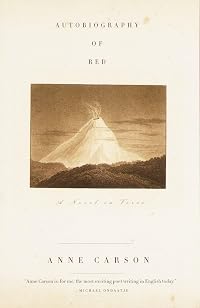
The award-winning poet Anne Carson reinvents a genre in Autobiography of Red, a stunning work that is both a novel and a poem, both an unconventional recreation of an ancient Greek myth and a wholly original coming-of-age story set in the present. Geryon, a young boy who is also a winged red monster, reveals the volcanic terrain of his fragile, tormented soul in an autobiography he begins at the age of five. As he grows older, Geryon escapes his abusive brother and affectionate but show more ineffectual mother, finding solace behind the lens of his camera and in the arms of a young man named Herakles, a cavalier drifter who leaves him at the peak of infatuation. When Herakles reappears years later, Geryon confronts again the pain of his desire and embarks on a journey that will unleash his creative imagination to its fullest extent. By turns whimsical and haunting, erudite and accessible, richly layered and deceptively simple, Autobiography of Red is a profoundly moving portrait of an artist coming to terms with the fantastic accident of who he is. show lessTags
Recommendations



















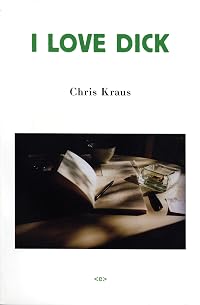
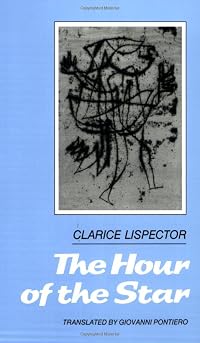

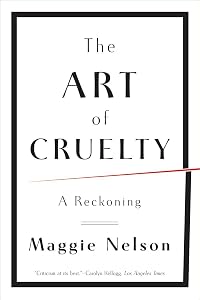

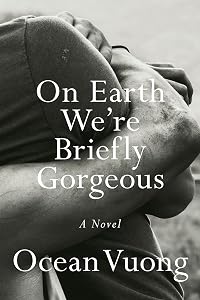






Member Recommendations
by Hibou8

Member Reviews
This book was unlike anything I'd ever read before. It is a story told in freeform verse and prose. Based on the Greek myth of Geryon but taking place before his involvement in the twelve labors of Herakles, "Autobiography of Red" is a coming-of-age story. Geryon is a teenaged boy, a winged red monster whose emotions sometimes overwhelm him and who struggles to find his identity. Although told in the third person, the book is Geryon's story - his story of growing up with an abusive older brother and loving but useless mother; of falling in love with Herakles, whose emotions don't run anywhere as deeply as Geryon's and who cavalierly breaks his heart; of finding ways to express himself as a photographer; of accidentally reconnecting with show more Herakles many years later and having to face unresolved feelings.
The book is at times ethereal in its beauty, at times raw and unapologetic. It brought out in me a mishmash of emotions: love, sympathy, pity, anger, discomfort. I had never read Anne Carson before, but I am now very much intrigued and would love to read her poetry. show less
The book is at times ethereal in its beauty, at times raw and unapologetic. It brought out in me a mishmash of emotions: love, sympathy, pity, anger, discomfort. I had never read Anne Carson before, but I am now very much intrigued and would love to read her poetry. show less
It is intimidating to write anything about Autobiography of Red. Anne Carson’s verse is both formidable and abundant in style, and her story is complexly layered. Emotion and understanding erupt in moments of intense convergence. She creates a narrative that is distant, yet somehow intuitive and sympathetic--a Bildungsroman of one misunderstood, red and winged. It is a perplexing book in some ways, akin to reading reading a journal from another time or a document that has been redacted--occasionally incomprehensible, but deeply intriguing. Carson can intimate so many things in her writing, and much of her writing has the feeling of revelation, ancient gnostic arcana, and deep allegorical truth. Highly recommended.
Autobiography of Red is a novel written in verse with the exceptions of the beginning and ending chapters. We start with Homerian era characters and legend and then are brought into more modern times. It is clever, intricate, good humored, having a sense of play, and sometimes thought provoking. Would the author, Anne Carson, object to her work being described as being somewhere between Homer and Gertrude Stein? Both of whom she refers to often. It has been said of Stein that she was concerned with the process of writing at the expense of product and this criticism also applies to Carson. The Homeric of the story is weakened by its Steinying presentation. Those readers with a sense of adventure will be rewarded with this tale; show more especially with how it is told. The Steinying part can sparkle and amaze.
Quotes: (page 4) “What is an adjective? Nouns name the world. Verbs activate the names. Adjectives come from somewhere else. The word adjective (epitheton in Greek) is itself an adjective meaning 'placed on top,' 'added,' 'appended,' imported,' foreign.' These small imported mechanisms are in charge of attaching everything in the world to its place in particularity. They are the latches of being...(page 5) For no reason that anyone can name, Stesichoros began to undo the latches.”
(page 82) “There is no person without a world.
___________
The red monster sat at the corner table of Cafe Mitwelt writing bits of Heidegger
on the postcards he'd bought.”
(page 135)
“Ancash and his mother were speaking Quechua all the time now or else Spanish
with Herakles. Geryon kept
the camera in his hand and spoke little. I am disappearing, he thought
but the photographs were worth it.
A volcano is not a mountain like others. Raising a camera to one's face has effects
no one can calculate in advance.”
(page 141)
“Geryon what's wrong? Jesus I hate it when you cry. What is it?
Geryon thinks hard.
I once loved you, now I don't know you at all. He does not say this.
I was thinking about time-he gropes
you know how apart people are in time together and apart at the same time-stops
Herakles wipes tears from Geryon's face
with one hand. Can't you ever just fuck and not think? Herakles gets out of bed
and goes into the bathroom” show less
Quotes: (page 4) “What is an adjective? Nouns name the world. Verbs activate the names. Adjectives come from somewhere else. The word adjective (epitheton in Greek) is itself an adjective meaning 'placed on top,' 'added,' 'appended,' imported,' foreign.' These small imported mechanisms are in charge of attaching everything in the world to its place in particularity. They are the latches of being...(page 5) For no reason that anyone can name, Stesichoros began to undo the latches.”
(page 82) “There is no person without a world.
___________
The red monster sat at the corner table of Cafe Mitwelt writing bits of Heidegger
on the postcards he'd bought.”
(page 135)
“Ancash and his mother were speaking Quechua all the time now or else Spanish
with Herakles. Geryon kept
the camera in his hand and spoke little. I am disappearing, he thought
but the photographs were worth it.
A volcano is not a mountain like others. Raising a camera to one's face has effects
no one can calculate in advance.”
(page 141)
“Geryon what's wrong? Jesus I hate it when you cry. What is it?
Geryon thinks hard.
I once loved you, now I don't know you at all. He does not say this.
I was thinking about time-he gropes
you know how apart people are in time together and apart at the same time-stops
Herakles wipes tears from Geryon's face
with one hand. Can't you ever just fuck and not think? Herakles gets out of bed
and goes into the bathroom” show less
I admire the ambition of this novel. Carson does not make it easy, but a challenge is good.
I am not going to pretend that I understood all of it, with its packed allusions. The gender fluidity and sexual ambiguity made it seem slightly more contemporary than it's 1998 publishing date would suggest. Yet, it had enough humor in it to keep it from falling into pretension.
I am not going to pretend that I understood all of it, with its packed allusions. The gender fluidity and sexual ambiguity made it seem slightly more contemporary than it's 1998 publishing date would suggest. Yet, it had enough humor in it to keep it from falling into pretension.
A thoroughly original and imaginative modern re-telling of myth, both heart-rending love story and dynamic coming of age. Geryon is our classically flawed protagonist, both sympathetic and maddening: moody artist, vulnerable teenager, and monstrous in a way both inviting and distancing. Herakles is his first love, and first real lover, a flighty heartbreaker, a wanderer and wonderer and vagabond. Over the course of their travels, Geryon pursues, seeking to be loved and pondering why he isn't, not in the way he yearns to be; and we, the readers, can't help but be swept up in the adventure, and in his journey and struggle.
Mythology and modern love intertwine gracefully in this shockingly gorgeous story. Carson captures the ontology of love and all its facets with wrenching accuracy. Her spare poetry pulls the reader into Geryon's senses with a deftness that gives his world the immediacy of a lucid dream. A reflection on passion, loneliness, and the sustaining power of art, Autobiography of Red is as sensual as it is elevating.
Autobiography of Red was a tender story with beautiful scenes that incorporated some compelling ruminations on art and identity. I had a hard time getting over the introduction and appendices, which were kind of funny, but it also felt like the adaptation of the lyric fragments served more of a pretentious pedestal than a grounding that deepened my appreciation of the text. The linking of childhood incest/rape to homosexuality also felt unnecessary insomuch as it perpetuates a cultural stigma at the expense of nuancing Geryon's character and familial relationships.
Members
- Recently Added By
Published Reviews
ThingScore 88
...Carson writes in language any poet would kill for: sensuous and funny, poignant, musical and tender, brilliantly lighted.
added by bitterfierce
It is a novel, all right; a story which creates characters that are surprising but credible, involves them in an action that works to what seems an appropriate if somewhat mysterious end and, in this case, leaves the reader with a feeling that it contains depths which only rereading and reflection will sound. But the reader cannot help wondering: Was the decision to tell the story in verse show more justified? show less
added by jburlinson
Lists

Narrative verse for pleasure
75 works; 8 members

Read These Too
458 works; 9 members

Poetry Corner
187 works; 15 members

Top Five Books of 2014
1,064 works; 398 members

Lit Lattes Ep 001
1 work; 1 member

Lit Lattes Ep 001
9 works; 1 member

Literary Witches
86 works; 4 members

Powell's 50 Books for 50 Years
50 works; 4 members

Lithub: The 50 Best Contemporary Novels Under 200 Pages
50 works; 4 members

Top 10 2021
10 works; 1 member

Favorite Recent Poetry: 1980-2022
178 works; 71 members

Books Read in 2023
5,547 works; 145 members
Author Information

52+ Works 10,095 Members
Anne Carson was born December 16, 1950. Carson is a poet, an essayist, and a classicist. She is the director of the graduate program in Classics at McGill University, where she also teaches Latin and Greek. Carson is perhaps besst know for Autobiography of Red: A Novel in Verse, which won the 1998 QSPELL Prize for Poetry. Carson recently won the show more 2001 Griffin Poetry Prize for Men in the Off Hours. Carson also won the T.S. Eliot poetry prize for The Beauty of the Husband, the first woman to win the award in its nine-year history. She was awarded a Guggenheim Fellowship in 1998 and received a $500,000 MacArthur Fellowship in 2000. Carson is the author of seven books. (Bowker Author Biography) show less
Awards and Honors
Series

Belongs to Publisher Series
Work Relationships
Is contained in
Common Knowledge
- Canonical title
- Autobiography of Red: A Novel in Verse
- Original title
- Autobiography of Red: A Novel in Verse
- Original publication date
- 1998
- First words
- He came after Homer and before Gertrude Stein, a difficult interval for a poet.
- Original language
- English
Classifications
Statistics
- Members
- 2,638
- Popularity
- 7,091
- Reviews
- 44
- Rating
- (4.33)
- Languages
- 10 — Danish, Dutch, English, Finnish, French, German, Portuguese, Spanish, Swedish, Turkish
- Media
- Paper, Audiobook, Ebook
- ISBNs
- 24
- ASINs
- 3