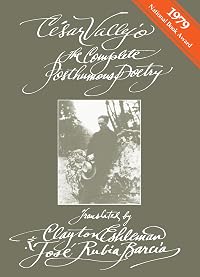
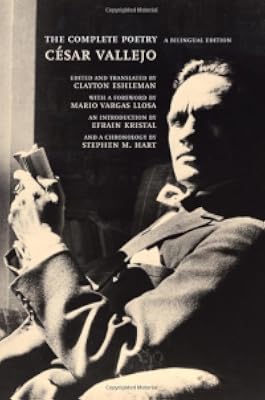
The Complete Posthumous Poetry
by César Vallejo
On This Page
Description
The Translation judges for the National Book Awards--Richard Miller, Alastair Reid, Eliot Weinberger--cited Clayton Eshleman and Jose Rubia Barcia's translation of Cesar Vallejo's The Complete Posthumous Poetry as follows: "This, the first National Book Award to be given to a translation of modern poetry, is a recognition of Clayton Eshleman's seventeen-year apprenticeship to perhaps the most difficult poetry in the Spanish language. Eshleman and his present collaborator, Jose Rubia show more Barcia, have not only rendered these complex poems into brilliant and living English, but have also established a definitive Spanish test based on Vallejo's densely rewritten manuscripts. In recreating this modern master in English, they have also made a considerable addition to poetry in our language." show lessTags
Recommendations







Member Reviews
Members
- Recently Added By
Lists

Philip Ward's Lifetime Reading Plan
592 works; 22 members
Author Information

176+ Works 1,695 Members
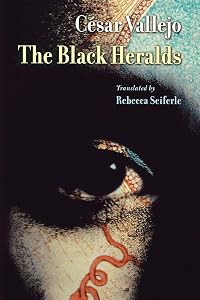
Primarily a poet and one of Latin America's finest of the twentieth century, Vallejo also wrote several novels and plays with a strong social content. His situation as a mestizo of part Indian blood, his humble social background, and the political and social discrimination to which he was subjected because of these factors, created the profound show more psychological tensions and alienation from society that mark his work. His work is permeated with a sense of the dignity of the oppressed Indian and a spirit of rebellion. In his first volume, The Black Heralds (1918), he used the techniques of symbolism to express bitterness at his suffering and condition of isolation. Trilce (1922) is one of the most original works of modern poetry, with an innovative syntax and structure that transcend normal logical rules to express the poet's feeling of solitude and the helplessness of oppressed peoples. After the publication of Trilce, Vallejo moved to Paris, where he lived in poverty and was harshly treated because of his political opinions. In poetry of a simpler structure and form, his posthumously published Human Poems (1939) and Spain, Let This Cup Pass from Me (1939) reveal his anguish over the Spanish civil war and his sense of solidarity with combatants for peace and freedom. (Bowker Author Biography) show less
Awards and Honors
Awards
Common Knowledge
- Canonical title
- The Complete Posthumous Poetry
Classifications
- Genres
- Poetry, Fiction and Literature, Literature Studies and Criticism
- DDC/MDS
- 809 — Literature & rhetoric Literature, rhetoric & criticism History, description, critical appraisal of more than two literatures
- LCC
- PQ8497 .V35 .A24 — Language and Literature French, Italian, Spanish and Portuguese literatures Spanish literature Provincial, local, colonial, etc. Spanish America
- BISAC
Statistics
- Members
- 128
- Popularity
- 254,885
- Rating
- (4.33)
- Languages
- English
- Media
- Paper
- ISBNs
- 3