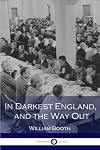
In Darkest England and the Way Out
by William Booth
On This Page
Description
This classic work in the literature of poverty was published in 1890 by William Booth (1829-1912), the founder of the Salvation Army. It was in fact mostly written by the crusading journalist W. T. Stead (referred to as an anonymous 'friend of the poor' in Booth's preface), but the practical ideas for relieving the poverty and squalor of late Victorian British cities are all Booth's own. Reworking the cliche? of 'Darkest Africa', in the first part he describes the 'submerged tenth' of show more Darkest England - destitute and/or criminal - and goes on to suggest the way to 'Deliverance', which includes better housing, education and training for work, and the sending of the urban poor to 'colonies', both overseas and in the British countryside. These proposals had their critics, but drew wide attention to an appalling aspect of urban life of which the prosperous classes were barely aware. show lessTags
Recommendations


























Member Reviews
If you know who General William Booth is, it's because he's the founder of the Salvation Army-- his general title comes from being the head of a large philanthropic organization, not from fighting in any battles. He founded the East London Christian Mission in 1865, reorganized it into the Salvation Army in 1878, and wrote In Darkest England in 1890. I read In Darkest England while trying to read widely in late Victorian apocalyptic and utopian fiction. In Darkest England isn't either, as it's a manifesto for what Booth thinks is wrong with England, and how it can be fixed, but it gives you some feeling for how Victorian culture was thinking about these issues outside of fiction. (Though Henry Lazarus's 1894 proto-science fiction novel show more target="_top">The English Revolution of the Twentieth Century is about a takeover of England organized by the Salvation Army!)
Booth is quick to dismiss the idea that this book is utopian, claiming that it's all actually achievable. The reason for this is essentially twofold. First, General Booth has statistics on his side. Secondly, everything he wants to do is completely practical. His big thing is to attack the actual causes of social maladies, something I think the Victorians in general were becoming more and more aware of. For example, he argues, the reason women become prostitutes isn't because they have low moral character, but because other people take advantage of women who have no other recourse. Similarly, alcohol isn't the cause of a problem, but a symptom of one.
He is also opposed to revolutionaries because their schemes of impossible hope make it difficult for him to recruit, and anyway the issue isn't some Bellamy-style top-down reorganization of society, but of changing individual behaviors to be more ethical; at one point he refers to his work as "revolutionising the character of those whose faults are the reason for their destitution" (252). It's sort of an interesting mix between increasing both social responsibility and individual responsibility. But it's all up to the Salvation Army to take the lead, because neither government nor society nor individuals are going to step up on their own.
Anyway, the most interesting parts of the book to a modern reader (or me, at least) are those where he articulates whys of his approach. In the rest of the book, there's a lot of hows, and they're very specific to both his time and place and his way of seeing the world. For example, he wants to establish New Britain, The Colony Over-Sea, which he calls "the unmooring of a little piece of England" (152), which has that usual nineteenth-century implication that all the continents that aren't Europe don't actually have people already living there. The schemes and data are also relayed in exhaustive detail. show less
Booth is quick to dismiss the idea that this book is utopian, claiming that it's all actually achievable. The reason for this is essentially twofold. First, General Booth has statistics on his side. Secondly, everything he wants to do is completely practical. His big thing is to attack the actual causes of social maladies, something I think the Victorians in general were becoming more and more aware of. For example, he argues, the reason women become prostitutes isn't because they have low moral character, but because other people take advantage of women who have no other recourse. Similarly, alcohol isn't the cause of a problem, but a symptom of one.
He is also opposed to revolutionaries because their schemes of impossible hope make it difficult for him to recruit, and anyway the issue isn't some Bellamy-style top-down reorganization of society, but of changing individual behaviors to be more ethical; at one point he refers to his work as "revolutionising the character of those whose faults are the reason for their destitution" (252). It's sort of an interesting mix between increasing both social responsibility and individual responsibility. But it's all up to the Salvation Army to take the lead, because neither government nor society nor individuals are going to step up on their own.
Anyway, the most interesting parts of the book to a modern reader (or me, at least) are those where he articulates whys of his approach. In the rest of the book, there's a lot of hows, and they're very specific to both his time and place and his way of seeing the world. For example, he wants to establish New Britain, The Colony Over-Sea, which he calls "the unmooring of a little piece of England" (152), which has that usual nineteenth-century implication that all the continents that aren't Europe don't actually have people already living there. The schemes and data are also relayed in exhaustive detail. show less
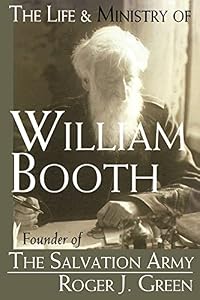
William Booth was apprenticed to a pawnbroker at age eleven. He began reading and educated himself so that he could become a minister. Booth wanted to be an evangelist and when the Methodist church kept assigning him to pastoral work he left and began his own ministry. This led to the founding of the Salvation Army.
The title In Darkest England was chosen after Booth had heard about the travels of Stanley in darkest Africa. Booth proposes to help the poor in England. He fought for universal social reforms. Some of his ideas included a poor man's bank, model suburban villages, matrimonial counseling, lawyers and white chapel by the sea.
The title In Darkest England was chosen after Booth had heard about the travels of Stanley in darkest Africa. Booth proposes to help the poor in England. He fought for universal social reforms. Some of his ideas included a poor man's bank, model suburban villages, matrimonial counseling, lawyers and white chapel by the sea.
Ratings
Members
- Recently Added By
Lists

Books that changed the world
67 works; 64 members
Author Information

55+ Works 266 Members
Common Knowledge
- Original publication date
- 1890
Classifications
- Genres
- Nonfiction, Religion & Spirituality, General Nonfiction, History
- DDC/MDS
- 362.5 — Society, Government, and Culture Social problems and social services Social Welfare Poor (from social service perspectives)
- LCC
- HV4387 .B72 — Social sciences Social pathology. Social and public welfare. Criminology Social pathology. Social and public welfare. Protection, assistance and relief Poor in cities. Slums
- BISAC
Statistics
- Members
- 121
- Popularity
- 264,230
- Reviews
- 2
- Rating
- (3.92)
- Languages
- Dutch, English, Swedish
- Media
- Paper, Audiobook, Ebook
- ISBNs
- 29
- ASINs
- 7