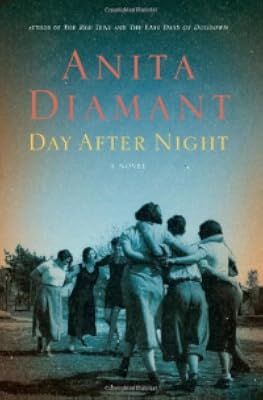
Day After Night
by Anita Diamant
On This Page
Description
Four young women haunted by unspeakable memories and losses, afraid to begin to hope, find salvation in the bonds of friendship and shared experience even as they confront the challenge of re-creating themselves in a strange new country. Based on the extraordinary true story of the October 1945 rescue of more than two hundred Jewish prisoners from the Atlit internment camp outside Haifa.Tags
Recommendations























Member Recommendations
BookshelfMonstrosity While The River Midnight occurs immediately prior to WWII and Day After Night immediately after, both are emotional stories of Jewish women struggling with their situations; both also depict a sense of female community within a larger group of outsiders.
BookshelfMonstrosity In spite of the end of World War II, the survivors in these two bleak novels are still feeling its effects as they struggle with emotional fallout and fight for survival in their new situations.
Member Reviews
Day After Night is an engaging, well-written work of historical fiction, looking at the lives and rescue of the Jewish women who were detained as illegal immigrants after attempting to find new homes in Palestine after WWII. Some were fresh from the death camps of Nazi Europe, others from situations just as dangerous or degrading, yet they found themselves corralled into another prison camp, with more barbed wire and guards - this time British - with freedom tantalisingly close, yet still out of reach.
The losses suffered by these women during the holocaust, and their desire to find a new home, build new lives, sometimes seems to be their only common ground. Diamant wills onto the page four principal, disparate characters in Shayndel, show more Leonie, Tedi and Zorah, each with their own powerful story; each trying to find a path from the past into the future and though Diamant clearly researched her book thoroughly, this is a much a tale of friendship, life, joy and mourning as it is a lesson in the Jewish post-war resettlement in Israel; both moving and fascinating.
It is difficult to say that I ‘enjoyed’ this book – for one thing, the renewed awareness of the imperfect role of the British when it came to war administration was rather uncomfortable – but it is sad and redeeming and human and brave and makes the reader marvel at how life blossomed from the ashes of places like Auschwitz, how these women struggled out from under the enormity of the loss and fear and shame, and faced what was ahead. show less
The losses suffered by these women during the holocaust, and their desire to find a new home, build new lives, sometimes seems to be their only common ground. Diamant wills onto the page four principal, disparate characters in Shayndel, show more Leonie, Tedi and Zorah, each with their own powerful story; each trying to find a path from the past into the future and though Diamant clearly researched her book thoroughly, this is a much a tale of friendship, life, joy and mourning as it is a lesson in the Jewish post-war resettlement in Israel; both moving and fascinating.
It is difficult to say that I ‘enjoyed’ this book – for one thing, the renewed awareness of the imperfect role of the British when it came to war administration was rather uncomfortable – but it is sad and redeeming and human and brave and makes the reader marvel at how life blossomed from the ashes of places like Auschwitz, how these women struggled out from under the enormity of the loss and fear and shame, and faced what was ahead. show less
Day After Night by Anita Diamant is about women refugees in Israel after the Holocaust. It's a small character study of the various types of people who helped found Israel. One haunting scene toward the beginning comes when new arrivals are taken to the "delousing shed" to shower and have their clothes cleaned. One survivor's eyes blaze with fear, he knows what it means to go to the showers. One of the characters has to convince him that these really are just showers for getting clean. Refugees from the terrors of Nazi oppression want to find safety in Israel and are confronted with imprisonment behind barbed wire in British internment camps. How these women begin the rest of their lives is told in very matter of fact, practical show more language which makes it all the more powerful. It's not as powerful as The Red Tent (will she ever match that?), but shows an aspect of history I knew little about. show less
Anita Diamant has a notable ability to bring a story alive out of the history books, or Bible in the case of "The Red Tent". I had never heard about the internment of Jews by the British, and was immediately intrigued with the story. Diamant's deceptively simple writing style manages to convey deep affect, character development and the emotional energies which work on the psyche of the characters. The four protagonists have all escaped to Palestine, only one from a concentration camp. Their experiences and memories, losses, and survivor guilt work on them in differing ways, all of which are powerful. I think this is a post Holocaust story which is more bearable to read, although clearly shadowed with the horror of Nazi Germany. show more Survival, the drive to be free, the desire to love and be loved are such powerful, vital forces! show less
I learned a great deal in reading “Day after Night”. I had no idea that some of the survivors of the Holocaust had to endure further imprisonment after the end of World War II. Author Anita Diamant vividly brings this truth to light using strong female voices that still haunt me, days after finishing the book.
Many books that I’ve read about World War II take the reader through the war and through the horrors that were part of that dark time in history. But most of those end along with the war, with maybe one final chapter or an afterword to let the reader know a few details of what happened later in the person’s or character’s life.
This book, however, begins after the war, but while memories are still very fresh, while show more survivors are still desperately trying to sort out exactly what happened and what remains, if anything, of their former lives.
Some of them, without documentation or relatives to claim them, were sent to an internment camp off the Mediterranean coast. The conditions were better than that of the concentration camps, but still they were not free. The people, who had seen and endured so much, were still victims.
While certainly not shying away from the horrific realities of the war, Diamant does a masterful job of reminding the reader just what those might mean to the people trying to find a way forward. She uses an actual place and true events, to create very powerful characters. Even a scene that reads very day-to-day at first catches the reader off guard when the true meaning sinks in.
“Leonie and Shayndel were early enough to get their favorite spot in the dining hall, at a table just to the right of the door, where they could watch people come and go. The other girls from their barrack joined them there and, as always, everyone ate a little too much bread a little too quickly.”
Even while immersed in this powerful book, I still couldn’t wrap my mind around the idea that people, who had survived some of the most powerful evil the world has known, were still not free. Barring the fact that few had homes and families to return to, they weren’t allowed to. Think for a moment, of people fresh from death camps, arriving at Atlit:
“All the newcomers stood, huddled together, staring at the biggest structure in Atlit, an imposing wooden barn that the inmates had dubbed “the Delousing Shed,” or just “Delousing.” Prison guards and translators from the Jewish Agency were trying to move them into two lines: men in front of the doorway at the right, women in a queue by a door on the left. Tedi caught the strong, sweat-soaked smell of fear even before she saw the faces fixed in horror at the spectacle of men and women being separated and sent through dim doorways on their way to unseen showers.”
Can you even imagine? I just wanted to go back in time and scream at whoever’s idea this was!
And later, I felt the same fierce delight as Tedi did as an escape from Atlit was planned and carried out. “As the truck started to climb the side of the mountain, Tedi inhaled the tang of pine and the mulch of fallen leaves and a hundred other scents: tree sap and resin, pollen from six kinds of dusty grasses going to seed. The soldiers up front added dark notes of leather, tobacco, onion, whiskey, sweat and gunpowder. It was a wild mixture, the aroma of escape. She caught Leoni’s eye and grinned. “It smells like heaven out here.”
I know that what many readers may take away from “Day After Night” will be the voices of the main characters: Tedi, Leoni, Zorah and Shayndel. As in “The Red Tent”, Diamant does a wonderful job of giving words to the voiceless – in this case, four women from a fading picture in an archive.
But I take away another reminder, all these years later that the grief, pain, fear and despair of those who lived through World War II, did not end when the battlefields fell silent.
“She leaned against the wall and sank slowly into a crouch, her arms folded over her head, as the icy stream stripped away the last of her defenses, motherless, brotherless, and weary to the bone, weeping for the losses she had counted and remembered and for numberless, nameless injuries registered in her flesh.”
No longer imprisoned, but never truly free. show less
Many books that I’ve read about World War II take the reader through the war and through the horrors that were part of that dark time in history. But most of those end along with the war, with maybe one final chapter or an afterword to let the reader know a few details of what happened later in the person’s or character’s life.
This book, however, begins after the war, but while memories are still very fresh, while show more survivors are still desperately trying to sort out exactly what happened and what remains, if anything, of their former lives.
Some of them, without documentation or relatives to claim them, were sent to an internment camp off the Mediterranean coast. The conditions were better than that of the concentration camps, but still they were not free. The people, who had seen and endured so much, were still victims.
While certainly not shying away from the horrific realities of the war, Diamant does a masterful job of reminding the reader just what those might mean to the people trying to find a way forward. She uses an actual place and true events, to create very powerful characters. Even a scene that reads very day-to-day at first catches the reader off guard when the true meaning sinks in.
“Leonie and Shayndel were early enough to get their favorite spot in the dining hall, at a table just to the right of the door, where they could watch people come and go. The other girls from their barrack joined them there and, as always, everyone ate a little too much bread a little too quickly.”
Even while immersed in this powerful book, I still couldn’t wrap my mind around the idea that people, who had survived some of the most powerful evil the world has known, were still not free. Barring the fact that few had homes and families to return to, they weren’t allowed to. Think for a moment, of people fresh from death camps, arriving at Atlit:
“All the newcomers stood, huddled together, staring at the biggest structure in Atlit, an imposing wooden barn that the inmates had dubbed “the Delousing Shed,” or just “Delousing.” Prison guards and translators from the Jewish Agency were trying to move them into two lines: men in front of the doorway at the right, women in a queue by a door on the left. Tedi caught the strong, sweat-soaked smell of fear even before she saw the faces fixed in horror at the spectacle of men and women being separated and sent through dim doorways on their way to unseen showers.”
Can you even imagine? I just wanted to go back in time and scream at whoever’s idea this was!
And later, I felt the same fierce delight as Tedi did as an escape from Atlit was planned and carried out. “As the truck started to climb the side of the mountain, Tedi inhaled the tang of pine and the mulch of fallen leaves and a hundred other scents: tree sap and resin, pollen from six kinds of dusty grasses going to seed. The soldiers up front added dark notes of leather, tobacco, onion, whiskey, sweat and gunpowder. It was a wild mixture, the aroma of escape. She caught Leoni’s eye and grinned. “It smells like heaven out here.”
I know that what many readers may take away from “Day After Night” will be the voices of the main characters: Tedi, Leoni, Zorah and Shayndel. As in “The Red Tent”, Diamant does a wonderful job of giving words to the voiceless – in this case, four women from a fading picture in an archive.
But I take away another reminder, all these years later that the grief, pain, fear and despair of those who lived through World War II, did not end when the battlefields fell silent.
“She leaned against the wall and sank slowly into a crouch, her arms folded over her head, as the icy stream stripped away the last of her defenses, motherless, brotherless, and weary to the bone, weeping for the losses she had counted and remembered and for numberless, nameless injuries registered in her flesh.”
No longer imprisoned, but never truly free. show less
It is 1945 and the war has just ended. Those released from the concentration camps must now decide what the remainder of their lives, devoid of loved ones and homes, will be. This is the story of some of those displaced women who opt to go to Israel, which is being governed by the British. They find themselves in another camp, and although this one is not the cruel and deadly ilk of the ones they have already known, it is still ringed with barbed wire and it still feels like a prison.
The story centers on four of the women and explores their backstories as well as their experiences in adjusting to a new life in Zion. It is the best Diamant I have found since falling in love with The Red Tent, which I count as her signature work. I did show more feel involved with each of the women, mourn their losses, and care about their futures. It was a quick read with a satisfying ending. What you want most for these women is a chance to live a life of happiness that will negate some of the pain and horror that they have experienced in their young lives. The first step for them is being able to connect with one another and those connections are believable in Diamant’s hands.
show less
The story centers on four of the women and explores their backstories as well as their experiences in adjusting to a new life in Zion. It is the best Diamant I have found since falling in love with The Red Tent, which I count as her signature work. I did show more feel involved with each of the women, mourn their losses, and care about their futures. It was a quick read with a satisfying ending. What you want most for these women is a chance to live a life of happiness that will negate some of the pain and horror that they have experienced in their young lives. The first step for them is being able to connect with one another and those connections are believable in Diamant’s hands.
show less
I picked this book up because I’d read ‘The Red Tent’ by Anita Diamant and enjoyed it. This is a story of four young Jewish women who had different experiences of World War II before they met at Atlit, a camp run by the British to house ‘illegal’ Jewish immigrants after the war. Tedi is Dutch, and was hidden for 2 years before being turned over to the Nazis. Zorah survived a concentration camp. Leonie is a Parisian, who did what she must to survive the war. And Shayndel is a Zionist activist who fought during the war.
I thought this was a great premise, as I’d never known such a camp existed. The people in the camp were basically prisoners, living behind barbed wire and being told when to eat, when to go to bed, and not show more allowed to leave the camp. It seemed wrong after their experiences of the war, many in concentration camps. At the same time, I guess I can understand regulating immigration. The story did cause me to read more about Atlit. And the was a very quick read. But this particular story just wasn’t that interesting to me. I’m not sure why, but the story never really seemed to start and I ended up reading just to finish. But it is getting decent ratings at Goodreads, so if the subject interests you, give it a try and let me know what you think!
Why did you choose this book? I loved ‘The Red Tent’ by Anita Diamant, so when I saw this on the shelf, I picked it up
When did you read this book? April 2012
Who should read this book? readers of historical fiction
Source: library show less
I thought this was a great premise, as I’d never known such a camp existed. The people in the camp were basically prisoners, living behind barbed wire and being told when to eat, when to go to bed, and not show more allowed to leave the camp. It seemed wrong after their experiences of the war, many in concentration camps. At the same time, I guess I can understand regulating immigration. The story did cause me to read more about Atlit. And the was a very quick read. But this particular story just wasn’t that interesting to me. I’m not sure why, but the story never really seemed to start and I ended up reading just to finish. But it is getting decent ratings at Goodreads, so if the subject interests you, give it a try and let me know what you think!
Why did you choose this book? I loved ‘The Red Tent’ by Anita Diamant, so when I saw this on the shelf, I picked it up
When did you read this book? April 2012
Who should read this book? readers of historical fiction
Source: library show less
So much Holocaust literature ends with the liberation of the camps; this book begins in Atlit, where Jewish survivors are being held by the British in Palestine. There is a lot of waiting before those in Atlit manage to escape to a kibbutz, and thus the book is more character-driven than plot-driven. There is Polish Zionist Shayndel, who fought in the resistance but lost her brother and parents; French Leonie, who was in Paris during the war, but still a prisoner; Dutch Tedi, who stayed hidden during the war but endured terrible ordeals all the same; and bitter Zorah, gifted with languages, who has turned her back on her former faith. The four become close during their time in Atlit and band together during their escape. An epilogue show more reveals the fate of each after they are sent to other kibbutzim. show less
Members
- Recently Added By
Lists

Books by Jewish Authors
68 works; 5 members

Indie Next Picks
196 works; 4 members
Author Information

28+ Works 26,426 Members
Anita Diamant is the author of Saying Kaddish, Choosing a Jewish Life, The New Jewish Wedding, Living a Jewish Life, The New Jewish Baby Book, Bible Baby Names, and the bestselling novel, The Red Tent. She lives in Newton, Massachusetts. Anita Diamant is the author of the bestselling novel "The Red Tent" & several books on Judaism, including show more "Living a Jewish Life", "Choosing a Jewish Life", & "The New Jewish Baby Book". A journalist who has written for "Redbook", the "Boston Globe", the "Boston Phoenix", & other publications, she lives in Newtonville, Massachusetts. (Publisher Provided) Anita Diamant was born in Newark, New Jersey on June 27, 1951. She received a bachelor's degree in Comparative Literature from Washington University in 1973 and a master's Degree in English from the State University of New York at Binghamton in 1975. She worked as a freelance journalist for numerous years and wrote for such magazines and newspapers as the Boston Globe, New England Monthly, Self, Parenting, Parents, McCalls, and Ms. She also wrote about Jewish practice and the Jewish community for Reform Judaism magazine, Hadassah magazine, and jewishfamily.com. She eventually started writing guidebooks to Jewish life including The New Jewish Wedding; The New Jewish Baby Book; Living a Jewish Life: Jewish Traditions, Customs and Values for Today's Families; and Saying Kaddish: How to Comfort the Dying, Bury the Dead and Mourn as a Jew. She also writes novels including The Red Tent; Good Harbor; The Last Days of Dogtown, Day after Night and The Boston Girl. (Bowker Author Biography) show less
Awards and Honors
Awards
Distinctions
Common Knowledge
- Canonical title
- Day After Night
- Original publication date
- 2009-09
- People/Characters
- Tedi Pastore; Zorah Weitz; Shayndel Eskenazi; Leonie Dubinski; Esther Zalinksky
- Important places
- Atlit detainee camp, British Mandate for Palestine; Israel; Palestine; Beit Oren, Israel
- Important events
- World War II
- Epigraph
- Know that every human being must cross a very narrow bridge. What is most important is not to be overcome by fear.
Rebbe Nachman of Bratslav, 1772-1810 - Dedication
- In memory
of my grandfather Abe Mordechai Ejbuszyc
and my uncle Henri Roger Ejbuszyc,
victims of the Holocaust - First words
- The nightmares made their rounds hours ago. (Prologue)
- Last words
- (Click to show. Warning: May contain spoilers.)"That was just the beginning." (Epilogue)
Classifications
Statistics
- Members
- 1,125
- Popularity
- 22,583
- Reviews
- 45
- Rating
- (3.53)
- Languages
- English, Portuguese (Portugal)
- Media
- Paper, Audiobook, Ebook
- ISBNs
- 22
- ASINs
- 7