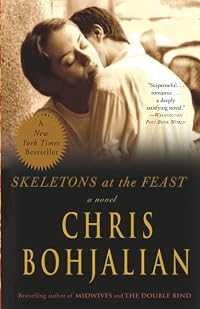
Skeletons at the Feast
by Chris Bohjalian 
On This Page
Description
Fiction. Literature. Romance. Historical Fiction. HTML:In January 1945, in the waning months of World War II, a small group of people begin the longest journey of their lives: an attempt to cross the remnants of the Third Reich, from Warsaw to the Rhine if necessary, to reach the British and American lines.Among the group is eighteen-year-old Anna Emmerich, the daughter of Prussian aristocrats. There is her lover, Callum Finella, a twenty-year-old Scottish prisoner of war who was brought show more from the stalag to her family’s farm as forced labor. And there is a twenty-six-year-old Wehrmacht corporal, who the pair know as Manfred–who is, in reality, Uri Singer, a Jew from Germany who managed to escape a train bound for Auschwitz.
As they work their way west, they encounter a countryside ravaged by war. Their flight will test both Anna’s and Callum’s love, as well as their friendship with Manfred–assuming any of them even survive.
Perhaps not since The English Patient has a novel so deftly captured both the power and poignancy of romance and the terror and tragedy of war. Skillfully portraying the flesh and blood of history, Chris Bohjalian has crafted a rich tapestry that puts a face on one of the twentieth century’s greatest tragedies–while creating, perhaps, a masterpiece that will haunt readers for generations. show less
Tags
Recommendations
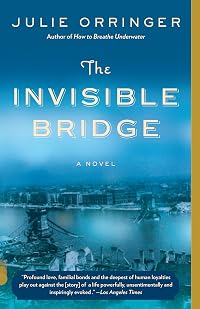
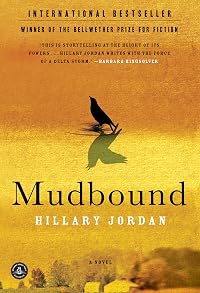
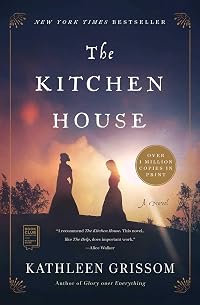
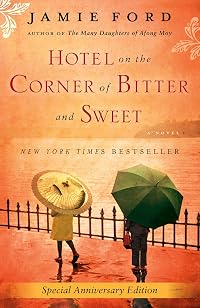
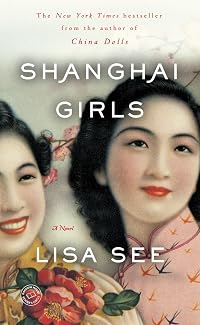
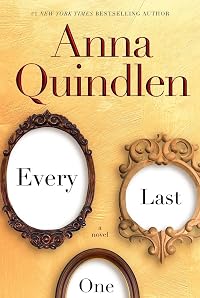
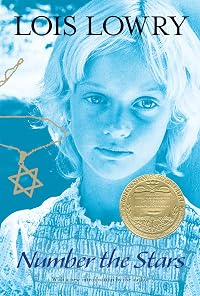
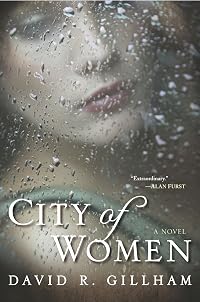
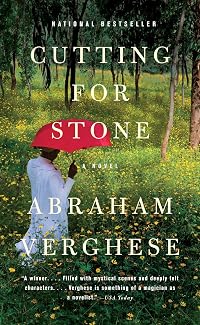
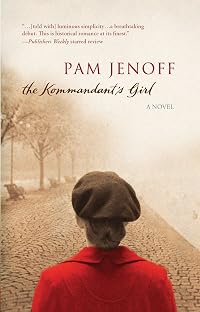
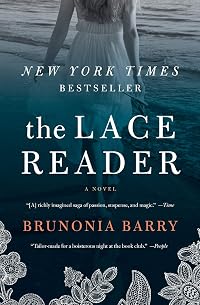
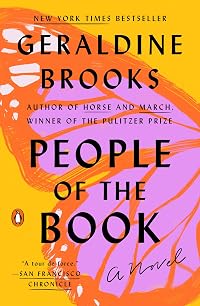



Member Recommendations
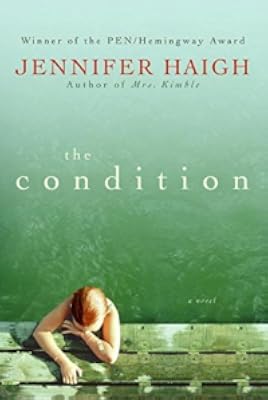
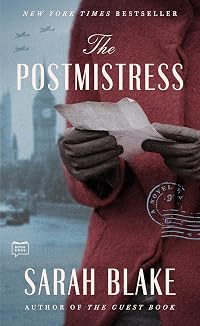
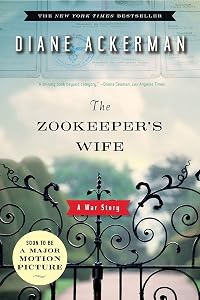
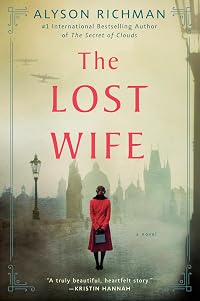
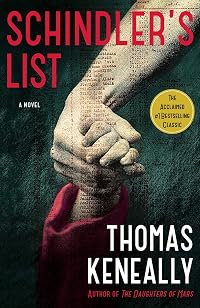
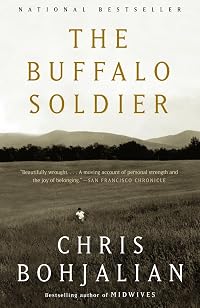
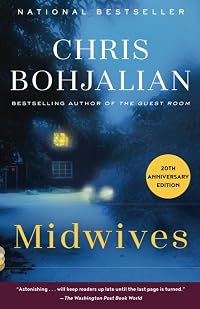
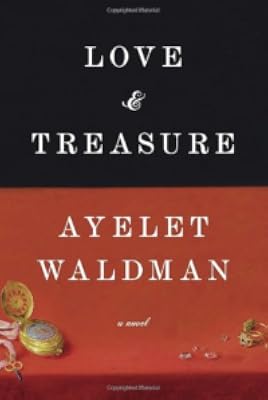
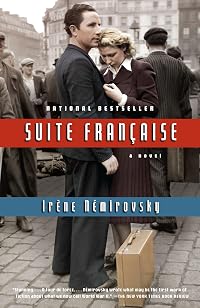
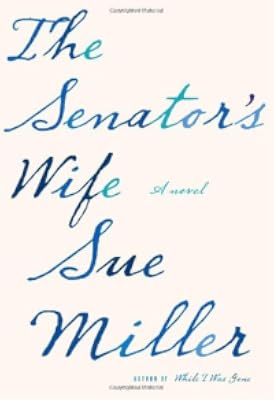
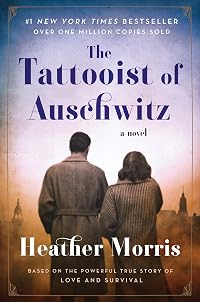
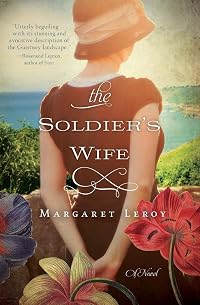
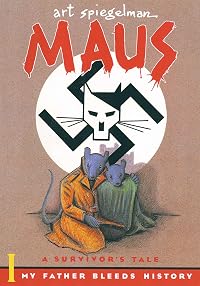
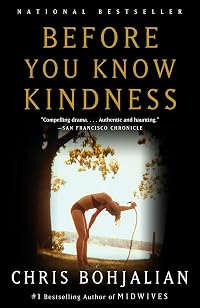
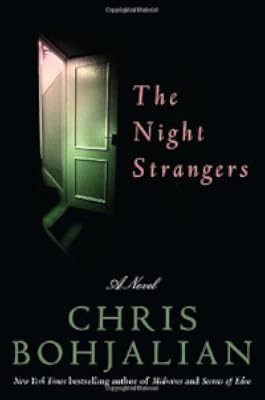
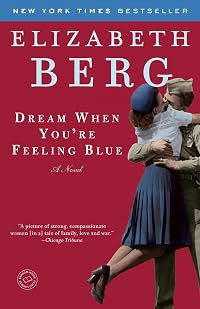
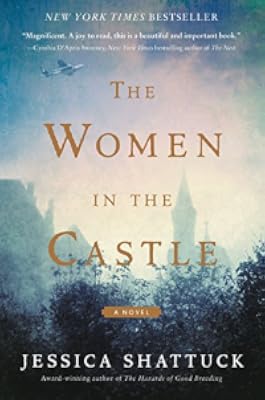
BookshelfMonstrosity In spite of the end of World War II, the survivors in these two bleak novels are still feeling its effects as they struggle with emotional fallout and fight for survival in their new situations.
Member Reviews
Set in Poland near the end of World War II, this book is told in three perspectives. An affluent Prussian family, accompanied by a Scottish POW who has been working on their farm, must flee their home as the Russians advance toward Germany. A Jewish man has been hiding in plain sight by assuming a series of different identities in the German military. A French Jewish woman is serving as forced laborer for the Nazis and is now part of group being marched into Germany. These storylines eventually converge.
The brutalities of war are clearly portrayed. The traumatic content is relieved on occasion by the relationships between family members and love developing between the POW and the family’s daughter. The different perspectives show more highlight the various attitudes toward the Jews. The Prussian family is largely unaware of (or turns a blind eye to) what is happening to their neighbors who disappeared. As with many WWII novels, there is a lot of difficult content, but is consistent with history. I became invested in the story and cared about what happened to the characters. My only slight disappointment is the ending, which strays a bit far afield. I think the author wanted to surprise the reader, but these last-minute twists seldom work well for me. show less
The brutalities of war are clearly portrayed. The traumatic content is relieved on occasion by the relationships between family members and love developing between the POW and the family’s daughter. The different perspectives show more highlight the various attitudes toward the Jews. The Prussian family is largely unaware of (or turns a blind eye to) what is happening to their neighbors who disappeared. As with many WWII novels, there is a lot of difficult content, but is consistent with history. I became invested in the story and cared about what happened to the characters. My only slight disappointment is the ending, which strays a bit far afield. I think the author wanted to surprise the reader, but these last-minute twists seldom work well for me. show less
Set in Poland near the end of World War II, this book is told in three perspectives. An affluent Prussian family, accompanied by a Scottish POW who has been working on their farm, must flee their home as the Russians advance toward Germany. A Jewish man has been hiding in plain sight by assuming a series of different identities in the German military. A French Jewish woman is serving as forced laborer for the Nazis and is now part of group being marched into Germany. These storylines eventually converge.
The brutalities of war are clearly portrayed. The traumatic content is relieved on occasion by the relationships between family members and love developing between the POW and the family’s daughter. The different perspectives show more highlight the various attitudes toward the Jews. The Prussian family is largely unaware of (or turns a blind eye to) what is happening to their neighbors who disappeared. As with many WWII novels, there is a lot of difficult content, but is consistent with history. I became invested in the story and cared about what happened to the characters. My only slight disappointment is the ending, which strays a bit far afield. I think the author wanted to surprise the reader, but these last-minute twists seldom work well for me. show less
The brutalities of war are clearly portrayed. The traumatic content is relieved on occasion by the relationships between family members and love developing between the POW and the family’s daughter. The different perspectives show more highlight the various attitudes toward the Jews. The Prussian family is largely unaware of (or turns a blind eye to) what is happening to their neighbors who disappeared. As with many WWII novels, there is a lot of difficult content, but is consistent with history. I became invested in the story and cared about what happened to the characters. My only slight disappointment is the ending, which strays a bit far afield. I think the author wanted to surprise the reader, but these last-minute twists seldom work well for me. show less
There have been many books focusing on the Holocaust and World War Two, and Chris Bohjalian sets himself quite a task when he set out to write the story (based in part by a personal diary ) set in the waning months of World War two.
But this story is told in a different manner to many of the fictionalised books out there as the author takes on the difficult task of telling this story from many points of view.
A Prussian family, a Scottish POW assigned to work on their farm, and a Jew disguised as a Third Reich soldier attempt to escape and try to stay well ahead of the fast-approaching Soviet army. Tales of atrocities to which the Soviet army has subjected their prisoners is enough to force the group on their way west through a show more countryside ravaged by war.
The novel also tells the story of Cecile a Jewish woman captured in her homeland of France and sent to a forced labour camp.
I have read quite a few books on the second world war and on the Holocaust and they always shock and sadden me and make me question how human beings can inflict such pain and horrors on each other in the name of war and while this is a difficult book to read as the author does not spare us any of the horrors, it is an good historical novel.
The plot for this Novel is haunting and quite a page turner, this is really a character driven novel and the characters are so engaging that they will stay with you long after you put down the novel. An emotional book that will shock and sadden even the most hardened reader.
While this is a story of love in the time of war the horrors of war far outweigh the love story.
This is only the second novel I have read by Chris Bohjalian and I will be adding more books by this author to my list.
Quote "Darkness cannot drive out darkness; only light can do that. Hate cannot drive out hate; only love can do that"
Quote by Martin Luther King, Jr. show less
But this story is told in a different manner to many of the fictionalised books out there as the author takes on the difficult task of telling this story from many points of view.
A Prussian family, a Scottish POW assigned to work on their farm, and a Jew disguised as a Third Reich soldier attempt to escape and try to stay well ahead of the fast-approaching Soviet army. Tales of atrocities to which the Soviet army has subjected their prisoners is enough to force the group on their way west through a show more countryside ravaged by war.
The novel also tells the story of Cecile a Jewish woman captured in her homeland of France and sent to a forced labour camp.
I have read quite a few books on the second world war and on the Holocaust and they always shock and sadden me and make me question how human beings can inflict such pain and horrors on each other in the name of war and while this is a difficult book to read as the author does not spare us any of the horrors, it is an good historical novel.
The plot for this Novel is haunting and quite a page turner, this is really a character driven novel and the characters are so engaging that they will stay with you long after you put down the novel. An emotional book that will shock and sadden even the most hardened reader.
While this is a story of love in the time of war the horrors of war far outweigh the love story.
This is only the second novel I have read by Chris Bohjalian and I will be adding more books by this author to my list.
Quote "Darkness cannot drive out darkness; only light can do that. Hate cannot drive out hate; only love can do that"
Quote by Martin Luther King, Jr. show less
Bohjalian ventures into the milieu of World War II Germany and tells the story of Anna Emmerich, a German girl living on the edge of Poland and her German family, who are Nazi party members. These are rural German's who are oblivious to the atrocities and turn a blind eye to the disappearances of people around them to relocation. It is the last days of the war, and the family is forced to flee before the oncoming Russian army. Accompanying them is a Scottish POW named Callum Finella who is given to her family to help work the farm, and a Jewish man, Uri Singer, who escapes the Nazi's by cleverly posing as one of them.
The story is unusual in being told from the point of view of the Germans (although this is the second such book I have show more read recently and not through any design to do so). Perhaps the tales of the Allies and those of the Holocaust victims have been exhausted and at this remove we can be more open to the stories of how the insanity of Nazi Germany affected everyday Germans.
The story is told masterfully, without any feeling that anything included is unnecessary or left out. Bohjalian amazes me with his ability to tell stories from so many different eras, with such disparate characters and yet to always seem knowledgeable and at home with his subjects. Stories such as this must always be told, lest we forget how devastating such a war can be and to help us remember that even among the monsters there are people who are just caught up in the circumstances created by others. show less
The story is unusual in being told from the point of view of the Germans (although this is the second such book I have show more read recently and not through any design to do so). Perhaps the tales of the Allies and those of the Holocaust victims have been exhausted and at this remove we can be more open to the stories of how the insanity of Nazi Germany affected everyday Germans.
The story is told masterfully, without any feeling that anything included is unnecessary or left out. Bohjalian amazes me with his ability to tell stories from so many different eras, with such disparate characters and yet to always seem knowledgeable and at home with his subjects. Stories such as this must always be told, lest we forget how devastating such a war can be and to help us remember that even among the monsters there are people who are just caught up in the circumstances created by others. show less
This book is something of a departure for Bohjalian, since it doesn't take place in the northeast United States of today. Instead, it takes place during the end of WWII in Europe. As in his other books, though, Bohjalian is not afraid to ask difficult questions in subtle but inescapable manner.
Through the eyes of the daughter of a Prussian aristocratic family fleeing the Russian advance, a Scottish POW, and a German Jew who is masquerading as a German soldier, Bohjalian explores the nature of revenge and collective guilt. Interspersed with the story of their trek west through Germany, is the story of a group of women being marched in the same direction from a Nazi labor camp, through which Bohjalian explores hope and survival.
This book show more is not a romance, no matter what the publisher may claim. But it is a compelling and well-told story about the relationships that can develop between people who initially think they're on opposite sides of a war. show less
Through the eyes of the daughter of a Prussian aristocratic family fleeing the Russian advance, a Scottish POW, and a German Jew who is masquerading as a German soldier, Bohjalian explores the nature of revenge and collective guilt. Interspersed with the story of their trek west through Germany, is the story of a group of women being marched in the same direction from a Nazi labor camp, through which Bohjalian explores hope and survival.
This book show more is not a romance, no matter what the publisher may claim. But it is a compelling and well-told story about the relationships that can develop between people who initially think they're on opposite sides of a war. show less
It's not often I say this, but for once, LibraryThing's "Will you like it?" appraiser was right. I did not like this book.
I never though I would say this, but I wish that Chris Bohjalian was a horribly inept storyteller. I wish his characters were as flat and unbelievable and as developed as a James Bond character (you know the ones I mean). I wish his book was as shallow as a reality television show host. I wish his story was as boring as watching cars rust. Because if my wishes were granted, then nothing would've happened in Skeletons at the Feast and I wouldn't have met Theo, Anna, Mutti, Uri, Rebekah, Cecile, or Jeanne and none of them would have gotten hurt. More importantly, I wouldn't have gotten hurt. I hate you, Bohjalian. I show more hate you and I hate your book. (But I love your characters. And your book. And you're probably a great person.) show less
I never though I would say this, but I wish that Chris Bohjalian was a horribly inept storyteller. I wish his characters were as flat and unbelievable and as developed as a James Bond character (you know the ones I mean). I wish his book was as shallow as a reality television show host. I wish his story was as boring as watching cars rust. Because if my wishes were granted, then nothing would've happened in Skeletons at the Feast and I wouldn't have met Theo, Anna, Mutti, Uri, Rebekah, Cecile, or Jeanne and none of them would have gotten hurt. More importantly, I wouldn't have gotten hurt. I hate you, Bohjalian. I show more hate you and I hate your book. (But I love your characters. And your book. And you're probably a great person.) show less
In the last waning days of World War II, Germany was in chaos. Besieged on western front by the Americans and the British and on the eastern front by the Russians, the German people were forced to flee their homes. Cold, hungry, and pushed beyond exhaustion they struggled to keep ahead of the Russian front though and endless winter. What they faced if caught by the Russians, no matter that most were women and young children, was enough for many to craft suicide plans while others would just give up, long beyond caring.
Skeletons at the Feast weaves together four disparate stories during this tragic and violent time in history; the Emmerich family, a prosperous Prussian family forced to abandon their home; Callum, a Scottish POW who had show more been sent to help work the Emmerich's sugar-beat farm and apple orchards; Uri Singer, a Jewish man who through courage and daring escaped a train headed towards certain death and for two years successfully disguised himself as a Nazi; and Cecile a French Jewess struggling to survive German work camps and forced marches.
This is a bleak and unrelenting portrayal of the Holocaust told through a completely unique perspective. Most of the story is viewed through the eyes of Anna Emmerich, eighteen years old and having lived her whole life in a remote corner of Germany that had for most of her life been ceded to Poland. It is unusual that Bohjalian chose to tell the story through the eyes of a German girl as so often novels regarding this horrific time in history are told through those who suffered the most. Yet the Jews, the Gypsies, and their fellow Nazi victims were not the only people to suffer. The privatizations suffered by Germany's own people as they fled in advance of the Russian advance is an often overlooked piece of history. Their treatment was brutal and no quarter was given for being a civilian, a woman, or a child. The author does not hold back; there are many violent and bloody depictions of rape and murder throughout the novel. It was often difficult to read. Yet none of these scenes felt gratuitous. It was an honest account of what really happened. It serves as a reminder of the cruelty that we humans are capable of, no matter on which side we fight. The epilogue was the single bright source of hope at the end of the novel, a welcome relief after the bleakness of the previous 350 pages. This novel is not for the faint of heart, but it is a must read for any World War II buff. show less
Skeletons at the Feast weaves together four disparate stories during this tragic and violent time in history; the Emmerich family, a prosperous Prussian family forced to abandon their home; Callum, a Scottish POW who had show more been sent to help work the Emmerich's sugar-beat farm and apple orchards; Uri Singer, a Jewish man who through courage and daring escaped a train headed towards certain death and for two years successfully disguised himself as a Nazi; and Cecile a French Jewess struggling to survive German work camps and forced marches.
This is a bleak and unrelenting portrayal of the Holocaust told through a completely unique perspective. Most of the story is viewed through the eyes of Anna Emmerich, eighteen years old and having lived her whole life in a remote corner of Germany that had for most of her life been ceded to Poland. It is unusual that Bohjalian chose to tell the story through the eyes of a German girl as so often novels regarding this horrific time in history are told through those who suffered the most. Yet the Jews, the Gypsies, and their fellow Nazi victims were not the only people to suffer. The privatizations suffered by Germany's own people as they fled in advance of the Russian advance is an often overlooked piece of history. Their treatment was brutal and no quarter was given for being a civilian, a woman, or a child. The author does not hold back; there are many violent and bloody depictions of rape and murder throughout the novel. It was often difficult to read. Yet none of these scenes felt gratuitous. It was an honest account of what really happened. It serves as a reminder of the cruelty that we humans are capable of, no matter on which side we fight. The epilogue was the single bright source of hope at the end of the novel, a welcome relief after the bleakness of the previous 350 pages. This novel is not for the faint of heart, but it is a must read for any World War II buff. show less
Members
- Recently Added By
Lists

Top Five Books of 2020
982 works; 350 members

Top Five Books of 2015
811 works; 241 members

Favorite Audiobooks Listened to in 2011
33 works; 11 members

Books To Get From The Library
115 works; 5 members

THE WAR ROOM
813 works; 24 members
Author Information

37+ Works 28,851 Members
Chris Bohjalian (born on August 12, 1962 in White Plains, New York) graduated from Amherst College and worked as an account representative for J. Walter Thompson advertising agency in New York in the mid-1980s. Bohjalian is an American novelist and the author of 15 novels, including the bestsellers Midwives and The Sandcastle Girls. His first show more novel, A Killing in the Real World, was released in 1988. His other novels include Water Witches, The Law of Similars, Before You Know Kindness, Skeletons at the Feast, and The Night Strangers. Past the Bleachers and Midwives were made into Hallmark Hall of Fame movies and Secrets of Eden was made into a Lifetime Television movie. He won the New England Book Award in 2002. He also contributes to numerous publications including Cosmopolitan, Reader's Digest, Boston Globe Sunday Magazine and the Burlington Free Press. Bohjalian's The Guest Room is a New York Times bestseller. (Bowker Author Biography) show less
Chris Bohjalian is a LibraryThing Author, an author who lists their personal library on LibraryThing.
Awards and Honors
Distinctions
Common Knowledge
- Canonical title
- Skeletons at the Feast
- Original publication date
- 2008
- People/Characters
- Anna Emmerich; Helmut Emmerich; Theo Emmerich; Irmgard Mutti Emmerich; Rolf Emmerich; Werner Emmerich (show all 14); Callum Finella; Uri Singer; Cecile Fournier; Jeanne from Troyes; Rebekah Singer; Klara; Gabi; Sonje
- Important places
- Germany; Poland; The Kaminheim Estate (fictional); Szczecin, West Pomeranian, Poland (as Stettin, Germany)
- Important events
- World War II; Holocaust
- Epigraph
- The past is never dead. It's not even past. - William Faulkner
- Dedication
- For Stephen Kiernan, Adam Turteltaub, and Dana Yeaton
And for Victoria, who reads every word - First words
- The girl - a young woman, really, eighteen, hair the color of corn silk - had been hearing the murmur of artillery fire for two days now.
- Last words
- (Click to show. Warning: May contain spoilers.)"I knew you would make it."
- Blurbers
- Picoult, Jodi
Classifications
Statistics
- Members
- 1,767
- Popularity
- 12,446
- Reviews
- 76
- Rating
- (3.97)
- Languages
- Dutch, English, Italian
- Media
- Paper, Audiobook, Ebook
- ISBNs
- 26
- ASINs
- 11