On This Page
Description
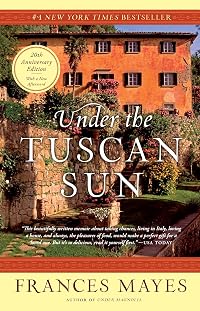
A chronicle of the author's first four years in Italy, describing her purchase and restoration of an abandoned villa in the Tuscan countryside, her transformation of the overgrown gardens, and her discovery of the many links between the food and culture of the region.Tags
Recommendations
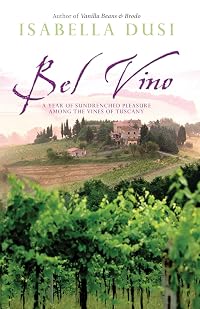
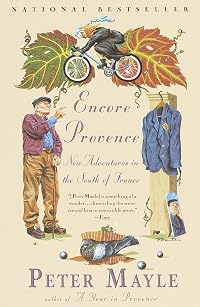
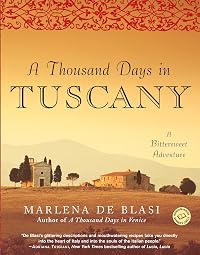
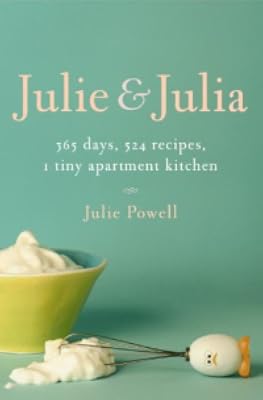
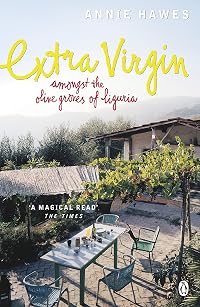
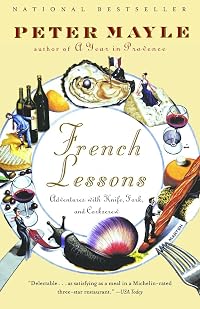
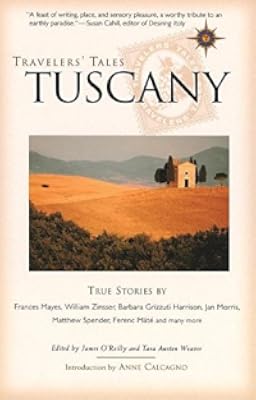
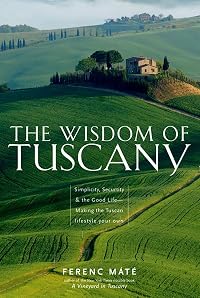
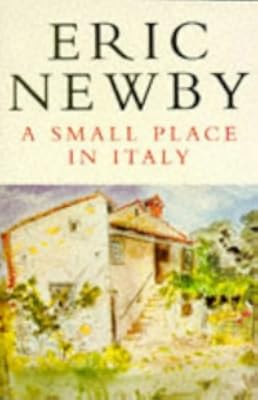
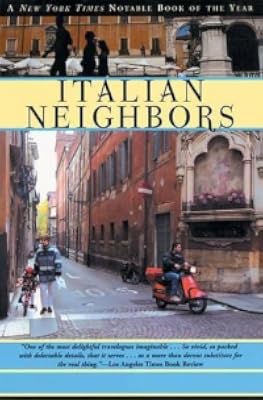
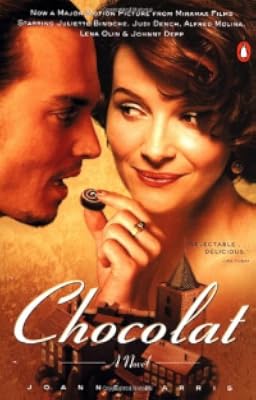
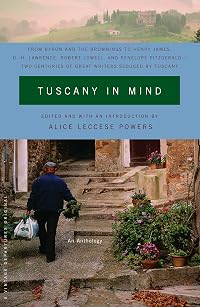
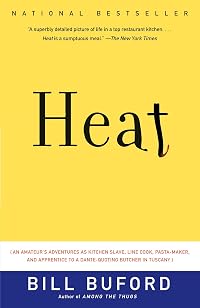
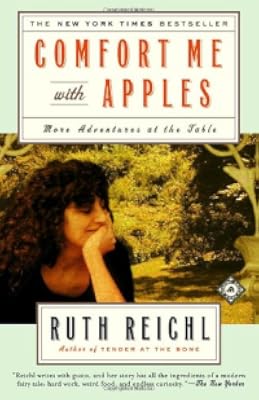
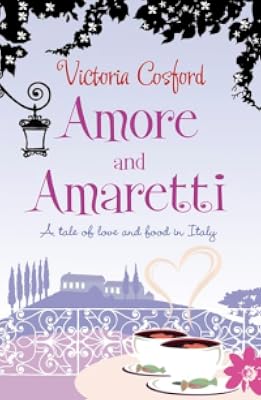
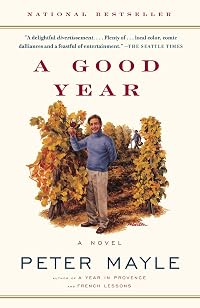

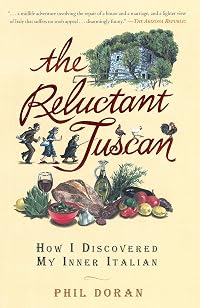
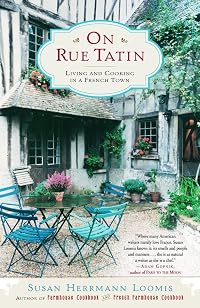
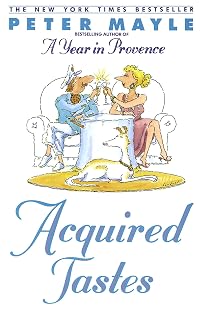
Member Recommendations
MyriadBooks Under the Tuscan Sun is a dreamier book, gentler and more idealistic than the rough-and-tumble and sometimes drug-soaked Blood, Bones & Butter, but both authors adore Italy and are lavish at showing their love on the pages.
by anonymous user

Member Reviews
My favorite thing about this book was that I felt no urgency to finish it; I could enjoy it the same way I would a lazy summer day. And while I was drifting through passages on house restoration and Italian cooking and Italian experiences that made me envious, I'd come across nuggets of wisdom I could just picture an eager class of college students discussing from every angle and viewpoint.
It seems all the more appropriate that I picked up this book on a whim at a used bookstore, that the bookstore owner told me it was one of her favorite books, that the previous owner left notes on the margins and underlined passages in freakishly straight lines. This book was just a lovely experience all around, one that didn't need to be rushed.
It seems all the more appropriate that I picked up this book on a whim at a used bookstore, that the bookstore owner told me it was one of her favorite books, that the previous owner left notes on the margins and underlined passages in freakishly straight lines. This book was just a lovely experience all around, one that didn't need to be rushed.
This month’s book club pick was Frances Mayes’ Under the Tuscan Sun, which natch made me want to go to Italy hasta pronto.
I was a tad skeptical, having seen bits and pieces of the movie and being severely underwhelmed. I wanted to like it; I enjoy Diane Lane as an actress, and how could I not also love a movie set in Italy, with all the food and scenery and handsome Italians in its favor?! However … it was not meant to be.
Thankfully, my initial inclinations about the book were unfounded. I honestly found the book to be … enchanting. The descriptions of the house restoration process; the foods; the wines – everything was drool-worthy.
The only aspect of the book I struggled with was Mayes’ description of a tour she and her show more husband Ed took through small-town Italy. I was overwhelmed with names! dates! wine they bought cases of to take home! It’s a blur – still.
But that didn’t hinder me from highlighting away and dreaming of recipes to try, from the simple pears and Gorgonzola cheese to the high-brow cherries steeped in Chianti. (Can’t wait to try that when cherries are in season here – only a couple months to go! I even bought a cherry pitter from Williams-Sonoma just for that recipe.)
Read it; enjoy; skip over the small-town Italy road trip; and start planning your next European Adventure. I know I am. show less
I was a tad skeptical, having seen bits and pieces of the movie and being severely underwhelmed. I wanted to like it; I enjoy Diane Lane as an actress, and how could I not also love a movie set in Italy, with all the food and scenery and handsome Italians in its favor?! However … it was not meant to be.
Thankfully, my initial inclinations about the book were unfounded. I honestly found the book to be … enchanting. The descriptions of the house restoration process; the foods; the wines – everything was drool-worthy.
The only aspect of the book I struggled with was Mayes’ description of a tour she and her show more husband Ed took through small-town Italy. I was overwhelmed with names! dates! wine they bought cases of to take home! It’s a blur – still.
But that didn’t hinder me from highlighting away and dreaming of recipes to try, from the simple pears and Gorgonzola cheese to the high-brow cherries steeped in Chianti. (Can’t wait to try that when cherries are in season here – only a couple months to go! I even bought a cherry pitter from Williams-Sonoma just for that recipe.)
Read it; enjoy; skip over the small-town Italy road trip; and start planning your next European Adventure. I know I am. show less
I likely purchased this soon after I read Peter Mayle's A Year in Provence, and it’s similar in content: ex-pat moves to a new country and describes the people, food, landscape, customs and home-restoration process there. But while I loved that Mayle regaled the reader, Mayes was pleasant but to-the-point.
Enjoyable read, especially after visiting the Tuscany region of Italy. The author's knowledge of the area and beautiful descriptions of everything from the play of the sunlight over the hills and valleys, the little towns that look like castles on hilltops, the plethora of cathedrals and their quirky artifacts of the martyred saints, to the descriptions of the various wines and gourmet meals made at home or enjoyed in area cafes, restaurants, and friends' homes, make this very interesting and pleasant to read. I don't know how else to explain this other than saying it is a "full-bodied" book. It has much more to it than the movie made using the premise and title.
Frances Mayes looks back on her initial visits to Italy with her show more significant other, Ed, in which they decide to buy a money pit of a house. They are both professors and writers from San Francisco, and they put everything (including the share she received after a painful divorce) into "Bramasole". Fortunately, they both have fallen hard for this house and seem to be a great team in all facets of their life together. She covers all the ins and outs of purchasing a house in a foreign country, hiring local workers, learning many crafts and skills from farming to building rock walls to re-tiling floors...and includes some of the local customs which may seem quirky or inefficient to someone not used to them.
The author writes using a very descriptive style, but it is so lovely, it is hard to skim through. It's best to savor this book slowly. show less
Frances Mayes looks back on her initial visits to Italy with her show more significant other, Ed, in which they decide to buy a money pit of a house. They are both professors and writers from San Francisco, and they put everything (including the share she received after a painful divorce) into "Bramasole". Fortunately, they both have fallen hard for this house and seem to be a great team in all facets of their life together. She covers all the ins and outs of purchasing a house in a foreign country, hiring local workers, learning many crafts and skills from farming to building rock walls to re-tiling floors...and includes some of the local customs which may seem quirky or inefficient to someone not used to them.
The author writes using a very descriptive style, but it is so lovely, it is hard to skim through. It's best to savor this book slowly. show less
I'm sad to say that it has finally happened. I've finally stumbled upon the one book that pales in comparison with the movie that was made about it. I picked up Under The Tuscan Sun last week at my local book exchange; it was hidden in the small biography section, and I was pleased to see the title; the movie is one of my favorites, and having never read the book, I imagined that I was in for a real treat. Instead of the lovely story of a woman's first trip to Italy right after her divorce, the spontaneous purchase of a villa, falling in love and finding heartbreak, the secondary love story between Polish boy and Italian neighbor, and the American friend coming to have her baby, I turned the pages and became more and more baffled and show more frustrated. Under the Tuscan Sun the movie and Under the Tuscan Sun the book can't possibly have anything in common outside of the most basic and briefest scenes; i.e. the little old man who brings flowers to the shrine [and even then, she writes that she meets him in the park one day early on, and he says hello to her]. The book encompasses the tale of Frances and her equally American boyfriend, of many, many years, both professors on the west coast, traveling around Italy every summer, and finally settling on a summer house to buy after having looked in earnest for over 5 years. It talks about the renovations and the markets and the endless, mind numbing trips around the country. There is no Italian stallion boyfriend. There is not an American girl coming to have a baby. The Polish boy is a 14 year old slacker JERK and, as far as the book details, he never meets much less falls in love with the Italian girl neighbor. The blond filmstar makes a brief appearance, but is nothing like the character in the movie. Halfway through the book, I felt sure I was going to throw it across the room if I had to read the word Etruscan once more. I say this as a person who is totally enamoured of Italy, art, and history; this book made me completely ambivalent through sheer force of repetition and walls of words trying to capture every mundane detail. With my eyes glossing over the endless prattle, what a nasty surprise to feel like I have been lied to rather than delighted. Instead of "based on a true story" at the begining of the movie, it should have said "we took a boring book and made magic happen, with only the most bare basis in reality." show less
After many years vacationing in Italy, Frances Mayes and her--husband? I don't think that's ever clarified--decide to buy a home in Tuscany. They search for a while, but nothing really calls to them. Then they stumble upon a home called Bramasole in the town of Cortona. It's a wreck, but they can't get it out of their heads. They go over and over all the reasons that they shouldn't buy it. And then they follow their hearts and move in and get to work.
First of all, I just need to say that this book has little in common with the movie except for the title. As she kept writing about "our house" and "our money," I kept looking back to see if I was missing something. She's buying the house with someone? And not just anyone, but a significant show more other? This was supposed to be about remodeling a house in Tuscany and romance with handsome Italians! What happened here?!?
Still, I enjoyed it, even more than the movie. So what if there aren't any romances with Italian men? I got to read beautiful descriptions that left me feeling as if I had just soaked in the heat of a Tuscan August, and left me feeling as if I really had been living life at a slower pace. Mayes is a very evocative writer and I was lost in the Tuscan countryside almost immediately. I didn't envy them the work they were doing, but I loved reading about the connection she was making with the house, the previous owners, and the roots she was growing. She refers often to the nonna that she imagines previously lived in the house, and wonders what she would think of the changes they are making and the food they are cooking. The nonna becomes something of a benevolent guardian, bestowing happiness and calm on all who enter.
The owners need that calm at times as they navigate the Italian method of renovating. Contractors they hire get sick, the replacement ones don't show up when they say they will, nothing is as easy as it seems, and fixing one problem seems to uncover ten more. Well, now that I think about it, that's probably a description of renovations the world over!
I enjoyed the pace of life that she fell into living in Tuscany. They strolled into town and loved to watch the evening passagietta, or stroll, when everyone who possibly can is out "meeting and greeting" in the dreamy twilights. I loved the way that life in Tuscany still seems to be so connected to the seasons. Your meals are actually planned around what's in season in your area and if you didn't grow the produce yourself, you probably just bought it from a farmer who picked it early that morning or the day before.
There's a tiny part of me that is tempted to place this on my Southern lit shelf, because Mayes is a Georgia girl and she frequently compares her life growing up in the South to the life she is living in Tuscany. Both cultures seem to be a little resistant to change, there's a strong sense of history and connection to the land, families have known families forever (well, maybe not quite as long in the South, but you know what I mean). "Southerners have a gene, as yet undetected in the DNA spirals, that causes them to believe that place is fate. Where you are is who you are." The Italians she meets seem to have that same bit of DNA.
One of my favorite chapters is entitled "Turning Italian." I love the first part when she writes about Ed and how she's watched him slowly change as they live in Italy. Starting as a tea drinker, he's learned to love syrupy-sweet espresso. He's learned to love the land and constantly nourishes it. But my favorite bit is how he's taken to Italian driving. "Most travellers here feel that driving in Rome qualifies as an experience that can be added to one's vita, that everyday autostrada trips are examinations in courage and that the Amalfi coast drive is a definition of hell." We spent two weeks in Italy in 2008 and I still have not gotten over the experience. Now, if we vacation somewhere that we can't drive to, we learn to navigate the public transportation or we walk. My husband has been grounded. He took a little too well to the utter chaos of Italian driving. I have a story that I love to tell, but let's just say that trying to find our way back to the rental car garage in Florence left me a quivering, screeching mass of nerves, cussing my husband for all he was worth. I don't cuss my husband. We barely even fight. That's how bad it was. So I laughed as I read the author's experiences and tried not to have flashbacks of driving the wrong way down a stretch of road in Rome with a barricade on one side of us and buildings on the other. *Shudder* Luckily for my husband, that was the taxi driver. I might have been driven to bloodshed if I had known the driver at all. But then again, bloodshed would have required letting go of the "chicken stick" I left my fingerprints in.
I wasn't quite as thrilled that she wrote so much about food. I'm not a foodie; I'm probably one of the pickiest adult eaters you will ever meet. So her loving descriptions of how to prepare rabbit or veal or wild boar were lost on me. I did still read every word, mostly for the small personal observations she worked in. So props to the author for getting me to read recipes that don't involve sugar!
I recommend this to armchair travelers, and those who enjoy thoughtful, beautifully written memoirs. show less
First of all, I just need to say that this book has little in common with the movie except for the title. As she kept writing about "our house" and "our money," I kept looking back to see if I was missing something. She's buying the house with someone? And not just anyone, but a significant show more other? This was supposed to be about remodeling a house in Tuscany and romance with handsome Italians! What happened here?!?
Still, I enjoyed it, even more than the movie. So what if there aren't any romances with Italian men? I got to read beautiful descriptions that left me feeling as if I had just soaked in the heat of a Tuscan August, and left me feeling as if I really had been living life at a slower pace. Mayes is a very evocative writer and I was lost in the Tuscan countryside almost immediately. I didn't envy them the work they were doing, but I loved reading about the connection she was making with the house, the previous owners, and the roots she was growing. She refers often to the nonna that she imagines previously lived in the house, and wonders what she would think of the changes they are making and the food they are cooking. The nonna becomes something of a benevolent guardian, bestowing happiness and calm on all who enter.
The owners need that calm at times as they navigate the Italian method of renovating. Contractors they hire get sick, the replacement ones don't show up when they say they will, nothing is as easy as it seems, and fixing one problem seems to uncover ten more. Well, now that I think about it, that's probably a description of renovations the world over!
I enjoyed the pace of life that she fell into living in Tuscany. They strolled into town and loved to watch the evening passagietta, or stroll, when everyone who possibly can is out "meeting and greeting" in the dreamy twilights. I loved the way that life in Tuscany still seems to be so connected to the seasons. Your meals are actually planned around what's in season in your area and if you didn't grow the produce yourself, you probably just bought it from a farmer who picked it early that morning or the day before.
There's a tiny part of me that is tempted to place this on my Southern lit shelf, because Mayes is a Georgia girl and she frequently compares her life growing up in the South to the life she is living in Tuscany. Both cultures seem to be a little resistant to change, there's a strong sense of history and connection to the land, families have known families forever (well, maybe not quite as long in the South, but you know what I mean). "Southerners have a gene, as yet undetected in the DNA spirals, that causes them to believe that place is fate. Where you are is who you are." The Italians she meets seem to have that same bit of DNA.
One of my favorite chapters is entitled "Turning Italian." I love the first part when she writes about Ed and how she's watched him slowly change as they live in Italy. Starting as a tea drinker, he's learned to love syrupy-sweet espresso. He's learned to love the land and constantly nourishes it. But my favorite bit is how he's taken to Italian driving. "Most travellers here feel that driving in Rome qualifies as an experience that can be added to one's vita, that everyday autostrada trips are examinations in courage and that the Amalfi coast drive is a definition of hell." We spent two weeks in Italy in 2008 and I still have not gotten over the experience. Now, if we vacation somewhere that we can't drive to, we learn to navigate the public transportation or we walk. My husband has been grounded. He took a little too well to the utter chaos of Italian driving. I have a story that I love to tell, but let's just say that trying to find our way back to the rental car garage in Florence left me a quivering, screeching mass of nerves, cussing my husband for all he was worth. I don't cuss my husband. We barely even fight. That's how bad it was. So I laughed as I read the author's experiences and tried not to have flashbacks of driving the wrong way down a stretch of road in Rome with a barricade on one side of us and buildings on the other. *Shudder* Luckily for my husband, that was the taxi driver. I might have been driven to bloodshed if I had known the driver at all. But then again, bloodshed would have required letting go of the "chicken stick" I left my fingerprints in.
I wasn't quite as thrilled that she wrote so much about food. I'm not a foodie; I'm probably one of the pickiest adult eaters you will ever meet. So her loving descriptions of how to prepare rabbit or veal or wild boar were lost on me. I did still read every word, mostly for the small personal observations she worked in. So props to the author for getting me to read recipes that don't involve sugar!
I recommend this to armchair travelers, and those who enjoy thoughtful, beautifully written memoirs. show less
Reading this memoir of an American woman who buys and renovates a three-story Italian Villa with her husband, I can understand why so many love and so many others hate the book. I feel mixed myself. To understand how readers feel, let me quote you her description of their new Summer residence, just an hour away from Florence:
A dignified house near a Roman road, an Etruscan (Etruscan!) wall looming at the at the top of the hillside, a Medici fortress in sight, a view toward Monte Amiata, a passageway underground, one hundred and seventeen olive trees, twenty plums, and still uncounted apricot, almond, apple, and pear trees. Several figs seem to thrive near the wall. Beside the front steps there's a large hazelnut.... In front the two show more palm trees rising on either side of the front door make the house look as though it should be in Costa Rica or Tangier.
First, one imagines some are going to hate the woman and this book from sheer envy. Mayes describes a rarefied life-style that makes Martha Stewart sound very déclasse. Assuming you're not fabulously wealthy, you have to be willing to enter into this as a fantasy setting to savor, one where you kick off your Italian shoes, admire the antique fresco uncovered on your wall as you nibble on Gorgonzola, sip your house wine made from the grapes out back, lean in to smell the freshly cut roses from out front, and listen to Scarlatti being played on your piano by your guest.
Second, there's the style. Note the present tense of the quotation--that's used throughout. The author is described on the back cover as a poet, and the narrative is very lyrical, almost prose poetry. For some that will be part of the charm--others might find it purple or overwritten. I actually felt a bit mixed. I thought much of the writing quite beautiful, but the style didn't wear well. After a hundred pages of it I felt glutted, on sensory overloaded and finding it irresistible to skim. Part of that might be my fault for reading this page after page as if it were a novel. I suspect that like any rich food, this might fare better taken in small bites--such as one chapter a day.
I think the substance and style work together to enchant or repel depending on a reader's tastes. This isn't anything like the film of the same name. There's no story here, no romance. They renovate their villa and they cook and eat--a lot. (Over 20 pages of gourmet recipes such as "Pea and Shallot Bruschetta" are included.) Rather, this is a rather decadent paean to the senses. show less
A dignified house near a Roman road, an Etruscan (Etruscan!) wall looming at the at the top of the hillside, a Medici fortress in sight, a view toward Monte Amiata, a passageway underground, one hundred and seventeen olive trees, twenty plums, and still uncounted apricot, almond, apple, and pear trees. Several figs seem to thrive near the wall. Beside the front steps there's a large hazelnut.... In front the two show more palm trees rising on either side of the front door make the house look as though it should be in Costa Rica or Tangier.
First, one imagines some are going to hate the woman and this book from sheer envy. Mayes describes a rarefied life-style that makes Martha Stewart sound very déclasse. Assuming you're not fabulously wealthy, you have to be willing to enter into this as a fantasy setting to savor, one where you kick off your Italian shoes, admire the antique fresco uncovered on your wall as you nibble on Gorgonzola, sip your house wine made from the grapes out back, lean in to smell the freshly cut roses from out front, and listen to Scarlatti being played on your piano by your guest.
Second, there's the style. Note the present tense of the quotation--that's used throughout. The author is described on the back cover as a poet, and the narrative is very lyrical, almost prose poetry. For some that will be part of the charm--others might find it purple or overwritten. I actually felt a bit mixed. I thought much of the writing quite beautiful, but the style didn't wear well. After a hundred pages of it I felt glutted, on sensory overloaded and finding it irresistible to skim. Part of that might be my fault for reading this page after page as if it were a novel. I suspect that like any rich food, this might fare better taken in small bites--such as one chapter a day.
I think the substance and style work together to enchant or repel depending on a reader's tastes. This isn't anything like the film of the same name. There's no story here, no romance. They renovate their villa and they cook and eat--a lot. (Over 20 pages of gourmet recipes such as "Pea and Shallot Bruschetta" are included.) Rather, this is a rather decadent paean to the senses. show less
Members
- Recently Added By
Published Reviews
ThingScore 50
It was with considerable baggage that I recently revisited "Under the Tuscan Sun" this year, on the occasion of its twentieth anniversary, and discovered that my opinion of the book has grown ever so slightly more generous with age. This is not to say that I found the book free of flaws the second time around. For one, it contains virtually no narrative conflicts; each incident that could show more potentially cause tension gets resolved within paragraphs or, at most, a few pages. Will the villa’s previous owner sell to Frances and her partner, Ed? Yes, he will. Will a big pile of money needed to make the deal arrive by wire? Several paragraphs later, it does. Frances stubs her toe, to much consternation, and a few lines later Ed applies a Band-Aid...
However I feel about Mayes and her privilege, and the marketing phenomenon that has flourished in her wake, there’s no denying that her prose brings Bramasole to life. When the workers begin to open up a wall between her living room and the kitchen, removing large stones, Mayes writes, “It’s the imagination that carries us through the stress of these projects. Soon we will be happy!” During a Christmas Day snowfall, while her daughter and a friend are visiting, she asks, “Is this much happiness allowed?” show less
However I feel about Mayes and her privilege, and the marketing phenomenon that has flourished in her wake, there’s no denying that her prose brings Bramasole to life. When the workers begin to open up a wall between her living room and the kitchen, removing large stones, Mayes writes, “It’s the imagination that carries us through the stress of these projects. Soon we will be happy!” During a Christmas Day snowfall, while her daughter and a friend are visiting, she asks, “Is this much happiness allowed?” show less
added by SnootyBaronet
Lists

100 Biographies and Memoirs to Read in a (Single) Lifetime
98 works; 12 members

Books Set in Italy
167 works; 19 members

Books All Georgians Should Read 2010
25 works; 1 member

NPRs audience picks: 100 best beach reads
105 works; 12 members

Europe
205 works; 6 members

Ambleside Books
459 works; 18 members

Read the book and saw the movie
1,170 works; 195 members

1990s
309 works; 17 members

Books Read in 2010
631 works; 11 members

Sense of place
156 works; 13 members
Talk Discussions
Past Discussions
Under the Tuscan Sun in Made into a Movie (February 2016)
Author Information

36+ Works 13,514 Members
A native of Georgia, Frances Mayes received a B.A. from the University of Florida and an M.A. from San Francisco State University. She is a creative writing professor at San Francisco State University. Mayes' memoir "Under the Tuscan Sun: At Home in Italy," about buying and restoring an abandoned villa in Cortona, was a national best seller in show more 1996. It became the basis of a feature film of the same name in 2003 starring Diane Lane. In addition her travel writing, Frances Mayes is the author of six books of poetry and is a respected essayist and gourmet cook. Frances' title Under Magnolia is a 2015 New York Times bestseller. (Bowker Author Biography) show less
Some Editions
Awards and Honors
Notable Lists
Series

Belongs to Publisher Series
Gallimard, Folio (3183)
Work Relationships
Is contained in
Has the adaptation
Inspired
Common Knowledge
- Original title
- Under the Tuscan Sun
- Original publication date
- 1996
- People/Characters
- Frances Mayes; Luca Signorelli
- Important places
- Tuscany, Italy; Marche, Italy; Cortona, Tuscany, Italy; Urbino, Marche, Italy; Loreto, Marche, Italy; Portofino, Liguria, Italy (show all 10); Senegallia, Marche, Italy; Assisi, Umbria, Italy; Umbria, Italy; Italy
- Related movies
- Under the Tuscan Sun (2003 | IMDb)
- Dedication
- for Ann Cornelisen
- First words
- "What are you growing here?" The upholsterer lugs an armchair up the walkway to the house but his quick eyes are on the land. [Preface]
I am about to buy a house in a foreign country. - Quotations
- Where you are is who you are. The further inside you the place moves, the more your identity is intertwined with it. Never casual, the choice of place is the choice of something you crave.
- Last words
- (Click to show. Warning: May contain spoilers.)The sun hits the Etruscan wall, turning the locust trees to lace. Two white butterflies are mating in midair. I walk from window to window, taking in the view.
- Blurbers
- Johnson, Diane; Barich, Bill; de'Medici, Lorenza
Classifications
Statistics
- Members
- 7,107
- Popularity
- 1,652
- Reviews
- 143
- Rating
- (3.52)
- Languages
- 15 — Czech, Danish, Dutch, English, Estonian, Finnish, French, German, Hungarian, Italian, Polish, Portuguese, Croatian, Spanish, Swedish
- Media
- Paper, Audiobook, Ebook
- ISBNs
- 63
- UPCs
- 1
- ASINs
- 20
