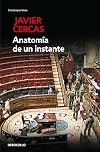
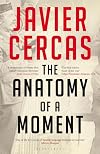
The Anatomy of a Moment: Thirty-Five Minutes in History and Imagination
by Javier Cercas
On This Page
Description
"The best history book at the year"-Felipe Fernandez-Armesto. Times Literary Supplement (UK)."A masterpiece of twenty-first-century European Literature."--Jordi Gracia, El Pais.In February 1981, Spain, still emerging from Franco's shadow, was in the process of electing a new prime minister. On the day of the vote in Parliament, while the session was being filmed by TV cameras, a band of right-wing soldiers burst in with automatic weapons, ordering everyone down. Only three men defied the show more order. For thirty-five minutes, as bullets flew and cameras rolled, they stayed in their seats.Javier Cercas originally set out to write a work of fiction about this pivotal event but determined it had already gained an air of myth, or, through the annual broadcast of video clips, had at least acquire the fictional taint of reality television. Instead, Cercas employs vivid descriptions of that archival footage to frame a true narrative of the attempted coup, which he comes to understand as a last gasp of the bloody civil war four decades earlier.Traversing the line between history and art, Cercas creates an incisive literary inquest into national myth, personal memory, political spectacle, and reality itself. His account of a watershed modent in Spain's history is a contemporary masterpiece of Spanish literature."With this noval, Javier Cercas takes his place in the select group at the forefront of Spanish literature."-Roberto Bolano."A masterly parable of political violence, of suffering, but also, and decisively, of the strange locic of compassion and healing ... [Soldiers of Salamis] should become a classic."-George Steiner."This book is magnificent ... One of the best I've read in a long time."-Mario Vargas Llosa, El Pais --Book Jacket. show lessTags
Recommendations

















Member Reviews
I read this shortly after Soldados de Salamina, and was struck by how differently Cercas approaches the "non-fiction novel" in the two cases. Soldados is a book with a closely-focussed plot and a very small group of characters, in which the author and the business of researching and writing the book plays a prominent part; in Anatomía there is a huge (all-male) cast of politicians, soldiers, courtiers and spies brought in to help us try to make sense of what happens to prime minister Alfonso Suarez in one short moment of the famous TV footage of the attempted coup of the 23rd of February 1981, taking as his premise a remark of Borges about historical events being defined in a single moment.
Cercas argues that our recollection of events show more does not make a clear distinction between fact and fiction, and that even our famous ability to remember "where we were when we heard about..." is false: thousands of people in Spain distinctly remember having seen the events of the 23rd live on television, but the parliamentary session was only being broadcast live on radio, and the famous TV footage was not shown until the following day, when it was all over. I can understand that: before reading the book I had a clear memory of seeing it on the British TV news and being concerned for the future of the fragile post-Franco democracy, but now that I think about it objectively it seems very unlikely that I saw it until well after it was all over. In February 1981 I was living in college, and rarely, if ever, came anywhere near a TV set. I probably saw the still picture of Lt-Col Tejero with his silly tricorn hat, moustache and sub-machine gun on the front page of a newspaper on the 24th. I'm sure Cercas is right that our awareness of history - even recent history - is basically just a set of stories we tell ourselves, and that it makes perfect sense to approach it with the same tools that we do fiction.
Although this is interesting, it wasn't on that rather theoretical level that I found the book fascinating and worthwhile. What counts is the intrinsic interest of its subject-matter, which Cercas communicates intelligently and clearly. I think it's an interest that goes well beyond Spain and one moment in 1981: what democracy means to us and why it has to be defended is a question that any of us might have to answer one day. show less
Cercas argues that our recollection of events show more does not make a clear distinction between fact and fiction, and that even our famous ability to remember "where we were when we heard about..." is false: thousands of people in Spain distinctly remember having seen the events of the 23rd live on television, but the parliamentary session was only being broadcast live on radio, and the famous TV footage was not shown until the following day, when it was all over. I can understand that: before reading the book I had a clear memory of seeing it on the British TV news and being concerned for the future of the fragile post-Franco democracy, but now that I think about it objectively it seems very unlikely that I saw it until well after it was all over. In February 1981 I was living in college, and rarely, if ever, came anywhere near a TV set. I probably saw the still picture of Lt-Col Tejero with his silly tricorn hat, moustache and sub-machine gun on the front page of a newspaper on the 24th. I'm sure Cercas is right that our awareness of history - even recent history - is basically just a set of stories we tell ourselves, and that it makes perfect sense to approach it with the same tools that we do fiction.
Although this is interesting, it wasn't on that rather theoretical level that I found the book fascinating and worthwhile. What counts is the intrinsic interest of its subject-matter, which Cercas communicates intelligently and clearly. I think it's an interest that goes well beyond Spain and one moment in 1981: what democracy means to us and why it has to be defended is a question that any of us might have to answer one day. show less
The novel that was never written. The history book that was never planned.
When Javier Cercas started writing this book, he planned on writing a novel. Except that it turned out that making it a novel is not necessary and the history of the events is almost unbelievable. So the novel plan was thrown away and instead we got this - a history book which is different from most history books you will ever read.
One of my favorite definitions of history is "Everything that happened before you were born is past history, everything happening in your lifetime is recent history". 23-F makes it into the past history category by a thread - I am born just months later. And because it was so new, it was missing from any history textbook I had ever show more used in class - if I remember correctly the history of the world in the few decades after the 70s were compressed in a few pages -- and I don't even remember hearing about that attempt to overthrow the government.
The story of the coup is simple - in the evening of 23 February 1981, Lieutenant-Colonel Antonio Tejero together with the Civil Guard went with weapons into the Parliament and took everyone as hostages. In the meantime, general Milans del Bosch started a revolution (or something similar enough) in Valencia, Alfonso Armada was trying to get to the king (because a lot of the participants were lied that the king approves silently) and a few smaller plots were under way. 3 men in the parliament did not submit and stayed either sitting or standing while everyone hid under the benches (General Manuel Gutierrez Mellado, Santiago Carillo and Antonio Suarez) - and Cercas uses these 3 men to compare them to three of the people that started the whole mess. And the singular is the correct category here - because even though it happened at the same time, the 23-F was actually a few different coup d'états rolled into one -- and any one of them could have succeeded. And probably would have - if some luck was not on the side of the current government.
The book is a biography - a biography of the 35 minutes after Tejero's march into the parliament. A case can be made that is also a biography of Suarez, of Spain in the early 80s or even of the whole event. But anything else takes backseats to the main event - these 35 minutes that could have changed everything. And it is more a journalistic account than a proper history book - without the flash of the nowadays newspapers - more in the style of the old fashioned journalism that made people see what happened around the world before we had the 24/7 images we can see now on TVs and online.
The way the book was written should have not worked - sentences spanning more than half a page, paragraphs spanning more than 2 pages, repetitious narrative and stating the same facts over and over (sometimes from different angles but still...), the initially annoying habit never to take a stance (I was getting seriously annoyed by all the "he know or should have known or X thought he knew or he thought that X knew that he knew" and so on - when you have 4 of those in the same paragraph, it gets long). And yet - it works. Once you get through the first 50 or so pages and the style actually works - flowery, almost lyrical in places, repetitious in places - but a very unique style that simply works.
Can you read the book if you have no knowledge of Spain's recent history? I think so -- all the background is there, all the research in why and how -- without becoming academic. And from the whole story emerge the images of the politicians of the Spain in 1981. And of Spain - the breathing Spain that lived through this -- and was almost ready to accept any outcome.
I suspect that the prose style won't work for everyone -- it almost made me stop reading the book initially. But even knowing that, I would still recommend the book. show less
When Javier Cercas started writing this book, he planned on writing a novel. Except that it turned out that making it a novel is not necessary and the history of the events is almost unbelievable. So the novel plan was thrown away and instead we got this - a history book which is different from most history books you will ever read.
One of my favorite definitions of history is "Everything that happened before you were born is past history, everything happening in your lifetime is recent history". 23-F makes it into the past history category by a thread - I am born just months later. And because it was so new, it was missing from any history textbook I had ever show more used in class - if I remember correctly the history of the world in the few decades after the 70s were compressed in a few pages -- and I don't even remember hearing about that attempt to overthrow the government.
The story of the coup is simple - in the evening of 23 February 1981, Lieutenant-Colonel Antonio Tejero together with the Civil Guard went with weapons into the Parliament and took everyone as hostages. In the meantime, general Milans del Bosch started a revolution (or something similar enough) in Valencia, Alfonso Armada was trying to get to the king (because a lot of the participants were lied that the king approves silently) and a few smaller plots were under way. 3 men in the parliament did not submit and stayed either sitting or standing while everyone hid under the benches (General Manuel Gutierrez Mellado, Santiago Carillo and Antonio Suarez) - and Cercas uses these 3 men to compare them to three of the people that started the whole mess. And the singular is the correct category here - because even though it happened at the same time, the 23-F was actually a few different coup d'états rolled into one -- and any one of them could have succeeded. And probably would have - if some luck was not on the side of the current government.
The book is a biography - a biography of the 35 minutes after Tejero's march into the parliament. A case can be made that is also a biography of Suarez, of Spain in the early 80s or even of the whole event. But anything else takes backseats to the main event - these 35 minutes that could have changed everything. And it is more a journalistic account than a proper history book - without the flash of the nowadays newspapers - more in the style of the old fashioned journalism that made people see what happened around the world before we had the 24/7 images we can see now on TVs and online.
The way the book was written should have not worked - sentences spanning more than half a page, paragraphs spanning more than 2 pages, repetitious narrative and stating the same facts over and over (sometimes from different angles but still...), the initially annoying habit never to take a stance (I was getting seriously annoyed by all the "he know or should have known or X thought he knew or he thought that X knew that he knew" and so on - when you have 4 of those in the same paragraph, it gets long). And yet - it works. Once you get through the first 50 or so pages and the style actually works - flowery, almost lyrical in places, repetitious in places - but a very unique style that simply works.
Can you read the book if you have no knowledge of Spain's recent history? I think so -- all the background is there, all the research in why and how -- without becoming academic. And from the whole story emerge the images of the politicians of the Spain in 1981. And of Spain - the breathing Spain that lived through this -- and was almost ready to accept any outcome.
I suspect that the prose style won't work for everyone -- it almost made me stop reading the book initially. But even knowing that, I would still recommend the book. show less
 This review was written for LibraryThing Early Reviewers.
Brilliant, moving, powerful. In Cercas' account of the 23 February 1981 hostage-taking in the Spanish Cortes, simple narrative and its components are denaturalized. Each moment is potentially transformational, and Cercas invests the fullness of his narrative talents in describing the meanings revealed in the momentary gestures of his actors. The narrative depends on thirty-five minutes of accidentally-recorded tape. It is Cercas' primary record and the framing device for his narrative, and he returns to it at the opening of each chapter.
Cercas' uncommon sympathy for what he calls the "hero of retreat" proves particularly moving. The few, great parliamentarians that resist their captors – Adolpho Suárez, the prime minister; Gutiérrez show more Mellado, his defense secretary; and Santiago Carillo, leader of the Communists – are at the end of their careers. They have lost their old allies. They have no friends in the new, democratic Spain that they had brought to life. In their resistance to their captors on 23 February, they are alone.
Cercas returns to the first years of democratization, and beyond to the Civil War. In their small, noble gestures on 23 February, he finds redemption – for Suárez, he finds a redemption from amoral politics, and for Mellado, a redemption from a Nationalist past. Cercas captures a fascinating coincidence of public virtue and private motive in his men, and each leg of his many trips to the thirty-five minutes is a minor revelation. Cercas gives the rebels Tejero, Milans and Armada far less moral depth, but he still details each decision they faced, and their every division over the aims of 23 February. His account is none the worse for it.
A delightful book. Strongly recommended. show less
Cercas' uncommon sympathy for what he calls the "hero of retreat" proves particularly moving. The few, great parliamentarians that resist their captors – Adolpho Suárez, the prime minister; Gutiérrez show more Mellado, his defense secretary; and Santiago Carillo, leader of the Communists – are at the end of their careers. They have lost their old allies. They have no friends in the new, democratic Spain that they had brought to life. In their resistance to their captors on 23 February, they are alone.
Cercas returns to the first years of democratization, and beyond to the Civil War. In their small, noble gestures on 23 February, he finds redemption – for Suárez, he finds a redemption from amoral politics, and for Mellado, a redemption from a Nationalist past. Cercas captures a fascinating coincidence of public virtue and private motive in his men, and each leg of his many trips to the thirty-five minutes is a minor revelation. Cercas gives the rebels Tejero, Milans and Armada far less moral depth, but he still details each decision they faced, and their every division over the aims of 23 February. His account is none the worse for it.
A delightful book. Strongly recommended. show less
This review was written for LibraryThing Early Reviewers.Jorge Luis Borges once wrote that "every destiny, however long and complicated, essentially boils down to a single moment -- the moment a man knows, once and for all, who he is." Thirty years ago in February of 1981, that moment came for three people who refused to comply with the demands of Lt. Col. Antonio Tejero and other members of the military, who came into a session of the Spanish parliament waving a gun and ordered everyone down to the floor. It was, it seems, the beginning of a coup. Film footage caught that moment and likewise caught these three people in their own gestures of resistance: Antonio Suárez, the prime minister; General Manuel Gutierrez Mellado, deputy prime minister; and finally, Santiago Carillo, the head of the show more Spanish Communist Party. Suarez stayed in his seat. Gutierrez Mellado looks to be challenging Tejero and his men to put down their weapons and is simultaneously guarding Suarez. Carillo just sits there, smoking a cigarette. At first Cercas thought that the story would be the background of a new novel, but as he writes,
"I decided that the only way to erect a fiction on the 23 February coup was to know as scrupulously as possible the reality of the 23 February coup. Only then did I dive into the depths of the mishmash of theoretical constructions, uncertainties, embellishments, falsehoods and invented memories surrounding that day. For several months...I worked full time at reading all the books I could find about 23 February and the years that preceeded it...They were obsessive, happy months, but as my investigation advanced and my vision of the coup d'état changed, I began to understand very quickly...that the reality of 23 February was of such magnitude that for the moment it was invincible...and it was therefore futile of me to propose the exploit of defeating it with a novel...even though I was a writer of fiction, for once reality mattered more to me than fiction or mattered to me too much to want to reinvent it by substituting it with an alternative reality..."
So rather than create a fiction based on that moment captured on camera, Cercas came up with a narrative of events leading to the coup, the coup itself and the aftermath, told via the political lives and careers of Suarez, Gutierrez Mellado and Carillo. He also delves into the motivations of the leaders and some of the participants of the coup and explores the position held by Spain's king. Anatomy of a Moment is a history, but the author also interjects a great deal of personal insight and reflection as well as speculation. Nearly every chapter ends and begins with a series of questions that Cercas explores, and although it is quite dense at times, it's absolutely fascinating and engrossing. The amount of research Cercas must have done to produce this book must have been staggering, as he goes back into the politics and players of the Spanish Civil War, coming full circle back to the coup and its meaning for the legacies left by that period of Spain's history.
It took me a while to finish this book, but it was definitely well worth every second of time spent reading it. My only issue with this book is that Cercas often launches into nearly stream-of-consciousness type observations with long, drawn-out sentences that I often needed to parse to stay on track. I think it would appeal most to readers of politics, European history, or people who have a great interest in the Spanish Civil War. It's definitely not a project for those who prefer their reads light, and it's not like most histories that are written to read like novels. But if you're interested, I wouldn't miss it. show less
"I decided that the only way to erect a fiction on the 23 February coup was to know as scrupulously as possible the reality of the 23 February coup. Only then did I dive into the depths of the mishmash of theoretical constructions, uncertainties, embellishments, falsehoods and invented memories surrounding that day. For several months...I worked full time at reading all the books I could find about 23 February and the years that preceeded it...They were obsessive, happy months, but as my investigation advanced and my vision of the coup d'état changed, I began to understand very quickly...that the reality of 23 February was of such magnitude that for the moment it was invincible...and it was therefore futile of me to propose the exploit of defeating it with a novel...even though I was a writer of fiction, for once reality mattered more to me than fiction or mattered to me too much to want to reinvent it by substituting it with an alternative reality..."
So rather than create a fiction based on that moment captured on camera, Cercas came up with a narrative of events leading to the coup, the coup itself and the aftermath, told via the political lives and careers of Suarez, Gutierrez Mellado and Carillo. He also delves into the motivations of the leaders and some of the participants of the coup and explores the position held by Spain's king. Anatomy of a Moment is a history, but the author also interjects a great deal of personal insight and reflection as well as speculation. Nearly every chapter ends and begins with a series of questions that Cercas explores, and although it is quite dense at times, it's absolutely fascinating and engrossing. The amount of research Cercas must have done to produce this book must have been staggering, as he goes back into the politics and players of the Spanish Civil War, coming full circle back to the coup and its meaning for the legacies left by that period of Spain's history.
It took me a while to finish this book, but it was definitely well worth every second of time spent reading it. My only issue with this book is that Cercas often launches into nearly stream-of-consciousness type observations with long, drawn-out sentences that I often needed to parse to stay on track. I think it would appeal most to readers of politics, European history, or people who have a great interest in the Spanish Civil War. It's definitely not a project for those who prefer their reads light, and it's not like most histories that are written to read like novels. But if you're interested, I wouldn't miss it. show less
This review was written for LibraryThing Early Reviewers.Anatomy of a Moment is a fascinating look at the events around the 23rd Feb 1981 coup attempt in Spain. Whilst I have read a number of books on the Spanish Civil War, I had not read anything on the Franco years or the immediate aftermath so I found this book really enlightening. It covers the lead up to the coup, the background of the key players, the events of the coup itself and the aftermath. Undoubtedly, there is one figure that stands out above all others, the main focus of this book: Adolfo Suarez.
A minister under Franco, Suarez was chosen by King Juan Carlos I to lead the transition from dictatorship to democracy. He did so with great skill and cunning, outmaneuvering both left and right in trying to create a stable democracy. show more Before reading this book I knew little about Suarez or his role in the "transition". Now I am fascinated by this interesting and wily character. If it wasn't for the skill of Suarez, Spain might still be suffering under a military dictatorship. That they aren't is principally down to a man who understood the game of politics perhaps more than any of his contemporaries.
If you are interested in finding out more about the "transition" and the immediate post-Franco era, I would heartily recommend this book. And if you aren't, read it anyway. It is a worthy addition to the body of work exploring Spain's path in the last 100 years, from democracy to Civil War to dictatorship to democracy again. show less
A minister under Franco, Suarez was chosen by King Juan Carlos I to lead the transition from dictatorship to democracy. He did so with great skill and cunning, outmaneuvering both left and right in trying to create a stable democracy. show more Before reading this book I knew little about Suarez or his role in the "transition". Now I am fascinated by this interesting and wily character. If it wasn't for the skill of Suarez, Spain might still be suffering under a military dictatorship. That they aren't is principally down to a man who understood the game of politics perhaps more than any of his contemporaries.
If you are interested in finding out more about the "transition" and the immediate post-Franco era, I would heartily recommend this book. And if you aren't, read it anyway. It is a worthy addition to the body of work exploring Spain's path in the last 100 years, from democracy to Civil War to dictatorship to democracy again. show less
Este libro es dificil de clasificar ya que es una novela fallida (segun cuenta el autor) que acabo siendo una mezcla de ensayo, documento periodistico y analisis historico de la transicion espanola. Cercas mantiene la tension narrativa y la combina con un uso riguroso de las fuentes y con una caracterizacion de los personajes y sus motivaciones que es mas tipica de la novela que del ensayo. El resultado es una obra informativa, que invita a la reflexion y que resulta muy amena. Esta es una obra que interesara no solo a aquellos que tengan un interes por la historia reciente de Espana, y en particular por el golpe de estado del 23-F, sino tambien a aquellos que quieran ver como se puede pasar de un estado autoritario a una democracia, de show more una manera pacifica y negociada. Excelente! show less
February 23rd, 1981. The Congress of Deputies, Spain's lower house of the legislative branch of government, is in the process of electing Leopoldo Calvo Sotelo as President of the Spanish government and Prime Minister of the country, replacing the controversial and almost universally reviled Adolfo Suárez, the first Prime Minister elected after the end of Franco's dictatorship. Calvo Sotelo needs a simple majority, which is all but guaranteed after he failed to win an absolute majority in an election held on February 20th.
There is a commotion outside of the chamber, causing the deputies to hold their breaths. Suddenly, armed members of the Guardia Civil, led by Lieutenant Colonel Antonio Tejero, rush into the room, and demand that the show more deputies duck for cover. Tejero stands before them and announces a coup d'état in opposition to democracy and the election of the new Prime Minister, as bullets fired by the Guardia Civil fly aimlessly about. Three men remain seated or standing throughout the chaos: Adolfo Suárez, who resigned a few weeks earlier; General Manuel Gutiérrez Mellado, the Deputy Prime Minister, who unsuccessfully attempts to order Tejero to drop his weapon and surrender, and is led to his seat by Suárez; and Santiago Carrillo, the leader of the Communist Party, whose organization was incorporated into the government by Suárez in 1977, an act that drew the ire of the military and led to the beginning of the opposition to Suárez that ultimately led to the coup.
The King of Spain, Juan Carlos I, gave a televised address before the country denouncing the golpistas. By that evening the bloodless coup fell apart, and the hostages were released the following morning. Calvo Sotelo was elected Prime Minister on February 25th, and the young democracy was preserved.
Radio coverage of the coup by the golpistas was broadcast throughout the country, and cameras captured the event as it happened, although it was not shown on television until the next day. The story of the coup d'état remains incomplete 30 years after it took place, despite numerous investigations and literature written about it. (A video of the coup as it takes place can be seen here: http://www.rtve.es/noticias/23f/ .)
Javier Cercas, one of the most highly regarded contemporary Spanish novelists, aimed to write a novel about the coup, known as 23-F for the date of its occurrence, which was the last coup that has taken place in Western Europe. He completed a first draft, then realized that it was not sufficient, as it was not based on detailed factual information. Cercas then researched the event in great detail, reading everything he could about the events leading up to the coup, interviewing participants and investigators, and repeatedly watching the entire television coverage of the event. The result was this book, an exquisitely detailed work of nonfiction based mainly on four key actors: Tejero, Suárez, Gutiérrez Mellado, and Carrillo. Cercas uses his literary skill to link the stories into a coherent whole, which also provides a interesting analysis into the workings of politics and the government and military of Spain following Franco's death.
The [Anatomy of a Moment] is a major accomplishment, which won four major book awards in Spain upon its publication. However, it is not one written for the casual reader, and would be best appreciated by those interested in the history of post-Franco Spain or Western democracy. show less
There is a commotion outside of the chamber, causing the deputies to hold their breaths. Suddenly, armed members of the Guardia Civil, led by Lieutenant Colonel Antonio Tejero, rush into the room, and demand that the show more deputies duck for cover. Tejero stands before them and announces a coup d'état in opposition to democracy and the election of the new Prime Minister, as bullets fired by the Guardia Civil fly aimlessly about. Three men remain seated or standing throughout the chaos: Adolfo Suárez, who resigned a few weeks earlier; General Manuel Gutiérrez Mellado, the Deputy Prime Minister, who unsuccessfully attempts to order Tejero to drop his weapon and surrender, and is led to his seat by Suárez; and Santiago Carrillo, the leader of the Communist Party, whose organization was incorporated into the government by Suárez in 1977, an act that drew the ire of the military and led to the beginning of the opposition to Suárez that ultimately led to the coup.
The King of Spain, Juan Carlos I, gave a televised address before the country denouncing the golpistas. By that evening the bloodless coup fell apart, and the hostages were released the following morning. Calvo Sotelo was elected Prime Minister on February 25th, and the young democracy was preserved.
Radio coverage of the coup by the golpistas was broadcast throughout the country, and cameras captured the event as it happened, although it was not shown on television until the next day. The story of the coup d'état remains incomplete 30 years after it took place, despite numerous investigations and literature written about it. (A video of the coup as it takes place can be seen here: http://www.rtve.es/noticias/23f/ .)
Javier Cercas, one of the most highly regarded contemporary Spanish novelists, aimed to write a novel about the coup, known as 23-F for the date of its occurrence, which was the last coup that has taken place in Western Europe. He completed a first draft, then realized that it was not sufficient, as it was not based on detailed factual information. Cercas then researched the event in great detail, reading everything he could about the events leading up to the coup, interviewing participants and investigators, and repeatedly watching the entire television coverage of the event. The result was this book, an exquisitely detailed work of nonfiction based mainly on four key actors: Tejero, Suárez, Gutiérrez Mellado, and Carrillo. Cercas uses his literary skill to link the stories into a coherent whole, which also provides a interesting analysis into the workings of politics and the government and military of Spain following Franco's death.
The [Anatomy of a Moment] is a major accomplishment, which won four major book awards in Spain upon its publication. However, it is not one written for the casual reader, and would be best appreciated by those interested in the history of post-Franco Spain or Western democracy. show less
This review was written for LibraryThing Early Reviewers.Members
- Recently Added By
Published Reviews
ThingScore 100
The alluring but treacherous borderlands between fact and fiction have never been more attractive to writers and readers, and the Spanish novelist Javier Cercas knows the territory well. A previous book, The Soldiers of Salamis, was a brilliant and original semi-fictional exploration of the Spanish Civil War; here he returns to another crucial episode in the history of his country in this show more dense but gripping, almost Shakespearean account of soldiers, politicians, mixed motives and the lust for power. show less
added by kidzdoc
Cercas is a major novelist who has written a fascinating account of a key event in Spain's recent history. Although 30 years have passed, the coup still reverberates. Many argue that, though the coup failed, it triumphed (one of the many paradoxes Cercas delights in): it forced the political class to grow up or, a more sinister consequence, it made politicians fall over each other to give the show more military what it wanted, a modernised NATO army and a more restricted democracy. Cercas's decision to write fact not fiction is vindicated. He forces us to abandon the fiction, the legends of the coup, and look at the pictures and story anew in all their complexity. show less
added by kidzdoc
Lists

Los 100 mejores libros en español de los últimos 25 años
26 works; 1 member

España en cien libros
100 works; 1 member
Author Information

38+ Works 4,983 Members
Javier Cercas is the author of Soldiers of Salamis (which sold more than a million copies worldwide), The Tenant and the Motive, and The Speed of Light. He has taught at the University of Illinois and for many years was a lecturer in Spanish literature at the University of Gerona. His books have been translated into more than twenty languages.
Some Editions
Awards and Honors
Awards
Distinctions
Series
Belongs to Publisher Series
Common Knowledge
- Canonical title
- The Anatomy of a Moment: Thirty-Five Minutes in History and Imagination
- Original title
- Anatomía de un instante
- Original publication date
- 2009
- People/Characters
- Adolfo Suárez; Santiago Carrillo; Manuel Gutiérrez Mellado; Juan Carlos I
- Important places
- Madrid, Spain
- Important events
- Coup d'état attempt (1981); Golpe de Estado en España (1981-02-23)
- Epigraph
- colui
che fece... il gran rifiuto.
DANTE,
Inferno, III, 59-60 - Dedication
- In memoria di José Cercas
A Raül Cercas e Mercé Mas - First words
- In the middle of March 2008, I read that according to a poll published in the United Kingdom almost a quarter of Britons thought Winston Churchill was a fictional character.
A mediados de marzo de 2008 leí que según una encuesta publicada en el Reino Unido la cuarta parte de los ingleses pensaba que Winston Churchill era un personaje de ficción. - Last words
- (Click to show. Warning: May contain spoilers.)Y por eso unos meses más tarde, cuando su muerte y la resurrección de Adolfo Suárez en los periódicos formaron una última simetría, la última figura de esta historia, yo no pude evitar preguntarme si habiá empezado a escribir este libro no para intentar entender a Adolfo Suárez o un gesto de Suárez sino para entender a mi padre, si había seguido escribiendolo para seguir hablando con mi padre, si había querido terminarlo para que mi padre lo leyera y supiera que por fin había entendido que yo no tenía tanta razón y él no estaba tan equivocado, que yo no soy mejor que él, y que ya no voy a serlo.
- Original language
- Spanish
Classifications
- Genres
- History, Nonfiction
- DDC/MDS
- 946.083 — History & geography History of Europe Spain & Portugal Spain Second Republic; Dictatorship; Juan Carlos I; Felipe VI 1931- Democracy 1976-
- LCC
- DP272 .C42813 — History of Europe, Asia, Africa and Oceania Spain – Portugal History of Spain History By period Modern Spain, 1479/1516- 20th century. 1886- 1975-
- BISAC
Statistics
- Members
- 710
- Popularity
- 40,179
- Reviews
- 39
- Rating
- (3.78)
- Languages
- 9 — Catalan, Dutch, English, French, German, Italian, Polish, Portuguese, Spanish
- Media
- Paper, Audiobook, Ebook
- ISBNs
- 35
- ASINs
- 12