On This Page
Description
Picks up the story of Isadora three years after the events of "Fear of Flying". Isadora is by now an older, wiser and somewhat more rueful heroine. This time her odyssey takes her to the never-never land called California where she meets a variety of sharks, knaves, fools-- and one real lover.Tags
Recommendations

















Member Reviews
Erica Jong’s sequel to the bestseller ‘Fear of Flying’ tells the next part of her life story via the character Isadora Wing. Isadora is married to Asian-American psychiatrist Bennett Wing; Erica was married to Asian-American psychiatrist Allan Jong. Isadora is Jewish, grew up in New York, and spent three years in Heidelberg with Bennett; Erica, well, you get the idea. The story picks up from when Bennett/Allan had forgiven her for her adultery and taken her back. Not surprisingly, their marriage still has issues, and when Bennett/Allan reveals his own indiscretions from the past, Isadora/Erica takes it very hard, even though she’s kept on having her own flings on the side. Dealing with this, as well as her new-found fame for her show more first novel, creates a crisis in her life. After making the rounds to her friends who dispense advice and in a couple of cases sex (and offers for a future together), she flies out to Hollywood to see about a possible film deal. There she meets Josh Ace/Jonathan Fast.
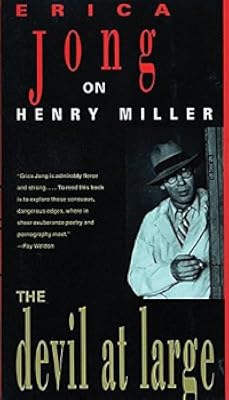
I find Jong compelling and I enjoyed this book to the end, but she does get a little repetitive and comes across as whining at times. I don’t think it’s a problem that the book is highly autobiographical (and with a rather complete cast; Britt Goldstein = sleazy Hollywood producer Julia Phillips, Jeannie Morton = suicidal poet Anne Sexton; Kurt Hammer = Henry Miller, etc.), and in fact that’s a somewhat interesting aspect of it, but it slips too often into reading like a journal without enough indirection or polish.
Jong has a reputation for explicitly sexuality and lives up to it here, so if you don’t like that sort of thing, this book is not for you. Trying to draw the line between expressing sexuality in an honest way and not going too far is tricky, particularly as every reader’s taste is going to vary. In this case, I felt she did well for most of the novel, but got a little too graphic towards the end, starting with an orgy scene. It’s not that the descriptions of the sex offended me, but they just seemed unnecessary and in there to titillate and sell books.
On the other hand, Jong is honest in her writing, and truly pushed boundaries for women. She’s well-read, cultured, and intelligent. She leaves herself bare on the page, both in terms of liking sex, which took a lot of guts to write about, but also in her soul searching about love and marriage. She captures the spirit of the 70’s, replete with psychotherapy, astrology, and the “new” expression to describe the culture in California: “laid-back”, which I smiled over.
However, after her breakthrough first novel which I loved, this one comes across as derivative, and a bit like ‘pop literature’ when she could do better – and did do better in her next novel, which was her version of Fanny Hill.
Here are a couple representative passages to give you an idea of her writing; the first, on her problem with her husband:
“How had we drifted so far apart? Or were we apart from the very beginning? Does eight years of marriage erode all points of contact between two people – or weren’t they ever there? I no longer knew. I only knew that I never looked forward to going on a vacation with him – or being alone with him at night – and that I filled my life with frenetic activity, hundreds of friends, casual affairs (which, of course, I felt guilty about) because being alone in his company was so curiously sterile. Even when we were home together, I was forever retreating to my study to work. Surely some of this was my fierce ambition (or, as my astrologer-nut friends would say, typical Aries woman married to a typical Cancer man); but surely some of it was a desire not to be with Bennett. His presence depressed me. There was something life-denying about his very manner, carriage, and monotonous way of speaking. How could one create life with someone who represented death?”
And this one, a small snippet but an example of her writing at its playful best:
“’Possibly you want to take me to bed?’ (My heart started pounding with astonishment at my own chutzpah
‘Bed?’ he said, as if he’d never heard the word before, as if the object itself were unfamiliar to him, an archaeological find, a household item from early Greece no longer in use today and unknown except to specialists.”
Lastly, a note on the connection discovered to the book I read previously, which was Vasily Shukshin’s ‘Stories from a Siberian Village’; from Jong: “It was harsh – but not as harsh as the fates of some of the other kids growing up during the Second World War.” After having just read this, among other things, from Shushkin, who was one such child: “But then the war broke out and our other father was no more, he was killed in the Kursk encirclement. Once again, hard times came upon us…” show less
I find Jong compelling and I enjoyed this book to the end, but she does get a little repetitive and comes across as whining at times. I don’t think it’s a problem that the book is highly autobiographical (and with a rather complete cast; Britt Goldstein = sleazy Hollywood producer Julia Phillips, Jeannie Morton = suicidal poet Anne Sexton; Kurt Hammer = Henry Miller, etc.), and in fact that’s a somewhat interesting aspect of it, but it slips too often into reading like a journal without enough indirection or polish.
Jong has a reputation for explicitly sexuality and lives up to it here, so if you don’t like that sort of thing, this book is not for you. Trying to draw the line between expressing sexuality in an honest way and not going too far is tricky, particularly as every reader’s taste is going to vary. In this case, I felt she did well for most of the novel, but got a little too graphic towards the end, starting with an orgy scene. It’s not that the descriptions of the sex offended me, but they just seemed unnecessary and in there to titillate and sell books.
On the other hand, Jong is honest in her writing, and truly pushed boundaries for women. She’s well-read, cultured, and intelligent. She leaves herself bare on the page, both in terms of liking sex, which took a lot of guts to write about, but also in her soul searching about love and marriage. She captures the spirit of the 70’s, replete with psychotherapy, astrology, and the “new” expression to describe the culture in California: “laid-back”, which I smiled over.
However, after her breakthrough first novel which I loved, this one comes across as derivative, and a bit like ‘pop literature’ when she could do better – and did do better in her next novel, which was her version of Fanny Hill.
Here are a couple representative passages to give you an idea of her writing; the first, on her problem with her husband:
“How had we drifted so far apart? Or were we apart from the very beginning? Does eight years of marriage erode all points of contact between two people – or weren’t they ever there? I no longer knew. I only knew that I never looked forward to going on a vacation with him – or being alone with him at night – and that I filled my life with frenetic activity, hundreds of friends, casual affairs (which, of course, I felt guilty about) because being alone in his company was so curiously sterile. Even when we were home together, I was forever retreating to my study to work. Surely some of this was my fierce ambition (or, as my astrologer-nut friends would say, typical Aries woman married to a typical Cancer man); but surely some of it was a desire not to be with Bennett. His presence depressed me. There was something life-denying about his very manner, carriage, and monotonous way of speaking. How could one create life with someone who represented death?”
And this one, a small snippet but an example of her writing at its playful best:
“’Possibly you want to take me to bed?’ (My heart started pounding with astonishment at my own chutzpah
‘Bed?’ he said, as if he’d never heard the word before, as if the object itself were unfamiliar to him, an archaeological find, a household item from early Greece no longer in use today and unknown except to specialists.”
Lastly, a note on the connection discovered to the book I read previously, which was Vasily Shukshin’s ‘Stories from a Siberian Village’; from Jong: “It was harsh – but not as harsh as the fates of some of the other kids growing up during the Second World War.” After having just read this, among other things, from Shushkin, who was one such child: “But then the war broke out and our other father was no more, he was killed in the Kursk encirclement. Once again, hard times came upon us…” show less
How to Save Your Own Life is the sequel to Erica Jong’s debut novel, Fear of Flying. This one finds heroine – and Jong’s literary alter ego – Isabelle Wing back in New York, deciding whether or not to leave her “awful wedded husband” Bennett.
As with Fear of Flying, this novel is frank, funny, and surprisingly contemporary for being over 30 years old. It is as full of insight and spot-on commentary about the human condition as the best of Saul Bellow, Philip Roth, John Updike, or any of the other male authors Jong set out to emulate from a female perspective.
Full review posted on Rose City Reader.
As with Fear of Flying, this novel is frank, funny, and surprisingly contemporary for being over 30 years old. It is as full of insight and spot-on commentary about the human condition as the best of Saul Bellow, Philip Roth, John Updike, or any of the other male authors Jong set out to emulate from a female perspective.
Full review posted on Rose City Reader.
Sexy sequel to _Fear_ and also featuring Jong's alter Wing who stumbles upon unhappiness and struggles to find intimacy in her rather oppressive life. Great humor and good sex would seem to be one way out...
very erotic. scenes with orgeys and lesbians and very raunchy sex. other than all that, i enjoyed the book. jong is a great and insightful writer.
BG-5
Oct 8, 2020Catalan
Dedicatòria: Clara, hoy, en esta dia, tú ya sabes y hoy, quiero para tí este libro, no como un catecismo, simplemente es ella, que escribe, lo que a mi me gustaría y no soy capaz, pero simplemente me gusta porque me recuerda a mi, un poco. Por eso, me gustaría que lo leyeses. Simplemente así. Y el final es como mi presente. Clara, como me gusta a mi me gusta para ti. Te quiero (signatura il·legible)
Mar 24, 2020Catalan
Traster 4 - caixa 4
Mar 31, 2020Spanish
Members
- Recently Added By
Lists

Jewish Books
367 works; 24 members

Anthony Burgess 99 Post War Novels
99 works; 7 members

Publisher's Weekly Bestsellers - Part II - 1940 - 1979
355 works; 6 members
Author Information

50+ Works 8,965 Members
Erica Jong was born on March 26, 1942. She received a B.A. from Barnard College and a M.A. in 18th Century English Literature from Columbia University. She also attended Columbia University's graduate writing program where she studied poetry. She has written numerous volumes of poetry, novels, and non-fiction works including Fruits and Vegetables, show more Fear of Flying, How to Save Your Own Life, Parachutes and Kisses, Sappho's Leap, Seducing the Demon: Writing for My Life, and It Was Eight Years Ago Today (But It Seems Like Eighty). She has received numerous awards including the United Nations Award for Excellence in Literature, Poetry magazine's Bess Hokin Prize, the Deauville Award for Literary Excellence, and the Sigmund Freud Award for Literature. (Bowker Author Biography) show less
Some Editions
Awards and Honors
Distinctions
Notable Lists
Series

Belongs to Publisher Series
Work Relationships
Common Knowledge
- Canonical title
- How to Save Your Own Life
- Original publication date
- 1977
- People/Characters
- Isadora Wing
- Important places
- Los Angeles, California, USA
- First words
- I left my husband on Thanksgiving Day.
Classifications
Statistics
- Members
- 701
- Popularity
- 40,847
- Reviews
- 7
- Rating
- (3.28)
- Languages
- 11 — Danish, Dutch, English, Finnish, French, German, Italian, Norwegian (Bokmål), Polish, Spanish, Swedish
- Media
- Paper, Ebook
- ISBNs
- 37
- ASINs
- 19