On This Page
Description
Ender Wiggin, the hero and scapegoat of mass alien destruction in Ender's Game, receives a chance at redemption in this novel. Ender, who proclaimed as a mistake his success in wiping out an alien race, wins the opportunity to cope better with a second race, discovered by Portuguese colonists on the planet Lusitania. Orson Scott Card infuses this long, ambitious tale with intellect by casting his characters in social, religious and cultural contexts.Tags
Recommendations





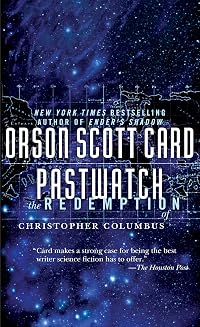
Member Recommendations
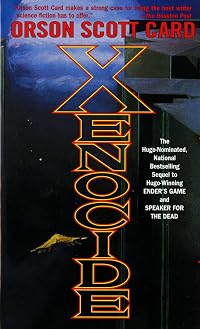
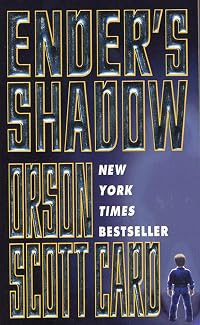
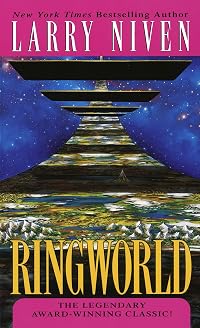
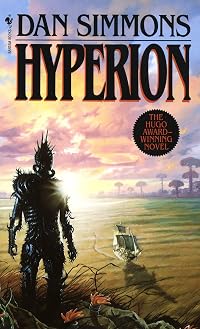
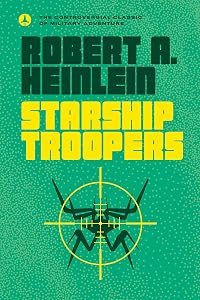
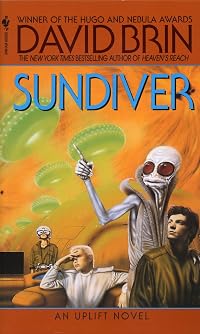
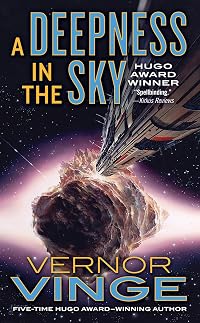
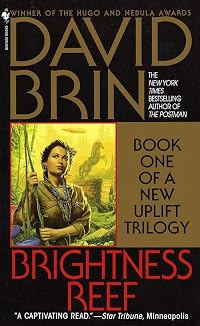
sturlington Also about first contact with an alien civilization that humans cannot understand.
21
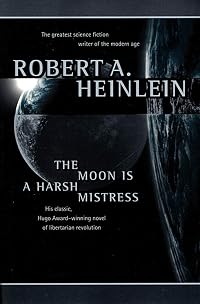
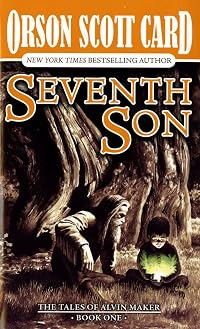
saltmanz These two books have quite a lot in common: first contact, a Christian human colony, a group of scientists, moral dilemmas, sharply drawn characters, and even more that I won't get into for fear of spoilers. Both fantastic books.
Member Reviews
So great to revisit one of my absolute favorite novels of all time!
Back when I first read this, Andrew Wiggin immediately jumped into my heart to become my ultimate role-model, my hero, and the idealized version of myself. Ender's Game had him go through some horrific things and really set the stage for the man he was later to become, but it is the full-grown man that really pulls on my heartstrings.
No. He wasn't truly at fault for wiping out the Formics. That can be laid at other's feet.
But he absolutely pulled the trigger. And the end of Ender's Game showed us the beginning of his redemption. Where redemption takes the form of Understanding. And then telling All the Truth, the good and the bad. Exposing it to the world for good or show more ill. I LOVE how this turned into a very powerful force for good.
Better yet, I love how turning it upon this special world of Lusitania transforms everyone's lives this dramatically. Or how it affects four intelligent species. Or how it paves the way for real redemption.
I'm not all that fond of Christian motif stories because they're generally all ham-fisted and overdone. Like, A LOT. But this one does NOT go that way. It's humanist. It's understanding that all of us have good and bad within us, and that accepting (and really understanding) each other is can be the most life-affirming thing that any of us can do.
The story of Speaker for the Dead is powerful on all levels of worldbuilding, strange aliens, mystery, love, and sheer cussed awesomeness. The threat of another Xenocide times three is shocking enough on its own, but when combined with all the events from Ender's Game, Speaker basically turns me into a quivering ball of emotional jelly. And worse, the characters, and I mean ALL the characters, from Pequenios to Navi's family to Andrew himself, just draws such a warm feeling from me that I can't even stand it.
It's more messed up than Ender's Game. More wonderful. Deeper, adult, complex, painful, and glorious.
I can't particularly think of ANY novel that deep down affects me more on a personal level. I'm thinking along the lines of putting this in one of my top ten best novels of all time. :)
So gorgeous. So important. :) show less
Back when I first read this, Andrew Wiggin immediately jumped into my heart to become my ultimate role-model, my hero, and the idealized version of myself. Ender's Game had him go through some horrific things and really set the stage for the man he was later to become, but it is the full-grown man that really pulls on my heartstrings.
No. He wasn't truly at fault for wiping out the Formics. That can be laid at other's feet.
But he absolutely pulled the trigger. And the end of Ender's Game showed us the beginning of his redemption. Where redemption takes the form of Understanding. And then telling All the Truth, the good and the bad. Exposing it to the world for good or show more ill. I LOVE how this turned into a very powerful force for good.
Better yet, I love how turning it upon this special world of Lusitania transforms everyone's lives this dramatically. Or how it affects four intelligent species. Or how it paves the way for real redemption.
I'm not all that fond of Christian motif stories because they're generally all ham-fisted and overdone. Like, A LOT. But this one does NOT go that way. It's humanist. It's understanding that all of us have good and bad within us, and that accepting (and really understanding) each other is can be the most life-affirming thing that any of us can do.
The story of Speaker for the Dead is powerful on all levels of worldbuilding, strange aliens, mystery, love, and sheer cussed awesomeness. The threat of another Xenocide times three is shocking enough on its own, but when combined with all the events from Ender's Game, Speaker basically turns me into a quivering ball of emotional jelly. And worse, the characters, and I mean ALL the characters, from Pequenios to Navi's family to Andrew himself, just draws such a warm feeling from me that I can't even stand it.
It's more messed up than Ender's Game. More wonderful. Deeper, adult, complex, painful, and glorious.
I can't particularly think of ANY novel that deep down affects me more on a personal level. I'm thinking along the lines of putting this in one of my top ten best novels of all time. :)
So gorgeous. So important. :) show less
This book absolutely transcends Ender's Game. I found it thought provoking and insightful. It was refreshing to read because the concept of war and hatred is largely denounced and themes of peace and coexistence run front and center to the plot. There are definitely religious themes but those themes don't dominate or direct the narrative morally. They are a part of the reality of the narrative. Again, I loved reading this book even though the plot was a bit slow and there is not a lot of action. It was the conversations between characters and the philosophy regarding contact between different worlds that really enthralled me.
An unexpected departure from the tone and structure of Ender's Game came as a pleasant surprise. Overall the Speaker for the Dead was an interesting, if somewhat flawed, reading experience.
As ever, Orson Scott Card's writing style is very engaging. However, the book is marred by rather too many walk-on walk-off characters that reduce the depth of development of the main actors in the plot. Ender is a more rounded, if slightly annoyingly, omniscient character and the new aliens have an irritatingly stupid colloquial name that is only slightly better than in book one.
Still a little YA overall, but just about good enough to persuade me to read book three.
As ever, Orson Scott Card's writing style is very engaging. However, the book is marred by rather too many walk-on walk-off characters that reduce the depth of development of the main actors in the plot. Ender is a more rounded, if slightly annoyingly, omniscient character and the new aliens have an irritatingly stupid colloquial name that is only slightly better than in book one.
Still a little YA overall, but just about good enough to persuade me to read book three.
Orson Scott Card is one of a distressingly large class of science fiction authors whose work is best appreciated by those who can ignore the writer’s opinions and behavior regarding religion, politics, and sex. The question for a reader is not what Card believes about these issues but what his novels say about them.
Ender’s Game dramatizes the pitfalls of innocence. Young Ender commits near xenocide because he doesn’t know that the decisions he makes in simulated battle games cost lives. In Speaker for the Dead, Ender sets out to find a new home for the Buggers. But full atonement is never possible, and the sins of ignorance are inescapable. Ender unwittingly causes the Bugger Queen pain because she does not experience time show more dilation and is conscious throughout the decades-long voyage. He also damages his close relationship with Jane, the ansible-AI, when he cuts his link to her, unaware that hours for him seem like years to her.
A similar drama of well-intentioned torture takes place on the planet Lusitania, where aliens and humans do not understand each other’s biological imperatives. The colonists also injure each other through well-intentioned attempts to protect each other from unpleasant truths.
NB: Speaker for the Dead seems to pay homage to James Blish’s A Case of Conscience (1958), another novel where a priest struggles to understand innocent but dangerous aliens who talk to trees. show less
Ender’s Game dramatizes the pitfalls of innocence. Young Ender commits near xenocide because he doesn’t know that the decisions he makes in simulated battle games cost lives. In Speaker for the Dead, Ender sets out to find a new home for the Buggers. But full atonement is never possible, and the sins of ignorance are inescapable. Ender unwittingly causes the Bugger Queen pain because she does not experience time show more dilation and is conscious throughout the decades-long voyage. He also damages his close relationship with Jane, the ansible-AI, when he cuts his link to her, unaware that hours for him seem like years to her.
A similar drama of well-intentioned torture takes place on the planet Lusitania, where aliens and humans do not understand each other’s biological imperatives. The colonists also injure each other through well-intentioned attempts to protect each other from unpleasant truths.
NB: Speaker for the Dead seems to pay homage to James Blish’s A Case of Conscience (1958), another novel where a priest struggles to understand innocent but dangerous aliens who talk to trees. show less
Years ago, when I first read the original Ender's trilogy, I found it awesome. Reading it years later after knowing more about the author and his views, I find I'm reading different books. Reading these, I'm struck that books aren't just the creation of their authors--they're collaborations between the author and the reader, and if the reader changes or his perception of what the author intended changes, you get a different read. That didn't affect my reread of Ender's Game much. From time to time, yes I could see what I'd learned of Card peeking through, but I still found the book a great adventure and a thought-provoking read. I found that Speaker for the Dead was a different case.
I didn't find this book as memorable as the first show more book--literally. I remembered a lot of Ender's Game, with this one it's as if I was reading it for the first time--I had forgotten it all. I imagine that the first time I read the book, I felt terrible about how the precepts and strictures of the theocracy Novinha was born into wrecked havoc upon her life, or at least aided and abetted. This time around though, I couldn't help but suspect that aspects I might have thought Card was critiquing, were actually aspects Card thoroughly approves of--the idea of husband and wife as legally one person so a wife has no right of privacy, the toleration of domestic violence, the lack of abortion or birth control so that six children are born into a a family with an abusive husband, the lack of a right to a civil divorce so that personal or familial happiness is impossible as long as the abuser lives so that his death is cause for rejoicing by his family...
All of that meant reading this was a very different experience for me. The religious aspect didn't bother me the first time--in fact I appreciated that Card, unlike most science fiction writers, includes a religious aspect to his characters, since for good or ill, I personally think religious belief will always be an important part of the human condition--as are families, another aspect many science fiction writers downplay that are an important feature of Card's works. But there's a difference between feeling an author is writing about religion, than feeling a religious agenda, one that judges people who don't have five or more children as not full adults, is part of the story.
And I wonder that the Catholic Church Card imagines over three thousand years in the future is so unchanging. That certainly hasn't been the case when you contrast today's church with that a thousand or two thousand years ago--a Church that once had married priests, that did not see fetuses before "quickening" as invested with a soul and rights among other things. In fact, his Catholic Church is rather retrograde--there hasn't been an index of proscribed books for Catholics in decades.
All that said, I kept reading, and found things were more complicated than the above might make it sound. Partly I continued on because this is at heart an engrossing murder mystery--not about who--but why. As told in Ender's Game, the first time human beings had encountered a sentient alien species, it had resulted in a devastating war and (as far as almost all humans know) genocide of the "Buggers" by Ender Wiggins. In partial atonement, Wiggins wrote as the first "Speaker for the Dead" the book The Hive Queen and the Hegemony explaining the Buggers and the tragic misunderstanding that led to genocide. That was over 3,000 years ago, but because of relativity's time dilation the much space traveled Ender is still alive and relatively young--only in his mid thirties biologically. Recently a second sentient species, technologically primitive, had been found on the Catholic colony of Lusitania. The communication with the "Piggies" are strictly limited to one or two xeonologists--and one of them is slaughtered horribly by them. Ender travels to Lusitania and tries to solve the mystery as to why--and carrying a cocoon and hive queen to find out if the planet might be the suitable place to resurrect the buggers as well.
Frankly, I wish I didn't know what I do about Card's political and religious views--it taints the books for me somewhat. But despite that, yes, I did still find I loved these characters and found the book thought-provoking and emotionally involving. I cared about Novinha, her family, Ender, and I loved Jane, the sentient computer companion of Ender who fears making herself known to a human race too prone to destroying what it fears and does not understand. And Card is fantastic at conveying a mindset truly alien and then making you think about what indeed, is truly human. show less
I didn't find this book as memorable as the first show more book--literally. I remembered a lot of Ender's Game, with this one it's as if I was reading it for the first time--I had forgotten it all. I imagine that the first time I read the book, I felt terrible about how the precepts and strictures of the theocracy Novinha was born into wrecked havoc upon her life, or at least aided and abetted. This time around though, I couldn't help but suspect that aspects I might have thought Card was critiquing, were actually aspects Card thoroughly approves of--the idea of husband and wife as legally one person so a wife has no right of privacy, the toleration of domestic violence, the lack of abortion or birth control so that six children are born into a a family with an abusive husband, the lack of a right to a civil divorce so that personal or familial happiness is impossible as long as the abuser lives so that his death is cause for rejoicing by his family...
All of that meant reading this was a very different experience for me. The religious aspect didn't bother me the first time--in fact I appreciated that Card, unlike most science fiction writers, includes a religious aspect to his characters, since for good or ill, I personally think religious belief will always be an important part of the human condition--as are families, another aspect many science fiction writers downplay that are an important feature of Card's works. But there's a difference between feeling an author is writing about religion, than feeling a religious agenda, one that judges people who don't have five or more children as not full adults, is part of the story.
And I wonder that the Catholic Church Card imagines over three thousand years in the future is so unchanging. That certainly hasn't been the case when you contrast today's church with that a thousand or two thousand years ago--a Church that once had married priests, that did not see fetuses before "quickening" as invested with a soul and rights among other things. In fact, his Catholic Church is rather retrograde--there hasn't been an index of proscribed books for Catholics in decades.
All that said, I kept reading, and found things were more complicated than the above might make it sound. Partly I continued on because this is at heart an engrossing murder mystery--not about who--but why. As told in Ender's Game, the first time human beings had encountered a sentient alien species, it had resulted in a devastating war and (as far as almost all humans know) genocide of the "Buggers" by Ender Wiggins. In partial atonement, Wiggins wrote as the first "Speaker for the Dead" the book The Hive Queen and the Hegemony explaining the Buggers and the tragic misunderstanding that led to genocide. That was over 3,000 years ago, but because of relativity's time dilation the much space traveled Ender is still alive and relatively young--only in his mid thirties biologically. Recently a second sentient species, technologically primitive, had been found on the Catholic colony of Lusitania. The communication with the "Piggies" are strictly limited to one or two xeonologists--and one of them is slaughtered horribly by them. Ender travels to Lusitania and tries to solve the mystery as to why--and carrying a cocoon and hive queen to find out if the planet might be the suitable place to resurrect the buggers as well.
Frankly, I wish I didn't know what I do about Card's political and religious views--it taints the books for me somewhat. But despite that, yes, I did still find I loved these characters and found the book thought-provoking and emotionally involving. I cared about Novinha, her family, Ender, and I loved Jane, the sentient computer companion of Ender who fears making herself known to a human race too prone to destroying what it fears and does not understand. And Card is fantastic at conveying a mindset truly alien and then making you think about what indeed, is truly human. show less
I first read Speaker for the Dead in middle school, not long after picking up Ender's Game. Both books set me on a course in reading for the rest of my life, but compared to the action-packed first novel I found Speaker comparatively boring, mundane, and a bit of a slog. Returning to it now as an adult, I am blown away. While it has its faults (Ender, for one, exists almost as a strange type of Mary Sue character), the concepts behind the book and the way they're unfolded throughout the narrative are unmatched. The book's emotional sensitivity takes its characters seriously, human and alien alike, driving home the central theme of finding the relatable and the shared core in the things we don't recognize or find repulsive. Speaker for show more the Dead is an absolute tour de force, and my only regret is that I didn't return to it sooner. show less
A brief disclaimer: While I recommend this book wholeheartedly, the author has shown himself to be a severe bigot and homophobe. If you wish to read this book, buy it used or don't buy it at all; I cannot endorse supporting the author in any respect.
This is a book of - duality, of forgiveness, of understanding of those outside yourself and love for people despite and because of their flaws. The opening quotation from Demosthenes, about the varelse and raman, about how when a species is judged as raman and not varelse, it is not an advancement in that species' maturity but in that of the judges -- this quotation is relevant throughout the book, particularly in at the end of the book, at the death that Andrew speaks. (I won't say much show more more than that, as it would spoil the story!)
I first read this book in late middle school, when I was a child, more Ender than Speaker or Andrew. I enjoyed it then; but now I am grown, now I have sinned, now I find my own guilt in Novinha, in Andrew. This tale speaks to me as much as Ender's Game ever did, and I will carry it with me as much as anything.
"For he loved her, as you can only love someone who is an echo of yourself at your time of deepest sorrow."
Five stars, and a permanent place on my shelf. No other review was ever a possibility. show less
This is a book of - duality, of forgiveness, of understanding of those outside yourself and love for people despite and because of their flaws. The opening quotation from Demosthenes, about the varelse and raman, about how when a species is judged as raman and not varelse, it is not an advancement in that species' maturity but in that of the judges -- this quotation is relevant throughout the book, particularly in at the end of the book, at the death that Andrew speaks. (I won't say much show more more than that, as it would spoil the story!)
I first read this book in late middle school, when I was a child, more Ender than Speaker or Andrew. I enjoyed it then; but now I am grown, now I have sinned, now I find my own guilt in Novinha, in Andrew. This tale speaks to me as much as Ender's Game ever did, and I will carry it with me as much as anything.
"For he loved her, as you can only love someone who is an echo of yourself at your time of deepest sorrow."
Five stars, and a permanent place on my shelf. No other review was ever a possibility. show less
Members
- Recently Added By
Lists

Best Science Fiction Novels
816 works; 430 members

Hugo Award Winning Novels
63 works; 23 members

Best First Contact Stories
33 works; 16 members

Hugo Awards - Best Novel
69 works; 10 members
Locus Award for Best Novel/SF Novel
53 works; 6 members

Top Five Books of 2013
1,562 works; 721 members

Space Colonization
100 works; 26 members

Stories About Other Worlds
145 works; 13 members

Nebula Award
111 works; 14 members

20th Century Literature
1,161 works; 54 members

Religious Science Fiction
70 works; 20 members

Books Set in Outer Space
39 works; 9 members

Lion's Mane Hardcover Wishlist
19 works; 1 member

Speculative Fiction to Read
706 works; 32 members
Easton Press Masterpieces of Science Fiction
30 works; 2 members
Best Books With Aliens
67 works; 10 members

Best-selling Books by Latter-day Saints
58 works; 2 members

Books Read in 2016
4,666 works; 197 members

Isaac Arthur’s Book Recommendations
98 works; 3 members
Science Fiction and Fantasy
63 works; 4 members

Top Five Books of 2023
767 works; 317 members

scav
54 works; 2 members
Books We Love to Reread
688 works; 296 members

Classic Sci-Fi
27 works; 1 member
Mind Expanding Books by hackerkid
581 works; 8 members

The Five Books That Represent Us
391 works; 148 members
Books Tagged Artificial Intelligence
17 works; 1 member

Viral Outbreaks and Pandemics
82 works; 8 members
Favorite Science Fiction
456 works; 218 members

Overdue Podcast
806 works; 9 members
Dim Sum Lunch Reading
43 works; 2 members

Mix Tape 📚
12 works; 2 members

Books Read in 2010
631 works; 11 members

BingoDOG - Scientists in Fiction
111 works; 17 members
Favourite Books
1,819 works; 316 members
Books That Will Take You Out of This World
19 works; 5 members
Books Read in 2015
3,299 works; 129 members

Biggest Disappointments
606 works; 164 members

1980s
356 works; 22 members

Recommend the 20 best books you've read in the last five years
2,168 works; 602 members

Books tagged favorites
390 works; 30 members

Unread books
1,063 works; 84 members
Best Books of the 20th Century
193 works; 5 members

Survey of Science Fiction and Fantasy
101 works; 13 members
Author Information

575+ Works 213,892 Members
Orson Scott Byron Walley Card, was born in 1951 and studied theater at Brigham Young University. He received his B.A. in 1975 and his M.A. in English in 1981. He wrote plays during that time, including Stone Tables (1973) and the musical, Father, Mother, Mother and Mom (1974). A Mormon, Scott served a two-year mission in Brazil before starting show more work as a journalist in Utah. He also designed games at Lucas Film Games, 1989-92. He is best known for his science fiction novels, including the popular Ender series. Well known titles include A Planet Called Treason (1979), Treasure Box (1996), and Heartfire (1998). He has also written the guide called How to Write Science Fiction and Fantasy (1990). His novel Ender's Game and its sequel Speaker for the Dead, both won Hugo and Nebula awards, making Card the only author to win both prizes in consecutive years. His titles Shadows in Flight, Ruins and Ender's Game made The New York Times Best Seller List. He is also the author of The First Formic War Series, which includes the titles Earth Unaware, Earth Afire, and Earth Awakens. (Bowker Author Biography) show less
Some Editions
Awards and Honors
Awards
Distinctions
Series


Belongs to Publisher Series
Work Relationships
Common Knowledge
- Canonical title
- Speaker for the Dead
- Original title
- Speaker for the Dead
- Alternate titles
- La Voix des morts
- Original publication date
- 1986-03
- People/Characters
- Ender Wiggin (Andrew Wiggin); Jane; Peter Wiggin; Novinha Ribeira (aka Ivanova Ribeira/von Hesse); Pipo; Libo (show all 16); Valentine Wiggin; Grego, Quara-Quim, Lauro+Olhado; Ela Ribeira; Marcão Ribeira; Ouanda Quenchatta Figueira Mucumbi; Gusto/Gussman; Cida; The Hive Queen; Dom Cristao; Marcos, Vladimir, Miro Ribeira
- Important places
- Lusitania (planet)
- Important events
- Xenocide of the Formics
- Dedication
- For Gregg Keizer who already knew how
- First words
- Since we are not yet fully comfortable with the idea that people from the next village are as human as ourselves, it is presumptuous in the extreme to suppose we could ever look at sociable, tool-making creatures who arose fr... (show all)om other evolutionary paths and see not beasts but brothers, not rivals but fellow pilgrims journeying to the shrine of intelligence.
- Quotations
- Only one rabbi dared to expect of us such a perfect balance that we could preserve the law and still forgive the deviation. So, of course, we killed him.
No human being, when you understand his desires, is worthless. No one’s life is nothing. Even the most evil of men and women, if you understand their hearts, had some generous act that redeems them, at least a little, from ... (show all)their sins.
Order and disorder, they each have their beauty. - Last words
- (Click to show. Warning: May contain spoilers.)The sunlight on her back, the breeze against her wings, the water cool under her feet, her eggs warming and maturing in the flesh of the cabra: Life, so long waited for, and not until today could she be sure that she would be, not the last of her tribe, but the first.
- Original language
- English
Classifications
Statistics
- Members
- 17,338
- Popularity
- 381
- Reviews
- 241
- Rating
- (3.97)
- Languages
- 19 — Czech, Dutch, English, Estonian, Finnish, French, German, Greek, Hebrew, Hungarian, Italian, Japanese, Polish, Portuguese, Romanian, Russian, Slovenian, Spanish, Turkish
- Media
- Paper, Audiobook, Ebook
- ISBNs
- 77
- UPCs
- 1
- ASINs
- 52