On This Page
Description
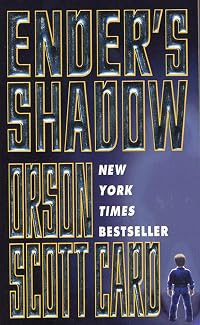
The novel that launched the bestselling Ender's Shadow series—available for the first time on unabridged cdThe human race is at War with the "Buggers," an insect-like alien race. As Earth prepares to defend itself from total destruction at the hands of an inscrutable enemy, all focus is on the development of military geniuses who can fight such a war, and win. The long distances of interstellar space have given hope to the defenders of Earth—they have time to train these future show more commanders up from childhood, forging them into an irresistible force in the high orbital facility called the Battle School. Andrew "Ender" Wiggin was not the only child in the Battle School; he was just the best of the best. In Ender's Shadow, Card tells the story of another of those precocious generals, the one they called Bean—the one who became Ender's right hand, part of his team, in the final battle against the Buggers. Bean's past was a battle just to survive. His success brought him to the attention of the Battle School's recruiters, those people scouring the planet for leaders, tacticians, and generals to save Earth from the threat of alien invasion. Bean was sent into orbit, to the Battle School. And there he met Ender....
. show less
Tags
Recommendations


Member Recommendations
Member Reviews
In a dystopian world of twelve year old hookers and grade school street gangs, this is the story of undersized and super smart Bean. You might remember him as a minor character from Ender's Game when Bean was in battle school with Ender. In Ender's Shadow Orson Scott Card takes us back to Bean's beginning where survival was only for the smartest. Bean is so smart you have to wonder if he is indeed human and not some genetically altered freak. This was my favorite Card book yet. I loved the character of Bean. I liked seeing a different side of the same story as Ender's Game. The end of Ender's Shadow was also a welcomed surprise.
This novel tells a parallel story to the one in Ender’s Game. It begins in Rotterdam where we meet a tiny child nicknamed Bean. Warring street gangs and soup kitchens run by nuns set the stage as we get to know the brilliant boy. Even as a toddler he is a strategist, which of course makes him perfect for battle school.
Sister Carlotta, a sarcastic nun with a good heart sees the unique potential in Bean and manages to get him into the school despite his size. Once he’s there his story intertwines with Ender’s during the same time period as Ender’s Game. It’s fascinating to see the whole story unfold through someone else’s eyes. We see Ender treat Bean like he was treated, picking on him for his size. We already know that show more Ender hated himself for doing that, but now we see how it affects Bean.
Unlike Ender, Bean’s life was never “normal.” From his first moments life was harder and the stakes were higher. Death was always one meal away and even his birth is shrouded in scientific secrets. Achilles, a member of the same street gang as Bean, is a horribly dark villain. He can smile and manipulate everyone around him and only Bean seems to stay a step ahead.
Bean and Ender are so alike in some ways; both brilliant generals, both small and young compared to the other leaders, but there are a few major differences as well. Bean is much more detached than Ender. While the old boy struggled with the emotional aspects of battle and the guilt that came with injuring others, Bean was more logical. He was a survivalist because he had to be and he is even more intelligent than Ender.
In some ways Bean’s story is the more poignant one. Ender struggles with the whole process of Battle School, but Bean is more aware of what’s really happening and the consequences of their actions. In the end his was a much harder cross to bear. Bean is not a loveable kid, but he is such a well-written character that he stays with you long after you finish the book.
BOTTOM LINE: Ender’s Game stole my heart, but Ender’s Shadow cemented my appreciation for the series as a whole. It has the same powerful story as the first book, but it also delves into the political side of things and sets up a world of dominoes which unfolds in the rest of the Shadow trilogy. Read it if you’ve already read Ender’s Game and you loved it. show less
Sister Carlotta, a sarcastic nun with a good heart sees the unique potential in Bean and manages to get him into the school despite his size. Once he’s there his story intertwines with Ender’s during the same time period as Ender’s Game. It’s fascinating to see the whole story unfold through someone else’s eyes. We see Ender treat Bean like he was treated, picking on him for his size. We already know that show more Ender hated himself for doing that, but now we see how it affects Bean.
Unlike Ender, Bean’s life was never “normal.” From his first moments life was harder and the stakes were higher. Death was always one meal away and even his birth is shrouded in scientific secrets. Achilles, a member of the same street gang as Bean, is a horribly dark villain. He can smile and manipulate everyone around him and only Bean seems to stay a step ahead.
Bean and Ender are so alike in some ways; both brilliant generals, both small and young compared to the other leaders, but there are a few major differences as well. Bean is much more detached than Ender. While the old boy struggled with the emotional aspects of battle and the guilt that came with injuring others, Bean was more logical. He was a survivalist because he had to be and he is even more intelligent than Ender.
In some ways Bean’s story is the more poignant one. Ender struggles with the whole process of Battle School, but Bean is more aware of what’s really happening and the consequences of their actions. In the end his was a much harder cross to bear. Bean is not a loveable kid, but he is such a well-written character that he stays with you long after you finish the book.
BOTTOM LINE: Ender’s Game stole my heart, but Ender’s Shadow cemented my appreciation for the series as a whole. It has the same powerful story as the first book, but it also delves into the political side of things and sets up a world of dominoes which unfolds in the rest of the Shadow trilogy. Read it if you’ve already read Ender’s Game and you loved it. show less
It's better to read Ender's Game first, as Bean figures out in the end that it's not a game but the real thing. I like this insight to come afterwards.
This is a sort of treatise on command. Although it's written by Bean, a pre-schooler, it's more insightful about leadership than a biography of Nelson.
It's gritty at lots of moments, knowing that a 13 audience is best to deal with these elements. Those younger than mid-teen will miss much of Bean's analysis, but hopefully they'll re-read it when older. Thanks to the movie, I'm just discovering this series as an adult, and loving it.
This is a sort of treatise on command. Although it's written by Bean, a pre-schooler, it's more insightful about leadership than a biography of Nelson.
It's gritty at lots of moments, knowing that a 13 audience is best to deal with these elements. Those younger than mid-teen will miss much of Bean's analysis, but hopefully they'll re-read it when older. Thanks to the movie, I'm just discovering this series as an adult, and loving it.
Taking an immensely popular novel and rewriting it again only this time from another character's point of view isn't a good idea, right? The result would pale in comparison to the original or at worst be a complete disappointment and immediately shunned. Not in this case. Ender's Shadow, Card's parallel novel published fifteen years after Ender's Game, succeeds in almost every way it shouldn't.
Book one of this Shadow Quartet revisits the geopolitical near-future Earth that Card barely had a chance to explore in the original Ender books, but more importantly it's a definitive look at the character of Bean, one of the key players in Ender's battle against the buggers. At points you'll want to roll your eyes at how brilliant Bean is show more portrayed. It's almost unbelievable. But it still works in the context of who Bean is and where he comes from. My favorite moments are getting to climb aboard again at Battle School, which is every bit as exciting to read here as it was in Ender's Game. show less
Book one of this Shadow Quartet revisits the geopolitical near-future Earth that Card barely had a chance to explore in the original Ender books, but more importantly it's a definitive look at the character of Bean, one of the key players in Ender's battle against the buggers. At points you'll want to roll your eyes at how brilliant Bean is show more portrayed. It's almost unbelievable. But it still works in the context of who Bean is and where he comes from. My favorite moments are getting to climb aboard again at Battle School, which is every bit as exciting to read here as it was in Ender's Game. show less
This one was much better than [b:Ender in Exile|3220405|Ender in Exile (Ender's Saga, #1.2)|Orson Scott Card|https://images.gr-assets.com/books/1442883678s/3220405.jpg|3465687], although you'd definitely be lost if you hadn't read [b:Ender's Game|375802|Ender's Game (Ender's Saga, #1)|Orson Scott Card|https://images.gr-assets.com/books/1408303130s/375802.jpg|2422333] first (or even recently), as much in this book relied on explanations already given in EG. Reading them near back-to-back, this didn't bother me (in fact, I rather welcomed not having to re-read nearly identical text), but if Ender's Game wasn't as fresh in my mind I might have been annoyed by this.
That said, I think that Bean is actually a much more interesting character show more than Ender, although his story is even MORE implausible, despite whatevergenetic enhancements Bean had been exposed to, especially his street urchin background.
I think that I need to take a break from Ender's Universe for a bit, as I don't have any interest in the story that happens back on Earth with Peter becoming the Hegemon, nor of Ender continuing his spiritual trek. show less
That said, I think that Bean is actually a much more interesting character show more than Ender, although his story is even MORE implausible, despite whatever
I think that I need to take a break from Ender's Universe for a bit, as I don't have any interest in the story that happens back on Earth with Peter becoming the Hegemon, nor of Ender continuing his spiritual trek. show less
Ender's Shadow is a retelling of the story of Ender's Game, but from the point of view of a different character, a battle school cadet called Bean, one of the top kids there who featured prominently in the original novel, too.
I thought that Ender's Shadow was bound to be a failure - how could reading the same story twice be anything but an unnecessary exercise in boredom. But this was not the case at all.
You see, Bean has a different personality and, more importantly, a completely different background than Ender Wiggin, the genius child commander who is the point of view character of the original series. This results in a fresh view of the events at battle school, with Bean's powerful analytical skills offering more insight into what is show more really happening politically behind the scenes than what was revealed in Ender's Game. As Bean is just as interested in the political situation back on Earth as he is in the impending war on an alien race, this serves as a good motivation to explain this part of the Ender's Game universe, although Card falls into the trap of splitting the world into good guys and bad guys along the traditional Cold War divide. Just for once I'd like to read about Russians as the good guys.
Even more interesting, however, is the story of Bean's origins. How he manages to survive as an abandoned baby on the mean streets of Rotterdam, where child gangs and bullies control access to charity kitchens and thus - life, is probably, together with Sister Carlotta's search for Bean's true family, the most interesting part of the book.
A pretty great piece of sci-fi, with classic Card drawbacks: really too brilliant four-to-ten-year-olds to be believable and the inability to resist his land-of-the-free-home-of-the-brave-and-religiously-indoctrinated political views from shining through. show less
I thought that Ender's Shadow was bound to be a failure - how could reading the same story twice be anything but an unnecessary exercise in boredom. But this was not the case at all.
You see, Bean has a different personality and, more importantly, a completely different background than Ender Wiggin, the genius child commander who is the point of view character of the original series. This results in a fresh view of the events at battle school, with Bean's powerful analytical skills offering more insight into what is show more really happening politically behind the scenes than what was revealed in Ender's Game. As Bean is just as interested in the political situation back on Earth as he is in the impending war on an alien race, this serves as a good motivation to explain this part of the Ender's Game universe, although Card falls into the trap of splitting the world into good guys and bad guys along the traditional Cold War divide. Just for once I'd like to read about Russians as the good guys.
Even more interesting, however, is the story of Bean's origins. How he manages to survive as an abandoned baby on the mean streets of Rotterdam, where child gangs and bullies control access to charity kitchens and thus - life, is probably, together with Sister Carlotta's search for Bean's true family, the most interesting part of the book.
A pretty great piece of sci-fi, with classic Card drawbacks: really too brilliant four-to-ten-year-olds to be believable and the inability to resist his land-of-the-free-home-of-the-brave-and-religiously-indoctrinated political views from shining through. show less
Erstaunlicherweise würde ich dieses Buch sogar besser einstufen als Enders Spiel. Bean war schon im ersten Buch so ziemlich meine Lieblingsfigur und dass die Ereignisse aus Enders Spiel nochmal aus seiner Sicht erzählt werden ist alles andere als nervig oder überflüssig. Zugegeben, Bean ist von Ender besessen, hat aber genug eigene Spirenzchen am laufen als dass sich alles überschneidet und man die selbe Geschichte zwei mal liest. Auf das andere Buch wird eher liebevoll hingenickt, so, dass ich immer wieder einzelne Stellen dort nachschlug und verglich.
Bean hat von Anfang an keinerlei Interesse, ein Soldat zu werden und möchte nur möglichst weit weg von Achilles (und dass es dort regelmäßig Essen gibt ist auch ein Pluspunkt). show more So beginnt er von Tag 1 an, alles zu unterwandern was ihm vor die Nase gesetzt wird statt brav den Regeln zu folgen die ihm gegeben werden und wir sehen Teile der Kampfschule, die Ender niemals hinterfragt hat.
Viel interessanter fand ich allerdings den ersten Teil des Buches in Rotterdam. Die Kinder dort kämpfen um das pure Überleben und Bean ist keine Ausnahme. Dabei geht es so roh zu wie bei den Hungerspielen wenn der Startschuss ertönt.
Bean hat von Anfang an keinerlei Interesse, ein Soldat zu werden und möchte nur möglichst weit weg von Achilles (und dass es dort regelmäßig Essen gibt ist auch ein Pluspunkt). show more So beginnt er von Tag 1 an, alles zu unterwandern was ihm vor die Nase gesetzt wird statt brav den Regeln zu folgen die ihm gegeben werden und wir sehen Teile der Kampfschule, die Ender niemals hinterfragt hat.
Viel interessanter fand ich allerdings den ersten Teil des Buches in Rotterdam. Die Kinder dort kämpfen um das pure Überleben und Bean ist keine Ausnahme. Dabei geht es so roh zu wie bei den Hungerspielen wenn der Startschuss ertönt.
Die wirkliche Gefahr war viel unmittelbarerer: größere Kinder. Poke war mit neun Jahren die Martriarchin ihrer kleinen Bande (nicht, dass einer von ihnen sicher gewusst hätte, dass sie ein Mädchen war), aber das half nichts gegen die elf-, zwölf-, und dreizehnjährigen Jungen und Mädchen, die kleinere Straßenkinder schikanierten. Die erwachsenen Bettler, Diebe und Huren achteten nicht auf die kleinen Kinder und traten sie höchstens aus dem Weg,. Aber die älteren Kinder, die ebenfalls getreten wurden, drehten sich dann um und stürzten sich auf die jüngeren. Jedes Mal, wenn Pokes Bande etwas zu essen fand – besonders, wenn es sich um eine verlässliche Abfallquelle oder eine Stelle handelte, wo man leicht eine Münze oder ein wenig Essen bekommen konnte -, mussten sie gut aufpassen und ihre Beute sofort verstecken, denn die älteren Kinder taten nichts lieber, als den kleineren auch noch den winzigsten Rest Essen abzunehmen. Jüngere Kinder zu bestehlen war viel sicherer, als es bei Läden oder Passanten zu versuchen. Und es machte ihnen Spaß, das sah Poke genau. Es gefiel diesen Tyrannen und Schlägern, wie die kleinen Kinder sich duckten und gehorchten, wie sie wimmerten und den Schlägern gaben, was auch immer sie verlangten.show less
Members
- Recently Added By
Lists

Best Science Fiction Novels
816 works; 426 members

Best Military Science Fiction
57 works; 26 members

Best SciFi and Fantasy Classics
53 works; 6 members

Recommend the 20 best books you've read in the last five years
2,168 works; 602 members

Lion's Mane Hardcover Wishlist
19 works; 1 member

Best-selling Books by Latter-day Saints
58 works; 2 members

Books Set in Outer Space
39 works; 9 members

Unread books
1,063 works; 87 members

Books Read in 2014
2,343 works; 89 members

Blue Pyramid 1,276 Best Books of All Time
1,248 works; 32 members

Books Read in 2011
684 works; 20 members

Books Read in 2018
4,360 works; 110 members

Classic Sci-Fi
27 works; 1 member

Books Read in 2025
4,128 works; 98 members
Talk Discussions
Past Discussions
Another tes in Touchstone Testing (February 2014)
Author Information

575+ Works 214,308 Members
Orson Scott Byron Walley Card, was born in 1951 and studied theater at Brigham Young University. He received his B.A. in 1975 and his M.A. in English in 1981. He wrote plays during that time, including Stone Tables (1973) and the musical, Father, Mother, Mother and Mom (1974). A Mormon, Scott served a two-year mission in Brazil before starting show more work as a journalist in Utah. He also designed games at Lucas Film Games, 1989-92. He is best known for his science fiction novels, including the popular Ender series. Well known titles include A Planet Called Treason (1979), Treasure Box (1996), and Heartfire (1998). He has also written the guide called How to Write Science Fiction and Fantasy (1990). His novel Ender's Game and its sequel Speaker for the Dead, both won Hugo and Nebula awards, making Card the only author to win both prizes in consecutive years. His titles Shadows in Flight, Ruins and Ender's Game made The New York Times Best Seller List. He is also the author of The First Formic War Series, which includes the titles Earth Unaware, Earth Afire, and Earth Awakens. (Bowker Author Biography) show less
Some Editions
Awards and Honors
Awards
Distinctions
Series


Belongs to Publisher Series
Work Relationships
Common Knowledge
- Canonical title
- Ender's Shadow
- Original title
- Ender's Shadow
- Original publication date
- 1999-09
- People/Characters
- Ender Wiggin (Andrew Wiggin); Bean; Achilles de Flandres; Petra Arkanian; Alai
- Important places
- Battle School (space station); Command School
- Important events
- Xenocide of the Formics
- Dedication
- To Dick and Hazie Brown
In Whose Home No One Is Hungry
And In Whose Hearts No One Is A Stranger - First words
- "You think you've found somebody, so suddenly my program gets the ax?"
- Quotations
- Remember, the enemy's gate is down.
My son, my son Absalom. Would God I could die for thee, Absalom, my sons!
Why don't you tell me what you don't want me to know, and I'll tell you if I already know it? - Last words
- (Click to show. Warning: May contain spoilers.)"I told you they were nice."
- Publisher's editor
- Meacham, Beth
- Blurbers
- Mollineaux, Bill; Bova, Ben
- Original language
- English
Classifications
Statistics
- Members
- 12,758
- Popularity
- 638
- Reviews
- 139
- Rating
- (4.11)
- Languages
- 13 — Chinese, Czech, Dutch, English, French, German, Hebrew, Hungarian, Italian, Japanese, Polish, Romanian, Spanish
- Media
- Paper, Audiobook, Ebook
- ISBNs
- 59
- ASINs
- 29