On This Page
Description
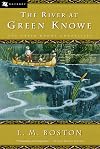
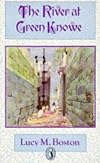
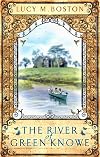
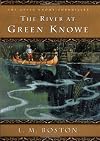
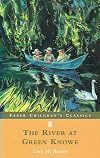
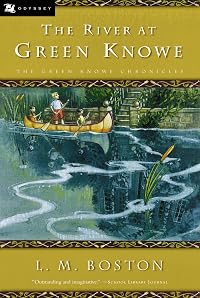
L. M. Boston's thrilling and chilling tales of Green Knowe, a haunted manor deep in an overgrown garden in the English countryside, have been entertaining readers for half a century. In this, the third book, Tolly and his grandmother are away (presumably in Cornwall). Two women have rented the house for the summer and ask three children to stay. Ida is the niece of one of the women, Ping and Oskar are refugees. The children are turned loose on the river, where they have many fine and show more imaginative adventures. show lessTags
Recommendations














Member Reviews
The River at Green Knowe is about three children who come to spend the summer with Dr. Biggin and her friend Sybilla Bun. Ida, Ping, and Oskar come from different backgrounds but have much in common. As children, they still are able to share the wonder of little things and see the magic all around them. They soon discover the magic of Green Knowe and the siren-call of the River that passes near it.
The book doesn't really have a plot; it is more a string of episodic chapters about things the children experience as they explore the River. This was my first Green Knowe book (there are five, I believe) and I'm excited to find the others. The writing is really beautiful and Boston slides between the "real" and the magical so easily, it's show more hard to see where the join comes in. It reminded me a bit of Narnia, actually. Really good stuff.
I think the Green Knowe books would have had a stronger effect on me had I read them as a young reader; there is that brief window where the books we read as children transcend themselves and move from being books we like to being books that have a life of their own to us. I try to recapture that love I have for certain books from my childhood, by reading other excellent children's books, but it's like the amazing capacity children have for learning language — after a certain age it's just gone.
And maybe that is the point of this story. Boston mentions several times how the children wisely know the limits of the adults around them. It is as if the children have eyes that the adults have closed. And everything that is fantastical and mystic in this book is treated by the children as a matter of course, a part of everyday life. I couldn't quite get into the boat and sail down the River with them... but I got to watch them from the shore, and that is all an adult can hope for. I recommend the view. show less
The book doesn't really have a plot; it is more a string of episodic chapters about things the children experience as they explore the River. This was my first Green Knowe book (there are five, I believe) and I'm excited to find the others. The writing is really beautiful and Boston slides between the "real" and the magical so easily, it's show more hard to see where the join comes in. It reminded me a bit of Narnia, actually. Really good stuff.
I think the Green Knowe books would have had a stronger effect on me had I read them as a young reader; there is that brief window where the books we read as children transcend themselves and move from being books we like to being books that have a life of their own to us. I try to recapture that love I have for certain books from my childhood, by reading other excellent children's books, but it's like the amazing capacity children have for learning language — after a certain age it's just gone.
And maybe that is the point of this story. Boston mentions several times how the children wisely know the limits of the adults around them. It is as if the children have eyes that the adults have closed. And everything that is fantastical and mystic in this book is treated by the children as a matter of course, a part of everyday life. I couldn't quite get into the boat and sail down the River with them... but I got to watch them from the shore, and that is all an adult can hope for. I recommend the view. show less
I absolutely adored the first two books in L.M. Boston’s Green Knowe series. In the first, The Children of Green Knowe, we meet Toseland, nicknamed Tolly, a boy sent to live with his great-grandmother, Mrs. Oldknow, and three 17th century children who haunt Green Knowe from their painting. In the next book, The Treasure of Green Knowe, I missed the ghostly but gentle Toby, Linnet and Alexander Oldknow, but I reveled at the return of Tolly and Mrs. Oldknow and the introduction of two 18th century child ghosts, Susan Oldknow and Jacob, a freed slave. But all of them are gone but for a mention in the third book, The River at Green Knowe, and the slim volume is much poorer for it.
Instead of Tolly and the ghosts of Green Knowe, The River show more at Green Knowe focuses on Ida, whose peculiar aunt is renting Green Knowe for the summer, and two refugee children, Oskar and Ping. As the title implies, the book also focuses on the river rather than on the Green Knowe mansion itself. What with its shrinking and growing, fantasy creatures and time travel, The River at Green Knowe turn into equal parts Alice in Wonderland and The Lion, the Witch, and the Wardrobe — but without the charm of either — and simply doesn’t measure up to the first two books. Except for dyed-in-the-wool L.M. Boston fans, give this a miss. show less
Instead of Tolly and the ghosts of Green Knowe, The River show more at Green Knowe focuses on Ida, whose peculiar aunt is renting Green Knowe for the summer, and two refugee children, Oskar and Ping. As the title implies, the book also focuses on the river rather than on the Green Knowe mansion itself. What with its shrinking and growing, fantasy creatures and time travel, The River at Green Knowe turn into equal parts Alice in Wonderland and The Lion, the Witch, and the Wardrobe — but without the charm of either — and simply doesn’t measure up to the first two books. Except for dyed-in-the-wool L.M. Boston fans, give this a miss. show less
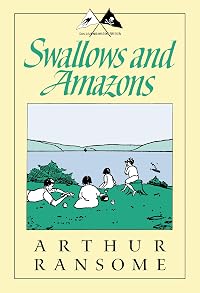
Nice, though I don't enjoy their magical adventures as much as Tolly's - they're sort of disconnected and random. The descriptions, however, are even better - when they close their eyes and tell what they hear on the river, it's wonderful. A bit of casual racism at the beginning; Hsu doesn't seem to mind being called Ping, and in fact he's as talkative as either of the others, but still. And more of the same at their first meal. Hmph. There's a faint flavor of Swallows and Amazons to some of their adventures, though S&A never had the magic touch most of theirs do. Fun, though not my favorite Green Knowe story. And it ends very abruptly - I was expecting at least a leavetaking, but it just stops.
This is completely different to the first two books. There's no sign of Tolly, or Mrs Oldknowe, or any of their ancestors, and even Green Knowe itself is barely featured. Instead we have two maiden ladies renting the house and inviting three children, two of them Displaced Orphans, to stay for the summer. Their adventures on the river are tinged with Swallows-and-Amazons-ishness, and the magic encountered is completely different to, and far less charming than, the timeslippage of the earlier books. I'm not entirely sure I really liked it. But, then again, it's possible that I have still not outgrown my early crush on Toby … Also, Lucy Boston seems to have hated cats, so clearly she and I would never agree.
The Premise: Three children come to spend the holidays at Green Knowe, an ancient house on an island in the middle of the river. Two of the children, Oskar & Ping, are displaced children and the third, Ida, is the niece of the woman who is renting the house while working on a book about giants. The children, all around 11 years old, spend most of their time out on the river discovering other islands.
My Take on the Book: This wasn't the book I thought it was. I remember loving a book about Green Knowe when I was growing up and I think it might be The Children of Green Knowe. I found this one difficult to get into and cannot imagine liking it as a child. The children find some fantastical things on their island searches (on one, there are show more flying horses), but the author doesn't spend any time on any particular spot and therefore loses opportunities to enhance to book. I need to find The Children of Green Knowe and reread that because this was a disappointment. show less
My Take on the Book: This wasn't the book I thought it was. I remember loving a book about Green Knowe when I was growing up and I think it might be The Children of Green Knowe. I found this one difficult to get into and cannot imagine liking it as a child. The children find some fantastical things on their island searches (on one, there are show more flying horses), but the author doesn't spend any time on any particular spot and therefore loses opportunities to enhance to book. I need to find The Children of Green Knowe and reread that because this was a disappointment. show less
The River at Green Knowe has a different feel from the first two books for two reasons. First, it has completely new characters. Second, it deals with fantastical elements along the river, not at Green Knowe itself. Dr. Biggin and her friend Miss Bun have rented Green Knowe for the summer, inviting her niece Ida and two “displaced” orphan children, Oskar and Ping, to join her. The children spend the summer finding adventure on the river, from flying horses to giants. It’s a fun story of childhood and shows the dichotomy between realistic (and boring) adults and children who are willing to see the unusual.
Thoughts on the entire series on my blog
Thoughts on the entire series on my blog
L. M. Boston's thrilling and chilling tales of Green Knowe, a haunted manor deep in an overgrown garden in the English countryside, have been entertaining readers for half a century. Now the children of Green Knowe -- both alive and ghostly -- are back in appealing new editions.
Members
- Recently Added By
Lists

Honey For a Child's Heart
1,152 works; 25 members
Talk Discussions
Past Discussions
old children's book about children's small boat adventure in Name that Book (March 2012)
Author Information

28+ Works 5,579 Members
Some Editions
Awards and Honors
Distinctions
Series

Belongs to Publisher Series
Work Relationships
Is contained in
Common Knowledge
- Canonical title
- The River at Green Knowe
- Original publication date
- 1959
- People/Characters
- Ping; Ida; Oskar Stanislawsky; Dr. Biggin; Sybilla Bun
- Important places
- Green Knowe, Hemingford Grey, Cambridgeshire, England, UK (fictional house)
- First words
- "When do the children come?" asked Dr. Maud Biggin, without looking up, as she licked her thumb and flicked over the pages of one of the many books open before her.
- Last words
- (Click to show. Warning: May contain spoilers.)"They are often like that," said Oskar wisely. "They don't like now. If it's really interesting it has to be then."
Classifications
- Genres
- Fiction and Literature, Children's Books, Kids, Tween, Fantasy
- DDC/MDS
- 823.91 — Literature & rhetoric English & Old English literatures English fiction 1900- 1901-1999
- LCC
- PZ7 .B6497 .R — Language and Literature Fiction and juvenile belles lettres Fiction and juvenile belles lettres Juvenile belles lettres
- BISAC
Statistics
- Members
- 703
- Popularity
- 40,631
- Reviews
- 9
- Rating
- (3.85)
- Languages
- English
- Media
- Paper, Audiobook
- ISBNs
- 20
- ASINs
- 10