On This Page
Description
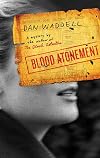
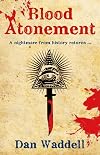
Detective Chief Inspector Grant Foster is called to a homicide at the home of a single mother in Queens Park, London. Her throat has been cut from ear to ear and her body dumped in the garden. Her daughter and only child, Naomi, who has just turned fourteen this day, is missing. As the hours tick by, the feeling grows among Foster's colleagues that this mis most likely becoming a double-murder inquiry. With nothing in the present to indicate a motive, Foster decides to delve into the show more woman's past, only to find out she doesn't have one. Not sure where else to turn for information, he calls on genealogist, Nigel Barnes for help. show lessTags
Recommendations










Member Reviews
Okay so I'm a bit of a fan - which after two books is quite an achievement. It's probably a little bit to do with the basic premise of genealogy being used to solve crimes (family tree research being an investigation in its own right after all), but mostly it's because Dan Waddell really can tell a bit of a tale.
There is a serial killer theme to BLOOD ATONEMENT, although initially it's only Detective Grant Foster who sees the parallels between the death of Katie Drake, and the disappearance of her 14 year old daughter, and a case 3 years earlier. But do not let that put you off, this isn't your standard mad, bad, feral serial killer. After Foster asks genealogist Nigel Barnes to look into the family history of these girls, the reason show more for this killer selecting his victims is finally resolved. It's the family tree research that gives Foster the leads he needs.
It's a real testament to the writing of Waddell that makes the idea of a consultant genealogist perfectly acceptable, it's the methodology in researching the past that makes for some of the real standouts of BLOOD ATONEMENT.
Whilst BLOOD ATONEMENT (and the earlier book THE BLOOD DETECTIVE) are effectively police procedurals, it's undoubtedly the spin of genealogy that creates the interest in these books. Having said that, at no stage does it seem like a trick or shtick or anything designed to make the books that little bit different. Instead the use of Nigel's skills seems seamless, makes sense. show less
There is a serial killer theme to BLOOD ATONEMENT, although initially it's only Detective Grant Foster who sees the parallels between the death of Katie Drake, and the disappearance of her 14 year old daughter, and a case 3 years earlier. But do not let that put you off, this isn't your standard mad, bad, feral serial killer. After Foster asks genealogist Nigel Barnes to look into the family history of these girls, the reason show more for this killer selecting his victims is finally resolved. It's the family tree research that gives Foster the leads he needs.
It's a real testament to the writing of Waddell that makes the idea of a consultant genealogist perfectly acceptable, it's the methodology in researching the past that makes for some of the real standouts of BLOOD ATONEMENT.
Whilst BLOOD ATONEMENT (and the earlier book THE BLOOD DETECTIVE) are effectively police procedurals, it's undoubtedly the spin of genealogy that creates the interest in these books. Having said that, at no stage does it seem like a trick or shtick or anything designed to make the books that little bit different. Instead the use of Nigel's skills seems seamless, makes sense. show less
Having enjoyed the first book in this series, I had to get my hands on this second, which also appears to be the last. Blood Atonement acknowledges the elephant in the room: the Church of Jesus Christ of the Latter Day Saints and the powerhouse position they have in the world of genealogy. Members may not be happy with Waddell's depiction of their religion since it touches on fundamentalist offshoots that practice polygamy as well as the actions the church has taken to erase (or at least cover up) things that have happened in their past that may not show them in a favorable light. It's this subterfuge that makes Barnes' investigation for the police so difficult.
The solution is convoluted and laced with a heavy dose of irony, but this show more isn't really what grabbed most of my attention. The still-healing Foster is brought face-to-face with a young boy-- eleven-year-old Gary-- whose life is in danger, and he takes it upon himself to protect him. Gary has been nothing but trouble most of his short life, but it's heart-warming to see how Foster warms up to him-- and how Gary reacts to him. Protecting Gary brings several of Foster's own shortcomings into sharp focus, and the seasoned copper knows he needs to mend his ways.
To be honest, Blood Atonement's mystery had a bit too much religion for my taste, but the characters are what made the book. I like watching how Nigel Barnes sifts through archives to find answers, and DCI Grant Foster is just the sort of homicide detective I like. show less
The solution is convoluted and laced with a heavy dose of irony, but this show more isn't really what grabbed most of my attention. The still-healing Foster is brought face-to-face with a young boy-- eleven-year-old Gary-- whose life is in danger, and he takes it upon himself to protect him. Gary has been nothing but trouble most of his short life, but it's heart-warming to see how Foster warms up to him-- and how Gary reacts to him. Protecting Gary brings several of Foster's own shortcomings into sharp focus, and the seasoned copper knows he needs to mend his ways.
To be honest, Blood Atonement's mystery had a bit too much religion for my taste, but the characters are what made the book. I like watching how Nigel Barnes sifts through archives to find answers, and DCI Grant Foster is just the sort of homicide detective I like. show less
This was an excellent police procedural with the addition of research into the victims' family tree. I can't imagine it sells many copies in Utah, but I enjoyed the plot, even if it was a bit 'out there'. Gary stole the show for me.
A fascinating mixture of modern crime novel and family history research, ‘Blood Atonement’ takes Nigel Barnes from London to the USA as he races against time to find answers for Detective Chief Inspector Grant Foster.
Foster’s first case after returning to work following injuries sustained in ‘The Blood Detective’ [first in this genealogical crime series] is a dead actress and her missing daughter. Links to the actress’s past, mystery about her family and unanswered questions, lead Foster to call in the help of genealogist Nigel Barnes. Both men are strong characters who walk off the page, both loners of a kind, both lonely in love.
This is a fast-moving mystery revolving around what happened to Horton and Sarah Rowley, who show more we know from flashbacks were teenage sweethearts planning to run away, but who only appear in records in the UK from 1891. Before that, they cease to exist. Where did they come from, and why were they running? Simply because their parents disapproved of the marriage, or something more sinister? And what has this to do with the dead actress found lying face down on her lawn in London? As he searches for the missing 14-year old, Foster finds chilling parallels with Leonie, another 14-year old who disappeared three years earlier and has never been found. As links to a cult are uncovered, attention focuses back on Sarah and Horton.
A satisfying well-written plot which manages to slip in a little history too.
Read more of my book reviews at http://www.sandradanby.com/book-reviews-a-z/ show less
Foster’s first case after returning to work following injuries sustained in ‘The Blood Detective’ [first in this genealogical crime series] is a dead actress and her missing daughter. Links to the actress’s past, mystery about her family and unanswered questions, lead Foster to call in the help of genealogist Nigel Barnes. Both men are strong characters who walk off the page, both loners of a kind, both lonely in love.
This is a fast-moving mystery revolving around what happened to Horton and Sarah Rowley, who show more we know from flashbacks were teenage sweethearts planning to run away, but who only appear in records in the UK from 1891. Before that, they cease to exist. Where did they come from, and why were they running? Simply because their parents disapproved of the marriage, or something more sinister? And what has this to do with the dead actress found lying face down on her lawn in London? As he searches for the missing 14-year old, Foster finds chilling parallels with Leonie, another 14-year old who disappeared three years earlier and has never been found. As links to a cult are uncovered, attention focuses back on Sarah and Horton.
A satisfying well-written plot which manages to slip in a little history too.
Read more of my book reviews at http://www.sandradanby.com/book-reviews-a-z/ show less
This was an excellent read. It forms part of the small but growing genre of genealogical thrillers and murder mysteries which I only recently became aware of. This is one of the better examples - I know enough about genealogical research to appreciate that the author knows his stuff, but he doesn't overload the reader with too much detail. The three main characters are engaging, and it's tightly plotted with a race against time that had me sitting up reading long past my bedtime! This is the second in the series, and follows on from the first, with the characters still dealing with the repercussions of events in the first, but it would stil make a good stand alone read.
Nigel Barnes helps the police investigate a current situation with roots deep in the past. Their biggest clue lies in mtDNA found at the scene. They want Nigel to trace the matrilineal line. A connection with the Mormon Church and a mysterious photo leads Nigel and a female detective to Salt Lake City where they uncover a tie to fundamentalist sect with strange ways of practicing their ordinances-- including the requirement of blood atonement. Although I am not Mormon, I was put off by the plot. I felt he was attacking the LDS church. I know the book was written many years ago when DNA was first being used in genealogy, but I'm not sure the author understood mtDNA enough to include it in the plot. He never really did anything with it. I show more think the author could have spent his words and pages better developing a mystery plot and less time discussing Mormon religious practices. show less
Wow, this guy can really write! I enjoyed the first book but the "serial killer" theme was a little predictable so was very pleased with the second book. Yes, several people are killed but the tying together of the past (1890's) and the present was fascinating and bringing in the newer methods of tracing people's history (like DNA) was interesting.
Nigel, the genealogist, and Grant, the detective, are both back and so is Grant's partner (and Nigel's love interest). When a woman is found dead in her garden and her 14 year-old daughter is missing the race is on to find the killer before he kills the girl. There are lots of twists and turns and I absolutely didn't figure out "who dunnit".
Waddell makes you think while you read, which makes show more the reading more challenging but it is worth the effort. show less
Nigel, the genealogist, and Grant, the detective, are both back and so is Grant's partner (and Nigel's love interest). When a woman is found dead in her garden and her 14 year-old daughter is missing the race is on to find the killer before he kills the girl. There are lots of twists and turns and I absolutely didn't figure out "who dunnit".
Waddell makes you think while you read, which makes show more the reading more challenging but it is worth the effort. show less
Members
- Recently Added By
Author Information

22+ Works 724 Members
Series

Common Knowledge
- Canonical title
- Blood Atonement
- Original publication date
- 2009-08-18
- People/Characters
- Nigel Barnes; Grant Foster; Heather Jenkins; Gary Stamey
- Important places
- London, England, UK; Utah, USA
- First words
- Detective Chief Inspector Grant Foster emitted a weary sigh as he crouched over the woman's corpse, arc lights in the garden bathing them both in bright light, anticipating the first light of dawn.
- Last words
- (Click to show. Warning: May contain spoilers.)'The last person buried here was in 1853. This body's barely two years old.'
Classifications
Statistics
- Members
- 133
- Popularity
- 245,550
- Reviews
- 14
- Rating
- (3.63)
- Languages
- Dutch, English, French
- Media
- Paper, Audiobook, Ebook
- ISBNs
- 15
- ASINs
- 4