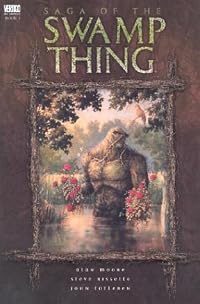
Swamp Thing Vol. 1: Saga of the Swamp Thing
by Alan Moore (Writer)
Swamp Thing (Vol.2 #21-27), Swamp Thing (1982-1996) (Swamp Thing Collected Volumes — V1)
On This Page
Description
"Created by a freak accident, the Swamp Thing is an elemental creature who uses the forces of nature and wisdom of the plant kingdom to rail against a polluted world's self-destruction"--Amazon.Tags
Recommendations
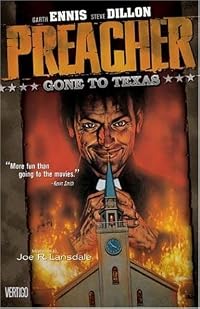
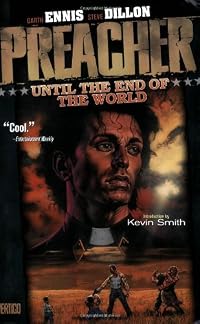
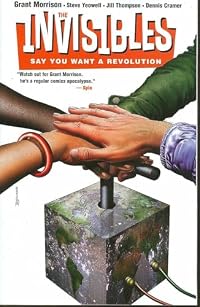
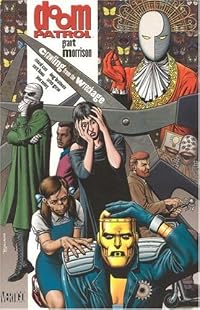
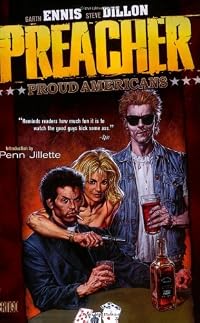
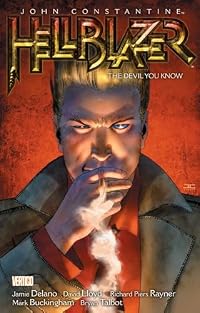
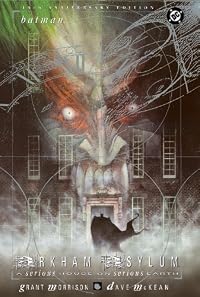
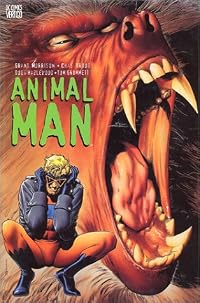
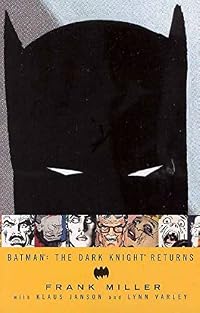
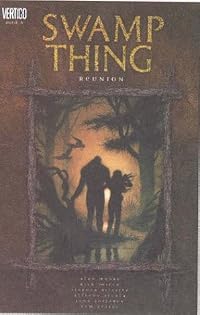
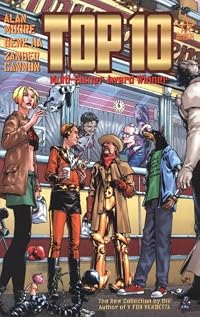
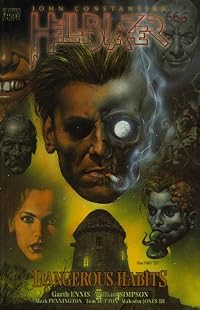
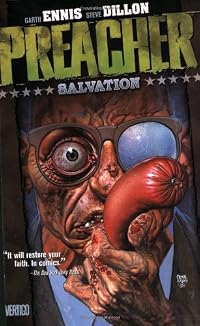
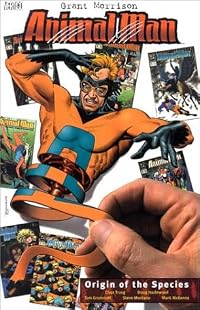
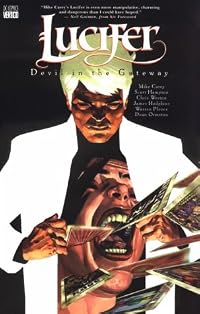
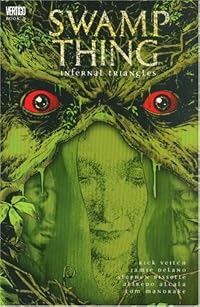

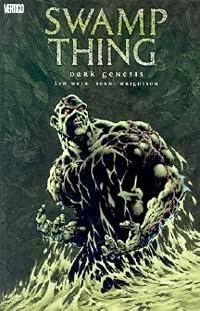
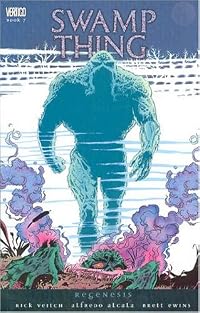


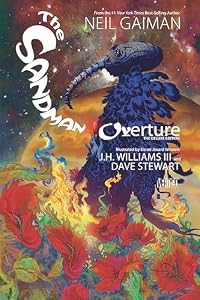
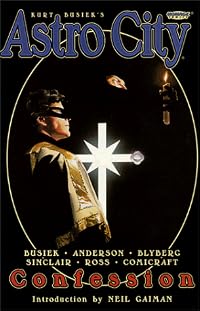
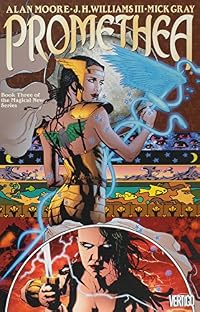
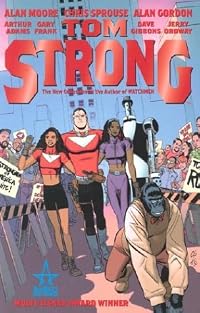
Member Recommendations
Member Reviews
Here Moore laid down a marker in the history of comics, ominous and unlikely as Archduke Ferdinand's tomb. Reading through the new wave of British authors who helped to reconceptialize the genre for us poor Americans, one understand more and more why it had to be this man. There is a flair amongst them all for a certain madness and depth of psychology, but Moore was the only one who didn't think it made him special. Our curiosity is always piqued by the mysterious stranger, and Moore will always be that.
There is a quote of Emerson's which helps elucidate men of mystery: "to be great is to be misunderstood". Most Zeppelin fans don't see the band in terms of their roots in early blues, just as most Tolkien fans (and followers) don't have show more the education to recognize the Welsh and Norse folktales he was emulating. It seems to be that the kernel of and author's inspiration is often so specific and poorly-understood by their audience that they find it an endless and entrancing mystery.
There was an undeniable and immediate difference in the comic authors of the early eighties, but many of them sinned by way of dadaism, indulging difference for its own sake. After recognizing this brazen and laughably naive rebellion, one begins to understand why most of these writers couldn't keep from breaking the fourth wall and injecting themselves into the text; Morrison has never stopped doing it.
The difference between them and Moore was one of reason; and like Milton's Lucifer, their reason was flawed; and like him still: it was pride. As a young and budding author, I saw in Morrison's 'Invisibles' and, to a lesser extent, in Ennis's 'Preacher', what a silly thing it is to believe your own stories.
Gaiman we may reprieve: unlike the others, he has never imagined himself mad. His penchant for myth and psychology stays rather trimly in the realm of the curious academic, though becomes quite laughable when he attempts to portray chaos. Gaiman's is the most predictable chaos you will ever meet this side of a fourteen-year-old girl who likes penguins.
Moore, however, has loomed over us in a state of questionable sanity for his entire career. Bearded, wild-eyed, long-winded, and obsessed with little things we don't even think about, and yet completely generous and unselfish with his pen. There is something we do not trust about the man who avoids the spotlight; who spurns money; who believes in the power of names enough to remove his from this or that film. The man who stands over and over a proven genius and who plods on into stranger and wider territory is almost an unknowable commodity.
That Alan Moore cares about things we cannot see, and cares nothing about that which we expect him to becomes his strength. In his unpredictability, we come to find new and inspiring sides of ourselves, and of comics, and of others.
If Morrison has lived his entire career as the incorrigable teenager of comics, inspiring in his gusto but disappointing in his ego, then Moore has always been the old man of comics, a crafty wizard who knows things we don't want to know, who leads us patiently through our wide-eyed bumbling and self-absorption, past the explosions and gun battles, and into our own back yard to show us something beautiful that was there the whole time.
We'll wonder why he doesn't want our thanks. Or our praise. We'll wonder why he seems tired and haggard. We'll try to catch his red-rimmed eyes, as if he'll betray by some gesture or expression just what it is he gets out of the deal.
As if sudden curiosity makes us worthy to know. show less
There is a quote of Emerson's which helps elucidate men of mystery: "to be great is to be misunderstood". Most Zeppelin fans don't see the band in terms of their roots in early blues, just as most Tolkien fans (and followers) don't have show more the education to recognize the Welsh and Norse folktales he was emulating. It seems to be that the kernel of and author's inspiration is often so specific and poorly-understood by their audience that they find it an endless and entrancing mystery.
There was an undeniable and immediate difference in the comic authors of the early eighties, but many of them sinned by way of dadaism, indulging difference for its own sake. After recognizing this brazen and laughably naive rebellion, one begins to understand why most of these writers couldn't keep from breaking the fourth wall and injecting themselves into the text; Morrison has never stopped doing it.
The difference between them and Moore was one of reason; and like Milton's Lucifer, their reason was flawed; and like him still: it was pride. As a young and budding author, I saw in Morrison's 'Invisibles' and, to a lesser extent, in Ennis's 'Preacher', what a silly thing it is to believe your own stories.
Gaiman we may reprieve: unlike the others, he has never imagined himself mad. His penchant for myth and psychology stays rather trimly in the realm of the curious academic, though becomes quite laughable when he attempts to portray chaos. Gaiman's is the most predictable chaos you will ever meet this side of a fourteen-year-old girl who likes penguins.
Moore, however, has loomed over us in a state of questionable sanity for his entire career. Bearded, wild-eyed, long-winded, and obsessed with little things we don't even think about, and yet completely generous and unselfish with his pen. There is something we do not trust about the man who avoids the spotlight; who spurns money; who believes in the power of names enough to remove his from this or that film. The man who stands over and over a proven genius and who plods on into stranger and wider territory is almost an unknowable commodity.
That Alan Moore cares about things we cannot see, and cares nothing about that which we expect him to becomes his strength. In his unpredictability, we come to find new and inspiring sides of ourselves, and of comics, and of others.
If Morrison has lived his entire career as the incorrigable teenager of comics, inspiring in his gusto but disappointing in his ego, then Moore has always been the old man of comics, a crafty wizard who knows things we don't want to know, who leads us patiently through our wide-eyed bumbling and self-absorption, past the explosions and gun battles, and into our own back yard to show us something beautiful that was there the whole time.
We'll wonder why he doesn't want our thanks. Or our praise. We'll wonder why he seems tired and haggard. We'll try to catch his red-rimmed eyes, as if he'll betray by some gesture or expression just what it is he gets out of the deal.
As if sudden curiosity makes us worthy to know. show less
"There is a red and angry world... Red things happen there. The world eats your wife... Eats your friends... Eats all the things... that make you human... And you become a monster. And the world... just keeps on eating."
Wow. Wow. Wow. If you question whether or not graphic novels are literature, all I can say is that Moore is the answer. I'm astounded by his ability to transform a line of comics about a man who turns into a plant and has adventures into a meditation on what it means to be human in an inhuman world. Especially impressive is his respectful treatment of Swamp Thing's prior publication history. Many an artist would just scrape the canvas and start over. Moore incorporates all of it — from its campy origins as a hero show more fighting "I will rule the world!" villains while dropping one-liners, to its 1980s reimagining as a paranoid supernatural thriller — while simultaneously laying it all gently to rest within his new vision of an inhuman monster grappling with the horrifying truth of its own nature. This is a masterpiece that deserves its reputation as a watershed in American comics. show less
Wow. Wow. Wow. If you question whether or not graphic novels are literature, all I can say is that Moore is the answer. I'm astounded by his ability to transform a line of comics about a man who turns into a plant and has adventures into a meditation on what it means to be human in an inhuman world. Especially impressive is his respectful treatment of Swamp Thing's prior publication history. Many an artist would just scrape the canvas and start over. Moore incorporates all of it — from its campy origins as a hero show more fighting "I will rule the world!" villains while dropping one-liners, to its 1980s reimagining as a paranoid supernatural thriller — while simultaneously laying it all gently to rest within his new vision of an inhuman monster grappling with the horrifying truth of its own nature. This is a masterpiece that deserves its reputation as a watershed in American comics. show less
"I say unto you: one must still have chaos in oneself to be able to give birth to a dancing star."
- Friedrich Nietzsche, Thus Spoke Zarathustra
Moore and his Swamp Thing spearheaded what has become known in the comic sphere as The British Invasion: a marked shift in the focus and composition of American comics (beginning with DC) as a result of the efforts of British writers and artists. And unlike most initial works of a new movement or genre, Swamp Thing has proven itself to be a work that possesses great staying power. It is a tour de force, superbly chaotic in its explorations and experiments, and vibrant, wild, in its color and artwork. It is the kind of endeavor that can only be pulled off once in a blue moon.
As for Swamp Thing's show more innerworkings, it exhibits a kind of psychological depth and understanding of humanity--especially madness--that is seldom found in a book. Swamp Thing himself walks lockstep with the natural world, and through his meditations and discoveries he effectively stands as a reinvention of what it means to be an outlying creature or monster. And, when need be, he harnesses the full, destructive potential that a creature of nature would wield. But what I appreciate most is that Moore limits Swamp Thing not by raw ability, but by his mind and his connection to those dear to him, giving rise to substantial conflicts that require more than brute force to solve. This ramps up in later volumes, and through these realistic sorts of inner and outer conflicts between the characters, Moore is able to portray human nature and mental landscapes in remarkably realistic ways. And the art always comes through--an apt extension of the writing that never fails to bring Moore's ideas to life in ways that are utterly expressive, overwhelmingly eerie, and hyperreal.
The plot itself is almost secondary, and sometimes there's not much going on aside from episodic escapades. The comic's major events do matter, but to Moore, these are simply opportunities to push boundaries and further explore the layered psyches of his characters. It's the characters that get you to care about the plot, not the other way around. I can't say the same for many comic creators and mangaka that struggle to find new ways to build upon or elevate their characters after a certain point. Oftentimes, and especially for lengthy series, a writer gets tangled up in a story that has become too needlessly complex, or perhaps they might begin relying on cliché and have their characters stagnate into caricature. Not so for Moore. He always has something new to say, some fresh insight or way to further transform his characters, and he never rambles or lays his cards down too early, or in ways that cheapen the story. He's a writer who knows his bounds.
Well, that is until the final part of Swamp Thing. Though the majority of this series is peerless, its ending is disappointing. I got the sense that Moore had grown tired of Swamp Thing, or that he had finished telling the story in the second-to-last volume (it's quite the volume--a tough act to follow), because the final part is overwritten and full of filler. Perhaps to a metal age comic book enthusiast, it's not filler, but to me it just seemed that Moore put a bunch of unnecessary roadblocks in the way, stunting the comic's momentum in its final moments. Halving the size of the final volume would've sufficed, and it would've made the ending stronger, too. Maybe Moore had an agreement with DC to make the comic a certain length, and he had planned a shorter ending. Whatever the case might have been, I was expecting a crescendo of an ending, a bang, not a messy and lackadaisical finale. Still, it is a finale that manages to be fulfilling in some ways, and the art remains top notch, so it's not a complete letdown (I gave it three stars).
While I've only read a handful of Moore's comics, I have a feeling that this one will be tough to beat. I like it even more than Watchmen (which, I'm sure, is a sacrilegious opinion to many--although I do plan on rereading Watchmen in the future). Swamp Thing dared to climb over the peaks and alps that would make most others give up, and it sits at a point that is difficult to surpass. Perhaps one day, a spiritual successor will surpass it. Until then, this series will remain as one of the most unique and timeless comics I've ever read. show less
I'm slightly biased in favor of Swamp Thing in general since reading Snyder's work, and I'm willing to let some other things slide because this is still Alan Moore of Watchmen and V for Vendetta as he's first gaining his fame in the early 80's, so even when I'm juggling all this in my mind, where does this first volume actually land?
It's okay. It doesn't feel *at all* like a comic for children, and I keep this in my mind because at the time this was written, *MOST of them STILL WERE*. Instead, it's full of tales of descending into madness, loss of identity, fear, and even a bit of heroism when no one else wants to even attempt it.
I mean, who gives a crap about some bumluck Louisiana town being ravaged by some *other* green meanie? Not show more the Justice League, that's for sure. As we see.
I really enjoyed the story where Alec was on the autopsy table for the entire tale. It was a great twist on the ghost story, especially when he comes back and learns that his entire self-identity is a lie.
There's so much of that going on throughout this volume, too, and it's definitely not limited to Alec, himself. The Swamp Thing is hardly the only major character. In fact, the villains are all nicely rounded and fairly easy to sympathize with. :)
That being said, I'm judging this all by the time it was written.
If I judged it by today's standards, I might say that it has greater subtlety than most of the comics coming out, it suffers greatly in the actual artwork being produced, and the themes feel only a bit less well-defined and bigger than life than some of the best I've read out of the modern batch.
But is that merely a sign of changing tastes after more than 30 years? Possibly. After having attempted 40's and 50's comics, my auto-vomit reaction was in full bloom, so I can absolutely appreciate how adult this one is compared to all that dross. It's all relative.
I think it's safe to say that this one began to pave the way for all the wonderfully dark and adult comics that started flooding the market only several years later, and where would we be without our Gaimans and our Millers and, of course, our Moores? :)
Holy dreck, Batman! show less
It's okay. It doesn't feel *at all* like a comic for children, and I keep this in my mind because at the time this was written, *MOST of them STILL WERE*. Instead, it's full of tales of descending into madness, loss of identity, fear, and even a bit of heroism when no one else wants to even attempt it.
I mean, who gives a crap about some bumluck Louisiana town being ravaged by some *other* green meanie? Not show more the Justice League, that's for sure. As we see.
I really enjoyed the story where Alec was on the autopsy table for the entire tale. It was a great twist on the ghost story, especially when he comes back and learns that his entire self-identity is a lie.
There's so much of that going on throughout this volume, too, and it's definitely not limited to Alec, himself. The Swamp Thing is hardly the only major character. In fact, the villains are all nicely rounded and fairly easy to sympathize with. :)
That being said, I'm judging this all by the time it was written.
If I judged it by today's standards, I might say that it has greater subtlety than most of the comics coming out, it suffers greatly in the actual artwork being produced, and the themes feel only a bit less well-defined and bigger than life than some of the best I've read out of the modern batch.
But is that merely a sign of changing tastes after more than 30 years? Possibly. After having attempted 40's and 50's comics, my auto-vomit reaction was in full bloom, so I can absolutely appreciate how adult this one is compared to all that dross. It's all relative.
I think it's safe to say that this one began to pave the way for all the wonderfully dark and adult comics that started flooding the market only several years later, and where would we be without our Gaimans and our Millers and, of course, our Moores? :)
Holy dreck, Batman! show less
Alan Moore's tenure on the Swamp Thing title is considered to be truly groundbreaking. There's massive opportunity for over-the-top farce in Swamp Thing, but Moore takes the character seriously and spins complex tales of love, humanity, evil, and ambiguity. The series is also the birthplace of Hellblazer's John Constantine, and the contrast between Constantine's smart-mouthed, "victory by any means necessary" attitude and Swamp Thing's slow-talking, moral, and fiercely loyal personality is fantastic. This series isn't for the squeamish; we're talking radioactive zombies, dismemberment, creepy-crawlies, etc., but if you like your horror to be smart, well-written, and funny, you need to check this out.
I read good things about this and thought I’d give it a try. I enjoyed the weird plots and unusual hero, although I thought one of the villains was a bit silly.
I’m kind of obsessive about reading introductions; sometimes they have wonderful little gems of information. The ones for this book were like that. I finally learned why I’m so confused sometimes when I’m reading comics. In Alan Moore’s intro he says
Swamp Thing was show more created in 1972 by Len Wein and Berni Wrightson, and in his intro, Moore kindly provides some background to the series before launching into the first story, “The Anatomy Lesson,” which I think is the best in the collection. I thought the stories where the Floronic Man was running amok were a bit too over-the-top, but the arc that started with “The Sleep of Reason” was more interesting and spooky.
I wasn’t a big fan of the artwork in this one, mainly how people were drawn, but I liked how Swamp Thing was drawn, especially on the pages when he’s filling an entire panel. I loved how benevolent the artists could make him look. And the cover art for this book is gorgeous. show less
I’m kind of obsessive about reading introductions; sometimes they have wonderful little gems of information. The ones for this book were like that. I finally learned why I’m so confused sometimes when I’m reading comics. In Alan Moore’s intro he says
The stories here don’t end—not in the way a movie ends or a book ends...Anyone picking up a comic book for the first time is almost certain to find themselves in the middle of a continuum that may have commenced before the reader’s birth, and will quite possibly continue long after his or her demise.
Swamp Thing was show more created in 1972 by Len Wein and Berni Wrightson, and in his intro, Moore kindly provides some background to the series before launching into the first story, “The Anatomy Lesson,” which I think is the best in the collection. I thought the stories where the Floronic Man was running amok were a bit too over-the-top, but the arc that started with “The Sleep of Reason” was more interesting and spooky.
I wasn’t a big fan of the artwork in this one, mainly how people were drawn, but I liked how Swamp Thing was drawn, especially on the pages when he’s filling an entire panel. I loved how benevolent the artists could make him look. And the cover art for this book is gorgeous. show less
After having only read these on their own before, I recently read through from the start of the series, and enjoyed them just as much but in a different way. The references to other DC Comics stuff, which were a bit cryptic before but in an enjoyable way, now seem like artifacts of the obligation to fit everything into a shared universe, which I just don't enjoy the way I did when I was a kid—even though Moore clearly loved dredging through decades of ad-hoc pulp ideas and it's fun to see him put his own stamp on them. The clever way in which Swamp Thing's origin is reinvented is certainly clever, but its main significance is as a way of discarding narrative dead ends from the earlier series. But just on the level of pure craft and show more feeling, this all still holds up awfully well. Moore is great at sketching in character through dialogue, and building atmosphere and suspense through well-chosen details. He's also always been good at writing to the strengths of his illustrators, and Bissette and Totleben are doing stunning work here, with an approach to design and rendering that doesn't resemble anything in the series before, nor anything going on in superhero comics at the time. There isn't yet a sense of what the new series is really about, it's mostly trying out a couple of ideas for how it might balance action and horror, but it's clear that these people are on to something big.
For more thoughts, here's a blog post. show less
For more thoughts, here's a blog post. show less
Members
- Recently Added By
Lists

Recommended Comics / Graphic Novels
595 works; 122 members

Books Read in 2017
4,249 works; 129 members
Author Information

Multiple award-winning author Alan Moore is universally considered the best writer of graphic novels in the medium's history. Among his many awards are the Hugo Award, the Bram Stoker Award, the Eisner Award, and the International Horror Guild Award
All Editions
Some Editions
Awards and Honors
Awards
Series

Swamp Thing
47 works (Vol.2 #21-27)

Swamp Thing (1982-1996)
171 works (Swamp Thing Collected Volumes — V1)
Belongs to Publisher Series
Work Relationships
Common Knowledge
- Canonical title*
- Swamp Thing Vol. 1: Saga of the Swamp Thing
- Original title
- Saga of the Swamp Thing, Volume 1
- Original publication date
- 1987
- People/Characters
- Swamp Thing (Alec Holland); Floronic Man (Dr. Jason Woodrue); Avery Carlton Sunderland; Abby Cable; Matthew Cable; Superman (Clark Kent | Kal-El) (show all 19); Green Lantern (Harold "Hal" Jordan); Aquaman (Orin | Arthur Curry); Wonder Woman (Diana); Firestorm (Ronald Raymond & Professor Martin Stein); Hawkman (Katar Hol); Green Arrow (Oliver Queen); Zatanna Zatara; Jason Blood; Monkey King (Kamera); Deanna French; Etrigan the Demon; Anton Arcane; Pogo Possum
- Important places
- Washington, D.C., USA; Houma, Louisiana, USA; The Green; Lacroix, Louisiana, USA; Chenille, Louisiana, USA; Justice League Satellite (show all 8); Baton Rouge, Louisiana, USA; Elysium Lawns Center for Autistic Children
- First words
- It's raining in Washington tonight.
- Quotations
- He isn't Alec Holland. He never will be Alec Holland. He never was Alec Holland. He's just a ghost. A ghost dressed in weeds.
I? I am ... the Swamp Thing. - Last words
- (Click to show. Warning: May contain spoilers.)Thus mollified she goes, harsh words forgiven, down highways in the dark... by demons driven.
- Disambiguation notice
- This is the edition that does not contain "Loose Ends" (aka issue 20).
*Some information comes from Common Knowledge in other languages. Click "Edit" for more information.
Classifications
- Genres
- Graphic Novels & Comics, Horror
- DDC/MDS
- 741.5941 — Arts & recreation Drawing & decorative arts Drawing Comic books, graphic novels, fotonovelas, cartoons, caricatures, comic strips History, geographic treatment, biography European British Isles
- LCC
- PN6728 .S93 .M66 — Language and Literature Literature (General) Literature (General) Collections of general literature Comic books, strips, etc.
- BISAC
Statistics
- Members
- 1,282
- Popularity
- 18,925
- Reviews
- 34
- Rating
- (4.10)
- Languages
- 8 — Czech, English, French, German, Italian, Polish, Spanish, Portuguese (Brazil)
- Media
- Paper
- ISBNs
- 20
- UPCs
- 1
- ASINs
- 3