

Michael Zulli (1952–2024)
Author of The Last Temptation
About the Author
Series
Works by Michael Zulli
The Sandman #13 (The Doll's House 4: Men of Good Fortune) (1990) — Illustrator — 22 copies, 2 reviews
Noodles: Sketchbook stuff, random drawings and telephone sqiggles [sic] (Tundra sketchbook series) (1991) 17 copies, 1 review
Seekers Into the Mystery # 07 — Illustrator — 3 copies
Seekers Into the Mystery # 08 — Illustrator — 3 copies
Seekers Into the Mystery # 09 — Illustrator — 3 copies
Seekers Into the Mystery # 06 — Illustrator — 3 copies
Longshot — Illustrator — 1 copy
the PUmA Blues number 24 1/2 1 copy
Associated Works
Swamp Thing Vol. 1: Saga of the Swamp Thing (1987) — Cover artist, some editions — 1,282 copies, 34 reviews
9-11: The World's Finest Comic Book Writers & Artists Tell Stories to Remember (2002) — Illustrator — 256 copies, 1 review
Tagged
Common Knowledge
- Legal name
- Zulli, Michael Lewis
- Birthdate
- 1952-12-20
- Date of death
- 2024-07-08
- Gender
- male
- Occupations
- artist
illustrator
comics artist - Nationality
- USA
- Associated Place (for map)
- USA
Members
Reviews
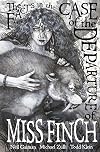
Two of my favourite things are Neil Gaiman stories and graphic novels. Gaiman is one of the few writers whose work I will seek out and read and reread and always find it as enjoyable, as entertaining as the first time. I originally read The Facts in The Case of the Departure of Miss Finch in Fragile Things several years ago and thought it was one very dark very creepy tale so when I saw it reproduced as a graphic novel, how could I resist?
While in London a writer is invited out for a night show more of fun and sushi with a couple of friends. However, their purpose for inviting him is not entirely friendship – they are saddled with Miss Finch, another acquaintance, a woman who is a bit of a killjoy and they hope the presence of the writer will prevent the evening from being entirely ruined.
After, a meal of sushi, in which Miss Finch ‘entertains’ them with tales of all of the parasites that one can get from eating raw seafood along with comments about now extinct animals, they decide to go to a underground circus to get out of the rain. But this is no ordinary circus - there are vampires and other denizens of the dark to amuse and amaze the rather small crowd. None of this, however, impresses the group until they reach the very last exhibit, the Cabinet of Wishes Fullfill’d and Miss Finch is dragged into it.
The graphic novel is published by Dark Horse and illustrated by Michael Zulli. The artwork is done in slightly muted tones and complements the tale beautifully. In fact, this may be one of the few times I would be hard pressed to say which I enjoyed more, the story or the art. This is also a very short book, just 56 pages, but what it lacks in length, it makes up for in the sheer creepy goodness of the story and the beauty of the art. Definitely a high recommendation from me for fans of Neil Gaiman and/or graphic novels. show less
While in London a writer is invited out for a night show more of fun and sushi with a couple of friends. However, their purpose for inviting him is not entirely friendship – they are saddled with Miss Finch, another acquaintance, a woman who is a bit of a killjoy and they hope the presence of the writer will prevent the evening from being entirely ruined.
After, a meal of sushi, in which Miss Finch ‘entertains’ them with tales of all of the parasites that one can get from eating raw seafood along with comments about now extinct animals, they decide to go to a underground circus to get out of the rain. But this is no ordinary circus - there are vampires and other denizens of the dark to amuse and amaze the rather small crowd. None of this, however, impresses the group until they reach the very last exhibit, the Cabinet of Wishes Fullfill’d and Miss Finch is dragged into it.
The graphic novel is published by Dark Horse and illustrated by Michael Zulli. The artwork is done in slightly muted tones and complements the tale beautifully. In fact, this may be one of the few times I would be hard pressed to say which I enjoyed more, the story or the art. This is also a very short book, just 56 pages, but what it lacks in length, it makes up for in the sheer creepy goodness of the story and the beauty of the art. Definitely a high recommendation from me for fans of Neil Gaiman and/or graphic novels. show less
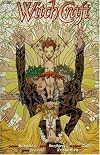
This isn't the first Sandman spin-off-- it's predated by the launch of Sandman Mystery Theatre and the first Death miniseries-- but it's kinda the first standalone one. (I say "kinda" because it did garner a sequel, but said sequel was never collected in trade paperback.) Its subject is a little odd, though; I refused to believe that any Sandman fans were clamoring for a return of the Three Fates or the Three Witches or the Three Goddesses or whatever they were. (I mean, they don't even have show more clear names.) They would just pop up sporadically and be cryptic; I think they had a role in the finale, but maybe the Three Furies were something separate? I don't know and I don't really care.
The story opens with a Pict barbarian coming to Londinium and raping a Roman woman. She's a priestess of the Triple Goddess, though, and lets off a prayer as she dies. Too late to save herself, but the Triple Goddess decide that she will get her revenge: when she and her killer are next reincarnated in the London area, her killer will die. This takes over a millennium, but finally a young maiden is due to marry a guy who turns out to be a rapist. She's secretly a witch, and so is he, and though the Triple Goddess try their best, it doesn't quite come together, everyone dies, and no revenge is had. At this point, I wasn't really into the story either way-- didn't hate it, didn't love it. Did kinda wonder what the point was. (Except that the introduction had told me, but I'll come back to that later.)
So they're left to try again in 1842, where for some reason the priestess has been reincarnated as a man-- and not just any man, but Sir Richard F. Burton (though he's no "sir" yet). What? This just seemed bizarre to me. The killer is actually his mother's lover, and willingly so. Richard Burton is chastised by her for not allowing her her sexual freedom. But he chases the lover anyway and, whoops, the lover rapes Burton. I guess because he's just so evil? Then Burton meets up with gypsies, who teach him sex magic or something (you know gypsies) and then he finds the lover, but doesn't kill him, and goes on to be imperialist bastard we all know and love. And who wrote awful, dull travelogues.
The last bit brings us to the 1990s, when the priestess is now an old lady, and the barbarian is her baby-raping, wife-mind-controlling, priest-killing warlock son-in-law. Because he just wasn't evil enough? It's starting to get over the top at this point. Anyway, the grandma wins, and the Triple Goddess sentences him to be reincarnated throughout the past as the victim of every sex crime ever. Leaving aside the fact that "sex crime" sounds a bit too 20th-century in the mouth of a pagan goddess, it's just what!? I don't even understand what this is supposed to mean. Does it make rape into an empowering act for women? Or is it poetic justice (because raping men is funny maybe)? Or something? God, how bizarre. The book tries to pull back from it by having one of the Goddesses say "I actually started wondering if the matter deserved all the fuss we'd given it," but you know, that ending still exists!
Like Black Orchid (it must be a Vertigo thing), this collection contains a fawning introduction from someone I've never heard of, but I think is supposed to be famous maybe, Penelope Spheeris. Spheeris describes the book as creating "a comic-book world for those who are evolved enough to know that ultimately there is justice in the world." There's nothing evolved about this book! It depicts men as eternal rapists and women as eternal victims, whose best outcome for "justice" is that the men can secretly be the victims of the rapes they commit. She also claims that it shows the power of women as "immeasurably strong and immeasurably subtle," though I feel like being victimized through the millennia is pretty much neither. And lastly, she's quick to claim that men will like this book too even if it is all about female power (really?) because the stories "are sexually titillating without being sexist. They are sometimes erotic, but in an artful, beautiful way... and in a way that allows the WitchCraft women to keep their power and their moral strength." WHAT!? Did we read the same book? Because in the book I read, every sex act bar two is coerced. This book is not remotely titillating-- sex is nasty, brutish, and short, a means to an end for one or both parties in every case. None of the participants are ever drawn attractively. And let's not even talk about the assumption that "boys and men alike" need sex on display to enjoy a story about women anyway...
I freely admit that Penelope Spheeris's introduction is not James Robinson's fault. But it does show the same warped, unpleasant set of values that seems to underly this entire book. Ugh.
Neil Gaiman's The Sandman Spin-Offs: « Previous in sequence | Next in sequence » show less
The story opens with a Pict barbarian coming to Londinium and raping a Roman woman. She's a priestess of the Triple Goddess, though, and lets off a prayer as she dies. Too late to save herself, but the Triple Goddess decide that she will get her revenge: when she and her killer are next reincarnated in the London area, her killer will die. This takes over a millennium, but finally a young maiden is due to marry a guy who turns out to be a rapist. She's secretly a witch, and so is he, and though the Triple Goddess try their best, it doesn't quite come together, everyone dies, and no revenge is had. At this point, I wasn't really into the story either way-- didn't hate it, didn't love it. Did kinda wonder what the point was. (Except that the introduction had told me, but I'll come back to that later.)
So they're left to try again in 1842, where for some reason the priestess has been reincarnated as a man-- and not just any man, but Sir Richard F. Burton (though he's no "sir" yet). What? This just seemed bizarre to me. The killer is actually his mother's lover, and willingly so. Richard Burton is chastised by her for not allowing her her sexual freedom. But he chases the lover anyway and, whoops, the lover rapes Burton. I guess because he's just so evil? Then Burton meets up with gypsies, who teach him sex magic or something (you know gypsies) and then he finds the lover, but doesn't kill him, and goes on to be imperialist bastard we all know and love. And who wrote awful, dull travelogues.
The last bit brings us to the 1990s, when the priestess is now an old lady, and the barbarian is her baby-raping, wife-mind-controlling, priest-killing warlock son-in-law. Because he just wasn't evil enough? It's starting to get over the top at this point. Anyway, the grandma wins, and the Triple Goddess sentences him to be reincarnated throughout the past as the victim of every sex crime ever. Leaving aside the fact that "sex crime" sounds a bit too 20th-century in the mouth of a pagan goddess, it's just what!? I don't even understand what this is supposed to mean. Does it make rape into an empowering act for women? Or is it poetic justice (because raping men is funny maybe)? Or something? God, how bizarre. The book tries to pull back from it by having one of the Goddesses say "I actually started wondering if the matter deserved all the fuss we'd given it," but you know, that ending still exists!
Like Black Orchid (it must be a Vertigo thing), this collection contains a fawning introduction from someone I've never heard of, but I think is supposed to be famous maybe, Penelope Spheeris. Spheeris describes the book as creating "a comic-book world for those who are evolved enough to know that ultimately there is justice in the world." There's nothing evolved about this book! It depicts men as eternal rapists and women as eternal victims, whose best outcome for "justice" is that the men can secretly be the victims of the rapes they commit. She also claims that it shows the power of women as "immeasurably strong and immeasurably subtle," though I feel like being victimized through the millennia is pretty much neither. And lastly, she's quick to claim that men will like this book too even if it is all about female power (really?) because the stories "are sexually titillating without being sexist. They are sometimes erotic, but in an artful, beautiful way... and in a way that allows the WitchCraft women to keep their power and their moral strength." WHAT!? Did we read the same book? Because in the book I read, every sex act bar two is coerced. This book is not remotely titillating-- sex is nasty, brutish, and short, a means to an end for one or both parties in every case. None of the participants are ever drawn attractively. And let's not even talk about the assumption that "boys and men alike" need sex on display to enjoy a story about women anyway...
I freely admit that Penelope Spheeris's introduction is not James Robinson's fault. But it does show the same warped, unpleasant set of values that seems to underly this entire book. Ugh.
Neil Gaiman's The Sandman Spin-Offs: « Previous in sequence | Next in sequence » show less

Murphy gives us a prescient narrative that is simultaneously mind-expanding and a little claustrophobic. The comic starts in the year 2000 (which would have been about fifteen years in the future when it was first published). The U.S. experienced a devastating act of domestic terrorism in 1995 when a nuclear weapon was set off in the Bronx. The environment is also going haywire and U.S. Agent Gavia Immer (our hero) is leading a solitary life in the woods tracking mutating animals (flying. show more manta. rays.) and measuring the ph levels of the water. He fills his time with video phone calls to his mom and some gut wrenching watching of old VHS movies his late father made that explore the existence of alien life forms. The amazing drawings by Zulli perfectly match the (sometimes pretty abstract) tone of the writing, and his drawings of animals and the natural world are some of the best I've ever seen. The scenes from nature give the sometimes pretty dense narrative the room it needs to take effect, and also give the reader a little time to breathe.
The story is often universal, but sprinkled throughout are pretty intimate-feeling vignettes of lost parents, sexual encounters, weird dreams, and unspoken thoughts. It has a very 80s feel in its politics, technology, philosophies, and sexy ladies, but since domestic terrorism and environmental collapse are still pretty relevant topics, there is plenty to chew on here. This is a weird and wonderful book and I'm so glad I fell into it. Plus my arms are super strong now from carrying it around.
[full review here: http://spacebeer.blogspot.com/2016/05/the-puma-blues-complete-sage-in-one.html ] show less
The story is often universal, but sprinkled throughout are pretty intimate-feeling vignettes of lost parents, sexual encounters, weird dreams, and unspoken thoughts. It has a very 80s feel in its politics, technology, philosophies, and sexy ladies, but since domestic terrorism and environmental collapse are still pretty relevant topics, there is plenty to chew on here. This is a weird and wonderful book and I'm so glad I fell into it. Plus my arms are super strong now from carrying it around.
[full review here: http://spacebeer.blogspot.com/2016/05/the-puma-blues-complete-sage-in-one.html ] show less

Sweeney Todd is definitely not one of my favourite urban myths, because its commonplace nature heightens the tension too much and the fact that Victorian-era murder stories that have made it into the popular consciousness were particularly brutal, but this short graphic story was rather interesting despite all that. Gaiman and Zulli spend quite some time at the forefront expositioning about the nature of the story itself - there doesn't seem to be a real origin of the tale, nor is there any show more factual evidence of the existence of a murderous barber on Fleet Street, but that's what makes the story even more intriguing for the authors (and for the audience). Their "retelling" isn't really a retelling at all, but in fact chronicles a journey taken to find the gate that once stood at the entrance to Fleet Street (and the City of London) and more discussion about the stories surrounding the urban legend. Somehow this still makes for an interesting little jaunt, even though the only real conflict is the growing tension as the protagonists continue to search for the Gate as it grows dark and a brief encounter with a rather creepy groundsman. He barely speaks to them, but something about his character struck me as being almost otherworldly and directly connected to the story of Sweeney Todd. Is he in fact the incarnation of the Barber, or is he just a creepy dude in the semi-wilderness? We'll never know, since the story unfortunately winds up shortly afterwards. show less
Lists
Awards

You May Also Like


Associated Authors
Statistics
- Works
- 30
- Also by
- 29
- Members
- 2,520
- Popularity
- #10,183
- Rating
- 4.3
- Reviews
- 68
- ISBNs
- 49
- Languages
- 9
- Favorited
- 1