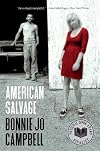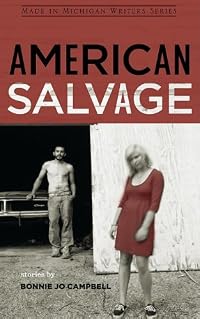
American Salvage
by Bonnie Jo Campbell
On This Page
Description
The fiction of Bonnie Jo Campbell has been honored with the Pushcart Prize, the AWP Award for Short Fiction, and Southern Review's Eudora Welty Prize. In this stunning collection-a National Book Award finalist-Campbell's rural Michigan characters are both as jagged as rusty metal and as delicate as the light brush of fading dreams.Tags
Recommendations




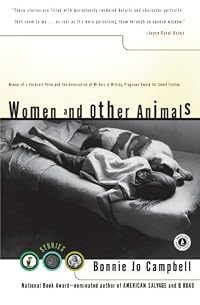

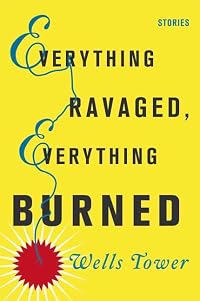
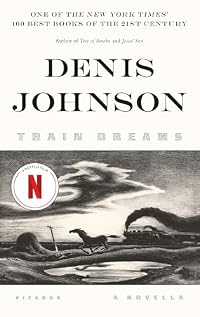

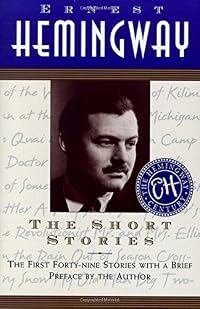
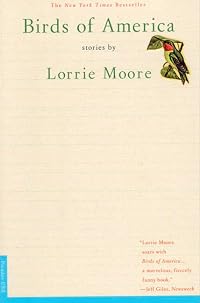
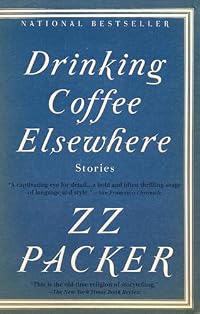
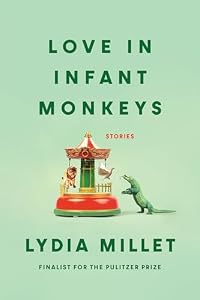
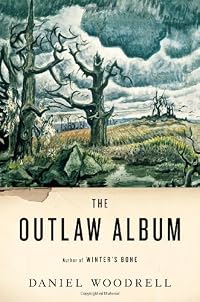
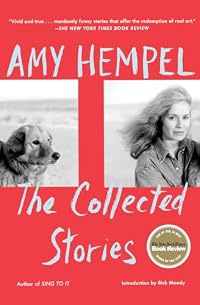


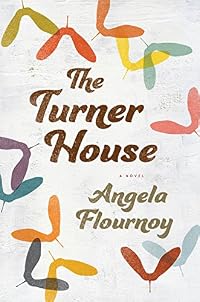
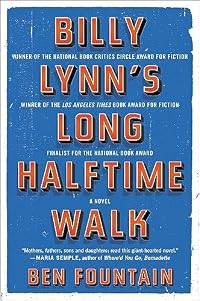
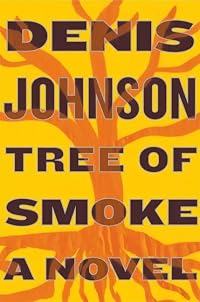
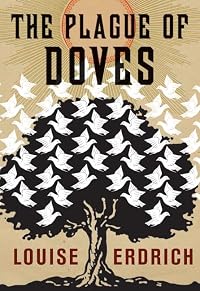
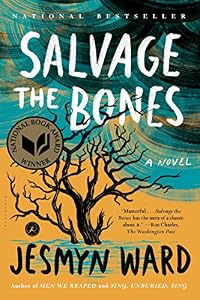
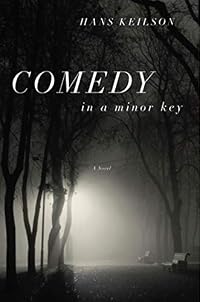
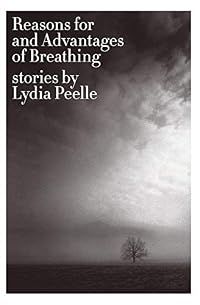
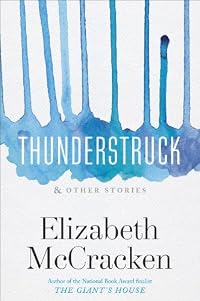

Member Recommendations
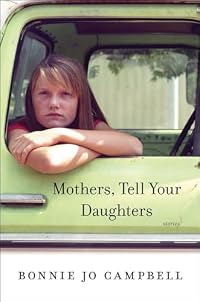
SqueakyChu Both books have short stories which include a love of Michigan as their starting point.
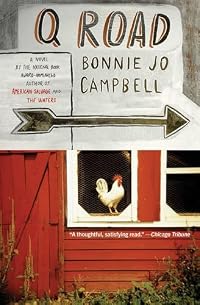
nancyewhite A novel that explores some of the same themes as these stories.
Member Reviews
Rating: 4.6* of five
The Publisher Says: American Salvage is rich with local color and peopled with rural characters who love and hate extravagantly. They know how to fix cars and washing machines, how to shoot and clean game, and how to cook up methamphetamine, but they have not figured out how to prosper in the twenty-first century. Through the complex inner lives of working-class characters, Bonnie Jo Campbell illustrates the desperation of post-industrial America, where wildlife, jobs, and whole ways of life go extinct and the people have no choice but to live off what is left behind.
My Review: Solid craftsmanship, a fearless imagination, and a complete lack of corrosive, cynical piety and pity make this collection of short stories show more exceptionally enjoyable.
I share nothing with these characters except the right to trial by jury, and yet I was enrapt by them. I loved "The Solutions to Brian's Problem" the best, since I never expect to see a male PoV on abuse by women. This book is seething with the rage of characters whose lives turned out bad, as in the TV series "Breaking Bad," and are flat-out irredeemably broken. This same territory was trodden by Barbara Ehrenreich in Nickel and Dimed from the factual PoV...it was revolting to read that book, it hurt me in ways I can't recover from, but Bonnie Jo Campbell has brought home to me the true emotional cost of indifference.
I don't thank her for that.
But I do recommend the book highly. show less
The Publisher Says: American Salvage is rich with local color and peopled with rural characters who love and hate extravagantly. They know how to fix cars and washing machines, how to shoot and clean game, and how to cook up methamphetamine, but they have not figured out how to prosper in the twenty-first century. Through the complex inner lives of working-class characters, Bonnie Jo Campbell illustrates the desperation of post-industrial America, where wildlife, jobs, and whole ways of life go extinct and the people have no choice but to live off what is left behind.
My Review: Solid craftsmanship, a fearless imagination, and a complete lack of corrosive, cynical piety and pity make this collection of short stories show more exceptionally enjoyable.
I share nothing with these characters except the right to trial by jury, and yet I was enrapt by them. I loved "The Solutions to Brian's Problem" the best, since I never expect to see a male PoV on abuse by women. This book is seething with the rage of characters whose lives turned out bad, as in the TV series "Breaking Bad," and are flat-out irredeemably broken. This same territory was trodden by Barbara Ehrenreich in Nickel and Dimed from the factual PoV...it was revolting to read that book, it hurt me in ways I can't recover from, but Bonnie Jo Campbell has brought home to me the true emotional cost of indifference.
I don't thank her for that.
But I do recommend the book highly. show less
It is relevant to note, as I have before in GR, that I grew up in Michigan and my mother told me that after the first time she took me to NYC when I was three my only response to the question "what do you want to be when you grow up?" was "a New Yorker. I was a pretty self-actualized 3-year-old. My parents refused to pay for an out-of-state college (which I totally understand, when I went to Michigan State tuition was $71.50 a credit hour) so I left MI after college graduation -- 3 days after to be precise. But still, I feel an attachment to my home state for many reasons, despite never (ever!) again wanting to live there. MI has spectacular natural beauty (especially the west side of the state with Lake Michigan and Lake Superior show more showing off a whole lot of perfection) and also IMO a fascinating if brutal history, excellent spare ribs, Sander's hot fudge cream puffs, the stunning Diego Rivera murals at the Detroit Institute of Arts, and a really good zoo. Also, Michigan has a surprising number of really great writers to its credit. Most of those writers are from Michigan but some remained and others left and returned. Bonnie Jo Campbell is one of that last group. For a long time she was a Chicago writer from rural southwestern MI, but for reasons that honestly baffle me she returned to Michigan where she lives rather close to another writer who will be on my best of the year list this year, Diane Seuss. My bafflement at Campbell's return does not stem entirely from me projecting my feelings about living there. Mostly it is baffling because Campbell writes about living in rural southwestern Michigan, and it sounds really truly awful.
The people we meet in this brilliant collection are uniformly unhappy. Most everyone is an alcoholic or addicted to meth and/or is the intimate partner or child of an addict or alcoholic, Many experience relentless suicidal ideation. Almost all are poor, some living in shocking want. Everyone here struggles to maintain any meaningful relationships, and even if those exist all appear to feel profoundly lonely much of the time (the exception is the last story, Boar Taint, in which the MC just seems like a searcher in a difficult but satisfying life passage.) The loneliness is what broke me. This book is filled with really bad people, Michigan Militia wannabes, and a few good people who cannot seem to win against the onslaught of bad. With every character though, even the murderers and rapists it is impossible to hate them.
There are touches of humor to be found here, but they are rare and more rueful than rollicking. Mostly though this is humbling and sad and so true. These are not caricatures of want at all, every character is fully drawn. When I first started this several months ago I noticed one of the top GR tags that had been applied to it was "Southern" and I laughed. I know geography education in America is terrible, but the only way Michigan is southern is if you live in Canada -- in fact, there are parts of Canada that are south of parts of Michigan. But then I realized that this reads a lot like Southern literature focused on poor White rural communities. I can hear in these stories writers like Carson McCullers, Erskine Caldwell, and even a hint or two of Faulkner. That is not to say that this is derivative, it is not, but stylistically this feels more a part of Southern lit than of Midwestern lit.
I am on a roll lately with good books after a bit of a slump -- this is going to be my top short story collection for sure, and I expect it will make the top 10 fiction choices. Campbell is a writer I have been meaning to read for years, and I think it is likely I will be moving Mothers Tell Your Daughters and Heart Like a River way up in the batting order after reading this one. show less
The people we meet in this brilliant collection are uniformly unhappy. Most everyone is an alcoholic or addicted to meth and/or is the intimate partner or child of an addict or alcoholic, Many experience relentless suicidal ideation. Almost all are poor, some living in shocking want. Everyone here struggles to maintain any meaningful relationships, and even if those exist all appear to feel profoundly lonely much of the time (the exception is the last story, Boar Taint, in which the MC just seems like a searcher in a difficult but satisfying life passage.) The loneliness is what broke me. This book is filled with really bad people, Michigan Militia wannabes, and a few good people who cannot seem to win against the onslaught of bad. With every character though, even the murderers and rapists it is impossible to hate them.
There are touches of humor to be found here, but they are rare and more rueful than rollicking. Mostly though this is humbling and sad and so true. These are not caricatures of want at all, every character is fully drawn. When I first started this several months ago I noticed one of the top GR tags that had been applied to it was "Southern" and I laughed. I know geography education in America is terrible, but the only way Michigan is southern is if you live in Canada -- in fact, there are parts of Canada that are south of parts of Michigan. But then I realized that this reads a lot like Southern literature focused on poor White rural communities. I can hear in these stories writers like Carson McCullers, Erskine Caldwell, and even a hint or two of Faulkner. That is not to say that this is derivative, it is not, but stylistically this feels more a part of Southern lit than of Midwestern lit.
I am on a roll lately with good books after a bit of a slump -- this is going to be my top short story collection for sure, and I expect it will make the top 10 fiction choices. Campbell is a writer I have been meaning to read for years, and I think it is likely I will be moving Mothers Tell Your Daughters and Heart Like a River way up in the batting order after reading this one. show less
American Salvage is a collection of short stories by author Bonnie Jo Campbell. She writes about rural, working class people of Michigan, people who once thought they could attain the American Dream but have long since given up and become the broken, damaged and discontented who can’t see beyond the downward spiral that their life has taken.
Although this was not a comfortable read, the author writes stories that are detailed, heart-felt and peopled with characters that feel authentic and real. This is an author who knows how to explore the lives of the desperate and drug-addicted and in doing so, reaches into the heart of America with some painful truths about what life is like for those who found themselves falling short.
As with all show more short story collections, I found some of these stories resonated a little more strongly with me than others, but overall the depth and richness of her writing, the poignant and painful lives she reveals, and the eye-opening rust belt mentality she describes make American Salvage a riveting and unique read. show less
Although this was not a comfortable read, the author writes stories that are detailed, heart-felt and peopled with characters that feel authentic and real. This is an author who knows how to explore the lives of the desperate and drug-addicted and in doing so, reaches into the heart of America with some painful truths about what life is like for those who found themselves falling short.
As with all show more short story collections, I found some of these stories resonated a little more strongly with me than others, but overall the depth and richness of her writing, the poignant and painful lives she reveals, and the eye-opening rust belt mentality she describes make American Salvage a riveting and unique read. show less
While reading this remarkable collection of stories, I thought of shopping for fresh fruit. How, when making your selection, you choose the healthiest, most robust piece, overlooking the mottled, unhealthy ones. The discards. This describes the people in these tales, with their bruised and damaged lives, living on the fringes, in this case rural or small town Michigan. Ex-cons, drug-dealers, struggling families and survivalists, to name a few. Campbell is an exceptional writer, with a fine ear for the rhythms of everyday life. She does not condemn or judge these characters, but gives them an honest, unflinching, sometimes heart-rending examination. Highly recommended!
In American Salvage, National Book Award finalist Bonnie Jo Campbell sought to portray the lives of America’s working poor in her native Michigan and the timeliness of this story collection is striking. With unemployment still hovering at around 10%, and with Michigan unemployment near 15%, Campbell highlights the unemployed and the underemployed, the down and out, and the practically there, but in doing so she portrays working class characters that don’t give up even with the odds stacked against them and, in the end, she allows them to let hope emerge. Things may seem hopeless here, but these characters prove that just the opposite is true.
Each story shows, through its quirky characters and desperate circumstances, the strong show more character traits needed to survive in the yawning depths of economic disaster. Impossible to put down, each story had me laughing until the circumstances changed on a dime and I was near tears. The settings of each story are littered with rusted cars, camouflage clothes, missing teeth, lack of insurance, methamphetamine, whiskey bottles, busted-up marriages and, just for good measure, the author throws in a large dose of plain old bad luck.
In “The Burn” down and out character Jim Lobretto is having what can only be described as a Murphy’s Law kind of day. He picks up a girl at the bowling alley and offers to drive her home only to learn as they pull out of the parking lot that she still lives with her parents twenty miles out of town. On his way back, he stops for gas but only has $3 for gas, $3 for cigarettes and $1 for coffee. In getting the coffee, he drops the cup and splatters coffee all over himself and the woman ahead of him in line. Out at the gas pump, he overfills his tank and gas runs down his right thigh and knee. Back on the road again, he gets pulled over for going through a stop light. As he’s waiting for the policeman, he tries to light a cigarette but the match ignites his pants where the gas spilled. The dialogue up to this point is hysterical but the foreboding language leads you to know something bad is coming down the pike, and the comedy of errors is going to end pretty badly. Campbell skillfully transitions to the painful ending to the story.
Along the way, Campbell throws out more than a few gems:
“It occurred to Susan that men were always waiting for something cataclysmic—love or war or a giant asteroid. Every man wanted to be a hot-headed Bruce Willis character, fighting against the evil foreign enemy while despising the domestic bureaucracy. Men wanted to focus on just one big thing, leaving the thousands of smaller messes for the women around them to clean up.” (Page 34, “World of Gas”)
And from “King Cole’s American Salvage,” Page 129:
“Johnny went back to work and started scrapping out a Lincoln Town Car. King was watching him, and it made Johnny conscious of his own breath forming a cloud that hung around him, a cloud that kept him down here on the oily, hard-packed dirt of the salvage yard, down here wearing his greasy clothes, picking through the piles of engines and axles with his filthy hands, down in this neighborhood of ramshackle houses with dogs barking in the torn up yards.”
You know you’re in the hands of a master here and she delivers. Highly recommended. show less
Each story shows, through its quirky characters and desperate circumstances, the strong show more character traits needed to survive in the yawning depths of economic disaster. Impossible to put down, each story had me laughing until the circumstances changed on a dime and I was near tears. The settings of each story are littered with rusted cars, camouflage clothes, missing teeth, lack of insurance, methamphetamine, whiskey bottles, busted-up marriages and, just for good measure, the author throws in a large dose of plain old bad luck.
In “The Burn” down and out character Jim Lobretto is having what can only be described as a Murphy’s Law kind of day. He picks up a girl at the bowling alley and offers to drive her home only to learn as they pull out of the parking lot that she still lives with her parents twenty miles out of town. On his way back, he stops for gas but only has $3 for gas, $3 for cigarettes and $1 for coffee. In getting the coffee, he drops the cup and splatters coffee all over himself and the woman ahead of him in line. Out at the gas pump, he overfills his tank and gas runs down his right thigh and knee. Back on the road again, he gets pulled over for going through a stop light. As he’s waiting for the policeman, he tries to light a cigarette but the match ignites his pants where the gas spilled. The dialogue up to this point is hysterical but the foreboding language leads you to know something bad is coming down the pike, and the comedy of errors is going to end pretty badly. Campbell skillfully transitions to the painful ending to the story.
Along the way, Campbell throws out more than a few gems:
“It occurred to Susan that men were always waiting for something cataclysmic—love or war or a giant asteroid. Every man wanted to be a hot-headed Bruce Willis character, fighting against the evil foreign enemy while despising the domestic bureaucracy. Men wanted to focus on just one big thing, leaving the thousands of smaller messes for the women around them to clean up.” (Page 34, “World of Gas”)
And from “King Cole’s American Salvage,” Page 129:
“Johnny went back to work and started scrapping out a Lincoln Town Car. King was watching him, and it made Johnny conscious of his own breath forming a cloud that hung around him, a cloud that kept him down here on the oily, hard-packed dirt of the salvage yard, down here wearing his greasy clothes, picking through the piles of engines and axles with his filthy hands, down in this neighborhood of ramshackle houses with dogs barking in the torn up yards.”
You know you’re in the hands of a master here and she delivers. Highly recommended. show less
Really good writing, brings to mind a female, slightly more contemporary take on Breece D'J Pancake's territory. Dark stuff -- the characters are all injured in one way or another -- but very well done. It's all classic and not show-offy in the least. The last story, "Boar Taint," called to mind Flannery O'Connor's "Greenleaf," though with an upbeat ending -- probably the most optimistic story in the collection. Now I'm really sorry it didn't win the NBA.
The writing here is first class. Campbell is probably one of the few writers today who can portray so accurately the lives of the unemployed, the disheartened and broken-hearted, the redneck and uneducated - in short people who are down on their luck or who've never had a chance for a decent life. There are drug addicts and drunks here, child molesters and rape victims, junk dealers and dirt farmers, and they are all so real you'd swear you might have met them somewhere. Perhaps the most recurrent theme in this slim volume of stories is one of near hopelessness. I guess if I'm gonna be honest here, the only real reason I didn't give this book five stars is because the stories are just too damn depressing. But they say you should write show more about what you know, and Campbell obviously knows her subjects, these awful characters who live along the margins of our society, in this case in southwest Michigan, where most of the blue collar factory jobs have long gone south. Home cooked meth is the drug of choice here and things in general seem pretty bleak. One wonders what Bonnie Jo Campbell sees in these people or why she chooses to write about them. There are clues to this scattered here and there, however, as in the title story's last line. A junk yard employee who was nearly an accessory to murder is stripping catalytic converters off old cars and throwing them on a pile - "mostly they were dirty and rusted from the slush and the mud and road salt, but each of their bodies contained a core of platinum."
Campbell has lived among these people. Hell, probably many of them are friends of hers. And she sees value in these beaten down people consigned to the junkyards of American society. She knows God doesn't make junk. She looks for the core, for the valuable, for the soul. She looks for the salvageable. This will be a hard sell to recommend. The subject is just too blatantly bleak. But this woman can write! show less
Campbell has lived among these people. Hell, probably many of them are friends of hers. And she sees value in these beaten down people consigned to the junkyards of American society. She knows God doesn't make junk. She looks for the core, for the valuable, for the soul. She looks for the salvageable. This will be a hard sell to recommend. The subject is just too blatantly bleak. But this woman can write! show less
Members
- Recently Added By
Published Reviews
added by lemontwist
Lists

W. W. Norton & Company
47 works; 2 members

National Book Award Finalists - Fiction
377 works; 11 members
Author Information

8+ Works 1,902 Members
Awards and Honors
Awards
Distinctions
Notable Lists
Series
Belongs to Publisher Series
Common Knowledge
- Canonical title
- American Salvage
- Original title
- American Salvage
- Original publication date
- 2009
- Important places
- Michigan, USA
- Dedication
- TO DARLING CHRISTOPHER
- First words
- The mother jiggles her key in the ancient lock, nudges open the heavy oak door with her shoulder, and then freezes on the threshold. The father steps around her, enters the kitchen of the family cottage - last summer her and ... (show all)his daughter painted these walls sunshine yellow - and drops one of his two bags of groceries onto the linoleum. The thirteen-year-old daughter's mouth glitter with braces. She squeezes her gym bag to her chest and says, "Holy crap." -The Trespasser
- Blurbers
- Perry, Rachael; Kasischke, Laura
- Canonical DDC/MDS
- 813.54
- Canonical LCC
- PS3553.A43956
Classifications
Statistics
- Members
- 438
- Popularity
- 69,728
- Reviews
- 35
- Rating
- (4.03)
- Languages
- English, French
- Media
- Paper, Audiobook, Ebook
- ISBNs
- 11
- ASINs
- 2