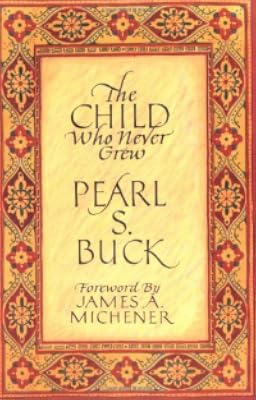
The Child Who Never Grew
by Pearl S. Buck
On This Page
Description
A "groundbreaking" memoir about raising a special-needs daughter in an era of misinformation and prejudice--a classic that helped transform our perceptions (Publishers Weekly). It was my child who taught me to understand so clearly that all people are equal in their humanity and that all have the same human rights. Pearl S. Buck is known today for earning a Nobel Prize in Literature and for such New York Times-bestselling novels as The Good Earth. What many do not know is that she show more wrote that great work of art with the motivation of paying for a special school for her oldest daughter, Carol, who had a rare developmental disorder. What was called "mental retardation" at the time--though some used crueler terms--was a disability that could cause great suffering and break a parent's heart. There was little awareness of how to deal with such children, and as a result some were simply hidden away, considered a source of shame and stigma, while others were taken advantage of because of their innocence. In this remarkable account, which helped bring the issue to light, Pearl S. Buck candidly discusses her own experience as a mother, from her struggle to accept Carol's diagnosis to her determination to give her child as full and happy a life as possible, including a top-quality education designed around her needs and abilities. Both heartrending and inspiring, The Child Who Never Grew provides perspective on just how much progress has been made in recent decades, while also offering common sense and timeless wisdom for the challenges still faced by those who love and care for someone with special needs. It is a clear-eyed and compelling read by a woman renowned for both her literary talent and her humanitarian spirit. This ebook features an illustrated biography of Pearl S. Buck including rare images from the author's estate. show lessTags
Recommendations













Member Reviews
What was called “mental retardation” at the time—though some used crueler terms—was a disability that could cause great suffering and break a parent’s heart. There was little awareness of how to deal with such children, and as a result some were simply hidden away, considered a source of shame and stigma, while others were taken advantage of because of their innocence.
In this remarkable account, which helped bring the issue to light, Pearl S. Buck candidly discusses her own experience as a mother, from her struggle to accept Carol’s diagnosis to her determination to give her child as full and happy a life as possible, including a top-quality education designed around her needs and abilities. Both heartrending and inspiring, show more The Child Who Never Grew provides perspective on just how much progress has been made in recent decades, while also offering common sense and timeless wisdom for the challenges still faced by those who love and care for someone with special needs. It is a clear-eyed and compelling read by a woman renowned for both her literary talent and her humanitarian spirit. show less
In this remarkable account, which helped bring the issue to light, Pearl S. Buck candidly discusses her own experience as a mother, from her struggle to accept Carol’s diagnosis to her determination to give her child as full and happy a life as possible, including a top-quality education designed around her needs and abilities. Both heartrending and inspiring, show more The Child Who Never Grew provides perspective on just how much progress has been made in recent decades, while also offering common sense and timeless wisdom for the challenges still faced by those who love and care for someone with special needs. It is a clear-eyed and compelling read by a woman renowned for both her literary talent and her humanitarian spirit. show less
Wow, really an amazing book. The 4 ⭐ are for what courage and frankness it took to write about this at a time when people pretended as if special needs children and adults did not exist.
In this book, Pearl Buck, the author of The Good Earth trilogy, shares the story of her daughter Carol, who because of an inability to absorb protein stopped her mind's growth at the age of three. This meant she could care for herself, mostly, with supervision. But she would need to be institutionalized in order that her mother could write and make enough money to institutionalize her. It's a wrenching story, and one that the reader sees was extremely heartbreaking and difficult for the author to write.
At the time it was written (1950), families just show more did not share that their children had special needs. In that sense, this is groundbreaking work.
The author gives parents of children with special needs great advice on what to look for if they are going to institutionalize their child. I guess this is mostly advice for wealthy parents.
Carol Buck was extremely fortunate in that her mother assured her a safe and long-lived life. Miss Buck is white and she is the daughter of Presbyterian missionaries who went to China to "win souls for the church" more or less.
Take the sad situation of Miss buck and her child, and transform it into a family of color, who live in poverty. You are not going to find the same solution for a special needs child as Ms Buck found for hers.
1992, Paperback, Woodbine House
P.8-9:
".. from the Chinese she absorbed two important attitudes: 'love of children for their own sakes and beyond' and acceptance of 'any human infirmity for what it is' She later wrote. Growing up in china, Miss Buck saw blind, lame, deformed people coming and going in their communities. No shame, no blame. They were openly 'accepted for themselves' because the Chinese believed that any affliction was part of one's fate, ordained by heaven, to be respected as such, and therefore not the fault of the individual or the family."
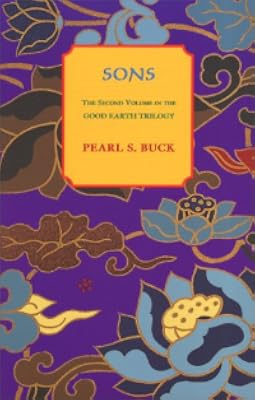
And yet, I just finished reading the second book of The Good Earth trilogy, by Ms buck, and in the Wang family, there was one daughter born to Wang long, who was mentally deficient, who was not accepted into the family. instead she was thrust upon Wang lung's youngest concubine, who cared for her until her death. And Wang lung's Son, the merchant: he had a son who had been given to a servant to wet nurse, whose own child was taken away for that reason, and who in her resentment of this, became sloppy and dropped the child on its head, resulting in physical deformity. That child was hidden away from the family and eventually went to live with Wang lung's concubine, who was already taking care of the mentally deficient daughter and now cared for the physically deformed son of Wang lung the merchant. So I don't know how great the author thinks the Chinese are with their treatment of physically or mentally deformed citizens. show less
In this book, Pearl Buck, the author of The Good Earth trilogy, shares the story of her daughter Carol, who because of an inability to absorb protein stopped her mind's growth at the age of three. This meant she could care for herself, mostly, with supervision. But she would need to be institutionalized in order that her mother could write and make enough money to institutionalize her. It's a wrenching story, and one that the reader sees was extremely heartbreaking and difficult for the author to write.
At the time it was written (1950), families just show more did not share that their children had special needs. In that sense, this is groundbreaking work.
The author gives parents of children with special needs great advice on what to look for if they are going to institutionalize their child. I guess this is mostly advice for wealthy parents.
Carol Buck was extremely fortunate in that her mother assured her a safe and long-lived life. Miss Buck is white and she is the daughter of Presbyterian missionaries who went to China to "win souls for the church" more or less.
Take the sad situation of Miss buck and her child, and transform it into a family of color, who live in poverty. You are not going to find the same solution for a special needs child as Ms Buck found for hers.
1992, Paperback, Woodbine House
P.8-9:
".. from the Chinese she absorbed two important attitudes: 'love of children for their own sakes and beyond' and acceptance of 'any human infirmity for what it is' She later wrote. Growing up in china, Miss Buck saw blind, lame, deformed people coming and going in their communities. No shame, no blame. They were openly 'accepted for themselves' because the Chinese believed that any affliction was part of one's fate, ordained by heaven, to be respected as such, and therefore not the fault of the individual or the family."
And yet, I just finished reading the second book of The Good Earth trilogy, by Ms buck, and in the Wang family, there was one daughter born to Wang long, who was mentally deficient, who was not accepted into the family. instead she was thrust upon Wang lung's youngest concubine, who cared for her until her death. And Wang lung's Son, the merchant: he had a son who had been given to a servant to wet nurse, whose own child was taken away for that reason, and who in her resentment of this, became sloppy and dropped the child on its head, resulting in physical deformity. That child was hidden away from the family and eventually went to live with Wang lung's concubine, who was already taking care of the mentally deficient daughter and now cared for the physically deformed son of Wang lung the merchant. So I don't know how great the author thinks the Chinese are with their treatment of physically or mentally deformed citizens. show less
Pearl Buck had a developmentally delayed daughter in 1920. Carol was born in China where, even at the time, there was no stigma attached. When Carol was 9, Buck made the very difficult decision to put her in an institution.
It was very brave of Buck to write this book. At the time, these children were hidden away and not talked about. The book was originally written in 1950, but this is the 1992 edition, which includes a foreword by James Michener (who knew Buck personally and worked with her on bringing mixed race children from Japan to be adopted into American families), and an afterword by Janice Walsh, Carol’s younger adopted sister. Because the book was originally written in 1950, some of the information is a bit out-of-date, but show more there are footnotes to update it.
I thought this was a very powerful book. It is only made better by the foreword and afterword. Walsh’s afterword goes into much more detail about her mother’s life, rather than just focusing on Carol, as her mother’s book did. show less
It was very brave of Buck to write this book. At the time, these children were hidden away and not talked about. The book was originally written in 1950, but this is the 1992 edition, which includes a foreword by James Michener (who knew Buck personally and worked with her on bringing mixed race children from Japan to be adopted into American families), and an afterword by Janice Walsh, Carol’s younger adopted sister. Because the book was originally written in 1950, some of the information is a bit out-of-date, but show more there are footnotes to update it.
I thought this was a very powerful book. It is only made better by the foreword and afterword. Walsh’s afterword goes into much more detail about her mother’s life, rather than just focusing on Carol, as her mother’s book did. show less
A slim look into the personal life of Pearl S Buck and her struggle with having a daughter with severe mental deficiencies. Buck lead what seems like an interesting life between the US and China and her journey to understand raising the "child who never grew" is emotional, if not very revelatory in this day and age. Still, reading this serves as a reminder that there is a whole population of people who are all but invisible in our society still exist, and their happiness and well being should be held up equally to the rest of the population.
it was a different era. It pulls out some very raw and real thoughts about living with children with disabilities. Also articulates that real issues are never easy, or easily explained.
A touching book about Pearl Buck's daughter with Down's Syndrome. Written in 1950, this book has some inaccuracies with regard to the disease as the facts were not known at the time, but these are annotated with updated information. More importantly, the author stressed the need to educate those who suffer from brain diseases - a still relevant book.
Care of the mentally handicapped has come a long way in the past 60 years. I think Pearl Buck would be pleased. Her comments are still worth reading.
Members
- Recently Added By
Author Information

440+ Works 37,176 Members
Pearl S. Buck, June 26, 1892 - March 6, 1973 Pearl Sydenstricker Buck was an American author, best know for her novels about China. Buck was born on June 26, 1892, in Hillsboro, West Virginia, but as the daughter of Presbyterian missionaries she was taken to China in infancy. She received her early education in Shanghai, but returned to the United show more States to attend college, and graduated from Randolph-Macon Woman's College in Virginia in 1914. Buck became a university teacher there and married John Lossing Buck, an agricultural economist, in 1917. Buck and her husband both taught in China, and she published magazine articles about life there. Her first novel East Wind, West Wind was published in 1930. Buck achieved international success with The Good Earth, which won the Pulitzer Prize in 1932. This story of a Chinese peasant family's struggle for survival was later made into a MGM film. Buck resigned from the Presbyterian Board of Foreign Missions after publishing an article that was critical of missionaries. She returned to the United States because of political unrest in China. Buck's novels during this period include Sons, A House Divided, and The Mother. She also wrote biographies of her father (Fighting Angel) and her mother (The Exile). She won the Nobel Prize for Literature in 1938. During her career, Buck published over 70 books: novels, nonfiction, story collections, children's books, and translations from the Chinese. She also wrote under the pseudonym John Sedges. In the United States, Buck was active in the civil rights and women's rights movements. In 1942 she founded the East and West Association to promote understanding between Asia and the West. In 1949, Buck established Welcome House, the first international interracial adoption agency. In 1964, she established the Pearl S. Buck foundation to sponsor support for Amerasian children who were not considered adoptable. Pearl Buck died in Danbury, Vermont, on March 6, 1973. (Bowker Author Biography) show less
Work Relationships
Common Knowledge
- Canonical title*
- Het meisje dat niet groeien kon
- Original title
- The child who never grew
- Original publication date
- 1950
*Some information comes from Common Knowledge in other languages. Click "Edit" for more information.
Classifications
- Genres
- Biography & Memoir, Nonfiction
- DDC/MDS
- 362.3 — Society, government, & culture Social problems and social services Social Welfare People with learning disabilities
- LCC
- HQ759.913 .B83 — Social sciences The family. Marriage, Women and Sexuality The Family. Marriage. Women The family. Marriage. Home
- BISAC
Statistics
- Members
- 144
- Popularity
- 227,859
- Reviews
- 9
- Rating
- (3.81)
- Languages
- 6 — Dutch, English, Finnish, French, German, Swedish
- Media
- Paper, Ebook
- ISBNs
- 9
- ASINs
- 3