On This Page
Description
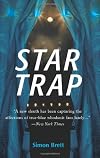
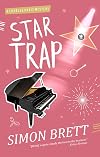
Joining the cast of a musical loosely based on She Stoops to Conquer, actor/detective Charles Paris is soon regretting his decision, irked as he is by the odious theatre and television star who is backing, producing and starring in the show. But when rehearsals are hampered by a strange series of mishaps, including the rehearsal pianist being shot in the hand and an actor falling and breaking his leg, Paris investigates and quickly decides that the star himself is responsible. But why would show more he want to sabotage his own show? The answer is much more human than it first appears.. show less
Tags
Recommendations























Member Reviews
Somewhere around the time I turned ten years old, my father decided to make a dream of his come true and he joined a local theater company. This was in a small town in a small state and so I always assumed it was for sociability and for a love of theater that prompted this in him. Surely he had no dreams of being recognized or becoming a star so late in life (thirty-five), and surely he recognized shortly after being in a few productions that he was never going to be a headliner. When he moved across the country, it wasn’t long before he insinuated himself into another company to fill the same type of roles. His dramatic specialty, from the number of shows I witnessed, consists of meaningful raises of his eyebrows and extra-careful show more annunciation of his lines. Bit players have such few opportunities to shine.One of the bonuses of being related to someone in the theater, if you can call it a bonus, is the plentiful opportunities to go to theater parties. For the uninitiated, imagine a group of about twenty people, all simultaneously and in increasing levels of volume and drunkenness competitively auditioning for the role of “Life of the Party.” The half-life of entertainment for this kind of thing is incredibly short and by evening’s end, you will wonder why there aren’t more celebrity murders. After one theater party, you really will have had your fill for the decade. I’ve had my share in my college life and as a post-graduate.By sheer coincidence, the two books I listened to at the end of the week, both rather short, happened to involve murder and the stage. (Get caught at too many theater parties and you will find yourself linking these concepts indelibly.) Both could be considered cozy mysteries featuring somewhat bloodless crimes and amateur detectives, though the older, an adaptation of Agatha Christie’s play Spider’s Web, comes from the mystery master, who oftentimes features crimes that are rather grisly. The second, Simon Brett’s Star Trap, has a seedy atmosphere and the kind of behavior that would shock my grandmother and perhaps many a cozy mystery reader (heavy drinking by the protagonist, casually loveless and almost hostile sex, existential crises brought on by age and failure, and poverty unflinchingly portrayed).And that last element, the rather grimy lowlife atmosphere, has a mundane reality that grimmer, more noir mysteries lack. While hardboiled detectives never lack for their bottle in the desk drawer, their poverty, if part of the story, is simply a minor element. Charles Paris, the low to middling actor/detective in Star Trap, has the kind of shortage of funds that cause him to reflect on simple things, like the difference between drinking when you’re poor and when you’re working steady. His dreary flat has no romantic glamour. His romances likewise are lacking in dramatic flair.The crimes of the book are also of a more simple nature. While more gritty detective stories feature daggers in the back and fatal struggles with a dropped pistol, Star Trap, which tells how Charles Paris tries to discover who, by knocking cast and crew about, is sabotaging the show he is in, features minor violence. Muggings that might not be muggings, a bit of paraffin wax slipped into someone’s gin to give them a touch of food poisoning, someone who may or may not have tripped down a flight of stairs.I’ve always felt resistance to series of novels in which normal, regular, everyday people spend their days and nights stumbling over bodies. It’s the kind of thing that would take a psychic toll, yet Jessica in Murder, She Wrote never seems to lose her joie de vivre and sprightliness. While I understand the rubbernecking titillation fans of this series are expressing (just the hint of a thrill, a tidy, bloodless body), their very hygienity is perhaps more appalling. These folks want murder, but just for entertainment purposes, the bad guy clutching his stomach and toppling from rooftop, pure and safe for prime time.Star Trap doesn’t pander to this vile sentimentality, and in fact, the actual crime element of the story is an incredibly small portion. While the crimes are clean enough for television, there is a seedy furtiveness that dramatic mysteries always overleap. What most of the book focuses on is the backstage dramas between the prima donna lead and every single other member of the show, the almost superstitious remedies for sore throats and coughs, and the little vanities actors are prone to. Brett elegantly skewers this bit of self-dramatization with the delightful phrase “...generally putting on expressions of private suffering which they had learnt when rehearsing Chekhov.”The other element that is much to be admired in Brett’s novel is just how underplayed the climaxes and moments of drama are, how authentic they feel. When in anger Charles decides to buck his orders to protect the star of the show over everyone else, rather than the timpani moment of some books, this scene is done with silent teeth gritting vengeance, the way you would do in isolation. When a cast member is hit by a car, his injuries are minor, a Mini-clipping him and breaking his kneecap. The revelations that come to Charles are shown not as sudden and elusive epiphanies, but the result of working hard (when the mood strikes him), and come after he makes many attempts to avoid his unpleasant conclusions. That he is so frequently wrong makes him even more sympathetic to readers.What ends up being the most striking about this is that the book demonstrates a keen psychological insight into the characters. Where most mysteries provide us with long-suffering existentialist automatons for heroes, one dimensional dramatic props, Charles Paris strides the literary stage with all his good and embarrassing bits fully on display, fully synthesized and realized. His flaws are not romantic, nor are they romanticized as heroic weaknesses. That’s rather appealing to find a writer willing to portray his hero so unflatteringly. show less
Charles Paris, my favorite chronically out of work actor, is offered a job! In a big budget commercially viable play! With a nine-month run scheduled! Of course, there’s a catch. Gerald Venables, his friend and a backer of the play, thinks someone is trying to sabotage it and he wants Charles to investigate from the inside and protect his investment. Being perpetually broke, Charles takes the job.
The play is a revamped version of She Stoops to Conquer headlined by a beloved comedic tv star. What could go wrong? Apparently, a bit of everything. There are accidents from the first week of rehearsal on. Charles has to investigate and decide if they really are accidents or if they really are sabotage.
The main theme of this book is the show more price of stardom. What are people willing to do to get it and how far they will go to keep it. Is rising to the top worth killing for?
This book held my interest from start to finish. Like the first 2 Charles Paris mysteries, the Theater is as important as the characters. It interested me enough that I did a little research on She Stoops to Conquer which I have never read. I’d love to see it performed! But I’d really want Charles Paris in the cast! show less
The play is a revamped version of She Stoops to Conquer headlined by a beloved comedic tv star. What could go wrong? Apparently, a bit of everything. There are accidents from the first week of rehearsal on. Charles has to investigate and decide if they really are accidents or if they really are sabotage.
The main theme of this book is the show more price of stardom. What are people willing to do to get it and how far they will go to keep it. Is rising to the top worth killing for?
This book held my interest from start to finish. Like the first 2 Charles Paris mysteries, the Theater is as important as the characters. It interested me enough that I did a little research on She Stoops to Conquer which I have never read. I’d love to see it performed! But I’d really want Charles Paris in the cast! show less
Charles Paris is asked by his old friend Gerald Venables to look into mishaps occurring on the set of a new theatrical production being headed by television star Christopher Milton; several people attached to the production have been injured in accidents and Gerald and other backers of the play are anxious that nothing goes wrong to derail it as they don’t want to lose their investment money. It is simple to get Charles attached to the play in a minor role, but he is reassured by the fact that once the production has been worked out in the “provinces,” it is due to land in London for a good long run. And Charles, of course, can always use the money offered by a long stage production. Once he arrives in the company, however, he show more discovers that everything is far more complicated than he expected, not least the quandary in which he finds himself: Christopher Milton is both a raging psychopath, his most likely suspect, and an extremely talented actor with a genius for theatrical work…. This is the third book featuring Charles Paris, set in 1970s England. I was initially amused by Charles, but by this third book I’ve become a bit jaded; he is basically a lecherous lush and only secondarily an amateur detective. The 1970s setting is interesting in itself, and this particular story offers a lot of behind-the-scenes information about how a big musical production is developed and staged, but I don’t think I’ll continue with the series, as Charles himself is just becoming a depressing character to read about. Mildly recommended for the setting and plot, though. show less
How much is stardom worth? Charles Paris, my favorite chronically out of work actor, is offered a job! In a big budget commercially viable play! With a nine-month run scheduled! Of course, there's a catch. Gerald Venables, his friend and a backer of the play, thinks someone is trying to sabotage it and he wants Charles to investigate from the inside and protect his investment. Being perpetually broke, Charles takes the job.
The play is a revamped version of She Stoops to Conquer headlined by a beloved comedic tv star. What could go wrong? Apparently, a bit of everything. There are accidents from the first week of rehearsal on. Charles has to investigate and decide if they really are accidents or if they really are sabotage.
The main theme show more of this book is the price of stardom. What are people willing to do to get it and how far they will go to keep it. Is rising to the top worth killing for?
This book held my interest from start to finish. Like the first 2 Charles Paris mysteries, the Theater is as important as the characters. It interested me enough that I did a little research on She Stoops to Conquer which I have never read. I'd love to see it performed. But I'd really want Charles Paris in the cast! show less
The play is a revamped version of She Stoops to Conquer headlined by a beloved comedic tv star. What could go wrong? Apparently, a bit of everything. There are accidents from the first week of rehearsal on. Charles has to investigate and decide if they really are accidents or if they really are sabotage.
The main theme show more of this book is the price of stardom. What are people willing to do to get it and how far they will go to keep it. Is rising to the top worth killing for?
This book held my interest from start to finish. Like the first 2 Charles Paris mysteries, the Theater is as important as the characters. It interested me enough that I did a little research on She Stoops to Conquer which I have never read. I'd love to see it performed. But I'd really want Charles Paris in the cast! show less
Something is going on with the musical production of Lumpkin! They have barely started rehearsals when things start to go wrong. The rehearsal pianist has a shooting accident and a main actor literally breaks a leg all within a week's time. Is it a coincidence? Actor/amateur detective Charles Paris is hired to find out. He conveniently takes the part left vacant by the actor with the broken leg so that he is able to get up close and personal to the drama (pun totally intended). Only, Charles shrugs off the rumors of sabotage as mere coincidences until he is directly affected. As soon as he opens his eyes to the possibility of it he starts noticing strange things really are happening - deliberately. Will he find out before opening night show more or will he be cut out of the script before the mystery is solved? show less
The great thing about reading this series of books, in order of appearance, is that one can see the character, and the acumen of the writer, grow with each tome.
The first two titles were adequately written; this one shows real class. The story grips, from the early pages to the last one and there is a twist that a crime fanatic, such as myself, did not twig. Equally, the twist was logical and believable.
An EXCELLENT read: bring on the next title in the series!
The first two titles were adequately written; this one shows real class. The story grips, from the early pages to the last one and there is a twist that a crime fanatic, such as myself, did not twig. Equally, the twist was logical and believable.
An EXCELLENT read: bring on the next title in the series!
Ratings
Members
- Recently Added By
Lists

#MysteryBingo2020Silver(Revised)
36 works; 1 member
#JustTheFacts2020Silver
48 works; 1 member
#MysteryBingo2020Silver(Original)
36 works; 1 member

Books Read in 2022
5,168 works; 114 members

Library ebooks and electronic audio books
52 works; 1 member
Author Information

171+ Works 10,075 Members
Simon Brett was born in Worcester Park, Surrey on October 28, 1945. He attended Dulwich College and then Wadham College, Oxford, where he studied English. Between 1967 and 1977, he was a producer with BBC Radio. He also spent a couple of years working for Thames Television. In 1975, he published his first 'Charles Paris' novel. By 1979, Brett had show more become a full-time writer. He has written and edited children's books, humorous novels and several anthologies. In 1986, he introduced another sleuth: Mrs Pargeter. As well as the Charles Paris and Mrs. Pargeter detective series, he is also the author of the radio and television series After Henry, the radio series No Commitments and the bestselling How to be a Little Sod . His novel A Shock to the System was filmed starring Michael Caine. (Bowker Author Biography) show less
Series

Work Relationships
Is contained in
Common Knowledge
- Canonical title
- Star Trap
- Original title
- Star Trap
- Original publication date
- 1977
- People/Characters
- Charles Paris; Gerald Venables
- Important places
- England, UK
- Dedication
- To my Parents, with thanks for all that education and with special thanks to Bill and Chris, who know all about it
- First words
- "Actually," said Gerald Venables, after a sip from his wine glass, "there's a bit more to it than that."
- Last words
- (Click to show. Warning: May contain spoilers.)And he meant it.
Classifications
Statistics
- Members
- 151
- Popularity
- 217,025
- Reviews
- 6
- Rating
- (3.42)
- Languages
- English, Swedish
- Media
- Paper, Audiobook, Ebook
- ISBNs
- 26
- ASINs
- 5