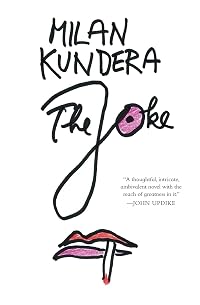
The Joke
by Milan Kundera
On This Page
Description
All too often, this brilliant novel of thwarted love and revenge miscarried has been read for its political implications. Now, a quarter century after The Joke was first published and several years after the collapse of the Soviet-imposed Czechoslovak regime, it becomes easier to put such implications into perspective in favor of valuing the book (and all Kundera 's work) as what it truly is: great, stirring literature that sheds new light on the eternal themes of human existence. The show more present edition provides English-language readers an important further means toward revaluation of The Joke. For reasons he describes in his Author's Note, Milan Kundera devoted much time to creating (with the assistance of his American publisher-editor) a completely revised translation that reflects his original as closely as any translation possibly can: reflects it in its fidelity not only to the words and syntax but also to the characteristic dictions and tonalities of the novel's narrators. The result is nothing less than the restoration of a classic. show lessTags
Recommendations
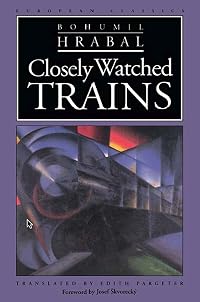
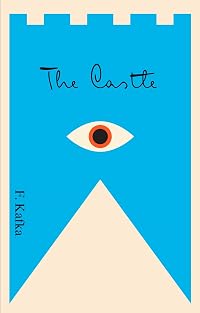
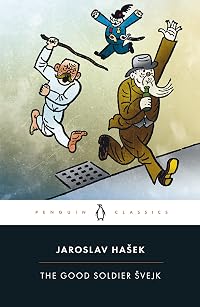
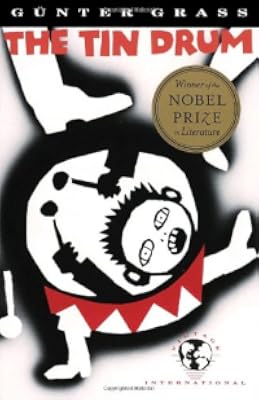




Member Recommendations
Member Reviews
When university student Ludvík Jahn sends his girlfriend Marketa a sarcastic postcard -"Optimism is the opium of the people....Long live Trotsky' - she isn't amused. Nor are the authorities. Ludvik is exelled from the communist party, expelled from the university, and sent to exercise his sense of humour in a forced labour camp. This is a story of revenge, unrequited love, and the "personal hell" of a life trapped by a single moment of thoughtlessness under a totalitarian regime.
'The Joke' is more straightforward and "plot-driven" than his 'The Unbearable Lightness of Being' which I've also read, and features multiple perspectives and flashbacks that can be a little disconcerting at times. The story is slow paced giving it a somewhat show more melancholic feel.
'The Joke' shines a bright light on the absurdity of life under totalitarianism, where personal self-interest, revenge and history often clash, leaving individuals to pay the price. It is often sad occasionally gripping. It is an important snapshot of a period of history in the Czech Republic that thankfully is a little dated in today's Europe but still worth reading. show less
'The Joke' is more straightforward and "plot-driven" than his 'The Unbearable Lightness of Being' which I've also read, and features multiple perspectives and flashbacks that can be a little disconcerting at times. The story is slow paced giving it a somewhat show more melancholic feel.
'The Joke' shines a bright light on the absurdity of life under totalitarianism, where personal self-interest, revenge and history often clash, leaving individuals to pay the price. It is often sad occasionally gripping. It is an important snapshot of a period of history in the Czech Republic that thankfully is a little dated in today's Europe but still worth reading. show less
How about "right church, wrong pew"? More accurately, "right book, wrong time". "The Joke" by Milan Kundera is a well written story of a small group of people living through the rise of Communism in South Eastern Europe after World War II. The story is told from several points of view which adds to the power of the saga. We come to know both their struggles and their sparse victories.
The problem with "The Joke" was entirely mine. I had not adequately researched the book to appreciate what I was getting into. And, worse, for personal reasons I was not in the mood for the characters or the story. But, I did finish it.
The book did seem a bit dated but, if you're in the right mood, a good read.
The problem with "The Joke" was entirely mine. I had not adequately researched the book to appreciate what I was getting into. And, worse, for personal reasons I was not in the mood for the characters or the story. But, I did finish it.
The book did seem a bit dated but, if you're in the right mood, a good read.
This novel has all too often been highlighted for its political implications and its criticism of the Communist regime in Czechoslovakia in the years leading up to the Prague Spring. Yet the messages and themes of the book go far beyond the specific circumstances in which it was written, and perhaps now, with the fall of the Iron Curtain and Communism in Europe fast fading from our collective memories, these eternal, human elements can be appreciated all the more. This is a story of lost faith, thwarted love, and misdirected revenge all brilliantly interwoven from the perspectives of a number of key protagonists.
The Joke of the novel's title refers in part to the major impulse that drives the main character, Ludvik Jahn. A postcard show more written satirically at the expense of the regime leads to his fall from grace, yet in his fall he finds happiness, only to lose it and become embittered, seeking vengeance against the system, the society, and the individuals that had robbed him of his place. This might seem ample ammunition for an author of Kundera's calibre, the simple message of resistance to totalitarianism through simple, human means: through resilience, through adultery. Needless to say, the failure of this resistance raises the question as to what the real joke is. Just the postcard? Or man's faith in the system (any system)? Perhaps the humility of life itself? Kundera leaves that to the reader to decide, and this openness contributes to making the novel a pleasure to read.
There is also a film adaptation produced in 1968 from director Jaromil Jires that is well worth a look, though its focus on Ludvik Jahn leaves the book feeling richer and more accurate in its message.
Finally it should be mentioned, as others have pointed out, that this edition marks the fifth and final version of the English translation of Zert, at least as far as Kundera is concerned. It captures not only the language but also the subtle moods and nuances, and even the syntax of the original, all elements askew in earlier revisions of the English translation, so for those with an older version of the work considering a re-read, this edition might also be worth the purchase. show less
The Joke of the novel's title refers in part to the major impulse that drives the main character, Ludvik Jahn. A postcard show more written satirically at the expense of the regime leads to his fall from grace, yet in his fall he finds happiness, only to lose it and become embittered, seeking vengeance against the system, the society, and the individuals that had robbed him of his place. This might seem ample ammunition for an author of Kundera's calibre, the simple message of resistance to totalitarianism through simple, human means: through resilience, through adultery. Needless to say, the failure of this resistance raises the question as to what the real joke is. Just the postcard? Or man's faith in the system (any system)? Perhaps the humility of life itself? Kundera leaves that to the reader to decide, and this openness contributes to making the novel a pleasure to read.
There is also a film adaptation produced in 1968 from director Jaromil Jires that is well worth a look, though its focus on Ludvik Jahn leaves the book feeling richer and more accurate in its message.
Finally it should be mentioned, as others have pointed out, that this edition marks the fifth and final version of the English translation of Zert, at least as far as Kundera is concerned. It captures not only the language but also the subtle moods and nuances, and even the syntax of the original, all elements askew in earlier revisions of the English translation, so for those with an older version of the work considering a re-read, this edition might also be worth the purchase. show less
This is Kundera's first and, in my opinion, best novel. (Later he became better at aphorisms than stories.) This novel has more beauty in it than all the others combined, and the irony/tragedy is more effective than in the others because it unfolds with the story, catching both the protagonist and the reader off guard.
If you're like me, this book will convince you to love Czech folk music before you've even heard it.
If you're like me, this book will convince you to love Czech folk music before you've even heard it.
Was funny, had the essence of of desperation, anger, frustration, love -holistic, sensual, lust and spades of misfortunes/ironies. Language was good and you could feel the characters and their personalities by the word they say/think.
Was an absolute joy to read.
Was an absolute joy to read.
Jó ez, nagyon, csak ne lenne a csehek 1966-os valósága annyira közeli a magyarok mai valóságához. Máshol vagy máskor olvasva biztosan más lenne. Így az a "hát igen, ez pontos", nagyon lehangolt, félrehúzott száj elismerése, mert túl ismerős, mert hihetetlen, hogy 2023-ban itt tartunk. Jó szatíra amúgy, csak ne adjunk ötleteket.
Like other Kundera novels, this book is bittersweet - perhaps mostly bitter. It's a despondent love story, a devastating look at Communism and a revenge plot, twisted into memories and multiple narrators. But mostly it's about perverted beliefs and human weaknesses in any age. All of the first person narrators have some religion, be it actual (Kostka's Christianity), political (Helena's Communism) or emotional (Helena's idealized love, Ludvik's hatred and cynicism). The absolutist beliefs never work out like they 'should', and this is most obviously represented by Communism.
The joke refers to one played on a fellow student by Ludvik. A member of the Party, he led a privileged life, studying at the university and attending meetings. show more Still, his intelligence and sardonic humor needed an outlet - a postcard that he sent to a girl he liked, mocking Marxist theory in two short sentences. This led to his expulsion from the Party and university, and the image he would carry around from that point on was of the entire group raising their hands, casting him out for good. His memory was a condemnation of all other people. Sent to work in the mines, Ludvik never forgot the injustice.
While working there, he fell in love with a young woman named Lucie. Although it was the major love affair of his life, it was full of contradictions. They never had sex, he never knew entire parts of her life and it was always a product of their situation. Still, his depressing life increased the intensity of the relationship. His memories of that affair, as well as his hatred of a former comrade, Zemanek, are dredged up when he returns home.
Helena, a staunch Communist, interacts with Ludvik when he returns to Prague. Unhappily married, her affairs are justified by 'love' while she despises her husband's infidelity, as well as a relationship between a married man and her coworker.
Jaroslav, an old friend of Ludvik's, narrates part of the story. His love of old folk traditions is revealed - although revered in the first flush of Communist power, now they've been abandoned. Ludvik cuts him on seeing him, and he also has to deal with his son, who rejects his passion.
Kostka, another of Ludvik's acquaintances, fills in some more blanks. A devout Christian, he also eagerly accepted Communism and made the two work in his mind. However, higher ups were suspicious so he was sent to the country and embarked on an affair.
Throughout the novel, Ludvik wonders if various events - even his whole life - are just history's jokes. His initial joke led to expulsion, he never knew the truth about Lucie, his revenge went awry and all his energy spent on hatred was wasted since he and Zemanek had both changed. Even his hideous experiences in the camps - was that just a joke, was it forgotten, did the younger generation just classify him and Zemanek together? Ludvik's hatred unbalanced his life and blinded him to many things. The others' beliefs were equally unproductive - Helena's obvious hypocrisy, Jaroslav's disappointed hopes and Kostka betraying his religion with a relationship. Communism was a twisted belief, possibly one of history's hideous jokes. show less
The joke refers to one played on a fellow student by Ludvik. A member of the Party, he led a privileged life, studying at the university and attending meetings. show more Still, his intelligence and sardonic humor needed an outlet - a postcard that he sent to a girl he liked, mocking Marxist theory in two short sentences. This led to his expulsion from the Party and university, and the image he would carry around from that point on was of the entire group raising their hands, casting him out for good. His memory was a condemnation of all other people. Sent to work in the mines, Ludvik never forgot the injustice.
While working there, he fell in love with a young woman named Lucie. Although it was the major love affair of his life, it was full of contradictions. They never had sex, he never knew entire parts of her life and it was always a product of their situation. Still, his depressing life increased the intensity of the relationship. His memories of that affair, as well as his hatred of a former comrade, Zemanek, are dredged up when he returns home.
Helena, a staunch Communist, interacts with Ludvik when he returns to Prague. Unhappily married, her affairs are justified by 'love' while she despises her husband's infidelity, as well as a relationship between a married man and her coworker.
Jaroslav, an old friend of Ludvik's, narrates part of the story. His love of old folk traditions is revealed - although revered in the first flush of Communist power, now they've been abandoned. Ludvik cuts him on seeing him, and he also has to deal with his son, who rejects his passion.
Kostka, another of Ludvik's acquaintances, fills in some more blanks. A devout Christian, he also eagerly accepted Communism and made the two work in his mind. However, higher ups were suspicious so he was sent to the country and embarked on an affair.
Throughout the novel, Ludvik wonders if various events - even his whole life - are just history's jokes. His initial joke led to expulsion, he never knew the truth about Lucie, his revenge went awry and all his energy spent on hatred was wasted since he and Zemanek had both changed. Even his hideous experiences in the camps - was that just a joke, was it forgotten, did the younger generation just classify him and Zemanek together? Ludvik's hatred unbalanced his life and blinded him to many things. The others' beliefs were equally unproductive - Helena's obvious hypocrisy, Jaroslav's disappointed hopes and Kostka betraying his religion with a relationship. Communism was a twisted belief, possibly one of history's hideous jokes. show less
Members
- Recently Added By
Lists

1001 Books You Must Read Before You Die
1,448 works; 1,134 members

Le Monde - Les 100 livres du siècle
121 works; 25 members

Best Political Fiction
92 works; 12 members

1960s, Best books published therein
254 works; 22 members

in pursuit of power
17 works; 2 members

Books set in Prague
40 works; 1 member

Spirit of Place
46 works; 1 member

HarperCollins Publishers
144 works; 3 members
Franklit
95 works; 1 member
Author Information

55+ Works 61,437 Members
One of the foremost contemporary Czech writers, Kundera is a novelist, poet, and playwright. His play The Keeper of the Keys, produced in Czechoslovakia in 1962, has long been performed in a dozen countries. His first novel, The Joke (1967), is a biting satire on the political atmosphere in Czechoslovakia in the 1950s. It tells the story of a show more young Communist whose life is ruined because of a minor indiscretion: writing a postcard to his girlfriend in which he mocks her political fervor.The Joke has been translated into a dozen languages and was made into a film, which Kundera wrote and directed. His novel Life Is Elsewhere won the 1973 Prix de Medicis for the best foreign novel. Kundera has been living in France since 1975. His books, for a long time suppressed in his native country, are once again published.The Unbearable Lightness of Being (1984), won him international fame and was a successful English-language film. In this work Kundera moves toward more universal and philosophically tinged themes, thus transforming himself from a political dissident into a writer of international significance. (Bowker Author Biography) show less
Some Editions
Awards and Honors
Awards
Distinctions
Series
Belongs to Publisher Series
Work Relationships
Common Knowledge
- Canonical title
- The Joke
- Original title
- Žert; Ptákovina
- Alternate titles*
- Tšekkiläinen pila
- Original publication date
- 1967; 1968-01; 1967 (original) (original); 1969 (first version, English) (first version, English); 1992 (definitive version, English, fully revised) (definitive version, English, fully revised); 1982 (fourth version, English) (fourth version, English)
- Important places*
- Tschechoslowakei
- Related movies
- The Joke (1969 | IMDb)
- First words
- So here I was, home again after all those years. Standing in the main square (which I had crossed countless times as a child, as a boy, as a young man), I felt no emotion whatsoever; all I could think was that the flat space... (show all), with the spire of the town hall (like a soldier in an ancient helmet) rising above the rooftops, looked like a huge parade ground and that the military past of the Moravian town, once a bastion against Magyar and Turk invaders, had engraved an irrevocable ugliness on its face.
- Last words
- (Click to show. Warning: May contain spoilers.)We had stood there with him like this for about ten minutes when the second fiddle reappeared and signaled us to help Jaroslav to his feet; supporting him under the arms, we slowly led him through the noisy, drunken adolescents out into the street, where an ambulance stood waiting, all its lights ablaze.
- Blurbers
- Rushdie, Salman; Howe, Irving; Updike, John
- Original language
- Czech
- Disambiguation notice
- Please note: The 1st English-language version was translated by Hamblyn and Stallybrass (1969); the 2nd English version was based on Hamblyn and Stallybrass, but "curtailed" (1969, New York, Coward-McCann); the 3rd English ve... (show all)rsion was revised by author (1970, London, Penguin); the 4th English version was translated by Heim and includes a preface by Kundera explaining the previous 3 English versions (1982); and the 5th Definitive Version in English was fully revised by Kundera and translated by Kundera and Asher, based on Heim's previous translation (1992). Definitive Version has "Author's Note" explaining all 5 English-language versions.
This 1st version translated into English was rendered by the translators David Hamblyn and Oliver Stallybrass. This 1st version should not be confused with subsequent English-language versions. For an explanation of this, s... (show all)ee "Author's Note" in the definitive version (the 5th version).
The Definitive Version is the 5th version translated into English, which was fully revised by the author. For an explanation of this, see "Author's Note" in the definitive version. Definitive Version was translated by Aaron... (show all) Asher and Milan Kundera, based on the 4th translation of Michael Henry Heim.
This 4th Version translated into English, is not to be confused with the Definitive Version (5th version, English). For an explanation of this, see "Author's Note" in the definitive version. This 4th Version was translated ... (show all)by Michael Henry Heim.
*Some information comes from Common Knowledge in other languages. Click "Edit" for more information.
Classifications
- Genres
- Fiction and Literature, General Fiction
- DDC/MDS
- 891.8635 — Literature & rhetoric Literatures of other languages East Indo-European and Celtic literatures West and South Slavic languages (Bulgarian, Slovene, Polish, Czech, Slovak, Serbo-Croatian, and Macedonian) Czech Czech fiction 1900–1989
- LCC
- PG5039.21 .U6 .Z313 — Language and Literature Slavic languages and literatures. Baltic languages. Albanian language Slavic. Baltic. Albanian Slavic Czech
- BISAC
Statistics
- Members
- 4,215
- Popularity
- 3,620
- Reviews
- 49
- Rating
- (3.92)
- Languages
- 28 — Arabic, Catalan, Chinese, Czech, Danish, Dutch, English, Estonian, Finnish, French, German, Greek, Hebrew, Hungarian, Icelandic, Italian, Japanese, Lithuanian, Norwegian (Bokmål), Farsi/Persian, Polish, Romanian, Russian, Serbian, Spanish, Swedish, Turkish, Portuguese (Portugal)
- Media
- Paper, Audiobook, Ebook
- ISBNs
- 130
- UPCs
- 1
- ASINs
- 33