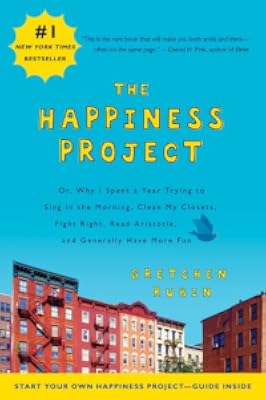
The Happiness Project: Or, Why I Spent a Year Trying to Sing in the Morning, Clean My Closets, Fight Right, Read Aristotle, and Generally Have More Fun
by Gretchen Rubin
On This Page
Description
A thoughtful and prescriptive work on happiness filled with practical advice, sharp insight, charm, and humor. On the outside, Gretchen Rubin had it all--a good marriage, healthy children and a successful career--but something was missing. Determined to end that nagging feeling, she set out on a year-long quest to learn how to better enjoy the life she already had. Each month, Gretchen pursued a different set of resolutions--go to sleep earlier, tackle a nagging task, bring people together, show more take time to be silly. She read everything from classical philosophy to cutting-edge scientific studies, from Winston Churchill to Oprah, developing her own definition of happiness and a plan for how to achieve it. She kept track of which resolutions worked and which didn't, sharing her stories and collecting those of others. Bit by bit, she began to appreciate and amplify the happiness in her life. With a wicked sense of humour and sharp insight, Gretchen's story will inspire readers to embrace the pleasure in their lives.--From publisher description. show lessTags
Recommendations
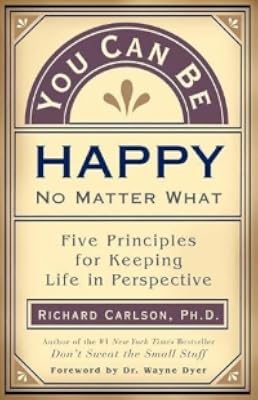
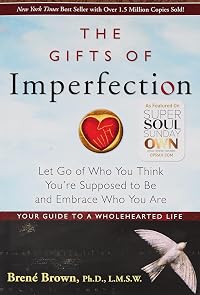
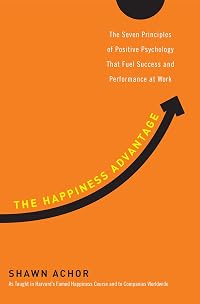
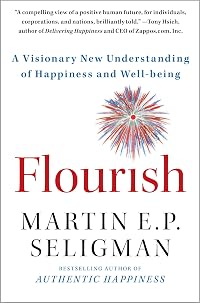
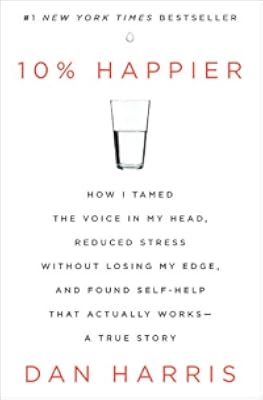
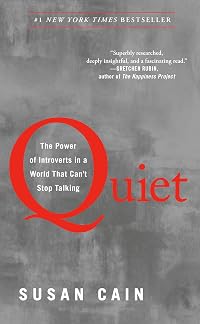
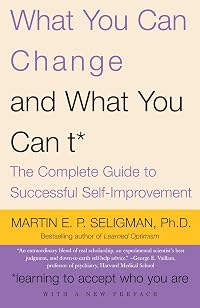
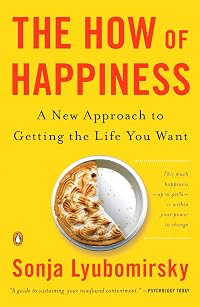



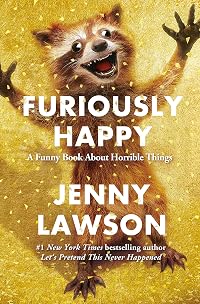
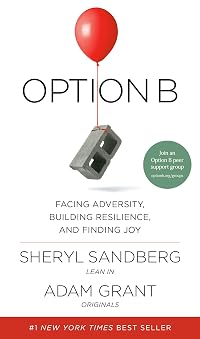
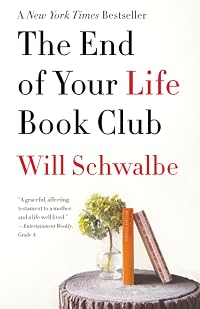
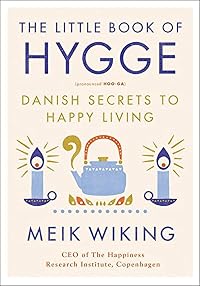


Member Recommendations
The Year of Living Biblically: One Man's Humble Quest to Follow the Bible as Literally as Possible by A. J. Jacobs
ansate similar thoughtful project. turns out they share a writers group!
80
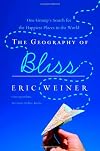
clamairy Enjoyable search for the roots of personal happiness.
20

Member Reviews
Should the pursuit of happiness be turned into a project? Gretchen Rubin made it a year-long project, one she put her heart and soul, blood, sweat, and tears into. It may seem like a weird way to go about attaining happiness, but her results, as finely detailed here, are impressive and inspiring.
Much has been written about how to be happier. The general belief seems to be that happiness will come when some milestone is reached or something life-changing happens: paying off a large debt, reaching a goal weight, or winning the lottery. Prior to reading The Happiness Project, I’d read articles on this topic now and then but always found them vague. “Happiness experts” repeatedly say that deep, long-term happiness can’t be found in show more the life-changing moments, but it wasn’t until reading The Happiness Project that I understood happiness-attainment concretely. In plainer words: This book makes sense.
The Happiness Project is organized well, divided into twelve chapters (one per month), with each of those further divided into a series of main points. January, for instance, is subtitled “Boost Energy” because that was Rubin’s resolution for that month on her journey to true happiness. Related to boosting energy, she covered the following points: “Go to sleep earlier,” “Exercise better,” “Toss, restore, organize,” “Tackle a nagging task,” and “Act more energetic.” In January Rubin did all these things, methodically and meticulously. Some she enjoyed more than others, but she did all of them.
I appreciated Rubin’s candid and sincere tone. She talks of feeling rushed and anxious at times, of losing patience and getting irritable. She never pretends to be perfect, though she set the bar high for herself and persisted. It’s admirable and overwhelming just reading about all that she did over the course of one year, and, ultimately, her type-A personality probably helped.
Especially fascinating to me was Rubin’s short but careful preparation. Right before starting her project she compiled a list of twelve personal commandments to help guide her and get her back on track when needed, and a list of “Secrets of Adulthood,” something she admits was goofier. What I loved, however, were what she dubbed the “Four Splendid Truths,” which were born of the project (and therefore revealed themselves toward the end) and are philosophical.
The Happiness Project is a sort of memoir/self-help book/handbook mesh, but as a self-help book/handbook the sheer amount of information is overwhelming, and this is the only fault I could find with it, if it can be called a fault. It begs a rereading, or if not that, extensive note-taking during the first reading. Rubin does, however, have a blog that has prompts to help readers set up their own happiness projects.
Trying to catch and hold on to an immaterial concept such as happiness isn’t so ridiculous; it’s precisely because Rubin did specific things over the course of one year that she got results. That’s how this book is valuable—in its specificity. It’s unnecessary to embark on a year-long challenge. Even if a reader makes only a handful of changes, that can help, and even readers who aren’t unhappy can find The Happiness Project helpful. show less
Much has been written about how to be happier. The general belief seems to be that happiness will come when some milestone is reached or something life-changing happens: paying off a large debt, reaching a goal weight, or winning the lottery. Prior to reading The Happiness Project, I’d read articles on this topic now and then but always found them vague. “Happiness experts” repeatedly say that deep, long-term happiness can’t be found in show more the life-changing moments, but it wasn’t until reading The Happiness Project that I understood happiness-attainment concretely. In plainer words: This book makes sense.
The Happiness Project is organized well, divided into twelve chapters (one per month), with each of those further divided into a series of main points. January, for instance, is subtitled “Boost Energy” because that was Rubin’s resolution for that month on her journey to true happiness. Related to boosting energy, she covered the following points: “Go to sleep earlier,” “Exercise better,” “Toss, restore, organize,” “Tackle a nagging task,” and “Act more energetic.” In January Rubin did all these things, methodically and meticulously. Some she enjoyed more than others, but she did all of them.
I appreciated Rubin’s candid and sincere tone. She talks of feeling rushed and anxious at times, of losing patience and getting irritable. She never pretends to be perfect, though she set the bar high for herself and persisted. It’s admirable and overwhelming just reading about all that she did over the course of one year, and, ultimately, her type-A personality probably helped.
Especially fascinating to me was Rubin’s short but careful preparation. Right before starting her project she compiled a list of twelve personal commandments to help guide her and get her back on track when needed, and a list of “Secrets of Adulthood,” something she admits was goofier. What I loved, however, were what she dubbed the “Four Splendid Truths,” which were born of the project (and therefore revealed themselves toward the end) and are philosophical.
The Happiness Project is a sort of memoir/self-help book/handbook mesh, but as a self-help book/handbook the sheer amount of information is overwhelming, and this is the only fault I could find with it, if it can be called a fault. It begs a rereading, or if not that, extensive note-taking during the first reading. Rubin does, however, have a blog that has prompts to help readers set up their own happiness projects.
Trying to catch and hold on to an immaterial concept such as happiness isn’t so ridiculous; it’s precisely because Rubin did specific things over the course of one year that she got results. That’s how this book is valuable—in its specificity. It’s unnecessary to embark on a year-long challenge. Even if a reader makes only a handful of changes, that can help, and even readers who aren’t unhappy can find The Happiness Project helpful. show less
After a shocking revelation while she rode a city bus, the author realized that she wasn't happy. Not that she was unhappy, exactly. She just felt she could do better. Her life was great, really, but did she properly appreciate it? This led her to research the topic of happiness to see what science, philosophers, and spiritual leaders had to say. Can a person make themselves happier by changing their behavior and thought patterns?
From this she formed a set of twelve resolutions. She wanted to try a lot of different things, but tried to focus on areas she knew were sapping her joy or niggling the back of her mind. She resolved to be lighter, sillier, more adventurous. She resolved to stop nagging, gossiping, and putting things off.
This show more is her happiness journey, and an inspiration to others to attempt similar projects. For me, it was a strong reminder to just appreciate my own life more. Like the author, I really don't have too much going wrong at the moment. Yet I still tend to focus on things that could be better. A very interesting book. show less
From this she formed a set of twelve resolutions. She wanted to try a lot of different things, but tried to focus on areas she knew were sapping her joy or niggling the back of her mind. She resolved to be lighter, sillier, more adventurous. She resolved to stop nagging, gossiping, and putting things off.
This show more is her happiness journey, and an inspiration to others to attempt similar projects. For me, it was a strong reminder to just appreciate my own life more. Like the author, I really don't have too much going wrong at the moment. Yet I still tend to focus on things that could be better. A very interesting book. show less
I read this book for my book club. It is the memoir of the author's one-year project to increase her happiness. At first, I was skeptical, because this seemed like yet another of those "I did this dumb thing for one year" books, and it came across as gimmicky. But Rubin won me over. She breaks her project down into one theme per month, such as energy, money or marriage, and then sets severals goals for that theme that she tries to accomplish every day of the month. Some days, she doesn't quite make her goals, which she's honest about. But what I really liked is that she emphasizes that the goals will, and should, be different for everyone. Most self-help books proselytize a one-size-fits-all solution without acknowledging that we are show more all individuals, and no one thing works for everyone.
Rubin throws out a lot of quotes, statistics and ideas for increasing one's day-to-day happiness. In accordance with the theme of finding what works for me, I was inspired by some of these ideas and mostly ignored the rest. I was most impressed that Rubin found the time to implement all of these changes (although she does admit that she discarded some if they didn't continue to increase her happiness). She did a whole lot of reading, too, and even write a novel in a month, which I thought was inspiring because she did it just for her own enjoyment, not to try to sell it. I seem to be stuck with the notion that I have to spend my time doing something productive or money-making, which is an impediment to my personal happiness; Rubin backs this notion up with some solid statistics, and it's a lesson that many of us can stand to learn, that not everything we do has to generate income. That insight alone, and the resolution I made to try to do more things for personal enrichment even if they don't seem particularly "useful," made reading this book worthwhile. show less
Rubin throws out a lot of quotes, statistics and ideas for increasing one's day-to-day happiness. In accordance with the theme of finding what works for me, I was inspired by some of these ideas and mostly ignored the rest. I was most impressed that Rubin found the time to implement all of these changes (although she does admit that she discarded some if they didn't continue to increase her happiness). She did a whole lot of reading, too, and even write a novel in a month, which I thought was inspiring because she did it just for her own enjoyment, not to try to sell it. I seem to be stuck with the notion that I have to spend my time doing something productive or money-making, which is an impediment to my personal happiness; Rubin backs this notion up with some solid statistics, and it's a lesson that many of us can stand to learn, that not everything we do has to generate income. That insight alone, and the resolution I made to try to do more things for personal enrichment even if they don't seem particularly "useful," made reading this book worthwhile. show less
I'm really quite torn as to what I feel about this book. On one hand, I did mostly enjoy it and I took from it some helpful ideas. On the other hand....some of the negative reviews of this book make some very good points.
1.) I really am growing weary of the "stunt" genre of books. Do something for a year, write a book about it. It was interesting the first few go-rounds, but it's losing its appeal.
2.) The author really is not particularly likeable. Maybe she's nicer in person, but she casts herself as a bit of a shrew. As I was reading through the marriage chapter (chapter 2, perhaps?), all I could think was, "Good God, I'm glad I'm not married to her." She strikes me as nagging, unpleasant, and intent upon bringing everyone down to show more make herself feel better. I suppose she gets points for honestly, but not for much else. (And what's with her emailing her husband throughout the day, and then getting snippy because he doesn't respond? Is she his mother? Does he need to check in with her regularly? I found this especially bizarre.)
3.) She is without a doubt a woman of a certain privilege. I suspect she came from money and she certainly married into it. It's all well and good to tell me to take time for myself, take classes, exercise more, etc... I understand she's right about these things. But as a single, working mother, my life is vastly different from hers. Not everyone has the time, money, and other resources readily available to her. This is not to say that I gleaned nothing from this book, but I just can't imagine that many people would find her very relateable.
4.) She really doesn't say anything new. I think we all already know most of her "epiphanies": money may not buy happiness, but it certainly makes it easier; regular exercise makes you happier; hobbies, friends, and a social life will make you happier; etc... While her conscious effort to do all these things (in a year, natch) is perhaps unique, not much of the information contained herein is.
5.) I felt like a fairly big chunk of this book was devoted to quoting comments from her blog. I also feel like these quotes were not separated from her writing very clearly. Perhaps it was a problem unique to the Kindle version, but several times I found myself wondering, "Is this Gretchen or someone else?"
Over all, I wish I could give the book 2.5 stars. It wasn't horrible, but it wasn't great. It was ok. I can't say that I regret reading it, but I wouldn't go out of my way to recommend it to a friend, either. show less
1.) I really am growing weary of the "stunt" genre of books. Do something for a year, write a book about it. It was interesting the first few go-rounds, but it's losing its appeal.
2.) The author really is not particularly likeable. Maybe she's nicer in person, but she casts herself as a bit of a shrew. As I was reading through the marriage chapter (chapter 2, perhaps?), all I could think was, "Good God, I'm glad I'm not married to her." She strikes me as nagging, unpleasant, and intent upon bringing everyone down to show more make herself feel better. I suppose she gets points for honestly, but not for much else. (And what's with her emailing her husband throughout the day, and then getting snippy because he doesn't respond? Is she his mother? Does he need to check in with her regularly? I found this especially bizarre.)
3.) She is without a doubt a woman of a certain privilege. I suspect she came from money and she certainly married into it. It's all well and good to tell me to take time for myself, take classes, exercise more, etc... I understand she's right about these things. But as a single, working mother, my life is vastly different from hers. Not everyone has the time, money, and other resources readily available to her. This is not to say that I gleaned nothing from this book, but I just can't imagine that many people would find her very relateable.
4.) She really doesn't say anything new. I think we all already know most of her "epiphanies": money may not buy happiness, but it certainly makes it easier; regular exercise makes you happier; hobbies, friends, and a social life will make you happier; etc... While her conscious effort to do all these things (in a year, natch) is perhaps unique, not much of the information contained herein is.
5.) I felt like a fairly big chunk of this book was devoted to quoting comments from her blog. I also feel like these quotes were not separated from her writing very clearly. Perhaps it was a problem unique to the Kindle version, but several times I found myself wondering, "Is this Gretchen or someone else?"
Over all, I wish I could give the book 2.5 stars. It wasn't horrible, but it wasn't great. It was ok. I can't say that I regret reading it, but I wouldn't go out of my way to recommend it to a friend, either. show less
Those who know me, know that I hate those cheesy cookie-cutter self-help books about telling yourself in the mirror "You're an champion". They feel to me like an exercise in egotism. They tell me how *others* believe I can be happy.
Fortunately, this book isn't that case.
Although it seems superficial at times, Rubin finds here some interesting ideas about happiness and one of the most important ones is that (the quest for) happiness doesn't look the same for everyone. We all have different problems and situations that make any DIY Happiness Kit impossible. Instead, Rubin takes us through her own ideas for *her* personal happiness, along with results.
Some might argue, and perhaps with good reason, that the book is vain just because it was show more written by a woman with a job, a stable and loving family, no particular undesirable situations like disease or war and no dramatic story. To me, that's completely missing the point of the book.
Instead she notes that even with all those things, happiness seems to be something else, unrelated to her status and position. Rather, it has to do with the way one acts, thinks and reacts to situations. Of course, it's impossible to account for everything and she emphasizes this repeatedly: there's no single way of achieving happiness, but we can learn some tricks and ideas from others and then adapt those to our own circumstances.
Her voyage serves as a starting point, rather than a map. A series of guidelines, rather than rules and ideas rather than orders. This is why, in a way, it reads better and more honest than the average crap. She says "This is what worked for me, perhaps some of it might work for you. Off you go!" and nothing more.
Give it a chance if you really have no idea where to start looking (and even if you have, chances are this might hold a surprise or two for you!) show less
Fortunately, this book isn't that case.
Although it seems superficial at times, Rubin finds here some interesting ideas about happiness and one of the most important ones is that (the quest for) happiness doesn't look the same for everyone. We all have different problems and situations that make any DIY Happiness Kit impossible. Instead, Rubin takes us through her own ideas for *her* personal happiness, along with results.
Some might argue, and perhaps with good reason, that the book is vain just because it was show more written by a woman with a job, a stable and loving family, no particular undesirable situations like disease or war and no dramatic story. To me, that's completely missing the point of the book.
Instead she notes that even with all those things, happiness seems to be something else, unrelated to her status and position. Rather, it has to do with the way one acts, thinks and reacts to situations. Of course, it's impossible to account for everything and she emphasizes this repeatedly: there's no single way of achieving happiness, but we can learn some tricks and ideas from others and then adapt those to our own circumstances.
Her voyage serves as a starting point, rather than a map. A series of guidelines, rather than rules and ideas rather than orders. This is why, in a way, it reads better and more honest than the average crap. She says "This is what worked for me, perhaps some of it might work for you. Off you go!" and nothing more.
Give it a chance if you really have no idea where to start looking (and even if you have, chances are this might hold a surprise or two for you!) show less
There was a lot of good stuff in the book, and the writing was very casual and easy to read. There were some small annoyances (e.g. waaaaaay too many pages were covered with paragraph-long quotes from the comment section of her blog), and one really big one. The first couple months focus on her actions and her marriage, and her main resolution was to stop "nagging," i.e. stop asking and expecting her husband to take an active role in the mental load of parenthood and marriage, and if she wanted tasks done it was better to just do them herself than ask someone else for support. My feminist heart cringed every time she accused herself of "nagging" or "needing gold stars" i.e. some acknowledgement for her work in keeping the house and show more marriage running. Telling women to take on more and expect less from their partners is NOT the key to happiness, and I shutter to think of how many women have read her book and felt like they just needed to change their own expectations of support and partnership, and just take on more, to be happier. show less
“I wasn’t as happy as I could be, and my life wasn’t going to change unless I made it change. […] I decided to dedicate a year to trying to be happier.”
The result is The Happiness Project, perfectly categorized in what even Gretchen Rubin laments is the new genre of “stunt nonfiction” (“spending a year doing something”).
Structured through four or five projects or resolutions (not goals -- “you hit a goal, you keep a resolution”) each month over the course of a calendar year, Rubin begins in January by improving her energy (in anticipation of the year to come), and then addresses aspects of her marriage, family, friends, work, play, finances, spirituality, health and home. Over time, she realizes that greater boosts show more in happiness come when she removes negatives rather than when she adds positives.
I read the entire book before I posted this review, and found it interesting and inspiring. But it’s too much -- overwhelming to read much less accomplish, and less a memoir than a fast-paced self-help report where I could almost hear Rubin check-marking each accomplishment. Readers can enter the book at any time, not just January, and I think a parsed read would be more meaningful than all at once, and would better lead readers to take up Rubin’s open invitation and resources to join in with their own happiness projects, individualized to their own needs.
(Review based on an advance reading copy provided by the publisher.) show less
The result is The Happiness Project, perfectly categorized in what even Gretchen Rubin laments is the new genre of “stunt nonfiction” (“spending a year doing something”).
Structured through four or five projects or resolutions (not goals -- “you hit a goal, you keep a resolution”) each month over the course of a calendar year, Rubin begins in January by improving her energy (in anticipation of the year to come), and then addresses aspects of her marriage, family, friends, work, play, finances, spirituality, health and home. Over time, she realizes that greater boosts show more in happiness come when she removes negatives rather than when she adds positives.
I read the entire book before I posted this review, and found it interesting and inspiring. But it’s too much -- overwhelming to read much less accomplish, and less a memoir than a fast-paced self-help report where I could almost hear Rubin check-marking each accomplishment. Readers can enter the book at any time, not just January, and I think a parsed read would be more meaningful than all at once, and would better lead readers to take up Rubin’s open invitation and resources to join in with their own happiness projects, individualized to their own needs.
(Review based on an advance reading copy provided by the publisher.) show less
Members
- Recently Added By
Published Reviews
ThingScore 75
A fun, funny and wise book written by Gretchen Rubin, a regular HuffingtonPost.com contributor, it's a distillation of the wisdom of the ages on happiness. It provides eminently practical ways to amplify your happiness pretty much immediately (e.g. gossip less; exercise more; launch a pet project).
(Video review follows)
(Video review follows)
added by sarah-e
I had fun reading about Rubin's triumphs, insights, and failures. She's honest about her frustrating experiences, which are often more interesting that her successful ones.
added by lampbane
If you are interested in clarifying your reasons to become uncluttered, are looking to be happier, or simply enjoy the genre of “a year in the life” style books, I recommend checking out The Happiness Project. It’s a great reminder for not letting the joys of life pass you by.
added by bongiovi
Lists

Non-Fiction Worth Reading
1,016 works; 256 members


My Year Spent Doing Something Stupid so I Could Write This Book
31 works; 5 members

Best Library Reads of 2013
114 works; 1 member

KayStJ's to-read list
1,616 works; 11 members

Books Read in 2011
684 works; 20 members

Shelf 101
60 works; 1 member

Pleasant Surprises: Books That Exceeded Our Expectations
418 works; 143 members

Books Read in 2019
4,052 works; 110 members

BitLife
212 works; 4 members

Books Read in 2024
4,727 works; 128 members

Psychology: Abuse, Grief, Self-Help
189 works; 1 member

Non-Fiction
68 works; 1 member
Author Information

28+ Works 9,939 Members
Gretchen Craft Rubin was editor in chief of the Yale Law Journal. She clerked on the Supreme Court under Justice Sandra Day O'Connor and served as counsel to FCC Chairman Reed Hundt. An adjunct professor at Yale, she currently lives in Manhattan. (Publisher Provided) Gretchen Rubin started her career in law and was clerking for Justice Sandra Day show more O'Connor when she realized she wanted to be a writer. She writes on the linked subjects of habits, happiness, and human nature on her daily blog as well as in books. Her books include Happier at Home, The Happiness Project, and Better Than Before: Mastering the Habits of Our Everyday Lives. (Bowker Author Biography) show less
Some Editions
Awards and Honors
Distinctions
Notable Lists
Common Knowledge
- Original publication date
- 2009
- Epigraph
- Samuel Johnson: "As the Spanish proverb says, 'He, who would bring home the wealth of the Indies, must carry the wealth of the Indies with him."
—James Boswell, The life of Samuel Johnson
There is no duty we so much underrate as the duty of being happy.
—Robert Louis Stevenson - Dedication
- For My Family
- First words
- A "happiness project" is an approach to changing your life. (A Note to the Reader)
I'd always vaguely expected to outgrow my limitations. - Last words
- (Click to show. Warning: May contain spoilers.)When I made the effort to reach out for them, I found that the ruby slippers had been on my feet all along; the bluebird was singing outside my kitchen window.
(Click to show. Warning: May contain spoilers.)And now I'm off to live happily ever after. (Afterword) - Publisher's editor
- Winston, Gail
- Blurbers
- Jacobs, A.J.; Lyubomirsky, Sonja; Pink, Daniel H.; Morgenstern, Julie; Lee-Youngren, Tiffany; Hong, Terry (show all 10); Crow, Kim; Sampson, Hannah; Scribner, Amy; Vido, Jennifer
Classifications
Statistics
- Members
- 5,614
- Popularity
- 2,370
- Reviews
- 187
- Rating
- (3.60)
- Languages
- 14 — Chinese, Danish, Dutch, English, Finnish, French, German, Hungarian, Italian, Norwegian (Bokmål), Polish, Spanish, Swedish, Turkish
- Media
- Paper, Audiobook, Ebook
- ISBNs
- 54
- UPCs
- 1
- ASINs
- 24