On This Page
Description
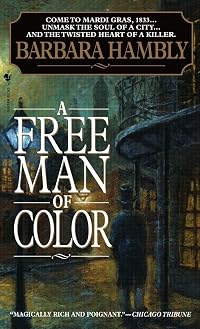
A lush and haunting novel of a city steeped in decadent pleasures . . . and of a man, proud and defiant, caught in a web of murder and betrayal. It is 1833. In the midst of Mardi Gras, Benjamin January, a Creole physician and music teacher, is playing piano at the Salle d'Orleans when the evenings festivities are interrupted--by murder. Ravishing Angelique Crozat, a notorious octoroon who travels in the city's finest company, has been strangled to death. With the authorities reluctant to show more become involved, Ben begins his own inquiry, which will take him through the seamy haunts of riverboatmen and into the huts of voodoo-worshipping slaves. But soon the eyes of suspicion turn toward Ben--for, black as the slave who fathered him, this free man of color is still the perfect scapegoat. . . . Praise for A Free Man of Color "A smashing debut. Rich and exciting with both substance and spice."--Star Tribune, Minneapolis "A sparkling gem."--King Features Syndicate "An astonishing tour de force."--Margaret Maron "Superb."--Drood Review of Mystery "A darned good murder mystery."--USA Today show lessTags
Recommendations






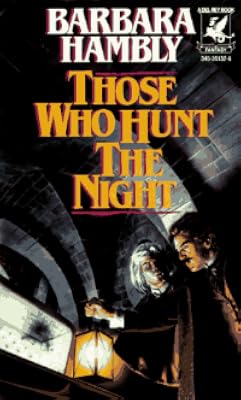

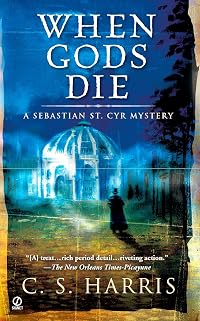
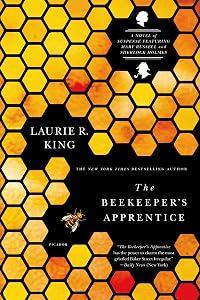
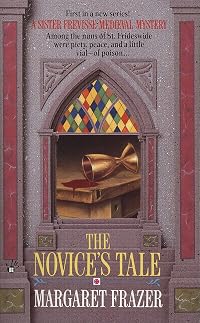













Member Recommendations
Member Reviews
Benjamin January is a colored man, a griffe. In his day, that meant he was 3/4 black, with a black father and a mulatto mother. His sister is a quadroon - 3/4 white. In New Orleans, pre-Civil War, that matters. Everything about race, and even about nationality, matters a lot. It defines who you are and what opportunities are open to you. Benjamin is a musician, but he also trained as a surgeon in Paris. He lived there with his wife for several years, but after her death, he returns to his hometown.
Much has changed since he has been gone. Suddenly the Americans are moving in. The British and French, which didn't much get along with each other but at least understood 'the custom of the country,' are being bought out by brash new Americans show more who only understand two things - money, and the color of your skin. Benjamin as a colored man cannot find work as a surgeon, only as a musician. He's playing the quadroon ball during Mardi Gras when one of the women is found murdered. He knows the owner of the hotel is not about to call in the police to investigate. After all, the woman is basically a courtesan, and the suspects are powerful and wealthy white men. But Benjamin is so sick of this kind of prejudice that he begins to ask questions himself. Next thing he knows, the police have been happy to investigate a much less tricky suspect - him.
I really enjoyed this book. Benjamin is a great character with a complicated background. Being away from home so much gives his a different perspective on things that the other characters take for granted. I realized that this was a time period I knew practically nothing about, but certainly a place I'd love to read about again. 5 stars. show less
Much has changed since he has been gone. Suddenly the Americans are moving in. The British and French, which didn't much get along with each other but at least understood 'the custom of the country,' are being bought out by brash new Americans show more who only understand two things - money, and the color of your skin. Benjamin as a colored man cannot find work as a surgeon, only as a musician. He's playing the quadroon ball during Mardi Gras when one of the women is found murdered. He knows the owner of the hotel is not about to call in the police to investigate. After all, the woman is basically a courtesan, and the suspects are powerful and wealthy white men. But Benjamin is so sick of this kind of prejudice that he begins to ask questions himself. Next thing he knows, the police have been happy to investigate a much less tricky suspect - him.
I really enjoyed this book. Benjamin is a great character with a complicated background. Being away from home so much gives his a different perspective on things that the other characters take for granted. I realized that this was a time period I knew practically nothing about, but certainly a place I'd love to read about again. 5 stars. show less
I delayed starting this book, even though it was highly recommended. I dislike historical novels, mysteries, and books involving historical slavery. So this wasn't a good bet. The historical setting was new for me, I know next to nothing about the intricacies of a French/Spanish/American New Orleans, or about the life of freed blacks in the South (hint: not that secure). It also cleared up why little old ladies think it's a compliment to call me colored instead of black. Having an unfamiliar "small" historical setting, unlike books which follow large well-known events (American revolution etc.), allowed me the same knowledge of the future as the character. Rather then reading it from the point of view of an all-knowing history god.
The show more mystery, which I'm usually uninterested in as a plot device (why would I care about the death of a random person?) had such staggering consequences for remaining unsolved that I was deeply invested in the outcome. The slavery aspects were well-handled and not simply placed for shock value. The setting also felt genuine and utterly necessary. Not one of those, "This is N.O. because it is cool, and look! French Quarter."
At the end of book there's a thank you for Octavia Butler who was a reader/commentator on the final manuscript. Honestly, if they had put that in the forward, I would have read the book much sooner.
In short, I enjoyed it even though it was atypical of my usual reading. And I plan to read the rest of the series, as well as other books by Hambly. show less
The show more mystery, which I'm usually uninterested in as a plot device (why would I care about the death of a random person?) had such staggering consequences for remaining unsolved that I was deeply invested in the outcome. The slavery aspects were well-handled and not simply placed for shock value. The setting also felt genuine and utterly necessary. Not one of those, "This is N.O. because it is cool, and look! French Quarter."
At the end of book there's a thank you for Octavia Butler who was a reader/commentator on the final manuscript. Honestly, if they had put that in the forward, I would have read the book much sooner.
In short, I enjoyed it even though it was atypical of my usual reading. And I plan to read the rest of the series, as well as other books by Hambly. show less
I found this a very satisfying period murder mystery set in and around New Orleans in 1833. It’s a couple of decades after the Louisiana Purchase and thirty years before the American Civil War, and the precarious position of a free but dark-skinned colored man in this time and place is made starkly clear. We’re also shown the conflict between the members of a highly stylized Creole culture and the relative new-comers, the uncouth and mercenary “Americans” or “Kaintucks.” Hambly’s historian credentials give the setting a rock-solid credibility. Her well-honed storytelling skill brings the characters to life and makes their story riveting.
The murder victim is a manipulative young freeborn “octoroon,” a light-skinned show more colored girl of the sort prized as mistresses by the Creole elite. The Kaintuck police officer investigating the case encounters resistance from various quarters when suspicion points to a young white man – much to the disgust of protagonist Benjamin January, a slave-born but Paris-educated free man of color. Disgusted though he is, January probably would not have risked himself by pursuing the case if the suspicion had not been transferred to him. Ultimately he risks both life and liberty to bring about a resolution and clear his name. The story is nail-bitingly tense in more than one place.
I found the solution of the mystery to be satisfyingly logical. Some of the clues were obscure enough to make a reader-solution unlikely, but nothing worse than is common in a genre that considers itself a failure if the reader guesses the ending. I’ve never been inclined to try very hard to second-guess an author in any case. When I read a good book I tend to surrender myself to it. Let the author take me for a ride; that’s what I came for. And “A Free Man of Color” is a darned good ride.
Some people may question the “right” of a white woman to write a story about the experience of black and colored people. And of course, I’m another white woman reviewing it. I would suggest that people – black people and white people – should read it before making a judgement. There is nothing over-simplified or sanitized, here. The characters (of all colors) and their motivations are complex and often morally ambiguous. Ms Hambly has clearly done her research, and the insight she brings to this highly race/color/class-conscious society has the combined power of her training as a historian and her ability as a fiction writer to put herself into characters’ heads. In creating Benjamin January, a black man with one white grandparent, who grew up in this culture and then left it in his twenties to return as a mature adult, Hambly has designed a character who can see the culture from both the inside and the outside and is therefore well positioned to mirror her insight. show less
The murder victim is a manipulative young freeborn “octoroon,” a light-skinned show more colored girl of the sort prized as mistresses by the Creole elite. The Kaintuck police officer investigating the case encounters resistance from various quarters when suspicion points to a young white man – much to the disgust of protagonist Benjamin January, a slave-born but Paris-educated free man of color. Disgusted though he is, January probably would not have risked himself by pursuing the case if the suspicion had not been transferred to him. Ultimately he risks both life and liberty to bring about a resolution and clear his name. The story is nail-bitingly tense in more than one place.
I found the solution of the mystery to be satisfyingly logical. Some of the clues were obscure enough to make a reader-solution unlikely, but nothing worse than is common in a genre that considers itself a failure if the reader guesses the ending. I’ve never been inclined to try very hard to second-guess an author in any case. When I read a good book I tend to surrender myself to it. Let the author take me for a ride; that’s what I came for. And “A Free Man of Color” is a darned good ride.
Some people may question the “right” of a white woman to write a story about the experience of black and colored people. And of course, I’m another white woman reviewing it. I would suggest that people – black people and white people – should read it before making a judgement. There is nothing over-simplified or sanitized, here. The characters (of all colors) and their motivations are complex and often morally ambiguous. Ms Hambly has clearly done her research, and the insight she brings to this highly race/color/class-conscious society has the combined power of her training as a historian and her ability as a fiction writer to put herself into characters’ heads. In creating Benjamin January, a black man with one white grandparent, who grew up in this culture and then left it in his twenties to return as a mature adult, Hambly has designed a character who can see the culture from both the inside and the outside and is therefore well positioned to mirror her insight. show less
The first Benjamin January/Javier mystery set in 1833 New Orleans and featuring a black musician/doctor as our POV character/sleuth.
The backstory of this mystery is, in my observation, more interesting than the mystery to be solved. I wasn't able to get into the book on first read, and made it to chapter 3 before shelving it. I re-tried the story, and got all the way through this time. It's a very evocative piece of writing, it's got a lot of characters whose interactions are very interesting, and in the end I was gruntled enough to give it three stars.
What I found irksome was the mystery itself. The sleuth's reasons for investigating the murder are, in theory, the strongest possible. Why then was I so indifferent to the crime and the show more eventual punishment? Because I don't think the author was fully engaged with that aspect of the story. It's not that it felt perfunctory, exactly, but it felt...extraneous...like she put it in so she'd have a reason to tell us a story in this setting.
Since it's the first of a series, I might pick up the next and see if there's some change that could make me follow the rest...but frankly, it's low on my priority list. Check back in 2013 or so (assuming the world doesn't end in 2012).
Neutral response...hazard at your own risk, historical fans. show less
The backstory of this mystery is, in my observation, more interesting than the mystery to be solved. I wasn't able to get into the book on first read, and made it to chapter 3 before shelving it. I re-tried the story, and got all the way through this time. It's a very evocative piece of writing, it's got a lot of characters whose interactions are very interesting, and in the end I was gruntled enough to give it three stars.
What I found irksome was the mystery itself. The sleuth's reasons for investigating the murder are, in theory, the strongest possible. Why then was I so indifferent to the crime and the show more eventual punishment? Because I don't think the author was fully engaged with that aspect of the story. It's not that it felt perfunctory, exactly, but it felt...extraneous...like she put it in so she'd have a reason to tell us a story in this setting.
Since it's the first of a series, I might pick up the next and see if there's some change that could make me follow the rest...but frankly, it's low on my priority list. Check back in 2013 or so (assuming the world doesn't end in 2012).
Neutral response...hazard at your own risk, historical fans. show less
The protagonist here is Benjamin January (or Janvier), a free man of color born into slavery, but freed in childhood by his mother's Creole "protector". It is set in Louisiana in the 1830's, when the intricate hierarchy of social standing among people of color was governed by how many white grandparents a person could claim, and Creole society accommodated a man's second family of mixed race children by pretending they did not exist. January is a trained surgeon, and an accomplished musician who lived for 16 years in Paris, until the death of his wife, and has now returned to his native New Orleans. Adapting to the diminishing French influence in Louisiana society and the rise of the brutish Americans to positions of power requires show more January to perform an often terrifying balancing act to keep his life and his freedom. There is a murder mystery imbedded in this "novel of suspense", but the real draw here is the glimpse into the fascinating milieu that was Louisiana in the first half of the 19th century. A bit repetitious at times, not plot-driven, but very hard to put down. It is the first in a series that now includes 10 titles, and I will definitely explore these further.
Review written in October, 2011 show less
Review written in October, 2011 show less
A seductively languid and ultimately engrossing book, much like the setting: New Orleans, 1830. The title character is Benjamin January, a trained pianist and French-educated surgeon, who flees a Paris haunted by memories of his deceased wife. He finds himself in a world that has in some ways changed from what he remembered but in others remains sadly the same. There are heightened racial and social tensions as the older Creole population is infiltrated by brash, crass Americans. Upon a request from a former piano student, January goes in pursuit of an infamous woman at a masquerade ball where he is performing -- and, since he is the last known person to see her alive once her corpse is discovered -- he becomes a prime suspect, show more especially among the elite white population of the city, who do not want to see one of their number fall under suspicion. -- The book is rich in detail (a little bewildering at first, perhaps, with all the various levels of caste in the society to track), and one comes away from it with a deeper appreciation of what New Orleans might have been like in this turbulent period. -- This is the first in a series of what will become (in September 2018) 15 books -- I will look forward to further adventures of Benjamin January! show less
An engaging, bittersweet book that paints a complex picture of historical New Orleans. It does an especially good job of depicting how different systems of power in New Orleans--not just race, but also nationality, class, gender, sexuality--interact with one another and encourage certain types of relationships.
Members
- Recently Added By
Lists

Best Historical Crime
44 works; 17 members

Crime and Mysteries to Read
746 works; 31 members

Sense of place
156 works; 13 members

Top Five Books of 2014
1,064 works; 397 members

Best Historical Fiction authors
41 works; 9 members

Books Set in Louisiana
29 works; 8 members

Expand Your Reading Demographics!
47 works; 15 members

Majkia's Mystery/ Thriller TBR
86 works; 3 members

music to my eyes
86 works; 12 members

the play's the thing... (novels themed around the theatre + acting)
34 works; 5 members

Urban Fiction
74 works; 7 members

Tagged Doctors
15 works; 5 members

Books Read in 2019
4,052 works; 110 members
Best Mysteries With a Historical Setting
292 works; 160 members
Talk Discussions
Past Discussions
MARCH - SPOILERS - A Free Man of Color in The Green Dragon (March 2014)
MARCH - NO SPOILERS - A Free Man of Color in The Green Dragon (March 2014)
Author Information

Some Editions
Series

Work Relationships
Is contained in
Common Knowledge
- Canonical title
- A Free Man of Color
- Original publication date
- 1997
- People/Characters
- Olympe 'Olympia Snakebones' Corbier; Angelique Crozat; Benjamin January (Benjamin Janvier); Dominique 'Minou' Janvier; Livia Janvier Levesque; Augustus Mayerling (show all 10); Galen Peralta; Hannibal Sefton; Abishag Shaw; Madeleine Dubonnet Trepagier
- Important places
- Louisiana, USA; New Orleans, Louisiana, USA
- Important events
- Mardi Gras (1833)
- Dedication
- For Brother Ed
- First words
- Had Cardinal Richelieu not assaulted the Mohican Princess, thrusting her up against the brick wall of the carriageway and forcing her mouth with his kisses, Benjamin January probably wouldn't have noticed anything amiss later... (show all) on.
- Last words
- (Click to show. Warning: May contain spoilers.)But if he spoke to her, he thought, she would deny it, of course.
- Blurbers
- Maron, Margaret
- Original language
- English
Classifications
Statistics
- Members
- 1,005
- Popularity
- 25,910
- Reviews
- 41
- Rating
- (3.93)
- Languages
- English, French, German, Italian
- Media
- Paper, Audiobook, Ebook
- ISBNs
- 13
- ASINs
- 7