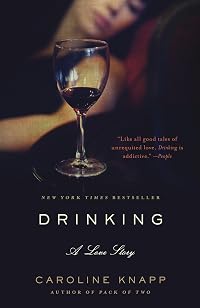
Drinking: A Love Story
by Caroline Knapp
On This Page
Description
"It happened this way: I fell in love and then, because the love was ruining everything I cared about, I had to fall out." So begins Drinking: A Love Story, journalist Caroline Knapp's brave and powerful memoir of her twenty years as a functioning alcoholic. Knapp writes that she loved liquor the way she loved bad men and, like all tragic love stories, hers is a tale of seduction and betrayal, a testament to the alluring but ultimately destructive powers of addiction. Fifteen million show more Americans a year are afflicted with the disease of alcoholism. Five million of them are women. Caroline Knapp, for example, started drinking at age fourteen. She drank through her years at an Ivy League college, through an award-winning career as a lifestyle editor and columnist. Publicly she was a dutiful daughter, attentive friend, sophisticated professional. Privately she was drinking herself into oblivion, trapped in love relationships that continued to undermine her self-esteem - until a series of personal crises forced her to confront and ultimately break free of the "liquid armor" she'd used to shield herself from the complicated battles of growing up. Caroline Knapp's ruthless self-examination, moral courage, and singular ability as a writer inform this remarkable memoir with many new insights about alcoholism, but more important, with many profound insights about life. show lessTags
Recommendations



Member Recommendations
Member Reviews
I first this book not long after I left rehab (for drinking, of course) on the seventh day. I would occasionally read it again during periods of sobriety - and heavy drinking. I've never read a book on alcoholism quite like it but now that I've been sober for almost nineteen months, I don't think I can read it again if I want to stay sober. Let me explain...it's such a wonderful, fascinating, hypnotic book, that for an alcoholic to read such detailed chapters about drinking and the obsession of it might make me want to take a drink. Until I read this book I thought I was the only alcoholic that truly LOVED drinking and all of its rituals. I also thought I was the only alcoholic that thought about the good drinking memories I had and not show more just the ones concerning sickness, jail, car accidents and broken relationships. I was saddened to read that a few years after this book was published, Caroline Knapp died of lung cancer (her father and mother both died of cancer). She was a wonderful, thoughtful writer and I hope she is at peace. show less
It is difficult to ready any story about a fall from grace, especially one written as honestly and bluntly as Caroline Knapp's. The story winds its way around different out-of-control drinking; when Knapp drank, why she thought she drank so much, the people she affected with her drinking, all the denials along the way. At times her stories seemed repetitive and meandering but that perception comes from the why of it all. Knapp was clearly in pain and had trouble rationalizing her rage. She brought two points home: you don't need to have suffered a trauma to become addicted to anything and once you recognize your problem, your addiction is never again a normalized behavior. In the world of alcohol, most people think nothing of having a show more cocktail with friends, a beer after work. All of that became off limits to Knapp once she accepted her addiction. It is clear Knapp had an addictive personality. She was drawn to obsessions and performed rituals while drinking, rituals about food consumption to the point of anorexia, rituals in how she fought with her boyfriends. Even after sobriety, Knapp was drawn to obsessions concerning cleanliness and being constantly aware of how large a role alcohol plays in our society. Even the words "champagne bunch" grated on her abstinence. In the end, Knapp was resolved to take one day at a time. She couldn't set large goals for herself while her drinking was larger than her resolve. She was smart to know that every day was a major victory. Her story ends unresolved but hopeful. show less
I wanted to love Drinking: A Love Story, I really did, for a lot of reasons:
All of these reasons should have led to a knockout reading experience but for this seemingly winning equation just didn't add up for me.
I can see why many people would love this book, and why it would be important to many people. The author is a drunk and the memoir follows her through the last few years of her drinking into the first few years of sobriety.
I appreciated the way Knapp compared getting sober with ending a relationship. It was true for me - I had a much stronger show more relationship with alcohol than I did with any human being the last few years of my drinking. And even though it was literally killing me, and I knew I would get nothing out of my life if I didn't quit, I still grieved the loss of it. I imagine it's similar to someone getting out of a bad marriage. They know it's bad, they know it's better to be out of it, but that doesn't mean it's easy or that their feelings aren't complicated. Knapp did a good job of portraying that particular part of getting sober, which, in my experience, is one of the more baffling things for non-alcoholics to understand.
The writing was fine. It wasn't amazing but it didn't really get in the way either. When I finished the book and researched Knapp I was not surprised to learn that she'd written extensively for many women's magazines. Her writing had a sort of cheesy, overly simplified, repetitive quality that didn't make me want to throw the book across the room or anything, but wasn't particularly appealing either.
I can see why many people found this book fascinating and insightful, but it wasn't for me. I've been sober for a little over three years and the entire time I read this I kept wondering if I would have felt differently about this book if I'd read it in my first year of sobriety. To me it was just another alcoholic telling their story. I hear stories exactly like this every week and they're important for me to hear, and I care deeply for the stories I hear, but when reading cold words on a page it just didn't get to me.
I also wasn't sure how I felt about her writing the thing in the first place. People who aren't familiar with Alcoholics Anonymous often think that the Anonymous part means we can't disclose the fact that we're in recovery. My interpretation is that it means A) we must respect the anonymity of others, which basically means if I see someone from a meeting out in the wild I won't let whoever they're with, or I'm with, for that matter, know they're in the program and B) as the traditions state, "remain anonymous at the level of press, radio, and film." I think writing a book about it falls under "press?" That's my feeling, at least.
As I understand it, the reason that tradition exists is because there are about a billion different ways for people to interpret AA - and not a single one of them is correct. One of the strengths of the program is that everyone can work their program the way they see fit. When a person in the public eye starts talking about what AA is like, they're not actually talking about what it's like - they're talking about what it's like for them. This is problematic, in my opinion. I don't like one person giving AA lessons to the world at large, which is largely what this book felt like to me.
So! As you can see, my own personal biases played a big role in my feelings on this book. If it's someone's first experience hearing the story of a person getting sober then it may be more interesting. I think if I'd read it in my first year or so of sobriety, when I wanted as many stories as I could get, it may have had more of an impact. As it was, it felt tedious to get through this thing and I was grateful when I finally finished it. show less
- A friend lent it to me with a glowing re
view and she generally has great taste. - I am a recovering alcoholic and am generally interested in books about recovery.
- I like a good memoir.
All of these reasons should have led to a knockout reading experience but for this seemingly winning equation just didn't add up for me.
I can see why many people would love this book, and why it would be important to many people. The author is a drunk and the memoir follows her through the last few years of her drinking into the first few years of sobriety.
I appreciated the way Knapp compared getting sober with ending a relationship. It was true for me - I had a much stronger show more relationship with alcohol than I did with any human being the last few years of my drinking. And even though it was literally killing me, and I knew I would get nothing out of my life if I didn't quit, I still grieved the loss of it. I imagine it's similar to someone getting out of a bad marriage. They know it's bad, they know it's better to be out of it, but that doesn't mean it's easy or that their feelings aren't complicated. Knapp did a good job of portraying that particular part of getting sober, which, in my experience, is one of the more baffling things for non-alcoholics to understand.
The writing was fine. It wasn't amazing but it didn't really get in the way either. When I finished the book and researched Knapp I was not surprised to learn that she'd written extensively for many women's magazines. Her writing had a sort of cheesy, overly simplified, repetitive quality that didn't make me want to throw the book across the room or anything, but wasn't particularly appealing either.
I can see why many people found this book fascinating and insightful, but it wasn't for me. I've been sober for a little over three years and the entire time I read this I kept wondering if I would have felt differently about this book if I'd read it in my first year of sobriety. To me it was just another alcoholic telling their story. I hear stories exactly like this every week and they're important for me to hear, and I care deeply for the stories I hear, but when reading cold words on a page it just didn't get to me.
I also wasn't sure how I felt about her writing the thing in the first place. People who aren't familiar with Alcoholics Anonymous often think that the Anonymous part means we can't disclose the fact that we're in recovery. My interpretation is that it means A) we must respect the anonymity of others, which basically means if I see someone from a meeting out in the wild I won't let whoever they're with, or I'm with, for that matter, know they're in the program and B) as the traditions state, "remain anonymous at the level of press, radio, and film." I think writing a book about it falls under "press?" That's my feeling, at least.
As I understand it, the reason that tradition exists is because there are about a billion different ways for people to interpret AA - and not a single one of them is correct. One of the strengths of the program is that everyone can work their program the way they see fit. When a person in the public eye starts talking about what AA is like, they're not actually talking about what it's like - they're talking about what it's like for them. This is problematic, in my opinion. I don't like one person giving AA lessons to the world at large, which is largely what this book felt like to me.
So! As you can see, my own personal biases played a big role in my feelings on this book. If it's someone's first experience hearing the story of a person getting sober then it may be more interesting. I think if I'd read it in my first year or so of sobriety, when I wanted as many stories as I could get, it may have had more of an impact. As it was, it felt tedious to get through this thing and I was grateful when I finally finished it. show less
This is so honest it gets uncomfortable sometimes. She has a great sense of introspection and insight, so you understand what she and a lot of addicts go through. At first you don't like her, because she talks about all the things her family was doing wrong when she was a kid (which was horrible, but still); or what her man was doing to make her cheat, etc. But then she realises, as a lot of addicts that want to stop, that is her fault and the substance that anesthetize the shame and guilt of her self-destruction. Apparently an addict hits rock bottom when they can't medicate that shame anymore, it's not really losing everything (material or relationship wise), which I didn't know. It can happen at any stage of addiction, even when show more you're barely starting, depends on the person and their psychosocial enviroment. An addiction stalls out your growth, stopping is literally deciding finally to become an adult, so I understand why it is so difficult and scary. My uncle is an alcoholic. He is in his 60s now, and haven't found the will to stop. Undertanding what maybe is going through his head, and what was his childhood like (and he doesn't stop talking about it) makes it even sadder, but what you gonna do. show less
Incisive dissection lf the motivations of a well-off, successful, "high-functioning alcoholic." Especially interesting is her understanding of her relationship with her father. She commits to AA and finds strength in the shared struggle, but makes no real claim for belief in a higher power.
I feel a bit uncomfortable saying that a book depicting the incredible amount of pain and suffering caused by the author's struggle with alcoholism a real page turner. I mean what does that say about me ? But that's exactly what reading this book was, I simply gobbled it up. Caroline Knapp's struggle started at an early age and although as she said, she was a functioning alcoholic and never did anything really horrible to anyone, there was a brutal honesty about the harm she did to herself. Caroline used alcohol to hide from her demons but when she finally gave it up and faced her demons head on, she displayed amazing amount of bravery in revealing not only to herself, but to her readers as well, all the many many mistakes she made show more while under it's spell. Like I said a real page turner. show less
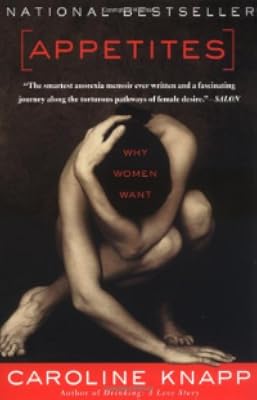
After recently reading Knapp's book 'Appetites' I went back and re-read 'Drinking'. Knapp has a masterly skill of taking the events of her own life and using them to explore larger issues than just her own problems. This is an honest and at times brutal look at her own problems with alcohol, and paints a great picture of how alcoholics are not just winos or obvious 'problem' people, but that they can also be people who from the outside seem to have it all together, whereas the reality is that they are struggling with addiction.
Members
- Recently Added By
Lists

Best Biographies, Autobiographies and Memoirs
465 works; 160 members

100 Biographies and Memoirs to Read in a (Single) Lifetime
98 works; 12 members
Author Information

7+ Works 2,658 Members
Caroline Knapp was the author of Alice K's Guide to Life as well as the best-selling books, Drinking: A Love Story and Pack of Two: The Intricate Bond Between People and Dogs. She died in June 2002 at the age of 42, and lived in Cambridge, Massachusetts
Some Editions
Awards and Honors
Distinctions
Work Relationships
Has as a student's study guide
Common Knowledge
- Canonical DDC/MDS
- 362.292092
- Canonical LCC
- HV5293.K53
Classifications
- Genres
- Biography & Memoir, Nonfiction, General Nonfiction
- DDC/MDS
- 362.292092 — Society, government, & culture Social problems and social services Social Welfare Mental illness Substance abuse Biographies
- LCC
- HV5293 .K53 — Social sciences Social pathology. Social and public welfare. Criminology Social pathology. Social and public welfare. Alcoholism. Intemperance. Temperance reform
- BISAC
Statistics
- Members
- 1,370
- Popularity
- 17,354
- Reviews
- 34
- Rating
- (3.96)
- Languages
- 7 — Chinese, Dutch, English, German, Italian, Portuguese, Spanish
- Media
- Paper, Audiobook, Ebook
- ISBNs
- 17
- ASINs
- 8