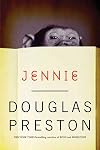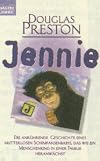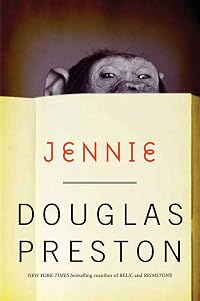
Jennie
by Douglas Preston
On This Page
Description
Jennie is the story of an orphaned chimpanzee who grows up with her adopted human family. Jennie adapts to her surroundings quickly, to enjoy the pursuits of the average young person - riding her own tricycle, playing with her pet kitten and Barbie, and fighting with her siblings. Written as a fictional oral history, Jennie tells the story of the Archibalds, the Boston-area family that took in the chimp from 1965 to 1975, and the ensuing family and scientific debates.Jennie's story is show more hilarious, poignant, and, in times, desperately sad. Based on accounts of six different cases of chimps in human surroundings, Jennie will make you laugh, fill you with wonder, and make your heart go out to a touching and warm character unlike any other - Jennie. show lessTags
Recommendations
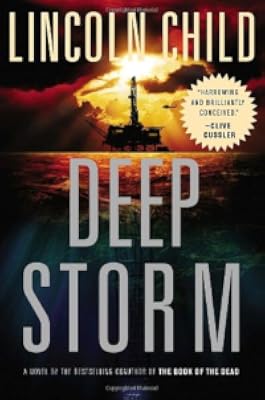

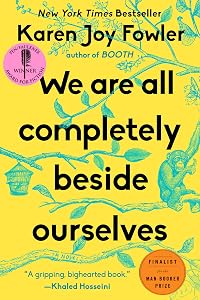
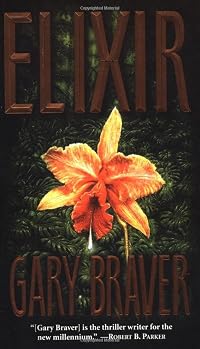
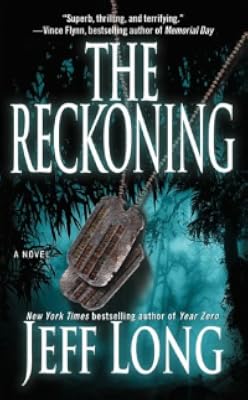


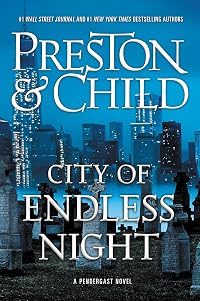
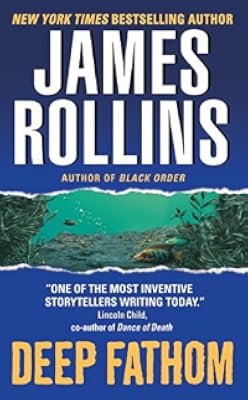

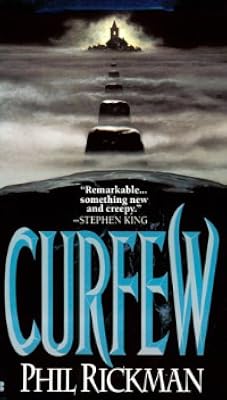
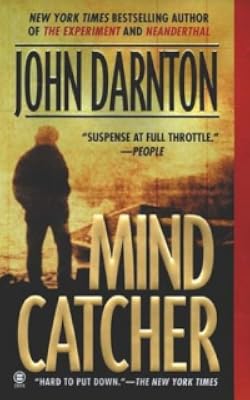




Member Recommendations
Member Reviews
Brilliant. From what I've read about ape research, nothing here seems implausible. Telling us the stories in a fictional format enables Preston to show us also how Jennie's 'siblings' reacted to her presence. The story takes place in an interesting cultural setting, too, a nice suburb in the eastern US in the late 60s - early 70s, and that becomes relevant. Iow, lots of different perspectives and strategies of exploration of What does it mean to be human, and are we qualitatively or only quantitatively 'smarter' than chimpanzees?
(Personally, though I fully support efforts to protect the apes and their habitat, and convict of manslaughter those who poach or conduct torturous research on them, I think the apes aren't as smart as humans, show more because they're not protecting themselves. But that's beside the point of this wise and moving book.) show less
(Personally, though I fully support efforts to protect the apes and their habitat, and convict of manslaughter those who poach or conduct torturous research on them, I think the apes aren't as smart as humans, show more because they're not protecting themselves. But that's beside the point of this wise and moving book.) show less
A novel, Douglas Preston's first, I think, although it is presented very believably as a true story put together by the author from notes, research and interviews. Jennie was a chimpanzee who was rescued as a baby by Professor Hugo Archibald when her mother died giving birth to her. Professor Archibald brought her back to his family in Boston, where she was raised as one of the family, believing herself to be human. This presented an irresistible opportunity for Archibald's colleagues to study Jennie's ability to communicate using American Sign Language (ASL). The Professor's family also learned it, and Jennie studied daily with a researcher from the institute. Jennie assimilated into her human family, going through many of the show more milestones an American child would go through: riding her tricycle, playing with her pet kitten and her brother Sandy, and rebelling against her "parents" as she entered puberty. She attained some measure of stardom as the rest of the world became aware of her and her impressive communication skills.
This is a funny, touching, and ultimately heart-wrenching story that reads like a true event. The author has done extensive research into experiments in teaching chimpanzees ASL, and occasions where chimps have been raised with human families, and says there is nothing in this novel that could not have easily happened in real life. I tend to believe him. show less
This is a funny, touching, and ultimately heart-wrenching story that reads like a true event. The author has done extensive research into experiments in teaching chimpanzees ASL, and occasions where chimps have been raised with human families, and says there is nothing in this novel that could not have easily happened in real life. I tend to believe him. show less
Excellent book. I was especially amazed at the tests and cognitive experiments they did (all of which was based on real research and actual events). I've pretty much loved everything Preston and Lincoln Child have done together and individually.
This is a fictional story about a wild baby chimpanzee adopted by the family of an anthropologist and raised like a human child until the chimp is an adult.
Because of the time period that the story covers, it seems that the story might be inspired by the chimpanzee, Washoe, one of the first chimpanzees taught sign language. However, it's clear that the characters and events in the story are largely fictional.
A physical anthropologist is collecting animal skeletons in Africa, when by chance, a dying mother chimpanzee brought to his camp gives birth. He decides to keep the baby, and takes it home to America. He seems to have no clear plans about how the baby chimp, named Jennie, will adapt to life in a human society, or how his family show more will accommodate a chimpanzee as a pet. In the US, his 7 year old son, immediately forms a strong bond with the animal, and even treats Jennie like a sibling. However, the Anthropologist's daughter, the same age as Jennie, never becomes as close to the chimp. When it is discovered that Jennie can learn sign language, the family also learns to sign, and they are then able to communicate to some degree with Jennie. The story is told from the view point of a fictional journalist about 25 years after Jennie was brought to America. It is written as a series of interviews with family members or friends who knew Jennie, and also includes excerpts of the fictional autobiography of the Anthropologist who by then had passed away.
In the Afterword, the real author states that while the story is fiction, Jennie's character is scientifically accurate.
At 293 pages, the book seemed longer than necessary, in my opinion. show less
Because of the time period that the story covers, it seems that the story might be inspired by the chimpanzee, Washoe, one of the first chimpanzees taught sign language. However, it's clear that the characters and events in the story are largely fictional.
A physical anthropologist is collecting animal skeletons in Africa, when by chance, a dying mother chimpanzee brought to his camp gives birth. He decides to keep the baby, and takes it home to America. He seems to have no clear plans about how the baby chimp, named Jennie, will adapt to life in a human society, or how his family show more will accommodate a chimpanzee as a pet. In the US, his 7 year old son, immediately forms a strong bond with the animal, and even treats Jennie like a sibling. However, the Anthropologist's daughter, the same age as Jennie, never becomes as close to the chimp. When it is discovered that Jennie can learn sign language, the family also learns to sign, and they are then able to communicate to some degree with Jennie. The story is told from the view point of a fictional journalist about 25 years after Jennie was brought to America. It is written as a series of interviews with family members or friends who knew Jennie, and also includes excerpts of the fictional autobiography of the Anthropologist who by then had passed away.
In the Afterword, the real author states that while the story is fiction, Jennie's character is scientifically accurate.
At 293 pages, the book seemed longer than necessary, in my opinion. show less
A memorable read
Ratings
Members
- Recently Added By
Author Information

114+ Works 85,658 Members
Douglas Jerome Preston was born on May 20, 1956 in Cambridge, Massachusetts. He received a B.A. in English literature from Pomona College in 1978. His career began at the American Museum of Natural History, where he worked as an editor and writer from 1978 to 1985. He also was a lecturer in English at Princeton University. He became a full-time show more writer of both fiction and nonfiction books in 1986. Many of his fiction works are co-written with Lincoln Child including Relic, Riptide, Thunderhead, The Wheel of Darkness, Cemetery Dance, and Gideon's Corpse. His nonfiction works include Dinosaurs in the Attic; Cities of Gold: A Journey Across the American Southwest in Pursuit of Coronado; Talking to the Ground; and The Royal Road. He has written for numerous magazines including The New Yorker; Natural History; Harper's; Smithsonian; National Geographic; and Travel and Leisure. He became a New York Times Best Selling author with his titles Two Graves and Crimson Shores which he co-wrote with Lincoln Child, and his titles White Fire, The Lost Island Blue Labyrinth and The Lost City of the Monkey God. (Bowker Author Biography) show less
Awards and Honors
Awards
Common Knowledge
- Original publication date
- 1994-10-01
- People/Characters
- Jennie Archibald (chimpanzee); Hugo Archibald; Lea Archibald; Harold Epstein; Sandy Archibald; Sarah Archibald Burnham (show all 24); Hendricks Palliser; Pamela Prentiss; Gabriel George; Reba Palliser; Henry S. Archibald; Mrs. Henry S. Archibald; Kwele; Ed Sullivan; Robert F. Kennedy; Andy Warhol; Jackson Pollock; Craig Miller; Julius Whitehead; William Proxmire; Bill Russo; Arthur Alterman; Judge Fiorello; Joseph Finney
- Important places
- Kibbencook, Massachusetts, USA (fictitious); Boston Museum of Natural History (Boston, Massachusetts, USA); Cameroons, West Africa; Tahachee Center for Primate Rehabilitation, Florida, USA (fictitious)
- Related movies
- The Jennie Project (2001 | IMDb)
- Dedication
- For Selene
- First words
- Many readers of this book, no doubt, will have heard of Jennie Archibald or will remember the details of her life as reported in the press during the period of 1965 to 1975.
- Last words
- (Click to show. Warning: May contain spoilers.)Good-bye, Jennie. Good-bye. Good-bye.
Classifications
Statistics
- Members
- 228
- Popularity
- 142,375
- Reviews
- 6
- Rating
- (3.84)
- Languages
- 5 — Dutch, English, French, German, Spanish
- Media
- Paper, Audiobook, Ebook
- ISBNs
- 25
- ASINs
- 2