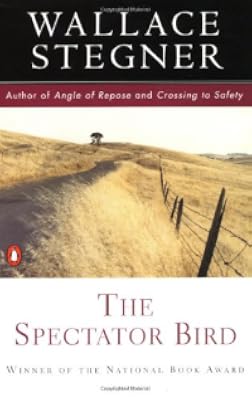
The Spectator Bird
by Wallace Stegner
On This Page
Description
Joe Allston is a retired literary agent who is, in his own words, "killing time before time gets around to killing me." His parents and his only son are long dead, leaving him with neither ancestors nor descendants, tradition nor ties. His job, trafficking the talent of others, had not been his choice. He passes through life as a spectator.A postcard from a friend causes him to return to the journals of a trip he had taken with his wife twenty years before, a journey to his mother's show more birthplace, where he'd sought a link with the past. The memories of that trip, both grotesque and poignant, read aloud to his wife so she too can reminisce, move through layers of time and meaning and reveal that Joe Allston isn't quite spectator enough.
This portrait of a husband and wife's marriage and a son's pursuit of his mother's memory is a literary masterpiece.
. show less
Tags
Recommendations
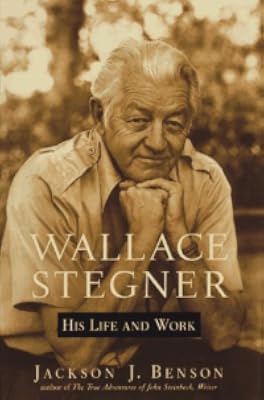




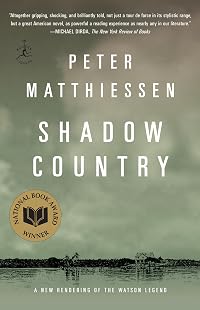
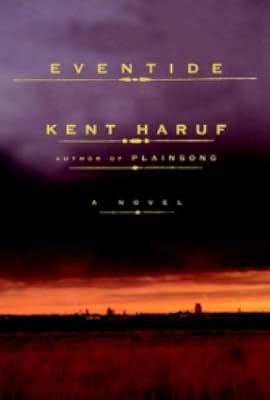
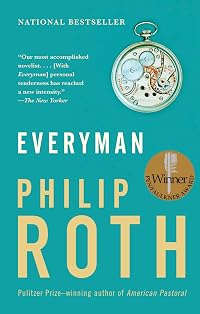
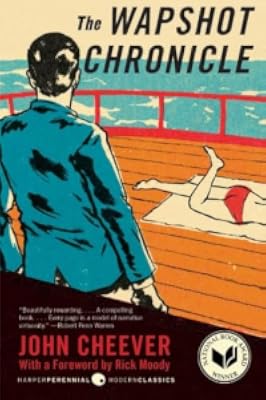



Member Recommendations
Member Reviews
Summary: A postcard from a Countess leads a retired literary agent and his wife to revisit the time they’d spent with her.
A postcard interrupts the routines of Joe Alston, a retired New York literary agent, living in California, near Stanford. Mostly, he spends his days caring for his home with his wife, Ruth, attending cultural events, and comparing maladies with other seniors his age. The postcard, from Astrid upsets all that. Astrid was an impoverished countess the two of them had stayed with in Denmark back in 1954.
In 1954, their son had recently drowned in the ocean, whether by accident or on purpose was unclear. Joe and he had constantly fought. The loss reminded Joe of other losses. His father, a railroader, died in his show more infancy. His mother had emigrated from Denmark, and he hoped understanding something of her background would help root his rootless life.
Joe had kept a collection of journals of that trip that he dug out. When Ruth finds him with them, she asks about why he has pulled these out, and asks if he would read them. So, in the evenings, he would read portions. And as the visit unfolded, the countess revealed the peculiar secret of her family and its own attempts to achieve a kind of genealogical purity. It is a story, that as it turns out, is connected with Joe’s mother’s emigration.
The account is broken up with present day events. A celebrity visits amid a storm and power outage, regaling Joe with his adventures and urging Joe to return to life. Then, clearing the aftermath of the storm, Joe feels his age, suffering several maladies, comforted by Ruth’s care. A neighbor delivers a woodchipper Joe has had occasion to borrow. It is a gift, with the unspoken message being that the neighbor, dying of cancer, will not need it.
Several themes come together in this finely crafted story. Firstly, it is a story about aging. It is not only about the physical indignities of age but also the assessing of what one’s life has meant. Secondly, it is about revisiting the unexamined ambiguities of one’s past. The journal revealed Joe’s fascination with the countess, one both he and Ruth had been aware of. Although he had not acted upon it, it was one of the ambiguities of the couple’s life together.
Finally, we come to Joe’s whole approach to life, that of the “spectator bird,” the observer rather than the participant. He was the literary agent, working for the success of his clients. His journal in Denmark is another exercise in observation. Did he feel an observer with his son, unable to prevent his self-destruction? He describes himself as “just killing time until time gets around to killing me.”
I found myself identifying with Joe. We are the same age and at similar stages in life. There are the indignities of a body that doesn’t always do what you want and imposes its own limits. Then, having laid down one’s career, one wonders what it has meant. And there is the complex companionship of a long marriage, both the deep and comforting bond and the awareness of what an imperfect work of art it has been and one’s own part in those imperfections. One is aware of being loved far beyond what one deserves.
As Joe and Ruth read and process the journals and revisit the past, we await to see whether this will help them make sense of their lives. Will they find the sense and meaning that will enable them to navigate their remaining years with some quality of equanimity? Will we? show less
A postcard interrupts the routines of Joe Alston, a retired New York literary agent, living in California, near Stanford. Mostly, he spends his days caring for his home with his wife, Ruth, attending cultural events, and comparing maladies with other seniors his age. The postcard, from Astrid upsets all that. Astrid was an impoverished countess the two of them had stayed with in Denmark back in 1954.
In 1954, their son had recently drowned in the ocean, whether by accident or on purpose was unclear. Joe and he had constantly fought. The loss reminded Joe of other losses. His father, a railroader, died in his show more infancy. His mother had emigrated from Denmark, and he hoped understanding something of her background would help root his rootless life.
Joe had kept a collection of journals of that trip that he dug out. When Ruth finds him with them, she asks about why he has pulled these out, and asks if he would read them. So, in the evenings, he would read portions. And as the visit unfolded, the countess revealed the peculiar secret of her family and its own attempts to achieve a kind of genealogical purity. It is a story, that as it turns out, is connected with Joe’s mother’s emigration.
The account is broken up with present day events. A celebrity visits amid a storm and power outage, regaling Joe with his adventures and urging Joe to return to life. Then, clearing the aftermath of the storm, Joe feels his age, suffering several maladies, comforted by Ruth’s care. A neighbor delivers a woodchipper Joe has had occasion to borrow. It is a gift, with the unspoken message being that the neighbor, dying of cancer, will not need it.
Several themes come together in this finely crafted story. Firstly, it is a story about aging. It is not only about the physical indignities of age but also the assessing of what one’s life has meant. Secondly, it is about revisiting the unexamined ambiguities of one’s past. The journal revealed Joe’s fascination with the countess, one both he and Ruth had been aware of. Although he had not acted upon it, it was one of the ambiguities of the couple’s life together.
Finally, we come to Joe’s whole approach to life, that of the “spectator bird,” the observer rather than the participant. He was the literary agent, working for the success of his clients. His journal in Denmark is another exercise in observation. Did he feel an observer with his son, unable to prevent his self-destruction? He describes himself as “just killing time until time gets around to killing me.”
I found myself identifying with Joe. We are the same age and at similar stages in life. There are the indignities of a body that doesn’t always do what you want and imposes its own limits. Then, having laid down one’s career, one wonders what it has meant. And there is the complex companionship of a long marriage, both the deep and comforting bond and the awareness of what an imperfect work of art it has been and one’s own part in those imperfections. One is aware of being loved far beyond what one deserves.
As Joe and Ruth read and process the journals and revisit the past, we await to see whether this will help them make sense of their lives. Will they find the sense and meaning that will enable them to navigate their remaining years with some quality of equanimity? Will we? show less
As often happens to me with Wallace Stegner, I am wowed by his writing, but don't really like the central character. I was glad to have the print book of this at the same time I was listening. I wanted to go back and reread phrases. Such a wonderful use of the language. We also had some trouble untangling the threads of family and the print edition helped us sort it all out. Edward Herrmann is a fabulous narrator.
So much to think about in this gorgeously written book!
The Spectator Bird surprised me throughout. I did not expect an ode to monogamy, a celebration of quiet contentment and trust over fire and wonder. It is kind of lovely, but also very much not. For me it is a trip to the theatre or a bit of gazing through the neighbors' window, never really having taken to quiet contentment and having found the joy of trust in non-romantic relationships to be enough for me.
The book gives us an aging couple, Joe and Ruth Allston, childless after the long-ago death of their only child (by accident or suicide, it is unclear.) Joe and Ruth are now living a quiet, seemingly lovely life in rural Northern California after years spent in NYC. Lovely life or show more no, Joe is depressed and mean. He is still grieving his son's long-ago death and his reckoning with the fact that he worked hard but got no real joy from his life as a literary agent and is unlikely to find joy now. Around him, friends and neighbors are failing and dying, and he is in pain from arthritis. His only solace is that he loves Ruth, who seems a not particularly bright but truly devoted and kind woman. He lives in fear she will see his flaws and his (really rather insignificant) secrets, and some illusion will be shattered. As if there are illusions to be shattered after more than 40 years together. When Joe receives a letter from a woman the couple met years ago on an extended trip to Denmark when healing after their son's death. Joe unearths journals he kept on the trip. Ruth asks him to read them aloud. It is clear Ruth has her reasons for this shared reading. There is some desire to examine their lives, a weird nostalgia, but something else seems to be going on, and it is clear that something else makes Joe nervous. As we go back in time with Joe and Ruth to relive that trip we know something is coming. Some of that something turned out to be not much of a surprise, but some of it most definitely was, at least for me.
Even with the tension, the book never loses an underlying hopefulness, and never wavers in its certainty that Joe and Ruth's commitment and sticktoitiveness are wonderful things. For this female reader in this century, it is clear how limited a life this was for women and how it was mostly just good for Joe. I want to talk about a couple of specific things that made me wince rather hard, but will do so below behind a spoiler tag.
(view spoiler)
The story was extremely engrossing, and the prose was magical. Some of this has not aged well, but it was written when it was written. My issues were really me bringing a modern sensibility to something written 50 years ago, and that is a silly thing to do. Still, it impacted the read for me. I may notch this up later after discussing this with my buddy readers Sarah and Allie on Sunday, but at first blush, I am going with a 4-star.
(Post buddy read meeting I am staying at 4-stars, but this made for an amazing buddy read book! What a great conversation.) show less
The Spectator Bird surprised me throughout. I did not expect an ode to monogamy, a celebration of quiet contentment and trust over fire and wonder. It is kind of lovely, but also very much not. For me it is a trip to the theatre or a bit of gazing through the neighbors' window, never really having taken to quiet contentment and having found the joy of trust in non-romantic relationships to be enough for me.
The book gives us an aging couple, Joe and Ruth Allston, childless after the long-ago death of their only child (by accident or suicide, it is unclear.) Joe and Ruth are now living a quiet, seemingly lovely life in rural Northern California after years spent in NYC. Lovely life or show more no, Joe is depressed and mean. He is still grieving his son's long-ago death and his reckoning with the fact that he worked hard but got no real joy from his life as a literary agent and is unlikely to find joy now. Around him, friends and neighbors are failing and dying, and he is in pain from arthritis. His only solace is that he loves Ruth, who seems a not particularly bright but truly devoted and kind woman. He lives in fear she will see his flaws and his (really rather insignificant) secrets, and some illusion will be shattered. As if there are illusions to be shattered after more than 40 years together. When Joe receives a letter from a woman the couple met years ago on an extended trip to Denmark when healing after their son's death. Joe unearths journals he kept on the trip. Ruth asks him to read them aloud. It is clear Ruth has her reasons for this shared reading. There is some desire to examine their lives, a weird nostalgia, but something else seems to be going on, and it is clear that something else makes Joe nervous. As we go back in time with Joe and Ruth to relive that trip we know something is coming. Some of that something turned out to be not much of a surprise, but some of it most definitely was, at least for me.
Even with the tension, the book never loses an underlying hopefulness, and never wavers in its certainty that Joe and Ruth's commitment and sticktoitiveness are wonderful things. For this female reader in this century, it is clear how limited a life this was for women and how it was mostly just good for Joe. I want to talk about a couple of specific things that made me wince rather hard, but will do so below behind a spoiler tag.
(view spoiler)
The story was extremely engrossing, and the prose was magical. Some of this has not aged well, but it was written when it was written. My issues were really me bringing a modern sensibility to something written 50 years ago, and that is a silly thing to do. Still, it impacted the read for me. I may notch this up later after discussing this with my buddy readers Sarah and Allie on Sunday, but at first blush, I am going with a 4-star.
(Post buddy read meeting I am staying at 4-stars, but this made for an amazing buddy read book! What a great conversation.) show less
I think Stegner may have written THE SPECTATOR BIRD not long after winning the Pulitzer Prize for ANGLE OF REPOSE, and I wonder if he may have been a bit depressed while writing BIRD. Because the book itself is a bit depressing, dwelling as it does on the various infirmities and illnesses of encroaching old age. Narrator Joe Allston, a retired literary agent, is feeling out to pasture and used up, it seems. His wife Ruthie keeps urging him to organize his papers, but instead he begins to keep a journal and also resurrects a diary of a trip to Denmark he and his wife had made 20 years earlier where he had met and become enamored of a countess. He reads his diary to Ruth, sharing his thoughts from that year. They reach a kind of sad show more understanding, and the marriage, even with the aches and pains, grumblings and disagreements, ends up seeming stronger. Bottom line: this is, I fear, primarily a book for old folks, i.e. I liked it well enough, despite its lumbering lugubrious pace and myriad meditations on growing old, death and dying, but it's probably not something readers under, say, sixty, would care much for. And Stegner needn't have worried he'd shot his creative wad. CROSSING TO SAFETY, which I consider one of his finest novels, was yet to come. Wallace Stegner was a national treasure. And his books remain as proof. show less
From the first page, I liked The Spectator Bird by Wallace Stegner. It's the writing. The narrator, Joe Allston, a retired literary agent, is shuffling papers in his study.
From my study I can watch wrens and bush tits in the live oak outside. The wrens are nesting in a hole for the fifth straight year and are very busy: tilted tails going in, sharp heads with the white eyebrow stripe coming out. They are surly and aggressive, and I wonder idly why I, who seems to be as testy as the wrens, much prefer the social bush tits. Maybe because the bush tits are doing what I thought we would be doing out here, just messing around , paying no attention to time or duty, kicking up leaves and playing hide-and-seek up and down the oak trunks and show more generally enjoying themselves.
It is meditation of this kind that keeps me, at nearly seventy, so contented and wholesome.
Joe is shuffling papers to "pacify a wife who worries about him and who reads newspaper psychiatrists urging the retired to keep their minds active." A postcard arrives that takes him back twenty years, to a trip he and Ruth (his wife) took to Denmark, in part seeking information about his mother's birthplace, but also to salve spirits and emotions damaged by the death six months before of their only child, a 20-year-old son, Curt.
Joe: "He died an over-age beach bum, evading to the last any obligation to become what his mother and I tried to make or help him be, and like my mother's, his death lay down accusingly at my door. He was my only descendant, as she was my only ancestor, and I failed both."
The trip was without itinerary or timetable. Within days of arriving, they rent an apartment, only to learn that the regular occupant is remaining there, giving them three rooms and keeping one for herself. She's a countess, but strangely ostracized by…well…just about everyone. We learn about the trip because Joe kept a diary. When the postcard arrives, he gets out his old diary to revisit that time and place. In short order, Ruth, who didn't know of its existence, insists that he read it to her.
"You don't expect me to read through the whole thing like some schoolmaster doing his annual rereading of Dickens?"
"I thought that's what we were going to do."
Rain like sand pattered at the window. I heard the clogged downspout by the door overflowing a heavy stream onto the bricks. I would have to get the leaves out of that before the next rain. "You want your pound of flesh," I said.
"Oh, Joe!"
"I told you, this isn't going to give either of us much pleasure."
"I didn't think that was the purpose."
"No?" I said. "What was the purpose?" But after a second or two in which we looked at each other with that baffled, stubborn expression that people who have been long time married often wear when they are reading each other's minds, I began reading again. My problem was the opposite of what I said it was. In our relationship with Astrid Wredel-Krarup, and in the recollections that the diary brought back, I wasn't quite spectator enough.
The novel is a story of the couple's explorations in Denmark, but even more, it's a story of an enduring marriage. show less
From my study I can watch wrens and bush tits in the live oak outside. The wrens are nesting in a hole for the fifth straight year and are very busy: tilted tails going in, sharp heads with the white eyebrow stripe coming out. They are surly and aggressive, and I wonder idly why I, who seems to be as testy as the wrens, much prefer the social bush tits. Maybe because the bush tits are doing what I thought we would be doing out here, just messing around , paying no attention to time or duty, kicking up leaves and playing hide-and-seek up and down the oak trunks and show more generally enjoying themselves.
It is meditation of this kind that keeps me, at nearly seventy, so contented and wholesome.
Joe is shuffling papers to "pacify a wife who worries about him and who reads newspaper psychiatrists urging the retired to keep their minds active." A postcard arrives that takes him back twenty years, to a trip he and Ruth (his wife) took to Denmark, in part seeking information about his mother's birthplace, but also to salve spirits and emotions damaged by the death six months before of their only child, a 20-year-old son, Curt.
Joe: "He died an over-age beach bum, evading to the last any obligation to become what his mother and I tried to make or help him be, and like my mother's, his death lay down accusingly at my door. He was my only descendant, as she was my only ancestor, and I failed both."
The trip was without itinerary or timetable. Within days of arriving, they rent an apartment, only to learn that the regular occupant is remaining there, giving them three rooms and keeping one for herself. She's a countess, but strangely ostracized by…well…just about everyone. We learn about the trip because Joe kept a diary. When the postcard arrives, he gets out his old diary to revisit that time and place. In short order, Ruth, who didn't know of its existence, insists that he read it to her.
"You don't expect me to read through the whole thing like some schoolmaster doing his annual rereading of Dickens?"
"I thought that's what we were going to do."
Rain like sand pattered at the window. I heard the clogged downspout by the door overflowing a heavy stream onto the bricks. I would have to get the leaves out of that before the next rain. "You want your pound of flesh," I said.
"Oh, Joe!"
"I told you, this isn't going to give either of us much pleasure."
"I didn't think that was the purpose."
"No?" I said. "What was the purpose?" But after a second or two in which we looked at each other with that baffled, stubborn expression that people who have been long time married often wear when they are reading each other's minds, I began reading again. My problem was the opposite of what I said it was. In our relationship with Astrid Wredel-Krarup, and in the recollections that the diary brought back, I wasn't quite spectator enough.
The novel is a story of the couple's explorations in Denmark, but even more, it's a story of an enduring marriage. show less
I loved this book. The characters rang true - from the crochety old man Joe, his wife Ruth with her "Bryn Mawr" accent, to the deposed Danish royalty, Astrid... it's a wonderful portrait and interesting story told from the modern day (well, 1980's) perspective, flashing back to Joe's 1957 diaries written on Joe & Ruth's trip to Denmark. The modern story revolved around Joe's coming to terms (or not) with aging, and he turns to reading the diaries from their trip. Joe's mother had been one of the "peasants" working for Astrid's family. Astrid's father fancied himself a geneticist, determined to make a perfect race of Danes, with predictably disasterous results, leaving his family in ruins. While it barely touches on WWII and Hitler's show more goal for a "perfect race," this is not a war story, though the parallel is clear. I was more familiar with Stegner's nature writing than his fiction, and his love of all things natural comes through. He writes with clarity and wit, and the audio book really makes it come alive. Hermann has all the right inflections & nails all the accents, be they Dutch, Italian, English or Oxford-English-Dutch. This book was an unexpected treat! show less
I wonder what I would have made of this book and Joe Allston if my younger self had read it when it was initially published. I wonder if I could have understood exactly where Joe was in life and how inescapable looking back is from that vantage point, or how poignant. Joe is 70 years old and looking old age squarely in the face. He hasn’t lost it yet, but he sees it deteriorating and he watches his friends, sometimes his age or a little older, faring worse than he does or dying. It makes him crotchety and cross, and it makes him reflective.
I drifted into my profession as a fly lands on flypaper, and my monument is not in the libraries, or men’s minds, or even in the paper-recycling plants, but in those files. They are the only thing show more that proves I ever existed. So far as I can see, it is bad enough sitting around watching yourself wear out, without putting your only immortal part into mothballs.
Spurred by a postcard from an old friend, Joe begins to remember a trip taken to Denmark after the death of his only son, and as the story of that trip unfolds, we get a chance to see who Joe was, who he has become, and at least part of the road he has taken between those two places in life.
There is a feeling part of us that does not grow old. If we could peel off the callus, and wanted to, there we would be, untouched by time, unwithered, vulnerable, afflicted and volatile and blind to consequence, a set of twitches as beyond control as an adolescent’s erections.
I found a kinship with Joe, this man with more life behind than in front of him but with no desire to exit the play before the final curtain. I understood his sorrow over both the present and the past; his respect for the life he lived and his nostalgia for the life he might have had.
I was reminded of a remark of Willa Cather’s that you can’t paint sunlight, you can only paint what it does with shadows on a wall. If you examine a life, as Socrates has been so tediously advising us to do for so many centuries, do you really examine the life, or do you examine the shadows it casts on other lives?...And what if you’re the wall? What if you never cast a shadow or rainbow of your own, but have only caught those cast by others?
Maybe every man nearing seventy asks himself these questions. I certainly have. I suspect Stegner did. I’m fairly sure this is a book I came to at the right time in life. It took me a long time to make it here, but the timing was perfect. show less
I drifted into my profession as a fly lands on flypaper, and my monument is not in the libraries, or men’s minds, or even in the paper-recycling plants, but in those files. They are the only thing show more that proves I ever existed. So far as I can see, it is bad enough sitting around watching yourself wear out, without putting your only immortal part into mothballs.
Spurred by a postcard from an old friend, Joe begins to remember a trip taken to Denmark after the death of his only son, and as the story of that trip unfolds, we get a chance to see who Joe was, who he has become, and at least part of the road he has taken between those two places in life.
There is a feeling part of us that does not grow old. If we could peel off the callus, and wanted to, there we would be, untouched by time, unwithered, vulnerable, afflicted and volatile and blind to consequence, a set of twitches as beyond control as an adolescent’s erections.
I found a kinship with Joe, this man with more life behind than in front of him but with no desire to exit the play before the final curtain. I understood his sorrow over both the present and the past; his respect for the life he lived and his nostalgia for the life he might have had.
I was reminded of a remark of Willa Cather’s that you can’t paint sunlight, you can only paint what it does with shadows on a wall. If you examine a life, as Socrates has been so tediously advising us to do for so many centuries, do you really examine the life, or do you examine the shadows it casts on other lives?...And what if you’re the wall? What if you never cast a shadow or rainbow of your own, but have only caught those cast by others?
Maybe every man nearing seventy asks himself these questions. I certainly have. I suspect Stegner did. I’m fairly sure this is a book I came to at the right time in life. It took me a long time to make it here, but the timing was perfect. show less
Members
- Recently Added By
Published Reviews
ThingScore 100
[A] seamless, beautiful work of imagination and re-imagination, of personal and social history, of love and family, of intimacy and alienation, of loss and discovery.
added by Shortride
Lists

Recommend the 20 best books you've read in the last five years
2,168 works; 606 members

National Book Award - Fiction
78 works; 10 members

Novels from The Guardian's Great American Novelist Tournament
148 works; 24 members

Five star books
1,767 works; 110 members

Blue Pyramid 1,276 Best Books of All Time
1,248 works; 32 members

National Book Award winners
65 works; 11 members
Author Information

93+ Works 20,871 Members
In 1972, Wallace Earle Stegner won a Pulitzer Prize for Angle of Repose (1971), a novel about a wheelchair-bound man's recreation of his New England grandmother's experience in a late nineteenth-century frontier town. Stegner was born on February 18, 1909 in Lake Mills, Iowa. He was an American novelist, short story writer, environmentalist, and show more historian; he has been called "The Dean of Western Writers". He also won the US National Book Award in 1977 for The Spectator Bird. Stegner grew up in Great Falls, Montana; Salt Lake City, Utah; and in the village of Eastend, Saskatchewan, which he wrote about in his autobiography Wolf Willow. Stegner taught at the University of Wisconsin and Harvard University. Eventually he settled at Stanford University, where he initiated the creative writing program. His students included Wendell Berry, and Sandra Day O'Connor. The Stegner Fellowship program at Stanford University is a two-year creative writing fellowship. The house Stegner lived in from age 7 to 12 in Eastend, Saskatchewan, Canada, was restored by the Eastend Arts Council in 1990 and established as a Residence for Artists; the Wallace Stegner Grant For The Arts offers a grant of $500 and free residency at the house for the month of October for published Canadian writers. Stegner died in Santa Fe, New Mexico, on April 13, 1993, from a car accident on March 28, 1993. (Bowker Author Biography) show less
Awards and Honors
Work Relationships
Is contained in
Common Knowledge
- Canonical title
- The Spectator Bird
- Original title
- The Spectator Bird
- Original publication date
- 1976
- People/Characters
- Joe Allston; Ruth Allston
- Important places
- Denmark
- First words
- On a February morning, when a weather front is moving in off the Pacific but has not quite arrived, and the winds are changeable and gusty and clouds drive over and an occasional flurry of fine rain darkens the terraced brics... (show all), this place conforms to none of the cliches about California with which they advertise the Sunshine Cities for the Sunset Years.
- Quotations
- And it reminds me too much of how little life changes: how, without dramatic events or high resolves, without tragedy, without even pathos, a reasonably endowed, reasonably well intentioned man can walk through the world's gr... (show all)eat kitchen from end to end and arrive at the back door hungry.
- Last words
- (Click to show. Warning: May contain spoilers.)So, arm and arm, we went and looked. Of course, there wasn't one.
Classifications
Statistics
- Members
- 1,202
- Popularity
- 20,734
- Reviews
- 43
- Rating
- (4.03)
- Languages
- English, French, German, Spanish
- Media
- Paper, Audiobook, Ebook
- ISBNs
- 27
- UPCs
- 1
- ASINs
- 19