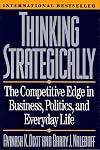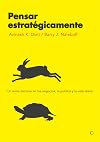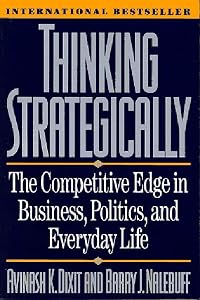
Thinking Strategically: The Competitive Edge in Business, Politics, and Everyday Life
by Avinash K. Dixit (Author), Barry J. Nalebuff (Author)
On This Page
Description
The international bestseller-don't compete without it!Tags
Recommendations



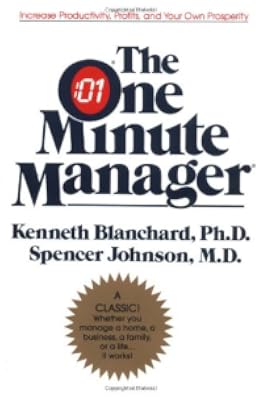
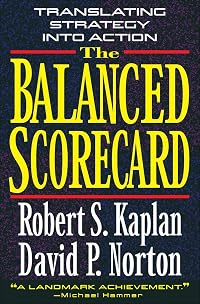
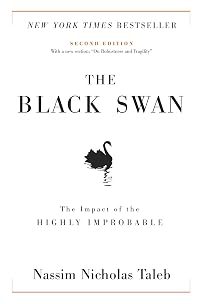
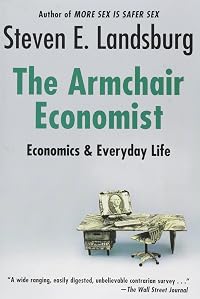
Member Reviews
Thinking Strategically was recommended on a website as a good layman's (limited math) introduction to game theory. It is! Chapters on sequential games, simultaneous games, strategic moves to turn a simultaneous game into a sequential game, cooperation, how to be unpredictable in the "right" way, how to make credible commitments, bargaining, and contracts were all very readable and littered with tangible examples from real life. The sheer wealth of examples is a strength of this book; they are absolutely essential to understanding this content.
Previous to this book, I'd spent a fair amount of time reading secondary internet sources on game theory (including multiple rounds through the Wikipedia article), but I was still unsure about how show more it all fit together. This book brought all the moving pieces together in a way that finally makes sense.
Now, game theory as a field faces numerous criticisms, especially that its assumption that people always act to maximize their profits/utility is flawed. The book doesn't address these criticisms. It should. Anyone who reads this book should look into criticisms of game theory independently.
Thinking Strategically also suffers from a handful of business examples that I Just Did. Not. Get. (for instance: what the heck is a poison pill??). To be fair, it did give some explanation of these examples, but it was still not enough that I could follow very well. It helps significantly that there are a wealth of other examples, from sports to politics to selling VCRs in New York City. (And yes, the examples are almost all a bit 1991-dated, but the theory isn't.)
My notes on this book are in the comments section in my LT library. show less
Previous to this book, I'd spent a fair amount of time reading secondary internet sources on game theory (including multiple rounds through the Wikipedia article), but I was still unsure about how show more it all fit together. This book brought all the moving pieces together in a way that finally makes sense.
Now, game theory as a field faces numerous criticisms, especially that its assumption that people always act to maximize their profits/utility is flawed. The book doesn't address these criticisms. It should. Anyone who reads this book should look into criticisms of game theory independently.
Thinking Strategically also suffers from a handful of business examples that I Just Did. Not. Get. (for instance: what the heck is a poison pill??). To be fair, it did give some explanation of these examples, but it was still not enough that I could follow very well. It helps significantly that there are a wealth of other examples, from sports to politics to selling VCRs in New York City. (And yes, the examples are almost all a bit 1991-dated, but the theory isn't.)
My notes on this book are in the comments section in my LT library. show less
Nice introduction to game theory. Enaging and easy to read, though not as deep as [a:David M. Kreps|405885|David M. Kreps|http://www.goodreads.com/assets/nophoto/nophoto-U-50x66.jpg]'[b:Game Theory and Economic Modelling|770938|Game Theory and Economic Modelling (Clarendon Lectures in Economics)|David M. Kreps|http://photo.goodreads.com/books/1178211141s/770938.jpg|756996], but still very insightful. Ideal for general readers or undergraduate students in their first years of study in the social sciences.
Fantastic introduction to game theory. I would highly recommend this book to everyone I've ever met.
Excellent book on game theory.
Ratings
Members
- Recently Added By
Author Information

Series
Belongs to Publisher Series
Common Knowledge
- Canonical title*
- Io vinco, tu perdi: strategie di successo nel business e nella vita
- Original title
- Thinking Strategically: The Competitive Edge in Business, Politics, and Everyday Life
- Original publication date
- 1991
- People/Characters
- John F. Kennedy; Nikita Khrushchev; Ronald Reagan; Thomas Schelling
- Dedication
- For Kusom and Marcia
- First words
- Introduction
What Is Strategic Behavior?
How should people behave in society? - Blurbers
- Malkiel, Burton G.; Henderson, David; Warsh, David; Bailey, Elizabeth; Volcker, Paul A.; Woolf, Bob (show all 7); Samuelson, Paul
*Some information comes from Common Knowledge in other languages. Click "Edit" for more information.
Classifications
- Genres
- Business, Nonfiction, General Nonfiction
- DDC/MDS
- 658.4012 — Applied science & technology Management & public relations General management Executive Planning, control, strategy Strategy
- LCC
- HD30.28 .D59 — Social sciences Industries. Land use. Labor Industries. Land use. Labor Management. Industrial management
- BISAC
Statistics
- Members
- 783
- Popularity
- 35,576
- Reviews
- 4
- Rating
- (3.75)
- Languages
- English, Italian, Spanish
- Media
- Paper, Audiobook, Ebook
- ISBNs
- 9
- ASINs
- 5