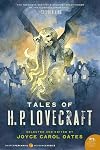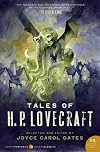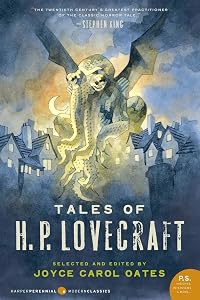
Tales of H.P. Lovecraft
by H. P. Lovecraft
On This Page
Description
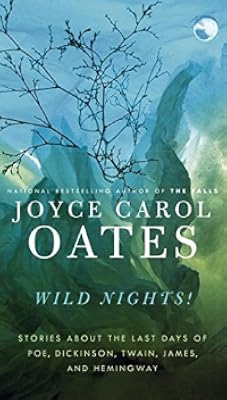
When he died in 1937, destitute and emotionally as well as physically ruined, H.P. Lovecraft had no idea that he would one day be celebrated as the godfather of modern horror. A dark visionary, his work would influence an entire generation of writers, including Stephen King, Clive Barker, Neil Gaiman, and Anne Rice. Now, the most important tales of this distinctive American storyteller have been collected in a single volume by National Book Award-winning author Joyce Carol Oates. In tales show more that combine the nineteenth-century gothic sensibility of Edgar Allan Poe with a uniquely daring internal vision, Lovecraft fuses the supernatural and mundane into a terrifying, complex, and exquisitely realized vision, foretelling a psychically troubled century to come. Set in a meticulously described New England landscape, here are harrowing stories that explore the total collapse of sanity beneath the weight of chaotic events--stories of myth and madness that release monsters into our world. Lovecraft's universe is a frightening shadow world where reality and nightmare intertwine, and redemption can come only from below. show lessTags
Recommendations












Member Reviews
In this volume Joyce Carol Oates has selected some of the best tales of the master of the macabre, H. P. Lovecraft.
The introductory tale, "The Outsider", is written in a first-person narrative style, and details the miserable and apparently lonely life of an individual, who appears to have never contacted with another individual. The story begins, with the narrator explaining his origins. His memory of others is vague, and he cannot seem to recall any details of his personal history, including who he is or where he is originally from. The narrator tells of his environment: a dark, decaying castle amid an "endless forest" of high, unlit trees. He has never seen natural light, nor another human being, and he has never ventured from the show more prison-like home he now inhabits. The only knowledge the narrator has of the outside world, is from his reading of the "antique books" that line the walls of his castle.
The narrator tells of his eventual determination to free himself, from what he views as a prison-like existence. He eventually decides to climb the ruined staircase of the high castle tower which appears to be his only hope for an escape. At the place where the stairs diminish into crumbled ruins, the narrator begins a long, slow climb up the tower wall, until he comes upon a trapdoor in the ceiling, which he pushes up and climbs through. Amazingly, he finds himself not at the great height he anticipated, but at ground level in another world. With the sight of the full moon before him, he proclaims, "There came to me the purest ecstasy I have ever known."(p 3) Overcome with the emotion he feels in beholding what—until now—he had only read about, the narrator takes in his new surroundings. He realizes that he is in an old churchyard, and he wanders out into the countryside before eventually coming upon another castle.
Upon visiting the castle, which he finds "maddeningly familiar," the narrator sees a gathering of people at a party within. Longing for some type of human contact, he climbs through a window into the room. Upon his entering, the people inside become terrified. They scream and collectively flee from the room, many stumbling blindly with their hands held over their eyes toward the walls in search of an exit. The narrator attempts to discover the source of their terror and in doing so the short story culminates with a shocking revelation.
This short beginning to the collection of works by Lovecraft is reminiscent of Poe at his best with its atmosphere of death and decrepitude; the feeling of isolation and desire for discovery; and the not-unexpected yet still horrifying revelation that ends the tale. show less
The introductory tale, "The Outsider", is written in a first-person narrative style, and details the miserable and apparently lonely life of an individual, who appears to have never contacted with another individual. The story begins, with the narrator explaining his origins. His memory of others is vague, and he cannot seem to recall any details of his personal history, including who he is or where he is originally from. The narrator tells of his environment: a dark, decaying castle amid an "endless forest" of high, unlit trees. He has never seen natural light, nor another human being, and he has never ventured from the show more prison-like home he now inhabits. The only knowledge the narrator has of the outside world, is from his reading of the "antique books" that line the walls of his castle.
The narrator tells of his eventual determination to free himself, from what he views as a prison-like existence. He eventually decides to climb the ruined staircase of the high castle tower which appears to be his only hope for an escape. At the place where the stairs diminish into crumbled ruins, the narrator begins a long, slow climb up the tower wall, until he comes upon a trapdoor in the ceiling, which he pushes up and climbs through. Amazingly, he finds himself not at the great height he anticipated, but at ground level in another world. With the sight of the full moon before him, he proclaims, "There came to me the purest ecstasy I have ever known."(p 3) Overcome with the emotion he feels in beholding what—until now—he had only read about, the narrator takes in his new surroundings. He realizes that he is in an old churchyard, and he wanders out into the countryside before eventually coming upon another castle.
Upon visiting the castle, which he finds "maddeningly familiar," the narrator sees a gathering of people at a party within. Longing for some type of human contact, he climbs through a window into the room. Upon his entering, the people inside become terrified. They scream and collectively flee from the room, many stumbling blindly with their hands held over their eyes toward the walls in search of an exit. The narrator attempts to discover the source of their terror and in doing so the short story culminates with a shocking revelation.
This short beginning to the collection of works by Lovecraft is reminiscent of Poe at his best with its atmosphere of death and decrepitude; the feeling of isolation and desire for discovery; and the not-unexpected yet still horrifying revelation that ends the tale. show less
An excellent selection of some of Lovecrafts best works. Anyone interested in sampling Lovecraft's world of gothic horror will find this arrangment of short stories both enjoyable and accessable.
Nice introduction to Lovecraft. While there are a few other tales I might have included, Joyce Carol Oates selected most of his very best.
Choice of Stories and Oates' intro put this collection on top of all the repackages out there.
The Outsider - An unknown narrator raised alone in a strange castle attempts to reach the outside world so that he may see sky for the first time. But he uncovers a terrible truth that will leave him forever isolated.
The Music of Erich Zann - A stressed student finds himself the neighbor of a deaf musician. This strange figure lives in the same building as the narrator and plays such mystifying music that introductions simply must be made. Although Erich Zann can barely communicate, his other-worldly compositions seem to be altering the very nature of reality.
The Rats in the Walls - An older man decides to restore his family's ancestral home in England after the death of his only child. When he arrives at the estate he realizes that show more the locals have a number of supernatural legends about his family and grounds. And night, he is sometimes awakened by the sound of thousands of rats running all over the walls. In the basement of the estate he discovers a passageway leading to an even older structure beneath. Aware that this must have been built by a civilization that predated the Romans, a team of archaeologists is assembled. What they discover is beyond any horror yet imagined.
The Shunned House - There is an old house in Rhode Island with a dark history. No tenants will rent it after a string of deaths. The original owner's entire family perished within. The narrator and his uncle set out to uncover and defeat the source of the evil that has long resided in the very air that emanates from the basement.
The Call of Cthulhu - Going through the papers of a deceased relative, the narrator of this dark tale comes across a record of a mysterious cult. The secrets it reveals of a dark terror from the stars forever cracks the protagonist's sanity.
The Colour Out of Space - A meteor lands in a farmer's field in rural Massachusetts. A few days later, the space rock has disintegrated but it's evil substance has poisoned the soil. Slowly the plants die. Then the animals. Eventually the farmer's family begins to sicken. Tormented by strange visions and nightmares, some go insane, others simply vanish. What is the evil's source and what will be the consequences?
The Dunwich Horror - A remote New England town is terrorized by a mysterious monster perhaps summoned up by a old-world cult practiced by previous generations.
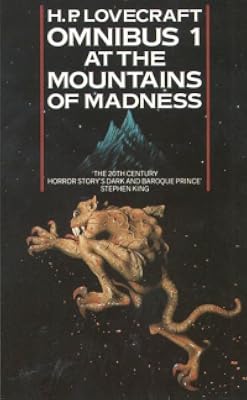
At the Mountains of Madness - A group of scientists and explorers embark on an expedition to take core samples in the Antarctic ice. What the discover is the remains of a truly ancient civilization predating mankind by millions of years. Who were these strange creatures that once colonized the southern most tip of the earth and is their elder evil waking again?
The Shadow over Innsmouth - A young man on his graduation tour makes a small side trip to Innsmouth, Massachusetts to investigate odd rumors of cultist activities. He merely want to see if this coastal village is a shadowy and superstitious as locals claim. What he discovers will alter his life and his sanity forever.
The Shadow Out of Time - An economics professor finds his unremarkable life brutally interrupted by a strange sort of mental breakdown. In the midst of a lecture he slips into a coma and upon awakening he doesn't seem to remember anything of his old life. Though he makes every effort to assume normalcy, his friends and family declare he is no longer himself. After years of erratic behavior and strange travels, he again slips into a coma. Upon awakening this time, he appears to have returned to his old self with no memory of the interceding years. The narrator comes to believe that his body was commandeered by an ancient intellect who used him as a vehicle to learn about the modern age. His pursuit of this theory and the strange details of his dreams leads him on a frightful adventure into the earth's unknown history. show less
The Music of Erich Zann - A stressed student finds himself the neighbor of a deaf musician. This strange figure lives in the same building as the narrator and plays such mystifying music that introductions simply must be made. Although Erich Zann can barely communicate, his other-worldly compositions seem to be altering the very nature of reality.
The Rats in the Walls - An older man decides to restore his family's ancestral home in England after the death of his only child. When he arrives at the estate he realizes that show more the locals have a number of supernatural legends about his family and grounds. And night, he is sometimes awakened by the sound of thousands of rats running all over the walls. In the basement of the estate he discovers a passageway leading to an even older structure beneath. Aware that this must have been built by a civilization that predated the Romans, a team of archaeologists is assembled. What they discover is beyond any horror yet imagined.
The Shunned House - There is an old house in Rhode Island with a dark history. No tenants will rent it after a string of deaths. The original owner's entire family perished within. The narrator and his uncle set out to uncover and defeat the source of the evil that has long resided in the very air that emanates from the basement.
The Call of Cthulhu - Going through the papers of a deceased relative, the narrator of this dark tale comes across a record of a mysterious cult. The secrets it reveals of a dark terror from the stars forever cracks the protagonist's sanity.
The Colour Out of Space - A meteor lands in a farmer's field in rural Massachusetts. A few days later, the space rock has disintegrated but it's evil substance has poisoned the soil. Slowly the plants die. Then the animals. Eventually the farmer's family begins to sicken. Tormented by strange visions and nightmares, some go insane, others simply vanish. What is the evil's source and what will be the consequences?
The Dunwich Horror - A remote New England town is terrorized by a mysterious monster perhaps summoned up by a old-world cult practiced by previous generations.
At the Mountains of Madness - A group of scientists and explorers embark on an expedition to take core samples in the Antarctic ice. What the discover is the remains of a truly ancient civilization predating mankind by millions of years. Who were these strange creatures that once colonized the southern most tip of the earth and is their elder evil waking again?
The Shadow over Innsmouth - A young man on his graduation tour makes a small side trip to Innsmouth, Massachusetts to investigate odd rumors of cultist activities. He merely want to see if this coastal village is a shadowy and superstitious as locals claim. What he discovers will alter his life and his sanity forever.
The Shadow Out of Time - An economics professor finds his unremarkable life brutally interrupted by a strange sort of mental breakdown. In the midst of a lecture he slips into a coma and upon awakening he doesn't seem to remember anything of his old life. Though he makes every effort to assume normalcy, his friends and family declare he is no longer himself. After years of erratic behavior and strange travels, he again slips into a coma. Upon awakening this time, he appears to have returned to his old self with no memory of the interceding years. The narrator comes to believe that his body was commandeered by an ancient intellect who used him as a vehicle to learn about the modern age. His pursuit of this theory and the strange details of his dreams leads him on a frightful adventure into the earth's unknown history. show less
Damn these bookstore discount sales!!!Ever been meaning to dive into the works of a well-known author, but didn't know where to start? I figured, not let another well-known author pick for me?
Ratings
Members
- Recently Added By
Lists

Survey of Classic Fantastic Fiction
36 works; 9 members
Author Information

1,925+ Works 73,890 Members
Howard Phillips Lovecraft, 1890 - 1937 H. P. Lovecraft was born on August 20, 1890 in Providence, Rhode Island. His mother was Sarah Susan Phillips Lovecraft and his father was Winfield Scott Lovecraft, a traveling salesman for Gorham & Co. Silversmtihs. Lovecraft was reciting poetry at the age of two and when he was three years old, his father show more suffered a mental breakdown and was admitted to Butler Hospital. He spent five years there before dying on July 19, 1898 of paresis, a form of neurosyphillis. During those five years, Lovecraft was told that his father was paralyzed and in a coma, which was not the case. His mother, two aunts and grandfather were now bringing up Lovecraft. He suffered from frequent illnesses as a boy, many of which were psychological. He began writing between the ages of six and seven and, at about the age of eight, he discovered science. He began to produce the hectographed journals, "The Scientific Gazette" (1899-1907) and "The Rhode Island Journal of Astronomy" (1903-07). His first appearance in print happened, in 1906, when he wrote a letter on an astronomical matter to The Providence Sunday Journal. A short time later, he began writing a monthly astronomy column for The Pawtuxet Valley Gleaner - a rural paper. He also wrote columns for The Providence Tribune (1906-08), The Providence Evening News (1914-18), The Asheville (N.C.) Gazette-News (1915). In 1904, his grandfather died and the family suffered severe financial difficulties, which forced him and his mother to move out of their Victorian home. Devastated by this, he apparently contemplated suicide. In 1908, before graduating from high school, he suffered a nervous breakdown. He didn't receive a diploma and failed to get into Brown University, both of which caused him great shame. Lovecraft was not heard from for five years, re-emerging because of a letter he wrote in protest to Fred Jackson's love story in The Argosy. His letter was published in 1913 and caused great controversy, which was noted by Edward F. Daas, President of the United Amateur Press Association (UAPA). Daas invited Lovecraft to join the UAPA, which he did in early 1914. He eventually became President and Official Editor of the UAPA and served briefly as President of the rival National Amateur Press Association (NAPA). He published thirteen issues of his own paper, The Conservative (1915-23) and contributed poetry and essays to other journals. He also wrote some fiction which titles include "The Beast in the Cave" (1905), "The Alchemist" (1908), "The Tomb" and "Dagon" (1917). In 1919, Lovecraft's mother was deteriorating, mentally and physically, and was admitted to Butler Hospital. On May 24, 1921, his mother died from a gall bladder operation. While attending an amateur journalism convention in Boston, Lovecraft met his future wife Sonia Haft Greene, a Russian Jew. They were married on March 3, 1924 and Lovecraft moved to her apartment in Brooklyn. Sonia had a shop on Fifth Avenue that went bankrupt. In 1925, Sonia went to Cleveland for a job and Lovecraft moved to a smaller apartment in the Red Hook district of Brooklyn. In 1926, he decided to move back to Providence. Lovecraft had his aunts bar his wife, Sonia, from going to Providence to start a business because he couldn't have the stigma of a tradeswoman wife. They were divorced in 1929. After his return to Providence, he wrote his greatest fiction, which included the titles "The Call of Cthulhu" (1926), "At the Mountains of Madness" (1931), and "The Shadow Out of Time" (1934-35). In 1932, his aunt, Mrs. Clark, died; and he moved in with his other aunt, Mrs. Gamwell, in 1933. Suffering from cancer of the intestine, Lovecraft was admitted to Jane Brown Memorial Hospital and on March 15, 1937 he died. (Bowker Author Biography) show less
All Editions
Some Editions
Work Relationships
Contains
Common Knowledge
- Original publication date
- 1935
- Disambiguation notice
- This is the collection selected and edited by Joyce Carol Oates; it contains: The Outsider; The Music of Erich Zann; The Rats in the Walls; The Shunned House; The Call of Cthulhu; The Colour out of Space; The Dunwich Horror; ... (show all)At the Mountains of Madness; The Shadow over Innsmouth; and The Shadow Out of Time. Do not combine with the Library of America edition, HP Lovecraft: Tales.
Classifications
Statistics
- Members
- 662
- Popularity
- 43,486
- Reviews
- 6
- Rating
- (4.13)
- Languages
- English
- Media
- Paper
- ISBNs
- 4
- ASINs
- 1