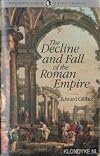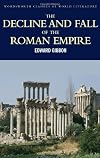
The Decline and Fall of the Roman Empire {abridged by Lentin and Norman}
by Edward Gibbon
On This Page
Description
Abridged and with an Introduction by Antony Lentin and Brian Norman. Gibbon's Decline and Fall of the Roman Empire, published between 1776 and 1788, is the undisputed masterpiece of English historical writing which can only perish with the language itself. Its length alone is a measure of its monumental quality: seventy-one chapters, of which twenty-eight appear in full in this edition. With style, learning and wit, Gibbon takes the reader through the history of Europe from the second show more century AD to the fall of Constantinople in 1453 - an enthralling account by 'the greatest of the historians of the Enlightenment'. This edition includes Gibbon's footnotes and quotations, here translated for the first time, together with brief explanatory comments, a precis of the chapters not included, 16 maps, a glossary, and a list of emperors. AUTHOR: Edward Gibbon was born on 8th May 1737 in Putney, Surrey. He described himself as "a puny child, neglected by my Mother, starved by my nurse". At nine his mother died and he was cared for by his adored 'Aunt Kitty'. In 1753 he converted to Roman Catholicism and in 1761 he began a literary career. His father's death made him a man of independent means with time to pursue his lilfe's work, 'The History of the Decline and Fall of the Roman Empire," published in 1776. show lessTags
Recommendations


























Member Reviews
An absolutely massive work, served up in a less forbidding shape in this edition, which has 28 in full of the book's 71 chapters (the omitted chapters, however, are served up in one-page summaries, so you at least get a feel of what you're missing). We are used to thinking of the Roman Empire in positive, even superlative, terms, but here the accent is on its weaknesses and failures. One gets the impression of a regime that depended too much on mercenary armed forces, who seem to have continually blackmailed the rulers; and of an inordinately self-serving ruling class, with rare exceptions like Marcus Aurelius or Trajan in the early years, and the chronic problem of an orderly succession, which seems to have been as traumatic and show more blood-soaked as in the Turco-Mongol world. The story is also that of the gradual ascendancy of Christianity, and its usurpation of the state apparatus. Little importance seems to have been given to the state-building prowess, the massive infrastructure, the Pax Romana which is touted as a gift to humanity. The story of the fall of Constantinople is especially heart-wrenching. The breadth and depth of the author's scholarship is mind-blowing.
For our era, Gibbon's work serves as a warning against depending too much on the armed forces to maintain the state; and the relative weakness of a state religion based on astrology, superstition,and the divine right of kings. show less
For our era, Gibbon's work serves as a warning against depending too much on the armed forces to maintain the state; and the relative weakness of a state religion based on astrology, superstition,and the divine right of kings. show less
Gibbon's work, although very lengthy, is very relevant to the study of the Roman Empire. He looks primarily as to why it failed to continue over the centuries -- thus the title. But it really is worth the time reading. Any historian, whether a novice or a decorated professor, can tell you the value of this work.
Chapter I
Chapter II: Of the Union and Internal Prosperity of the Roman Empire in the Age of the Antonines
Chapter III: Of the Constitution of the Roman Empire in the Age of the Antonines
Chapter IV: The cruelty, follies and murder of Commodus [with added Pertinax]
Chapter V: mostly about Septimius Severus
Chapter VI: Septimius Severus, Caracalla, Macrinus, Elagabalus and Alexander Severus; and taxation
Chapter VII: The Year of Six Emperors, and Philip the Arab
Chapter VIII: Of the state of Persia after the restoration of the monarchy by Artaxerxes
Chapter IX: The state of Germany till the invasion of the Barbarians
Chapter XIII: Diocletian
Chapter XV: Early Christianity
Chapter XVI: Early Christianity and the Emperors
Chapter XX: The conversion of show more Constantine and the establishment of Christianity
Chapter XXI: Heresy and paganism
Chapter XXIII: Julian and his Apostasy
Chapter XXIV: Julian's Persian campaign, and his death
Chapter XXVIII: The Destruction of Paganism, and Worship of Relics and Saints by Christians
Chapter XXX: The Goths are coming
Chapter XXXIV: Attila the Hun
Chapter XXXV: The End of Attila
Chapter XXXVI: The End of the Western Empire
Chapter XXXVII: Monks and Arians
Chapter L: Mahomet
Chapter LVII: The Turks
Chapter LVIII: The First Crusade
Chapter LIX: The Later Crusades
Chapter LXVIII: The Fall of Constantinople
Chapter LXXI: The End show less
Chapter II: Of the Union and Internal Prosperity of the Roman Empire in the Age of the Antonines
Chapter III: Of the Constitution of the Roman Empire in the Age of the Antonines
Chapter IV: The cruelty, follies and murder of Commodus [with added Pertinax]
Chapter V: mostly about Septimius Severus
Chapter VI: Septimius Severus, Caracalla, Macrinus, Elagabalus and Alexander Severus; and taxation
Chapter VII: The Year of Six Emperors, and Philip the Arab
Chapter VIII: Of the state of Persia after the restoration of the monarchy by Artaxerxes
Chapter IX: The state of Germany till the invasion of the Barbarians
Chapter XIII: Diocletian
Chapter XV: Early Christianity
Chapter XVI: Early Christianity and the Emperors
Chapter XX: The conversion of show more Constantine and the establishment of Christianity
Chapter XXI: Heresy and paganism
Chapter XXIII: Julian and his Apostasy
Chapter XXIV: Julian's Persian campaign, and his death
Chapter XXVIII: The Destruction of Paganism, and Worship of Relics and Saints by Christians
Chapter XXX: The Goths are coming
Chapter XXXIV: Attila the Hun
Chapter XXXV: The End of Attila
Chapter XXXVI: The End of the Western Empire
Chapter XXXVII: Monks and Arians
Chapter L: Mahomet
Chapter LVII: The Turks
Chapter LVIII: The First Crusade
Chapter LIX: The Later Crusades
Chapter LXVIII: The Fall of Constantinople
Chapter LXXI: The End show less
Ratings
Members
- Recently Added By
Author Information

418+ Works 16,941 Members
All Editions
Some Editions
Series
Belongs to Publisher Series
Work Relationships
Is an abridged version of
Common Knowledge
- Canonical title
- The Decline and Fall of the Roman Empire {abridged by Lentin and Norman}
- Original publication date
- 1998
- Important places
- The Roman Empire
- Original language
- English
- Disambiguation notice
- This edition is an abridged version of the work, published by Wordsworth and abridged by Antony Lentin and Brian Norman. Please do not combine this abridged edition with the unabridged and "complete set" editions of th... (show all)e work, or with the other different abridged versions.
Classifications
- Genres
- History, Nonfiction, Fiction and Literature
- DDC/MDS
- 813 — Literature & rhetoric American literature in English American fiction in English
- LCC
- DG311 .G5 — History of Europe, Asia, Africa and Oceania City History of Italy Ancient Italy. Rome to 476 History By period Empire, 27 B.C. - 476 A.D. 284-476. Decline and fall
- BISAC
Statistics
- Members
- 431
- Popularity
- 71,152
- Reviews
- 3
- Rating
- (4.00)
- Languages
- English
- Media
- Paper
- ISBNs
- 2
- ASINs
- 3