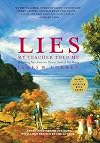
Lies My Teacher Told Me: Everything Your American History Textbook Got Wrong {original edition}
by James W. Loewen
On This Page
Description
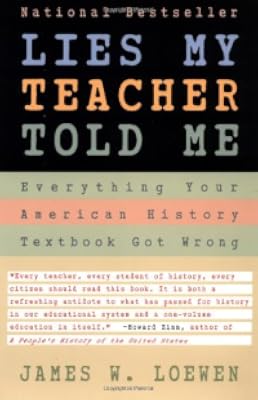
A new edition of the national bestseller and American Book Award winner, with a new preface by the author Since its first publication in 1995, Lies My Teacher Told Me has become one of the most important-and successful-history books of our time. Having sold nearly two million copies, the book also won an American Book Award and the Oliver Cromwell Cox Award for Distinguished Anti-Racist Scholarship and was heralded on the front page of the New York Times in the summer of 2006. For this new show more edition, Loewen has added a new preface that shows how inadequate history courses in high school help produce adult Americans who think Donald Trump can solve their problems, and calls out academic historians for abandoning the concept of truth in a misguided effort to be "objective." What started out as a survey of the twelve leading American history textbooks has ended up being what the San Francisco Chronicle calls "an extremely convincing plea for truth in education." In Lies My Teacher Told Me, James W. Loewen brings history alive in all its complexity and ambiguity. Beginning with pre-Columbian history and ranging over characters and events as diverse as Reconstruction, Helen Keller, the first Thanksgiving, the My Lai massacre, 9/11, and the Iraq War, Loewen offers an eye-opening critique of existing textbooks, and a wonderful retelling of American history as it should-and could-be taught to American students. show lessTags
Recommendations



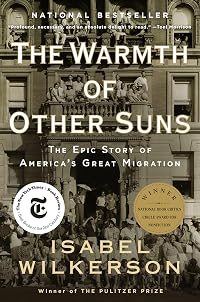
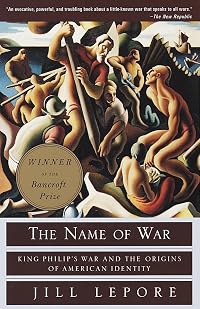
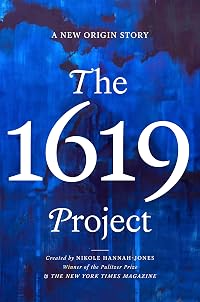
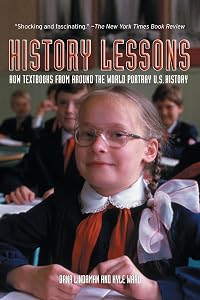





Member Recommendations

pammab Immerwahr focuses on history outside the continental US and how everyone in the world conveniently forgets how much US population and territory existed outside the mainland, through telling stories that never made it into the American canon. Immerwahr's book is a much better structured book to my mind than Lies My Teacher Told Me; it has an overarching thesis, and each of the chapters have a subthesis that is well-substantiated and argued. It goes beyond the thrust of Loewen's book, which felt to me like a collection of mostly unrelated facts strung together with nothing more than the idea of "filing off complexities".
Member Reviews
Well, this explains why I was so bored with World History in 10th grade. The dull textbooks! Later in high school, I started loving history, probably because of my mom, the passionate history-buff, and the many books I read outside of school. In college, the history classes helped, as they pulled our icons off their pedestals and showed them as real people with flaws. History is so much more interesting when it's real. Like in the book Forget the Alamo.
The author James W. Loewen died in 2021. I wish he were still around to share his views of DeSantis banning school subjects in Florida. This book is super relevant to current events.
American history was not just one patriotic triumph over another. It was horrendous and painful and still show more affects our lives today. It's time to stop whitewashing history with John Wayne heroes and get real.
Highly recommended!
P.S. A friend once told me that history was boring -- just memorizing a million dates. She was probably a victim of high school textbooks. She had a French surname as her family had immigrated to the U.S. from French Canada. Wow! So much history to explore right there in her own family! Stories, stories, so many stories she's missed! show less
The author James W. Loewen died in 2021. I wish he were still around to share his views of DeSantis banning school subjects in Florida. This book is super relevant to current events.
American history was not just one patriotic triumph over another. It was horrendous and painful and still show more affects our lives today. It's time to stop whitewashing history with John Wayne heroes and get real.
Highly recommended!
P.S. A friend once told me that history was boring -- just memorizing a million dates. She was probably a victim of high school textbooks. She had a French surname as her family had immigrated to the U.S. from French Canada. Wow! So much history to explore right there in her own family! Stories, stories, so many stories she's missed! show less
In 1995, James W. Loewen, who holds a PhD in sociology, read twelve of the most popular American history textbooks at the time and critiqued them for accuracy and inclusiveness. In 2007, he read another six textbooks and revised his original work accordingly. He published an edition with a preface about the era of “fake news” in 2018.
The main body of the book presents highlights of American history as told in the textbooks and then details exactly how the author feels they are wrong or misleading and presents an alternative version that could be included instead. In later chapters, Dr. Loewen explains how textbooks have come to this state and how damaging these books are to minority students in the short-term and American culture as show more a whole in the long-term. He also explores the world of textbook publishing and selection and how political that process is.
Hmmm…. Where to start? I mostly found this book fascinating and the inaccurate history we are taught infuriating but I also had problems with the tone. I’ll start with the positives.
One of my high school classmates recommended this book on Facebook and that opened a discussion about how abysmal the history department in our school was. I don’t have any complaints about any other aspect of my high school education but my foundation in history is almost nonexistent. It wasn’t even that my teachers were teaching lies; it was that they didn’t teach at all. College wasn’t much better. I was a biology major and I don’t think I took any true history classes. My humanities classes included history but as far as a class that had “History” in the title? I truly don’t remember one.
But being a reader with varied tastes, I have absorbed some history over the years. I don’t generally seek out history books but sometimes a title will capture my attention and I’ll pick it up. I do read quite a bit of historical fiction, which can be informative, but sometimes it’s misleading too. Anyway, not all of Loewen’s facts were new to me but a surprising number were.
Loewen’s main complaint is that our American history textbooks invariably teach from the point of view of White males of European descent. The textbooks also never criticize US policies and in fact teach that we’re the best and only getting better. Even the titles of the textbooks reflect this, with examples like Triumph of the American Nation and The Challenge of Freedom.
Beginning with Columbus (I believe none, or very few, of the books address pre-Columbian history) and his “discovery” of the Americas, there’s almost never a negative word. According to our textbooks, everything Americans have ever done has been for the betterment of all mankind.
Needless to say, no country is perfect. But where other countries might acknowledge mistakes and make an attempt to learn from them, the US rewrites history or reframes the problem to make ourselves look good. And so today, the Civil War is touted ad nauseum as being about States’ Rights instead of slavery, despite the fact that South Carolina’s Declaration of Secession is riddled with complaints about northern states failing to support the institution of slavery.
“A geographical line has been drawn across the Union, and all the States north of that line have united in the election of a man to the high office of President of the United States, whose opinions and purposes are hostile to slavery. He is to be entrusted with the administration of the common Government, because he has declared that that ‘Government cannot endure permanently half slave, half free,’ and that the public mind must rest in the belief that slavery is in the course of ultimate extinction.”
From the Confederate States of America – Declaration of the Immediate Causes Which Induce and Justify the Secession of South Carolina from the Federal Union
How much clearer can this issue be? And yet it’s something we still argue about to this day, 160 years later.
By failing to teach about the achievements and accomplishments of minority groups or women, the books alienate and exclude those same groups. Essentially, they’re implying that if you aren’t a White male of European descent, you have nothing to contribute. Your ancestors didn’t contribute anything and you won’t either. Everyone needs role models. Our textbooks completely fail to deliver them for broad swaths of the population.
The publishing and textbook selection chapters started to bog me down, but the entire process has very little accountability. The authors on the cover of any given textbook probably haven’t even read any of the book, much less written it. Freelancers who might or might not have a background in history write updates. Those same freelancers might work for multiple publishing companies so entire paragraphs are identical from one book to the next.
Every state has different textbook selection procedures but, as with most things in the US, the process is typically very political. The teachers who are going to be using the book rarely have a say in selection. No one reads the books and at best just flip through. That’s led to a serious problem of appearance overriding content over the past couple of decades. In 2007, Dr. Loewen writes that some books are almost unreadable because of all the boxes and irrelevant pictures and graphics that don’t illustrate much of anything but they sure look nice. He frequently mentions that Texas chooses books that are used statewide. That gives them huge power over the textbook publishing world. Why write a textbook that typically-conservative Texas obviously isn’t going to like and knowingly give up that source of revenue?
But the problems are more varied. There aren’t very many history majors in college at this point. And why would there be when so many of us share the same lackluster memories of our history classes? So coaches and teachers with other backgrounds are coerced into teaching history. With no formal background to draw from, they invariably teach straight from the book. Even teachers with a solid history background face pushback from parents and administrators if they start teaching history that is contrary to the established mythos.
I could go on but I’ll try to wrap this up.
My one big complaint, and it was big for me, is that the tone of the entire book is combative. I personally avoid confrontation at almost any cost and Dr. Loewen is strident in his criticism of these textbooks and the authors. He even names names. To be fair, he did contact some of the authors whose names are on the cover and confront them with, “Is this accurate? No? Then why is it in the book with your name on it?” So they had a chance to voice their opinions, but again, it came across as very confrontational. I even find the title to be antagonistic so I don’t know why this came as a surprise to me but it did.
The author himself had a very negative experience with publishing a history textbook, but he discloses that very early on. Somehow, the tone of this book came across as having… sour grapes? Don’t get me wrong. He published a history of the state of Mississippi and directly addressed its racist history. Of course Mississippi didn’t adopt the book. Dr. Loewen took the state to court and won a landmark case about free speech. Knowing this, I sometimes felt that the author was making a case of “This tripe can get published and selected but my book wasn’t?” He has a point but it still left a little bit of a negative taste in my mouth.
Overall, the book was eye-opening. I learned a lot of history that was completely new to me. I checked it out from the library but I really wish I’d had my own copy. There’s a huge wait list so I felt rushed to finish it. I would have liked to take my time and chew over everything I was learning. I don’t know how much appeal this would hold outside the US but readers who are open to new ideas, and especially teachers, should give this one a try. show less
The main body of the book presents highlights of American history as told in the textbooks and then details exactly how the author feels they are wrong or misleading and presents an alternative version that could be included instead. In later chapters, Dr. Loewen explains how textbooks have come to this state and how damaging these books are to minority students in the short-term and American culture as show more a whole in the long-term. He also explores the world of textbook publishing and selection and how political that process is.
Hmmm…. Where to start? I mostly found this book fascinating and the inaccurate history we are taught infuriating but I also had problems with the tone. I’ll start with the positives.
One of my high school classmates recommended this book on Facebook and that opened a discussion about how abysmal the history department in our school was. I don’t have any complaints about any other aspect of my high school education but my foundation in history is almost nonexistent. It wasn’t even that my teachers were teaching lies; it was that they didn’t teach at all. College wasn’t much better. I was a biology major and I don’t think I took any true history classes. My humanities classes included history but as far as a class that had “History” in the title? I truly don’t remember one.
But being a reader with varied tastes, I have absorbed some history over the years. I don’t generally seek out history books but sometimes a title will capture my attention and I’ll pick it up. I do read quite a bit of historical fiction, which can be informative, but sometimes it’s misleading too. Anyway, not all of Loewen’s facts were new to me but a surprising number were.
Loewen’s main complaint is that our American history textbooks invariably teach from the point of view of White males of European descent. The textbooks also never criticize US policies and in fact teach that we’re the best and only getting better. Even the titles of the textbooks reflect this, with examples like Triumph of the American Nation and The Challenge of Freedom.
Beginning with Columbus (I believe none, or very few, of the books address pre-Columbian history) and his “discovery” of the Americas, there’s almost never a negative word. According to our textbooks, everything Americans have ever done has been for the betterment of all mankind.
Needless to say, no country is perfect. But where other countries might acknowledge mistakes and make an attempt to learn from them, the US rewrites history or reframes the problem to make ourselves look good. And so today, the Civil War is touted ad nauseum as being about States’ Rights instead of slavery, despite the fact that South Carolina’s Declaration of Secession is riddled with complaints about northern states failing to support the institution of slavery.
“A geographical line has been drawn across the Union, and all the States north of that line have united in the election of a man to the high office of President of the United States, whose opinions and purposes are hostile to slavery. He is to be entrusted with the administration of the common Government, because he has declared that that ‘Government cannot endure permanently half slave, half free,’ and that the public mind must rest in the belief that slavery is in the course of ultimate extinction.”
From the Confederate States of America – Declaration of the Immediate Causes Which Induce and Justify the Secession of South Carolina from the Federal Union
How much clearer can this issue be? And yet it’s something we still argue about to this day, 160 years later.
By failing to teach about the achievements and accomplishments of minority groups or women, the books alienate and exclude those same groups. Essentially, they’re implying that if you aren’t a White male of European descent, you have nothing to contribute. Your ancestors didn’t contribute anything and you won’t either. Everyone needs role models. Our textbooks completely fail to deliver them for broad swaths of the population.
The publishing and textbook selection chapters started to bog me down, but the entire process has very little accountability. The authors on the cover of any given textbook probably haven’t even read any of the book, much less written it. Freelancers who might or might not have a background in history write updates. Those same freelancers might work for multiple publishing companies so entire paragraphs are identical from one book to the next.
Every state has different textbook selection procedures but, as with most things in the US, the process is typically very political. The teachers who are going to be using the book rarely have a say in selection. No one reads the books and at best just flip through. That’s led to a serious problem of appearance overriding content over the past couple of decades. In 2007, Dr. Loewen writes that some books are almost unreadable because of all the boxes and irrelevant pictures and graphics that don’t illustrate much of anything but they sure look nice. He frequently mentions that Texas chooses books that are used statewide. That gives them huge power over the textbook publishing world. Why write a textbook that typically-conservative Texas obviously isn’t going to like and knowingly give up that source of revenue?
But the problems are more varied. There aren’t very many history majors in college at this point. And why would there be when so many of us share the same lackluster memories of our history classes? So coaches and teachers with other backgrounds are coerced into teaching history. With no formal background to draw from, they invariably teach straight from the book. Even teachers with a solid history background face pushback from parents and administrators if they start teaching history that is contrary to the established mythos.
I could go on but I’ll try to wrap this up.
My one big complaint, and it was big for me, is that the tone of the entire book is combative. I personally avoid confrontation at almost any cost and Dr. Loewen is strident in his criticism of these textbooks and the authors. He even names names. To be fair, he did contact some of the authors whose names are on the cover and confront them with, “Is this accurate? No? Then why is it in the book with your name on it?” So they had a chance to voice their opinions, but again, it came across as very confrontational. I even find the title to be antagonistic so I don’t know why this came as a surprise to me but it did.
The author himself had a very negative experience with publishing a history textbook, but he discloses that very early on. Somehow, the tone of this book came across as having… sour grapes? Don’t get me wrong. He published a history of the state of Mississippi and directly addressed its racist history. Of course Mississippi didn’t adopt the book. Dr. Loewen took the state to court and won a landmark case about free speech. Knowing this, I sometimes felt that the author was making a case of “This tripe can get published and selected but my book wasn’t?” He has a point but it still left a little bit of a negative taste in my mouth.
Overall, the book was eye-opening. I learned a lot of history that was completely new to me. I checked it out from the library but I really wish I’d had my own copy. There’s a huge wait list so I felt rushed to finish it. I would have liked to take my time and chew over everything I was learning. I don’t know how much appeal this would hold outside the US but readers who are open to new ideas, and especially teachers, should give this one a try. show less
A decent look at some of the stories behind the stories - the things that don't make it into high school history textbooks. Although bound to be controversial among those who want to keep history clean and tidy, it isn't necessary to accept everything the author says in order to find the stories fascinating and thought provoking. This book just might lead you to do a little further digging on your own, and that can never be a bad thing.
Good base level on why American history classes are fucked, annoyingly milquetoast about its own conclusions at times, bizzarely tries to equate existing white supremacist history courses with hypothetical textbooks that suggest "black people invented everything and white people invented slavery" (which if anything is closer to the truth than what is currently taught).
Loewen tells us the real American History story. I knew most of the big things already, but was quite surprised at more than a few details. My favorite moment is when he foreshadows the current administration. Commenting on the state of our government after the Watergate scandal, Loewen predicts, "Since the structural problem in the government has not gone away, it is likely that students will again, in their adult lives, face an out-of-control federal executive pursuing criminal foreign and domestic policies" (p. 229). I was a junior in high school in 1995 (the copyright date of this book) and took US History that year. Now I'm an adult and who is my president? Loewen hit the nail on the head. Loewen was quite hard on high school show more history teachers and missed a vital point in his critique of why they teach the way they do: testing. You can't skip around and spend a lot of time covering a few incidents in-depth because all of your children would fail the EOC test and that would put your job in jeopardy. show less
Inspiring. Every American should read this. Now. Not because it will reveal unheard of hypocrisy, but because it will incite further discovery and understanding about our culture.
What I particularly appreciated was that the author, Loewen, provides complex, well-researched and paranoia-less (which is a word I just made up) reasons for the white-washing of American history in school text books.
What I particularly appreciated was that the author, Loewen, provides complex, well-researched and paranoia-less (which is a word I just made up) reasons for the white-washing of American history in school text books.
My rating says more about me than it does about the book. One of the key points I've come away from the book with is that I'm not part of the target audience. This book is written for Americans. Those who have gone through or are going through the US education system. Coming from a different country I wasn't raised on US history. Everything I've learned I've had to research myself thereby getting round the majority of problems this book talks about.
I can't say the Australian history I learned in school is free from all the same sort of problems but I do believe it was much better.
This book was interesting but I could only recommend it to those who have experienced the US education system or are interested in it. If you're just show more interested in actual US history there are books out there which would serve better. show less
I can't say the Australian history I learned in school is free from all the same sort of problems but I do believe it was much better.
This book was interesting but I could only recommend it to those who have experienced the US education system or are interested in it. If you're just show more interested in actual US history there are books out there which would serve better. show less
Members
- Recently Added By
Lists

LT picks: Blue Books
197 works; 44 members

Non-Fiction Worth Reading
1,025 works; 257 members

Bret Victor's Five-Star List
46 works; 5 members

Authors from the United States
245 works; 3 members

1990s
309 works; 17 members

My List
302 works; 1 member

List of Removed Books from Nimitz Library
353 works; 1 member

My Favorite Books
26 works; 1 member

Top Five Books of 2025
954 works; 304 members
Author Information

Social scientist and professor James Loewen is an outspoken critic of "feel-good" history. In his book "Lies My Teacher Told Me: Everything Your American Textbook Got Wrong" (1996) he debunks the myths and exposes the omissions he feels are taught in the nation's high schools. Disturbed by his college students' lack of knowledge of history and show more concerned about minority misconceptions, Loewen spent two years at the Smithsonian analyzing 12 leading history texts and 11 years writing this best-selling indictment of history teaching. Loewen believes that controversy has been removed from classrooms in favor of blind patriotism. "Any history book that celebrates, rather than examines, our heritage has the by-product, intended or not, of alienating all those in the 'out group', those who have not become affluent, and denies them a tool for understanding their own group's lack of success." Loewen's other books include ""Mississippi: Conflict and Change" (1974, rev. 1980), a revisionist history of the state written with a coalition of students and faculty at Tougaloo College, Mississippi; "Mississippi Chinese: Between Black and White" (1971), a study of this minority's role in society; "Social Science in the Courtroom" (1983), based on the author's experiences as an expert witness in civil rights cases and "The Truth About Columbus: A Subversively True Poster Book For A Dubiously Celebratory Occasion" (1992). In addition, the author is a frequent contributor to professional publications, sometimes under the pseudonym James Lyons. James W. Loewen was born February 6, 1942 in Decatur, Illinois and was educated at Carleton College (B.A., 1964) and Harvard University (M.A, 1967; Ph.D., 1968). He was a sociologist and teacher specializing in race relations at Tougaloo College, Mississippi from 1968 to 1974. (Bowker Author Biography) show less
Some Editions
Awards and Honors
Work Relationships
Common Knowledge
- Canonical title
- Lies My Teacher Told Me: Everything Your American History Textbook Got Wrong {original edition}
- Original title
- Lies My Teacher Told Me: Everything Your American History Textbook Got Wrong
- Original publication date
- 1995; 1996 (First Touchstone Edition) (First Touchstone Edition)
- People/Characters
- William Bradford; George H. W. Bush; John Brown, abolitionist; William Jennings Bryan; Christopher Columbus; Frederick Douglass (show all 14); Helen Keller; Juan Ponce de León; Abraham Lincoln; Richard M. Nixon; Ronald Reagan; Arthur Schlesinger Jr.; George Washington; Woodrow Wilson
- Important places
- USA; Harpers Ferry, West Virginia, USA; West Virginia, USA
- Epigraph
- It would be better not to know so many things than to know so many things that are not so. — Felix Okoye
American history is longer, larger, more various, more beautiful, and more terrible than anything anyone has ever said about it. — James Baldwin
Concealment of the historical truth is a crime against the people. — Gen. Petro G. Grigorenko, samizdat letter to a history journal, c. 1975, USSR
Those who don't remember the past are condemned to repeat the eleventh grade. — James W. Loewen - Dedication
- Dedicated to all American history teachers
who teach against their textbooks - First words
- High school students hate history.
- Quotations
- Which came first, civilization or the wilderness?
Students who have taken more mathematics courses are more proficient at math than other students. The same is true in English, foreign language studies, and almost every other subject. Only in history is stupidity the result ... (show all)of more, not less, schooling.
We don't want complicated icons. - Last words
- (Click to show. Warning: May contain spoilers.)Students will start finding history interesting when their teachers and textbooks stop lying to them.
- Publisher's editor
- Schiffrin, André; Wachtell, Diane
- Blurbers
- Zinn, Howard; Mackey, Mary; Lydon, Sandy; Wiener, Jon; Bigelow, Bill; Fadden, John Kahionhes (show all 7); Berman, Sandford
- Original language
- English US
- Disambiguation notice
- This LT Work is the original edition of James Loewen's book, Lies My Teacher Told Me: Everything Your American History Textbook Got Wrong (1995). Please do not combine it with either the completely revised and upda... (show all)ted edition (2007) or the later new edition (2018). Thank you.
Classifications
Statistics
- Members
- 804
- Popularity
- 34,632
- Reviews
- 11
- Rating
- (4.01)
- Languages
- Chinese, English
- Media
- Paper, Audiobook, Ebook
- ISBNs
- 12
- UPCs
- 1
- ASINs
- 18