
Zeitoun
by Dave Eggers
On This Page
Description
In the wake of Hurricane Katrina, longtime New Orleans residents Abdulrahman and Kathy Zeitoun are cast into an unthinkable struggle with forces beyond wind and water. In the days after the storm, Abdulrahman traveled the flooded streets in a secondhand canoe, passing on supplies and helping those he could. A week later, on September 6, 2005, Zeitoun abruptly disappeared-- arrested and accused of being an agent of al Qaeda.Tags
Recommendations


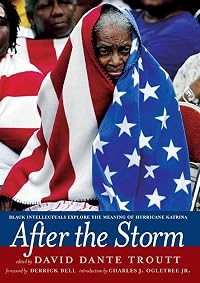
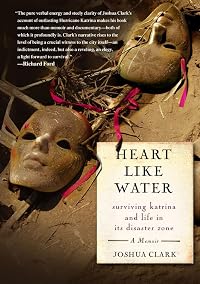
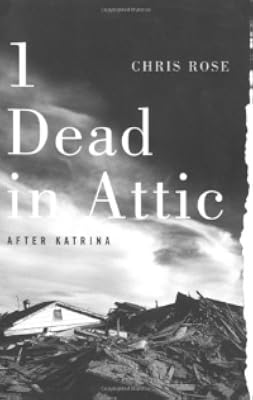










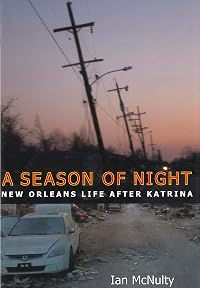
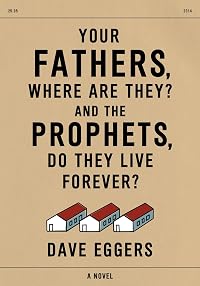
Member Recommendations
BookshelfMonstrosity Neufeld's compelling graphic novel depicts the effects of Hurricane Katrina through the true stories of seven of the city's residents.
BookshelfMonstrosity A columnist for the New Orleans Times-Picayune, Rose delves into the aftereffects of the storm on his adopted city in this compelling collection of essays.
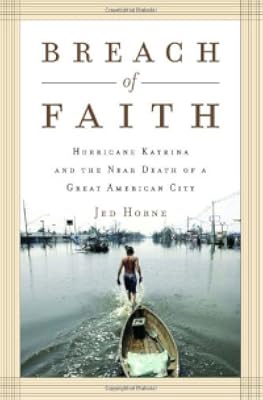
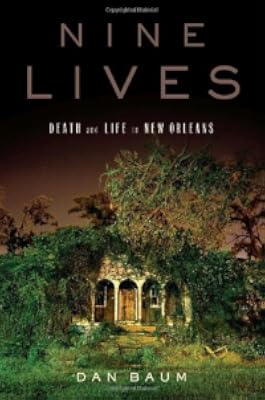
TooBusyReading Both books are fascinating and heartbreaking looks at how much went wrong as Hurricane Katrina hit New Orleans.
LynnB Story of ordinary people, like Mr. Zeitoun, who made a difference.
SqueakyChu Story of the hurricane in Galveston in 1900 resulting in unexpected and devastating flooding
Member Reviews
Eggers is a master of weaving together various threads and bringing personalities to life--here, in this book set up primarily against the aftermath of Hurricane Katrina, his talents are on full display.
In focusing in on a single man and his family, Zeitoun tells the story of a family of New Orleans, taking us through their history, their separation during the storm, and the Kafka-esque days they faced after the storm passed. Pulling together everything from religion to racism, not to mention immigration and the socio-political forces at work at every turn, Eggers manages to bring to life not just the hurricane that ravaged New Orleans (which he does masterfully), but to bring to life a number of men and women who lived through it. The show more result is at turns heartbreaking and terrifying, though there's a fair bit of humor thrown in, and it's sometimes difficult to remember that this is a true history of a family and a storm, it reads so much like a suspenseful drama.
I don't think this book can be compared to any other piece of nonfiction regarding immigration or natural disaster, because its scope is so wide and its detailing so careful, but there is no question that it is worth reading--perhaps now more than ever for US residents especially, considering the environmental and socio-political obstacles in the future.
Absolutely recommended. show less
In focusing in on a single man and his family, Zeitoun tells the story of a family of New Orleans, taking us through their history, their separation during the storm, and the Kafka-esque days they faced after the storm passed. Pulling together everything from religion to racism, not to mention immigration and the socio-political forces at work at every turn, Eggers manages to bring to life not just the hurricane that ravaged New Orleans (which he does masterfully), but to bring to life a number of men and women who lived through it. The show more result is at turns heartbreaking and terrifying, though there's a fair bit of humor thrown in, and it's sometimes difficult to remember that this is a true history of a family and a storm, it reads so much like a suspenseful drama.
I don't think this book can be compared to any other piece of nonfiction regarding immigration or natural disaster, because its scope is so wide and its detailing so careful, but there is no question that it is worth reading--perhaps now more than ever for US residents especially, considering the environmental and socio-political obstacles in the future.
Absolutely recommended. show less
Reading this in the wake of Ronald Wright’s What Is America?, I can’t help but see it as a case study in the dimension of the US that is missing from the land-of-freedom myth. It’s a post-Katrina story: Abdulrahman Zeitoun is a painter, contractor and landlord who had been living and working in New Orleans for 15 years when Katrina struck. His wife and children left before the storm, but he stayed behind to look after their properties, and then stayed on, paddling around in his canoe, helping people to safety, feeding dogs that otherwise would have starved, generally serving God’s purpose (he was and is a devout Muslim). Things go terribly wrong when he encounters the military, and the story takes on the quality of a show more nightmare.
Dave Eggers displays extraordinary authorial restraint: his narrative is based primarily on the stories as told by Zeitoun and his wife Kathy, and everything is told here from their points of view. There are writerly flourishes in some of the descriptive passages, and it may well be that some of the embedded commentary about Geroge W Bush and FEMA originates with Eggers, but the whole reads as an impressively humble work, the author at the service of his material, at the service of his subjects. All his royalites go to the Zeitoun Foundation, which exists to fund organisations that help people caught up in similar difficulties to the Zeitouns.
The day I finished it, I saw Quentin Tarantino's Inglourious Basterds in New York City. With the behaviour of the prison guards in Camp Greyhound fresh in my mind, not to mention the callous treatment of the Zeitouns when they finally were to have their day in court, it was hard to see the Brad Pitt character and his troop as anything oither than sadistic briutes draped in the US flag, and endorsed by Tarantino and his intended audience. show less
Dave Eggers displays extraordinary authorial restraint: his narrative is based primarily on the stories as told by Zeitoun and his wife Kathy, and everything is told here from their points of view. There are writerly flourishes in some of the descriptive passages, and it may well be that some of the embedded commentary about Geroge W Bush and FEMA originates with Eggers, but the whole reads as an impressively humble work, the author at the service of his material, at the service of his subjects. All his royalites go to the Zeitoun Foundation, which exists to fund organisations that help people caught up in similar difficulties to the Zeitouns.
The day I finished it, I saw Quentin Tarantino's Inglourious Basterds in New York City. With the behaviour of the prison guards in Camp Greyhound fresh in my mind, not to mention the callous treatment of the Zeitouns when they finally were to have their day in court, it was hard to see the Brad Pitt character and his troop as anything oither than sadistic briutes draped in the US flag, and endorsed by Tarantino and his intended audience. show less
This is an astonishing book. U. S. government agencies, acting upon bizarre studies on what terrorists "might do" before, during and after a natural catastrophe, themselves became the terrorist organization committing, in their frenzy, violations of human rights with impunity. This is the story of just one remarkable family in New Orleans whose acts of basic human kindness in the face of every conceivable obstacle from both hurricane Katrina and from the organized terror of FEMA and the Department of Homeland Security, should be an example to all of us.
Warning: This review mentions a few details that could spoil certain events in the story. But I just couldn't see any way around it.
A very sobering read about one family's experiences living in New Orleans before, during, and after the Katrina flood. A national tragedy for a great city and a national disgrace for the disaster recovery response at all levels of our government, local, state, and federal. The treatment of our citizens by police and National Guard service members, and by FEMA and the courts, in the wake of the disaster beggars belief. Solid citizens and pillars of the community locked up in maximum security prisons or outdoor cages for months with no recourse, treated like convicts or terrorists or animals, given no show more lawyers, no knowledge of their charges, no phone calls, and no way to contact their families to let them know they were even still alive. The callousness and basic lack of human decency of those in authority towards those they are supposed to serve reads like a Kafka short story.
America is better than this. At least I hope it is. Dave Eggers narrative is filled with that same hope even as he recounts a throughly documented and engaging story that says different. show less
A very sobering read about one family's experiences living in New Orleans before, during, and after the Katrina flood. A national tragedy for a great city and a national disgrace for the disaster recovery response at all levels of our government, local, state, and federal. The treatment of our citizens by police and National Guard service members, and by FEMA and the courts, in the wake of the disaster beggars belief. Solid citizens and pillars of the community locked up in maximum security prisons or outdoor cages for months with no recourse, treated like convicts or terrorists or animals, given no show more lawyers, no knowledge of their charges, no phone calls, and no way to contact their families to let them know they were even still alive. The callousness and basic lack of human decency of those in authority towards those they are supposed to serve reads like a Kafka short story.
America is better than this. At least I hope it is. Dave Eggers narrative is filled with that same hope even as he recounts a throughly documented and engaging story that says different. show less
Rating: 5* of five
The Publisher Says: When Hurricane Katrina struck New Orleans, Abdulrahman Zeitoun, a prosperous Syrian-American and father of four, chose to stay through the storm to protect his house and contracting business. In the days after the storm, he traveled the flooded streets in a secondhand canoe, passing on supplies and helping those he could. A week later, on September 6, 2005, Zeitoun abruptly disappeared.
Eggers’s riveting nonfiction book, three years in the making, explores Zeitoun’s roots in Syria, his marriage to Kathy — an American who converted to Islam — and their children, and the surreal atmosphere (in New Orleans and the United States generally) in which what happened to Abdulrahman Zeitoun was show more possible. Like What Is the What, Zeitoun was written in close collaboration with its subjects and involved vast research — in this case, in the United States, Spain, and Syria.
My Review: Okay. I herewith open my piehole for the crow to be inserted. I have said nasty, judgmental things about Eggers's writings, and I meant each and every one of them. I still do.
But this book is excellent, and this book is Eggers's, so it is obvious that the old adage about a stopped clock being right twice a day applies to writers and writing as well.
It's a direct, elegantly simple telling of the nightmare side of the American Dream. It's powerfully focused, unlike every other one of Eggers's overpraised books that I've read, and it's superbly structured, with no room for improvement in pacing and character development that I can find.
I don't believe I'm typing these things, someone reassure me that this is *me*! Every criticism I've leveled at this guy's previous writing is out the window! Will they turn off the gravity next?
But truth is truth, and honesty compels me to say: I haven't enjoyed a book this much in ages. Well, enjoyed is a strange term to use for the true and factual, and awful, story of a decent, honorable man made the butt of scoiety's opprobrium for no reason other than his religion and origins. But the book is deeply enjoyable, because at every turn, Zeitoun's decency and honor and integrity shine through. That alone makes the book worth buying and reading. Add to that the fact that, rare in this world failed of kindness, Zeitoun summons the best and the most positive people to him in his desperate hours.
I am disappointed that Twilight *shudder* and The Life of Pi *retch*, vastly inferior books to this one, and to name but two of the many, many books this applies to, have more copies on the site.
Please...do your part to change this, and go buy a copy. Then read it. It will, contrary to any expectation you might have, leave you uplifted and happier for having read a book about Hurricane Katrina and an Arab immigrant. Very strongly recommended.
And, thanks to my friend Terri for making me read this...even sending me a copy...one it will be extremely hard to release back into the bookosphere. That I will *have* to buy a replacement is a small economic price to pay.
********Addendum in 2013: Yes indeed, Zeitoun has been arrested and accused of crimes recently, and many have taken this as an invalidation of his post-Katrina experiences. Apparently no thought is given to what these experiences of injustice in The Home of The Free might be expected to do to a man is irrelevant to those who hold this opinion. That's just bad, sloppy thinking. What happened to Zeitoun after Katrina is still real, and his story of that time is still one of a horrifying miscarriage of justice using "race" as a flimsy, transparent attempt at justification. show less
The Publisher Says: When Hurricane Katrina struck New Orleans, Abdulrahman Zeitoun, a prosperous Syrian-American and father of four, chose to stay through the storm to protect his house and contracting business. In the days after the storm, he traveled the flooded streets in a secondhand canoe, passing on supplies and helping those he could. A week later, on September 6, 2005, Zeitoun abruptly disappeared.
Eggers’s riveting nonfiction book, three years in the making, explores Zeitoun’s roots in Syria, his marriage to Kathy — an American who converted to Islam — and their children, and the surreal atmosphere (in New Orleans and the United States generally) in which what happened to Abdulrahman Zeitoun was show more possible. Like What Is the What, Zeitoun was written in close collaboration with its subjects and involved vast research — in this case, in the United States, Spain, and Syria.
My Review: Okay. I herewith open my piehole for the crow to be inserted. I have said nasty, judgmental things about Eggers's writings, and I meant each and every one of them. I still do.
But this book is excellent, and this book is Eggers's, so it is obvious that the old adage about a stopped clock being right twice a day applies to writers and writing as well.
It's a direct, elegantly simple telling of the nightmare side of the American Dream. It's powerfully focused, unlike every other one of Eggers's overpraised books that I've read, and it's superbly structured, with no room for improvement in pacing and character development that I can find.
I don't believe I'm typing these things, someone reassure me that this is *me*! Every criticism I've leveled at this guy's previous writing is out the window! Will they turn off the gravity next?
But truth is truth, and honesty compels me to say: I haven't enjoyed a book this much in ages. Well, enjoyed is a strange term to use for the true and factual, and awful, story of a decent, honorable man made the butt of scoiety's opprobrium for no reason other than his religion and origins. But the book is deeply enjoyable, because at every turn, Zeitoun's decency and honor and integrity shine through. That alone makes the book worth buying and reading. Add to that the fact that, rare in this world failed of kindness, Zeitoun summons the best and the most positive people to him in his desperate hours.
I am disappointed that Twilight *shudder* and The Life of Pi *retch*, vastly inferior books to this one, and to name but two of the many, many books this applies to, have more copies on the site.
Please...do your part to change this, and go buy a copy. Then read it. It will, contrary to any expectation you might have, leave you uplifted and happier for having read a book about Hurricane Katrina and an Arab immigrant. Very strongly recommended.
And, thanks to my friend Terri for making me read this...even sending me a copy...one it will be extremely hard to release back into the bookosphere. That I will *have* to buy a replacement is a small economic price to pay.
********Addendum in 2013: Yes indeed, Zeitoun has been arrested and accused of crimes recently, and many have taken this as an invalidation of his post-Katrina experiences. Apparently no thought is given to what these experiences of injustice in The Home of The Free might be expected to do to a man is irrelevant to those who hold this opinion. That's just bad, sloppy thinking. What happened to Zeitoun after Katrina is still real, and his story of that time is still one of a horrifying miscarriage of justice using "race" as a flimsy, transparent attempt at justification. show less
This book was a very pleasant (OK, not really) surprise. I doubt that the teller of this harrowing tale was the same as the one who wrote the self-indulgent crap of Staggering Genius.
The trials of an immigrant man imprisoned for no reason after the disaster of Katrina - even after he distributed supplies to his neighbors in a canoe (hence the cover picture). It's hard to believe how far America fell - but how it is also rising up by letting this story be told. An astonishing bit of journalism.
The only real criticism that can be found is that the New Orleaners don't speak real New Orleans English. I suppose my friends from there have spoiled me. But that is only a minor dent in a necessary and gripping book.
The trials of an immigrant man imprisoned for no reason after the disaster of Katrina - even after he distributed supplies to his neighbors in a canoe (hence the cover picture). It's hard to believe how far America fell - but how it is also rising up by letting this story be told. An astonishing bit of journalism.
The only real criticism that can be found is that the New Orleaners don't speak real New Orleans English. I suppose my friends from there have spoiled me. But that is only a minor dent in a necessary and gripping book.
Though I enjoyed Dave Eggers' What is the What?, I was never entirely comfortable with the genre, which, like Zeitoun, takes the form of a non-fiction novel. In that first work, I was not always sure who was speaking, Eggers or the protagonist, Achak, and I was perpetually unclear about how much was fact and how much was the fictional glue required to hold it together. The approach did serve the storytelling: it was fascinating and very readable.
With Zeitoun, I was initially comfortable with this same tension, and it was not long before I was totally buying Eggers' thesis about this quintessentially American man, hardworking and dedicated deeply to his religion, his family, his property, and his enterprise, who ultimately encounters a show more darker America, where one's treatment is less a function of guilt or innocence, and more about one's name, ethnicity, and religion.
At that point in my reading, I did some supplementary research about Hurricane Katrina, and the Zeitouns themselves, and discovered what any quick internet search will reveal, that after Katrina, Abdulrahman and Kathy Zeitoun's relationship descended into acrimony, domestic abuse, and eventually divorce and violated restraining orders. In the book their relationship comes across as a much tried, but resilient pillar of strength in the midst of the post-Katrina failure of American society and institutions. Although Kathy Zeitoun has indicated that Eggers did describe their marriage pretty much as it was during that brief window covered by the book, she has since said that she was abused by her husband prior to the events depicted.
This supplmentary information, in and of itself, did not discredit the Katrina-related events of Zeitoun, but once I was aware of it, how could I possibly have continued to empathize with Abdulrahman as a victim? The entire edifice of the book became as leaky as a Louisiana levee, and my focus inevitably moved from the story itself to the limitations of how the story was told. Would a more traditional journalistic treatment have uncovered the details that Zeitoun missed? Does the necessity of forcing a fictionalized narration on real events and people necessarily result in an oversimplified interpretation? Does it force the subjects to reveal only what will support that interpretation? And if the published story widely misses the mark, what is the impact on those who were misrepresented or who misrepresented themselves?
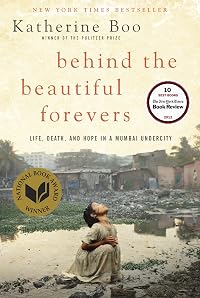
In considering these questions, I thought of the brilliant Behind the Beautiful Forevers, for which Katherine Boo spent three years with her subjects. Her book demonstrates that the non-fiction novel can succeed in incorporating many viewpoints and complexities. Handled with enough artistry, effort, and care, this genre is more than just a vehicle for immersing the reader in other, real people's lives, it can also provide a way to successfully capture something resembling the tangled intricacy of the human situation. Who knows how or why Zeitoun failed? In that moment of extraordinary upheaval when it was written, likely all involved acted to some degree in good faith. It may have just proven too fraught a challenge for the time and resources that were brought to the task. show less
With Zeitoun, I was initially comfortable with this same tension, and it was not long before I was totally buying Eggers' thesis about this quintessentially American man, hardworking and dedicated deeply to his religion, his family, his property, and his enterprise, who ultimately encounters a show more darker America, where one's treatment is less a function of guilt or innocence, and more about one's name, ethnicity, and religion.
At that point in my reading, I did some supplementary research about Hurricane Katrina, and the Zeitouns themselves, and discovered what any quick internet search will reveal, that after Katrina, Abdulrahman and Kathy Zeitoun's relationship descended into acrimony, domestic abuse, and eventually divorce and violated restraining orders. In the book their relationship comes across as a much tried, but resilient pillar of strength in the midst of the post-Katrina failure of American society and institutions. Although Kathy Zeitoun has indicated that Eggers did describe their marriage pretty much as it was during that brief window covered by the book, she has since said that she was abused by her husband prior to the events depicted.
This supplmentary information, in and of itself, did not discredit the Katrina-related events of Zeitoun, but once I was aware of it, how could I possibly have continued to empathize with Abdulrahman as a victim? The entire edifice of the book became as leaky as a Louisiana levee, and my focus inevitably moved from the story itself to the limitations of how the story was told. Would a more traditional journalistic treatment have uncovered the details that Zeitoun missed? Does the necessity of forcing a fictionalized narration on real events and people necessarily result in an oversimplified interpretation? Does it force the subjects to reveal only what will support that interpretation? And if the published story widely misses the mark, what is the impact on those who were misrepresented or who misrepresented themselves?
In considering these questions, I thought of the brilliant Behind the Beautiful Forevers, for which Katherine Boo spent three years with her subjects. Her book demonstrates that the non-fiction novel can succeed in incorporating many viewpoints and complexities. Handled with enough artistry, effort, and care, this genre is more than just a vehicle for immersing the reader in other, real people's lives, it can also provide a way to successfully capture something resembling the tangled intricacy of the human situation. Who knows how or why Zeitoun failed? In that moment of extraordinary upheaval when it was written, likely all involved acted to some degree in good faith. It may have just proven too fraught a challenge for the time and resources that were brought to the task. show less
Members
- Recently Added By
Published Reviews
ThingScore 94
'Zeitoun was sterk', schrijft Dave Eggers in zijn verwoestend mooie boek Zeitoun. 'Hij had nog nooit zo'n gevoel van urgentie en vastberadenheid gehad. (...) Er was een reden, wist hij nu, waarom hij was achtergebleven in de stad. Hij had zich gedwongen gevoeld om te blijven, door een kracht die hij niet kende. Hij was nodig.'De eerste helft van dit zonder opsmuk geschreven non-fictie boek show more heeft iets van een sprookje.
De details die de auteur heeft opgediept, maken dit boek tot een meesterwerk. In de postmoderne romancier Eggers bleek een verslaggever van het zuiverste water schuil te gaan, een observator met een gouden pen. show less
De details die de auteur heeft opgediept, maken dit boek tot een meesterwerk. In de postmoderne romancier Eggers bleek een verslaggever van het zuiverste water schuil te gaan, een observator met een gouden pen. show less
added by sneuper
In “Zeitoun,” what Dave Eggers has found in the Katrina mud is the full-fleshed story of a single family, and in telling that story he hits larger targets with more punch than those who have already attacked the thematic and historic giants of this disaster. It’s the stuff of great narrative nonfiction.
added by Shortride
"Zeitoun" is a warm, exciting and entirely fresh way of experiencing Hurricane Katrina.
added by SqueakyChu
Lists

Disaster Books
74 works; 19 members

Really Good Narrative Non-Fiction
65 works; 24 members

BingoDOG - Books With Natural Disasters: Nonfiction
18 works; 5 members

Recommend the 20 best books you've read in the last five years
2,168 works; 603 members

Accidents, Disasters, and Tragedies
175 works; 7 members

Top Five Books of 2020
982 works; 350 members

Non-Fiction Worth Reading
1,016 works; 257 members

Books Set in Louisiana
29 works; 8 members

New Orleans
13 works; 4 members

2008-2012 Notable Books for Adults
127 works; 10 members

Floods
4 works; 2 members

Bookshelf from Interstellar
62 works; 1 member

Hurricane Books
10 works; 3 members

Rising water
19 works; 6 members

San Francisco One City One Book Selections
15 works; 2 members
Tagged Storms
31 works; 3 members

Five star books
1,767 works; 110 members

Deena's Favorites--How Many have you read?
102 works; 3 members

Ten+ Books About Being Stranded!
14 works; 5 members

To Read
617 works; 7 members

Books Read in 2013
1,630 works; 51 members

Books I have Recommended
208 works; 1 member
Author Information

170+ Works 73,475 Members
Dave Eggers was born on March 12th, 1970, in Boston, Massachusetts. His family moved to Lake Forest, Illinois when he was a child. Eggers attended the University of Illinois at Urbana-Champaign, until his parents' deaths in 1991 and 1992. The loss left him responsible for his eight-year-old brother and later became the inspiration for his highly show more acclaimed memoir "A Heartbreaking Work of Staggering Genius". Published in 2000, the memoir was nominated for a nonfiction Pulitzer the following year. Eggers edits the popular "The Best American Nonrequired Reading" published annually. In 1998, he founded the independent publishing house, McSweeney's which publishes a variety of magazines and literary journals. Eggers has also opened several nonprofit writing centers for high school students across the United States. Eggers has written several novels and his title, A Hologram for the King, was a finalist for the 2012 National Book Award. His most recent work of fiction, entitled The Circle, was published in 2013. His recent nonfiction books are The Monk of Mokha (January 2018) and What Can a Citizen Do? (Illustrated by Shawn Harris)(September 2018). (Bowker Author Biography) show less
Some Editions
Awards and Honors
Awards
Distinctions
Notable Lists
Series
Belongs to Publisher Series
KiWi Paperback (1266)
Gallimard, Folio (5673)
Common Knowledge
- Canonical title*
- Zeitoun
- Original title
- Zeitoun
- Original publication date
- 2009
- People/Characters
- Abdulrahman Zeitoun (Abdul Zeitoun | Zeitoun); Zeitoun (Abdulrahman Zeitoun); Kathy Zeitoun (nee Delphine); Nasser Dayoob; Todd Gambino; Ronnie (show all 15); Nademah Zeitoun; Safiya Zeitoun; Aisha Zeitoun; Zachary Delphine; Yuko Alakoum; Ahmaad Alakoum; Ahmad Zeton; Frank Noland; Mohammed Zeitoun
- Important places
- New Orleans, Louisiana, USA; Jableh, Syria; Baton Rouge, Louisiana, USA; Phoenix, Arizona, USA; Lake Pontchartrain, Louisiana, USA; Superdome, New Orleans, Louisana, USA (show all 8); Louisiana, USA; Arizona, USA
- Important events
- Hurricane Katrina (2005)
- Epigraph
- ...in the history of the world it might even be that there was more punishment than crime...
Cormac McCarthy, The Road
To a man with a hammer, everything looks like a nail.
Mark Twa... (show all)in - Dedication
- For Abdulrahman, Kathy, Zachary, Nademah, Aisha, Safiya, and Ahmad in New Orleans.
For Ahmad, Antonia, Lutfi, and Laila in Málaga.
For Kousay, Nada, Mahmoud, Zakiya, Luay, Eman, Fahzia, Fatimah, Aisha, Munah, N... (show all)asibah, and all the Zeitouns of Jableh, Lattakia, and Arwad Island.
For the people of New Orleans. - First words
- On moonless nights the men and boys of Jableh, a dusty fishing town on the coast of Syria, would gather their lanterns and set out in their quietest boats.
- Last words
- (Click to show. Warning: May contain spoilers.)This has been the pattern of his life: ludicrous dreams followed by hours and days and years of work and then a reality surpassing his wildest hopes and expectations.
And so why should this be any different? - Blurbers
- van Hoogstraten, Diederik
- Original language
- English
- Canonical DDC/MDS
- 305.89
*Some information comes from Common Knowledge in other languages. Click "Edit" for more information.
Classifications
- Genres
- Biography & Memoir, Nonfiction, General Nonfiction
- DDC/MDS
- 305.89 — Society, government, & culture Social sciences, sociology & anthropology Social group - Age, Gender, Ethnicity Ethnic and national groups Other ethnic and national groups
- LCC
- F379 .N553 .Z454 — Local History of the United States, Canada and Latin America United States local history Louisiana
- BISAC
Statistics
- Members
- 4,558
- Popularity
- 3,209
- Reviews
- 190
- Rating
- (4.05)
- Languages
- 8 — Dutch, English, French, German, Hungarian, Italian, Portuguese, Spanish
- Media
- Paper, Audiobook, Ebook
- ISBNs
- 43
- ASINs
- 20