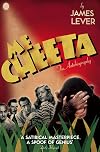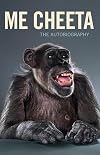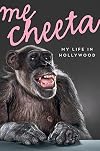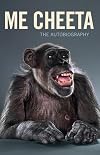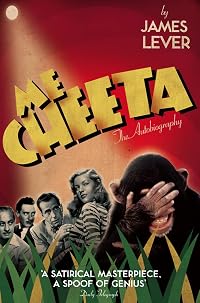
Me Cheeta: The Autobiography
by James Lever
On This Page
Description
Cheeta the Chimp was just a baby in 1932 when he was snatched from the jungle of Liberia by the great animal importer Henry Trefflich. That same year, Cheeta appeared in Tarzan the Ape Man, and in 1934 in Tarzan and His Mate, in which he famously stole clothes from a naked Maureen O'Sullivan, who was dripping wet from an underwater swimming scene with Johnny Weissmuller. Other Tarzan films followed, and later roles with Bela Lugosi in the 1950s. Cheeta finally retired from the big screen show more after the 1967 film Doctor Dolittle with Rex Harrison, whose finger he accidentally bit backstage while being offered a placatory banana. Cheeta now lives in Palm Springs, where, at age seventy-seven, he is by far the oldest living chimpanzee ever recorded. show lessTags
Recommendations











Member Recommendations
Member Reviews
Once in a great while a book will find it’s way into your life and earns a place of honor on your bookshelves. Such a book is Me Cheeta: My Life In Hollywood by James Lever. Extremely readable, this clever spoof of Hollywood memoirs will have you laughing one minute, gasping with shock the next, and then actually bring you to tears with it’s moving story of a chimp that makes it big in Hollywood.
This is one monkey that isn’t afraid to dish the dirt. Stories of the stars and their way of life in the thirties and forties, is both hilarious and eye-opening. The fact that Cheeta, the oldest chimpanzee on record, is still alive and well, living in Palm Springs, painting pictures and stealing cigarettes warms the cockles of my heart.
If show more you are looking for a slightly different read, I would recommend this book. From his hilarious well documented battles with co-star Maureen O’Sullivan, who played Jane, and his insights on all the stars of the day, especially at MGM, you don’t have to be a particular fan of “Tarzan” movies to enjoy Me Cheeta. Definitely one of the year’s best books for me, but a warning for the faint-hearted, there is some animal cruelty described and some explicit sexual conduct. show less
This is one monkey that isn’t afraid to dish the dirt. Stories of the stars and their way of life in the thirties and forties, is both hilarious and eye-opening. The fact that Cheeta, the oldest chimpanzee on record, is still alive and well, living in Palm Springs, painting pictures and stealing cigarettes warms the cockles of my heart.
If show more you are looking for a slightly different read, I would recommend this book. From his hilarious well documented battles with co-star Maureen O’Sullivan, who played Jane, and his insights on all the stars of the day, especially at MGM, you don’t have to be a particular fan of “Tarzan” movies to enjoy Me Cheeta. Definitely one of the year’s best books for me, but a warning for the faint-hearted, there is some animal cruelty described and some explicit sexual conduct. show less
This year’s oddball choice on the Booker longlist is a satire on Hollywood as seen through the eyes of Tarzan’s long-lived chimp companion. When it was published last autumn as an autobiography, the book had Cheeta listed as its writer, but it didn’t take long for the real author to be uncovered; James Lever, a book editor, has his name on the paperback.
Cheeta, now aged 76, looks back on his life. In the first section, he tells us how he and many other animals were ‘rescued’ from the jungle and ‘rehabilitated’ by humans, how he was selected to go to Hollywood where he became ‘part of the family’ belonging to L.B.Mayer. There, Cheeta met the love of his life, Tarzan in the sublime form of Johnny Weissmuller, and Johnny show more too got a pal who would always be there for him. Cheeta didn’t get always get on with Jane however – Maureen O’Sullivan found ‘the ape-talk a trifle wearying’. Johnny’s reply, ‘Jane angry. Jane need smack on rear end.'
Ere long Cheeta is mixing with all the stars and indulging in all the vices - smoking, drinking, sniffing cocaine from starlets’ cleavages and indulging in high jinks with Douglas Fairbanks and David ‘Niv’ Niven. There were those he didn’t get on with too, particularly Charlie Chaplin who had to upstage everyone, (he got his own back in spectacular fashion with members of Charlie’s garden menagerie). Johnny always stuck up for Cheeta though. Esther Williams was another, but we don’t know the details as that chapter was ‘removed on legal advice’! Eventually the films got worse, Cheeta’s role was diminished and the Tarzan brand faded. In the last section of the book, Cheeta has retired to a sanctuary where he paints and dreams.
Very clever and often scabrously funny, this spoof plays long and hard with the facts of Hollywood’s golden age – after all, its targets are dead. Young Cheeta’s innocent belief that the human’s had his best interests at heart was neatly handled, as was the older Cheeta’s world-weary cynicism about the system that had made him, but spat him back out when he was no longer useful, his comeback having flopped.
Luckily, I grew up watching all the black and white movies on Saturday afternoons when my Dad and brother went off to the footie, so I was familiar with all Cheeta’s co-stars. Reading it without this grounding may prove tedious though, for at 320 pages, it is too long by about a quarter. It shouldn’t make it onto the Booker shortlist, but it has been a great choice to stimulate discussion and successfully raise the media profile of the prize. I found it to be in parts, hilarious and truly fascinating, also a little repetitive, but above all it was a really interesting exercise in satire and good fun. show less
Cheeta, now aged 76, looks back on his life. In the first section, he tells us how he and many other animals were ‘rescued’ from the jungle and ‘rehabilitated’ by humans, how he was selected to go to Hollywood where he became ‘part of the family’ belonging to L.B.Mayer. There, Cheeta met the love of his life, Tarzan in the sublime form of Johnny Weissmuller, and Johnny show more too got a pal who would always be there for him. Cheeta didn’t get always get on with Jane however – Maureen O’Sullivan found ‘the ape-talk a trifle wearying’. Johnny’s reply, ‘Jane angry. Jane need smack on rear end.'
Ere long Cheeta is mixing with all the stars and indulging in all the vices - smoking, drinking, sniffing cocaine from starlets’ cleavages and indulging in high jinks with Douglas Fairbanks and David ‘Niv’ Niven. There were those he didn’t get on with too, particularly Charlie Chaplin who had to upstage everyone, (he got his own back in spectacular fashion with members of Charlie’s garden menagerie). Johnny always stuck up for Cheeta though. Esther Williams was another, but we don’t know the details as that chapter was ‘removed on legal advice’! Eventually the films got worse, Cheeta’s role was diminished and the Tarzan brand faded. In the last section of the book, Cheeta has retired to a sanctuary where he paints and dreams.
Very clever and often scabrously funny, this spoof plays long and hard with the facts of Hollywood’s golden age – after all, its targets are dead. Young Cheeta’s innocent belief that the human’s had his best interests at heart was neatly handled, as was the older Cheeta’s world-weary cynicism about the system that had made him, but spat him back out when he was no longer useful, his comeback having flopped.
Luckily, I grew up watching all the black and white movies on Saturday afternoons when my Dad and brother went off to the footie, so I was familiar with all Cheeta’s co-stars. Reading it without this grounding may prove tedious though, for at 320 pages, it is too long by about a quarter. It shouldn’t make it onto the Booker shortlist, but it has been a great choice to stimulate discussion and successfully raise the media profile of the prize. I found it to be in parts, hilarious and truly fascinating, also a little repetitive, but above all it was a really interesting exercise in satire and good fun. show less
This is a brilliantly funny and moving expose of Hollywood penned by the star of several Tarzan movies, Cheeta. OK, the original Cheeta, Jinks, died in the 1930s but that doesn't prevent James Lever from producing a fantastic pastiche of all those Hollywood memoirs telling the truth about the sex, booze and drug fuelled exploits of Mid-Twentieth Century Hollywood. There are some hilarious anecdotes - the one with the Rolls Royce, David Niven and Johnny Weissmuller will stay with me for a while. I also particularly loved Chapter 8. This is also a book with a strong emotional heart, the love Cheeta feels for his Tarzan, Johnny Weissmuller, is as innocent and pure as Hollywood isn't and Cheeta's innocent and often misguided observations on show more human/animal relations are insightful and moving. show less
Once upon a time I thought dirrrttty words were best spoken in a plummy poshey-oshey voice but since discovering Me Cheeta, “the greatest celebrity autobiography of our time” I now know that filth comes best from an ape. Scurrilous, defamatory, racy and rude Cheeta’s tale spans a life lived in the fast lane during the golden age of Hollywood. From the barbarous jungle of Liberia to the barbarous jungle of Hollywood, Cheeta went on to scale the heady heights of fame as Tarzan’s trusty sidekick.
Cheeta dishes the dirt on all the famous names of the era, Rex Harrison is described as “an absolutely irredeemable [rude word!] ”, Maureen O’Sullivan (Tarzan’s Jane) is an “old trout” and Lupe Velez is an “adulterous show more canicidal bitch”. Chapter 8 has been completely excised “on legal advice’ what salacious and unfounded gossip have we missed?!
So apart from being a hilarious spoof what is the point of it all? It is beautifully written; the early chapters describing Cheeta’s life in the jungle and his separation from his family are positively eye-moistening. But most poignant of all is Cheeta’s love for the ultimate alpha male Johnny Weissmuller, Tarzan, a big-hearted, misguided but beautiful human-being. The real author behind Me Cheeta is editor James Lever who was commissioned to ghost-write the story by his publisher Nick Pearson at Fourth Estate who’d read a news report about Cheeta’s 75th birthday celebrations. In preparation Lever read a multitude of memoirs from the 1930’s and 1940’s the most affecting being Weissmuller Jnr’s memoir of his father who died in poverty and obscurity after six disastrous marriages. So this spoof autobiography is also about the dangers of fame and the futility of celebrity, I hope you are listening Paris Hilton. Read, guffaw and enjoy. show less
Cheeta dishes the dirt on all the famous names of the era, Rex Harrison is described as “an absolutely irredeemable [rude word!] ”, Maureen O’Sullivan (Tarzan’s Jane) is an “old trout” and Lupe Velez is an “adulterous show more canicidal bitch”. Chapter 8 has been completely excised “on legal advice’ what salacious and unfounded gossip have we missed?!
So apart from being a hilarious spoof what is the point of it all? It is beautifully written; the early chapters describing Cheeta’s life in the jungle and his separation from his family are positively eye-moistening. But most poignant of all is Cheeta’s love for the ultimate alpha male Johnny Weissmuller, Tarzan, a big-hearted, misguided but beautiful human-being. The real author behind Me Cheeta is editor James Lever who was commissioned to ghost-write the story by his publisher Nick Pearson at Fourth Estate who’d read a news report about Cheeta’s 75th birthday celebrations. In preparation Lever read a multitude of memoirs from the 1930’s and 1940’s the most affecting being Weissmuller Jnr’s memoir of his father who died in poverty and obscurity after six disastrous marriages. So this spoof autobiography is also about the dangers of fame and the futility of celebrity, I hope you are listening Paris Hilton. Read, guffaw and enjoy. show less
Normally, the thought of reading a book told from the point of view of an animal sends me running, and to be very truthful, I probably would have skipped on this one as well had it not been placed on the Booker Prize Longlist this year. What a mistake that would have been -- actually, more of a shame.
Ostensibly written by Cheeta the chimpanzee, bosom companion to Tarzan vis-a-vis the series of movies first produced by MGM then by RKO, the book reads like a Hollywood memoir of debauchery and hedonism among the big stars of the 30s 40s and 50s. But there's so much more between the covers than a pseudo-tell all.
Me Cheeta is an ode to Johnny Weissmuller, the best friend Cheeta ever had. It's a look at the downside of the world of stardom show more and celebrity -- even for animals -- once the box office numbers start falling. It delves into the world of animal cruelty in the name of show business and laboratory research. It's an examination of civilization using the action in the series of Tarzan movies as a starting point. At times it's laugh-out-loud funny, and yet there's a sense of poignancy throughout the book that makes the reader stop and think about the cruelties that humans can inflict upon each other (not to mention animals).
I can't really do this book justice in a short review, but it is one of those stories where after you read it, you'll be thinking about it for a while. Very well written, Me Cheeta is refreshing and fun, and I can definitely very highly recommend it. show less
Ostensibly written by Cheeta the chimpanzee, bosom companion to Tarzan vis-a-vis the series of movies first produced by MGM then by RKO, the book reads like a Hollywood memoir of debauchery and hedonism among the big stars of the 30s 40s and 50s. But there's so much more between the covers than a pseudo-tell all.
Me Cheeta is an ode to Johnny Weissmuller, the best friend Cheeta ever had. It's a look at the downside of the world of stardom show more and celebrity -- even for animals -- once the box office numbers start falling. It delves into the world of animal cruelty in the name of show business and laboratory research. It's an examination of civilization using the action in the series of Tarzan movies as a starting point. At times it's laugh-out-loud funny, and yet there's a sense of poignancy throughout the book that makes the reader stop and think about the cruelties that humans can inflict upon each other (not to mention animals).
I can't really do this book justice in a short review, but it is one of those stories where after you read it, you'll be thinking about it for a while. Very well written, Me Cheeta is refreshing and fun, and I can definitely very highly recommend it. show less
Ostensibly a memoir by Cheeta, the chimpanzee from the Tarzan films, Me Cheeta is really a parody of the Hollywood tell-all. “Cheeta” writes of his discovery, his experiences on the Tarzan sets, and his many encounters with Hollywood stars. So it’s a book with a gimmick. If you aren’t going to buy into the gimmick, there’s no point reading it.
I was willing to go along with the gimmick. I love 1930s and 1940s film, so I was curious as to how the author would depict the period. I also wondered whether Cheeta would be depicted as a witness to film history describing things accurately and how Cheeta’s chimpness would influence his perspective.
It becomes clear early on that Cheeta’s perspective is more important than actual show more accuracy. As a chimp, Cheeta has no discretion, and he describes drug use and sex acts with a bluntness that you’re unlikely to find in the typical tell-all memoir. But Cheeta also brings a weird upside-down morality to these descriptions because his understanding of appropriate behavior is so different. He doesn’t really come across as prurient; he’s a chimp. However, I couldn’t help but think of the author behind the chimp, and how, for the actual author, James Lever, the chimp narrator could simply be an excuse for saying things that simply aren’t said about real people. (And many of which I’m guessing are entirely made up.)
The core of the book is the name-dropping Hollywood tale. The descriptions of the Tarzan films are sometimes hilarious. I also got a lot of chuckles out of Cheeta’s obsessive resentment of Charlie Chaplin and Mickey Rooney, and the looming specter of his rivalry with Esther Williams. (The chapter detailing their rivalry supposedly had to be removed for legal reasons.)
However, like so many books that are based on a gimmick, the gimmick wears thin after a while. Cheeta’s tirades get repetitive, and his oaths of ever-lasting love of Johnny Weissmuller, Tarzan himself, get old. The book is a quick read, but the last third felt like too much of a good thing. I suppose it’s too much to ask for character development in a chimp, but that’s what I wanted. The Cheeta of this book wore out his welcome with me eventually.
See my complete review at my blog show less
I was willing to go along with the gimmick. I love 1930s and 1940s film, so I was curious as to how the author would depict the period. I also wondered whether Cheeta would be depicted as a witness to film history describing things accurately and how Cheeta’s chimpness would influence his perspective.
It becomes clear early on that Cheeta’s perspective is more important than actual show more accuracy. As a chimp, Cheeta has no discretion, and he describes drug use and sex acts with a bluntness that you’re unlikely to find in the typical tell-all memoir. But Cheeta also brings a weird upside-down morality to these descriptions because his understanding of appropriate behavior is so different. He doesn’t really come across as prurient; he’s a chimp. However, I couldn’t help but think of the author behind the chimp, and how, for the actual author, James Lever, the chimp narrator could simply be an excuse for saying things that simply aren’t said about real people. (And many of which I’m guessing are entirely made up.)
The core of the book is the name-dropping Hollywood tale. The descriptions of the Tarzan films are sometimes hilarious. I also got a lot of chuckles out of Cheeta’s obsessive resentment of Charlie Chaplin and Mickey Rooney, and the looming specter of his rivalry with Esther Williams. (The chapter detailing their rivalry supposedly had to be removed for legal reasons.)
However, like so many books that are based on a gimmick, the gimmick wears thin after a while. Cheeta’s tirades get repetitive, and his oaths of ever-lasting love of Johnny Weissmuller, Tarzan himself, get old. The book is a quick read, but the last third felt like too much of a good thing. I suppose it’s too much to ask for character development in a chimp, but that’s what I wanted. The Cheeta of this book wore out his welcome with me eventually.
See my complete review at my blog show less
This was something really different and I was not sure what to expect. What I did get was a book that was very funny, and also crude, lewd and rude.
There are some descriptions of people that hit hard and hold nothing back which makes it entertaining and perhaps scandalous.
Who ever created the idea for this book really hit pay dirt and I hope we are not treated to the lost diaries of Rin Tin Tin or Trigger's life with Roy.
If you want something different to read then I highly recommend the book.
There are some descriptions of people that hit hard and hold nothing back which makes it entertaining and perhaps scandalous.
Who ever created the idea for this book really hit pay dirt and I hope we are not treated to the lost diaries of Rin Tin Tin or Trigger's life with Roy.
If you want something different to read then I highly recommend the book.
Members
- Recently Added By
Published Reviews
ThingScore 100
When I first heard about this book, the publicity spin on it suggested that it was going to be little more than a tiresome rip-off; ooh, the chimpanzee who starred in the Tarzan movies has - ho ho! - written a book! I didn't even bother filing this away under "books that should not be".
And then I was sent the hardback, and urged by a colleague to read it. And since then, I have been urging it show more on anyone who has cared to listen, for it is by some margin the most audacious, funny and even moving novel that I have come across in years.
The conceit is, it is true, that Cheeta the Chimp has written his Hollywood memoirs. But, after a throat-clearing "Note to the Reader" that is much funnier once you have read the book than before, you soon realise that the extraordinary nature of this autobiography extends beyond the premise that it was written by a chimpanzee. We begin in the grounds of a country house in England, where Rex Harrison, his wife Rachel Roberts and Dickie Attenborough are taking a break from filming "Fox's disastrous megaflop Doctor Dolittle", and taking bets on whether Cheeta will be able to get down from a monkey-puzzle tree. "Why don't we forget the money?" asks Rex of his wife. "If the monkey makes it you can sleep with Burton, if he'll have you, and if it doesn't, then I can divorce you but you have to promise not to kill yourself." A couple of pages further on, and Cheeta is describing Harrison as "universally despised, impotent, alcoholic, cruel, vain, brittle, snobbish and mephitic but still, under that carapace of protective acerbity, [a] very gentle and insecure human being".
This, then, is an alternative take on Hollywood's golden age; the place where, as Cheeta describes it, the actors perform dreams which are soaked up by the public watching them being played out on the screen. And the price of this is that the "dreamers", as Cheeta sometimes calls the stars, lose their minds. Cheeta works the grimmest parts of the fairytale even into his similes: "But that was as foolish a dream as Lana Turner's daughter Cheryl's hope that her stepfather Lex Barker would stop raping her." There is plenty more near or even past the knuckle like that, and James Lever knows how funny this can be when he writes "Chapter 8 has been removed on legal advice", yet allows us some clue, in the index, of what the chapter might have consisted of: look under "Williams, Esther" - "nauseatingly self-justifying autobiography of, 225", and so on.
But this is far more than a wicked spoof tell-all. It operates, and works smoothly and well, on several levels: it is a Swiftian satire, as Cheeta walks through the world observing human foibles and, often as not, getting them exactly wrong, as when he imagines that the stuffed animal heads adorning the walls of one actor's house are all old pets, lovingly preserved. It is a textbook example of the unreliable narrator ("Incidentally, during this conversation, Marlene [Dietrich] and Mercedes [de Acosta] were stimulating each other's sexual organs. You can well imagine how bored I was watching them ..."). It is also deeply funny. The story of what happens when Johnny Weissmuller and David Niven borrow Douglas Fairbanks's Rolls-Royce, and rig it up so it looks as if Cheeta and Jackie the MGM lion are driving it, will have you laughing out loud for 10 pages.
But it is also a love letter to Weissmuller, the original star of the Tarzan films; a tribute that bursts its own narrative confines, and stands the novel on its head, to become a hymn to a certain kind of beauty and innocence. Weissmuller is as much the star of the book as Cheeta.
And the prose ... well, no wonder people were wondering whether Will Self or Martin Amis were behind the pseudonym (only revealed some time after publication. There are signs, incidentally, that Lever has read, and tried not to overlap with, Self's splendid Great Apes). The prose is impeccable - supple, intelligent, penetrating, vigorous. A delight to read. Lever couldn't have got away with this without it. show less
And then I was sent the hardback, and urged by a colleague to read it. And since then, I have been urging it show more on anyone who has cared to listen, for it is by some margin the most audacious, funny and even moving novel that I have come across in years.
The conceit is, it is true, that Cheeta the Chimp has written his Hollywood memoirs. But, after a throat-clearing "Note to the Reader" that is much funnier once you have read the book than before, you soon realise that the extraordinary nature of this autobiography extends beyond the premise that it was written by a chimpanzee. We begin in the grounds of a country house in England, where Rex Harrison, his wife Rachel Roberts and Dickie Attenborough are taking a break from filming "Fox's disastrous megaflop Doctor Dolittle", and taking bets on whether Cheeta will be able to get down from a monkey-puzzle tree. "Why don't we forget the money?" asks Rex of his wife. "If the monkey makes it you can sleep with Burton, if he'll have you, and if it doesn't, then I can divorce you but you have to promise not to kill yourself." A couple of pages further on, and Cheeta is describing Harrison as "universally despised, impotent, alcoholic, cruel, vain, brittle, snobbish and mephitic but still, under that carapace of protective acerbity, [a] very gentle and insecure human being".
This, then, is an alternative take on Hollywood's golden age; the place where, as Cheeta describes it, the actors perform dreams which are soaked up by the public watching them being played out on the screen. And the price of this is that the "dreamers", as Cheeta sometimes calls the stars, lose their minds. Cheeta works the grimmest parts of the fairytale even into his similes: "But that was as foolish a dream as Lana Turner's daughter Cheryl's hope that her stepfather Lex Barker would stop raping her." There is plenty more near or even past the knuckle like that, and James Lever knows how funny this can be when he writes "Chapter 8 has been removed on legal advice", yet allows us some clue, in the index, of what the chapter might have consisted of: look under "Williams, Esther" - "nauseatingly self-justifying autobiography of, 225", and so on.
But this is far more than a wicked spoof tell-all. It operates, and works smoothly and well, on several levels: it is a Swiftian satire, as Cheeta walks through the world observing human foibles and, often as not, getting them exactly wrong, as when he imagines that the stuffed animal heads adorning the walls of one actor's house are all old pets, lovingly preserved. It is a textbook example of the unreliable narrator ("Incidentally, during this conversation, Marlene [Dietrich] and Mercedes [de Acosta] were stimulating each other's sexual organs. You can well imagine how bored I was watching them ..."). It is also deeply funny. The story of what happens when Johnny Weissmuller and David Niven borrow Douglas Fairbanks's Rolls-Royce, and rig it up so it looks as if Cheeta and Jackie the MGM lion are driving it, will have you laughing out loud for 10 pages.
But it is also a love letter to Weissmuller, the original star of the Tarzan films; a tribute that bursts its own narrative confines, and stands the novel on its head, to become a hymn to a certain kind of beauty and innocence. Weissmuller is as much the star of the book as Cheeta.
And the prose ... well, no wonder people were wondering whether Will Self or Martin Amis were behind the pseudonym (only revealed some time after publication. There are signs, incidentally, that Lever has read, and tried not to overlap with, Self's splendid Great Apes). The prose is impeccable - supple, intelligent, penetrating, vigorous. A delight to read. Lever couldn't have got away with this without it. show less
added by kidzdoc
Lists

real people in fiction circumstances
74 works; 10 members

Booker Prize
491 works; 62 members

the dog was the hero
31 works; 5 members

Man Booker Prize Longlist 2009
13 works; 2 members
Author Information

1 Work 314 Members
Some Editions
Awards and Honors
Awards
Series
Belongs to Publisher Series
Critica Diabolis (183)
Common Knowledge
- Canonical title*
- Ich, Cheeta : die Autobiographie
- Original title
- Me Cheeta : The Autobiography
- Original publication date
- 2008-10-01
- People/Characters
- Cheeta; Johnny Weissmuller; Maureen O'Sullivan; Marlene Dietrich; David Niven; Douglas Fairbanks Sr. (show all 7); Rex Harrison
- Important places
- Hollywood, Los Angeles, California, USA
- Epigraph
- 'A movie star is not quite a human being.'
MARLENE DIETRICH - Dedication
- To D
- First words
- Dearest humans,
So, it's a perfect day in Palm Springs, California, and here I am - actor, artist, African, American, ape, and now author - flat out on the lounger by the pool, looking back over this autobiography of mine. - Last words
- (Click to show. Warning: May contain spoilers.)Me. Cheeta.
- Disambiguation notice
- 'Me Cheeta' was originally published as the work of 'Cheeta' himself, leading to great speculation as to the true identity of the author . It was subsequently revealed that English screenwriter and reviewer James Lever was in... (show all) fact responsible.
*Some information comes from Common Knowledge in other languages. Click "Edit" for more information.
Classifications
- Genre
- Biography & Memoir
- DDC/MDS
- 791.436620929 — Arts & recreation Recreation, sports, and performing arts Public performances Motion pictures, radio, television, podcasting Motion pictures Special aspects of films; film adaptations, film genres {class specific films in 791.437} Films dealing with natural and physical phenomena; mathematics Animals
- LCC
- PN1995.9 .A5 .M4 — Language and Literature Literature (General) Literature (General) Drama Motion pictures
- BISAC
Statistics
- Members
- 314
- Popularity
- 101,756
- Reviews
- 23
- Rating
- (3.37)
- Languages
- 5 — English, Finnish, German, Norwegian (Bokmål), Swedish
- Media
- Paper, Audiobook, Ebook
- ISBNs
- 12
- ASINs
- 4