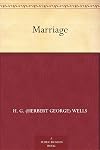
Marriage
by H. G. Wells
On This Page
Description
When it came to holy matrimony, writer H.G. Wells had a rather interesting personal history. He married his first cousin, soon left her for one of his students, and then had multiple affairs (and children) with important female thinkers and writers over the course of the rest of his lifetime. With that in mind, Wells brings a unique twist to this relatively straightforward take on Edwardian morals and mores in marriage.Tags
Recommendations




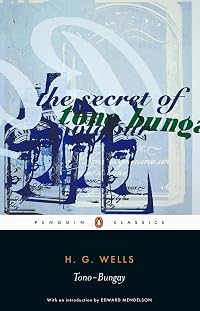


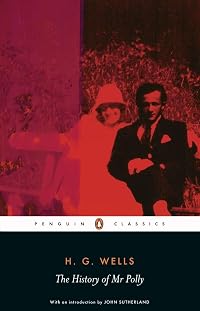











Member Recommendations

Member Reviews
He spoke slowly, as though he traced things carefully. "Before I met her I suppose I wasn't half alive. No! Yet I don't remember. I felt particularly incomplete. Women were interesting, of course; they excited me at times, that girl at Yonkers!—H'm. I stuck to my work. It was fine work, I forget half of it now, the half-concealed intimations, I mean—queer how one forgets!—but I know I felt my way to wide, deep things. It was like exploring caves—monstrous, limitless caves. Such caves! . . . Very still—underground. Wonderful and beautiful. . . . They're lying there now for other men to seek. Other men will find them. . . . Then she came, as though she was taking possession. The beauty of her, oh! the life and bright eagerness, show more and the incompatibility! That's the riddle! I've loved her always. When she came to my arms it seemed to me the crown of life. Caves indeed! Old caves! Nothing else seemed to matter." (342)
I thought the title of this novel was odd from the moment I picked it up, because what made Wells think this novel should be called "Marriage" in particular? Every one of Wells's literary novels I've read could have this title without any dissonance: Ann Veronica, The History of Mr Polly, The New Machiavelli. (And, of course, Wells wrote many other non-sf novels that I haven't read but know also to substantively be about marriage.) But upon reading it, I came to see what sets this book apart from those others-- the three previous "marriage novels" all feature the disintegration of a marriage, a man who throws over his wife for another woman. And since all these novels are by H. G. Wells, who did this to two different wives himself, these men are of course all justified in doing so.
However, Marriage might be about a failing marriage, but it is not about a failed one. The marriage of Richard A.G. Trafford (professor of molecular physics) and Marjorie Pope has some down periods, but no one ever cheats on anyone else, and the marriage is saved by the end of the novel. The title, then, I think originates from a bit of Wellsian prescriptivism at the end: as opposed to his other marriage novels, where the marriages collapsed, this is how marriage ought to work. Unfortunately, to a modern reader (but also, I suspect, to many 1910s ones) the end is profoundly unsatisfying. Having established that part of the problem of contemporary society is that women get educated better than ever before and treated like whole people, but then they get married and are given no outlet for themselves other than purchasing consumer goods, the solution Trafford and Marjorie ("Rag" and "Madge") come up with is that Marjorie will completely devote herself to her husband's intellectual interests!
What had been a pretty enjoyable novel comes crashing down at that point. Wells is usually good with the subtle comedy of social life, and Marriage has that in spades, and his portrayal of how a marriage can both be formed through and disintegrate under social pressures has the verisimilitude you might expect from someone who got married twice and had affairs both times (though Trafford never has an affair, because he never had any premarital sex to give him a taste for sex outside the confines of marriage). The opening third of the novel is the best part, but I also really enjoyed the last sixth or so, where Trafford and Marjorie go to the Canadian wilderness and live in a cabin hundred of miles away from anyone else in order to find themselves. Marjorie turns out to be a total badass, and saves Trafford's life after a botched hunting expedition when he thinks himself doomed.
During his recovery, he finally has the time to think (the passage I've quoted above is part of him working out the principles of a good life and a good marriage), and Marjorie responds to his decision that he needs to bring his scientific vision to solving the problems of society with a decision of her own, about the role of women in marriage: "It isn't that we can make you or guide you—I'm not pretending to be an inspiration—but—but we can release you. We needn't press upon you; we can save you from the instincts and passions that try to waste you altogether on us. . . . Yes, I'm beginning to understand. [...] I've begun to see what it is to be a woman. For the first time in my life. We're the responsible sex" (347). Despite Wells's hopes, I feel like this says more about Wells's marriage in particular (his second wife Jane basically did devote herself to His Great Man's Work), and it is especially underwhelming when you realize what Trafford is going to do is write books with titles like From Realism to Reality and The Limits of Language as a Means of Expression.
I discovered when reading Marriage that Wells's literary novels form a little "shared universe"; I'd known that Ann Veronica of Ann Veronica (now Mrs. Godwin Capes) reappears in Marriage, but there's also a passing reference to the events of The New Machiavelli, and Google shows me there's at least one more connection, with a character shared between Marriage and the later The Wife of Sir Isaac Harman. Victoria Glendinning discusses these connections' significance in the introduction to my Hogarth edition of the novel, but what strikes me is how similar Marriage is to Ann Veronica. Ann Veronica is about a young woman with a scientific education, somewhat interested in suffragism, who marries a science educator, and so is Marriage, though many of the particulars vary. Ann Veronica almost ends where Marriage takes up: in Ann Veronica, we see none of the actual marriage of Ann Veronica and Capes (whose first name, Godwin, is one of Trafford's middle names*), except in a brief epilogue. Ann Veronica has a very ambivalent ending: you feel that Ann Veronica and Capes ought to conquer the world together, but in that epilogue, she's pregnant and he's given up his scientific career as they bow to domestic convention. This ambivalence becomes outright negativity with Ann Veronica's appearance in Marriage, where she's "subsided from an early romance [...] into a markedly correct and exclusive mother of daughters" (294). Capes himself doesn't appear in Marriage, but we're told he cranks out formulaic plays to make money for his family.
Marriage functions as a pseudo-sequel to Ann Veronica, in that it shows how Capes and Ann Veronica could save their marriage, how they could come back from the brink of conventionalism and do the Great Work that Ann Veronica glimpses during Ann Veronica but couldn't realize. Why not then just actually make Ann Veronica and Capes the protagonists of Marriage? My guess is that their romance in Ann Veronica was too much unconventional. They ended up marginalized because Capes got a divorce in order to marry Ann Veronica, limiting both of their career prospects. Marriage shows that you can (mostly) do everything right, but still be trapped in the rut of convention and unable to realize your potential.
Except, of course, if you follow Wells's marriage advice. There's a one-star review of Marriage on Amazon that complains it's not a self-help book: "Glad it was free ITs NOT A MARRIAGE HELP BOOK waste of time not impressed at all. 'Winning your wife back' is a great book".
Before I read the novel I thought this guy got it wrong because Marriage is obviously not a self-help book, it's a novel. Now that I've read it, I know he's wrong because it actually is a self-help book. If I were rating it solely on the basis of the advice it gives, though, I'd also give it one star.
* Actually, Capes doesn't even get a first name until Marriage. Oddly, we end Ann Veronica only knowing that it begins with "G"! show less
I thought the title of this novel was odd from the moment I picked it up, because what made Wells think this novel should be called "Marriage" in particular? Every one of Wells's literary novels I've read could have this title without any dissonance: Ann Veronica, The History of Mr Polly, The New Machiavelli. (And, of course, Wells wrote many other non-sf novels that I haven't read but know also to substantively be about marriage.) But upon reading it, I came to see what sets this book apart from those others-- the three previous "marriage novels" all feature the disintegration of a marriage, a man who throws over his wife for another woman. And since all these novels are by H. G. Wells, who did this to two different wives himself, these men are of course all justified in doing so.
However, Marriage might be about a failing marriage, but it is not about a failed one. The marriage of Richard A.G. Trafford (professor of molecular physics) and Marjorie Pope has some down periods, but no one ever cheats on anyone else, and the marriage is saved by the end of the novel. The title, then, I think originates from a bit of Wellsian prescriptivism at the end: as opposed to his other marriage novels, where the marriages collapsed, this is how marriage ought to work. Unfortunately, to a modern reader (but also, I suspect, to many 1910s ones) the end is profoundly unsatisfying. Having established that part of the problem of contemporary society is that women get educated better than ever before and treated like whole people, but then they get married and are given no outlet for themselves other than purchasing consumer goods, the solution Trafford and Marjorie ("Rag" and "Madge") come up with is that Marjorie will completely devote herself to her husband's intellectual interests!
What had been a pretty enjoyable novel comes crashing down at that point. Wells is usually good with the subtle comedy of social life, and Marriage has that in spades, and his portrayal of how a marriage can both be formed through and disintegrate under social pressures has the verisimilitude you might expect from someone who got married twice and had affairs both times (though Trafford never has an affair, because he never had any premarital sex to give him a taste for sex outside the confines of marriage). The opening third of the novel is the best part, but I also really enjoyed the last sixth or so, where Trafford and Marjorie go to the Canadian wilderness and live in a cabin hundred of miles away from anyone else in order to find themselves. Marjorie turns out to be a total badass, and saves Trafford's life after a botched hunting expedition when he thinks himself doomed.
During his recovery, he finally has the time to think (the passage I've quoted above is part of him working out the principles of a good life and a good marriage), and Marjorie responds to his decision that he needs to bring his scientific vision to solving the problems of society with a decision of her own, about the role of women in marriage: "It isn't that we can make you or guide you—I'm not pretending to be an inspiration—but—but we can release you. We needn't press upon you; we can save you from the instincts and passions that try to waste you altogether on us. . . . Yes, I'm beginning to understand. [...] I've begun to see what it is to be a woman. For the first time in my life. We're the responsible sex" (347). Despite Wells's hopes, I feel like this says more about Wells's marriage in particular (his second wife Jane basically did devote herself to His Great Man's Work), and it is especially underwhelming when you realize what Trafford is going to do is write books with titles like From Realism to Reality and The Limits of Language as a Means of Expression.
I discovered when reading Marriage that Wells's literary novels form a little "shared universe"; I'd known that Ann Veronica of Ann Veronica (now Mrs. Godwin Capes) reappears in Marriage, but there's also a passing reference to the events of The New Machiavelli, and Google shows me there's at least one more connection, with a character shared between Marriage and the later The Wife of Sir Isaac Harman. Victoria Glendinning discusses these connections' significance in the introduction to my Hogarth edition of the novel, but what strikes me is how similar Marriage is to Ann Veronica. Ann Veronica is about a young woman with a scientific education, somewhat interested in suffragism, who marries a science educator, and so is Marriage, though many of the particulars vary. Ann Veronica almost ends where Marriage takes up: in Ann Veronica, we see none of the actual marriage of Ann Veronica and Capes (whose first name, Godwin, is one of Trafford's middle names*), except in a brief epilogue. Ann Veronica has a very ambivalent ending: you feel that Ann Veronica and Capes ought to conquer the world together, but in that epilogue, she's pregnant and he's given up his scientific career as they bow to domestic convention. This ambivalence becomes outright negativity with Ann Veronica's appearance in Marriage, where she's "subsided from an early romance [...] into a markedly correct and exclusive mother of daughters" (294). Capes himself doesn't appear in Marriage, but we're told he cranks out formulaic plays to make money for his family.
Marriage functions as a pseudo-sequel to Ann Veronica, in that it shows how Capes and Ann Veronica could save their marriage, how they could come back from the brink of conventionalism and do the Great Work that Ann Veronica glimpses during Ann Veronica but couldn't realize. Why not then just actually make Ann Veronica and Capes the protagonists of Marriage? My guess is that their romance in Ann Veronica was too much unconventional. They ended up marginalized because Capes got a divorce in order to marry Ann Veronica, limiting both of their career prospects. Marriage shows that you can (mostly) do everything right, but still be trapped in the rut of convention and unable to realize your potential.
Except, of course, if you follow Wells's marriage advice. There's a one-star review of Marriage on Amazon that complains it's not a self-help book: "Glad it was free ITs NOT A MARRIAGE HELP BOOK waste of time not impressed at all. 'Winning your wife back' is a great book".
Before I read the novel I thought this guy got it wrong because Marriage is obviously not a self-help book, it's a novel. Now that I've read it, I know he's wrong because it actually is a self-help book. If I were rating it solely on the basis of the advice it gives, though, I'd also give it one star.
* Actually, Capes doesn't even get a first name until Marriage. Oddly, we end Ann Veronica only knowing that it begins with "G"! show less
https://fromtheheartofeurope.eu/marriage-by-h-g-wells/
A young physicist marries a younger woman, and they undergo stresses and strains in their relationship (and have four children) before going off together to darkest Labrador to rebuild their relationship and their lives.
I really liked most of it. I thought the portrayal of two young people who make a lifetime commitment before either of them is really ready for it was very well done, to the point that it was difficult for me to read in some places. The intersection of the academic career, capitalism and family life speaks directly to my own experience, although in our case we found a different solution to a somewhat different situation.
If you can swallow the premise of them going off show more to Labrador to find themselves while leaving their young children behind in England, the descriptive parts of those sections are also very good. In 1967, Ian Calder, a dentist who was married to a cousin of mine, and his friend Peter Bromley died when their canoe capsized as they explored the Back River in the Northwest Territories; Bromley’s teenaged son survived, but the two older men’s bodies were never found. I must say that Wells’ portrayal of the Labradorean desolation resonated for me with my cousin’s account of the unsuccessful search for her husband’s body.
(Incidentally Wells does not use the word ‘Canada’ even once in this book; Labrador and Newfoundland did not become part of Canada until 1949, 37 years after Marriage was published, so he did not consider his protagonists to be having a Canadian adventure as such.)
What does spoil the book for me is that, stuck in Labrador, his protagonists (especially the bloke, when immobilized after an accident) start going on and on at tedious length to each other about philosophy and politics. Wells’ views on women in society are less enlightened than he obviously thought they were. I think Wells had perhaps reached the point where he thought his readers expected this kind of thing, and perhaps they actually did, but it’s a bit of a yawnfest for us 112 years later. So not quite top marks, which otherwise the depiction of the protagonists’ emotional development in England and their travails in Labrador would have deserved. show less
A young physicist marries a younger woman, and they undergo stresses and strains in their relationship (and have four children) before going off together to darkest Labrador to rebuild their relationship and their lives.
I really liked most of it. I thought the portrayal of two young people who make a lifetime commitment before either of them is really ready for it was very well done, to the point that it was difficult for me to read in some places. The intersection of the academic career, capitalism and family life speaks directly to my own experience, although in our case we found a different solution to a somewhat different situation.
If you can swallow the premise of them going off show more to Labrador to find themselves while leaving their young children behind in England, the descriptive parts of those sections are also very good. In 1967, Ian Calder, a dentist who was married to a cousin of mine, and his friend Peter Bromley died when their canoe capsized as they explored the Back River in the Northwest Territories; Bromley’s teenaged son survived, but the two older men’s bodies were never found. I must say that Wells’ portrayal of the Labradorean desolation resonated for me with my cousin’s account of the unsuccessful search for her husband’s body.
(Incidentally Wells does not use the word ‘Canada’ even once in this book; Labrador and Newfoundland did not become part of Canada until 1949, 37 years after Marriage was published, so he did not consider his protagonists to be having a Canadian adventure as such.)
What does spoil the book for me is that, stuck in Labrador, his protagonists (especially the bloke, when immobilized after an accident) start going on and on at tedious length to each other about philosophy and politics. Wells’ views on women in society are less enlightened than he obviously thought they were. I think Wells had perhaps reached the point where he thought his readers expected this kind of thing, and perhaps they actually did, but it’s a bit of a yawnfest for us 112 years later. So not quite top marks, which otherwise the depiction of the protagonists’ emotional development in England and their travails in Labrador would have deserved. show less
I really enjoyed this book right up until the last few pages, in which the male character starts spouting nonsense. For the rest of the novel, two realistic characters undergo a slow growth from immaturity to true adulthood, accepting their failings and trying to reconcile their differences. They go to Labrador to 'find themselves' and undergo many trials in the wilderness. At which point the aforementioned male comes out with some genuinely bizarre conclusions about how to give his life meaning and his wife - having spent weeks being the 'practical' one and doing men's work - concludes she'd be happier if she devoted her life to making his easier.
I've decided to read 12 H. G. Wells novels this year - To be followed by a biography or two. Since it is my strong feeling that all Wells must be read in the context of the time it was written and understanding the author's mindset, I'm really speaking out of uneducated, first impressions in the reviews I'm jotting down after reading each. I will come back and reassess after I do my homework. ;-)
Marriage is one of the first books on my list I've gotten through and feel must be backed up by some knowledge of Wells and the time in which it was written to fully appreciate. It is extremely contemporary in it's characterizations and ideas and yet, dated in it's setting and language. Once again I'm in awe of Wells' ability to capture people show more at a real level... Trafford and Marjorie were perhaps a little more two-dimensional than I've found other of Wells' characters to be but still, this book might have been written yesterday (apart from some isolated period-chauvinism, to be discussed later.)
The book is laid out in several parts, leading us through the fast and dramatic courtship of the couple, and then on through several stages of their marriage. Marjorie moves through the misguided role society has said she must play and builds a home, a family, and substantial debt with dedicated fervor - All in the name of complimenting her scientist husband to the height of her abilities. Trafford, meanwhile, starts to make choices which slowly divert him away from his calling of exploratory scientist and move him into the business world to support the ever-growing bankroll of his household. Communication between the ernest couple breaks down - Trafford becomes disillusioned with his life and marriage and finds that he has sacrificed his dreams and morals. The couple takes a year's sabbatical to venture deep into the wilds of Lapland in an attempt to cut the distractions of society and materialism out of their lives and "talk through" the mess that is their marriage.
I found the book engaging all through to end of their time in the wilderness when, at long last, the couple really opens up to each other. When the story was organically revealing each of their struggles and characters I was impressed with all of Wells' insights. However, the second Trafford and Marjorie really start talking, some seriously chauvinistic themes appear and ruin the whole thing. A critic once said, "Most often Wells reveals himself as a petulant, self-indulgent man-child, who is dominated and obsessed by his passions." I agree, and at times in this particular book it is abundantly clear.
At times my fur bristled at Wells' generalizations that women are load-stones to their husbands and hopelessly absorbed in appearance and spending. For what I do know about Wells, this all felt a little heavy-handed and it's possible he chose this viewpoint simply as a plot device. If one can forgive some of the specific slights on Marjorie's nature as necessary to the story arc as a whole, it makes a significant difference. In fact, I found some of the earlier scenes with Marjorie, struggling with her debt and dealing with peer pressures, rather insightful and startlingly contemporary. While one could argue that Marjorie admitting her spending addiction persists to the very end is showing her as the weak, material-driven creature Wells accuses her of being, part of me appreciates that she isn't magically cured of her problems. From a modern standpoint, her walking out of the story a "cured" woman would have been simplistic and annoying. I was interested to read in an essay that Wells actually met his mistress, feminist Rebecca West, when she wrote a scathing review of the novel. I'd really like to read that review.
All in all, interesting reading - But I feel he wrote better novels than this. I would very much like to read more reviews of the time and those letters of Rebecca West debating the novel - I'm sure my opinions will expand/alter after reading them.
A final note: In running a quick google for essays discussing this book, I found that a movie was made in 1927! I'd be very interested to see what Hollywood made of it - The summary I found sounded wildly overworked and the essence of the original novel all but gone.
Discuss at: http://agentxpndble.livejournal.com/98935.html show less
Marriage is one of the first books on my list I've gotten through and feel must be backed up by some knowledge of Wells and the time in which it was written to fully appreciate. It is extremely contemporary in it's characterizations and ideas and yet, dated in it's setting and language. Once again I'm in awe of Wells' ability to capture people show more at a real level... Trafford and Marjorie were perhaps a little more two-dimensional than I've found other of Wells' characters to be but still, this book might have been written yesterday (apart from some isolated period-chauvinism, to be discussed later.)
The book is laid out in several parts, leading us through the fast and dramatic courtship of the couple, and then on through several stages of their marriage. Marjorie moves through the misguided role society has said she must play and builds a home, a family, and substantial debt with dedicated fervor - All in the name of complimenting her scientist husband to the height of her abilities. Trafford, meanwhile, starts to make choices which slowly divert him away from his calling of exploratory scientist and move him into the business world to support the ever-growing bankroll of his household. Communication between the ernest couple breaks down - Trafford becomes disillusioned with his life and marriage and finds that he has sacrificed his dreams and morals. The couple takes a year's sabbatical to venture deep into the wilds of Lapland in an attempt to cut the distractions of society and materialism out of their lives and "talk through" the mess that is their marriage.
I found the book engaging all through to end of their time in the wilderness when, at long last, the couple really opens up to each other. When the story was organically revealing each of their struggles and characters I was impressed with all of Wells' insights. However, the second Trafford and Marjorie really start talking, some seriously chauvinistic themes appear and ruin the whole thing. A critic once said, "Most often Wells reveals himself as a petulant, self-indulgent man-child, who is dominated and obsessed by his passions." I agree, and at times in this particular book it is abundantly clear.
At times my fur bristled at Wells' generalizations that women are load-stones to their husbands and hopelessly absorbed in appearance and spending. For what I do know about Wells, this all felt a little heavy-handed and it's possible he chose this viewpoint simply as a plot device. If one can forgive some of the specific slights on Marjorie's nature as necessary to the story arc as a whole, it makes a significant difference. In fact, I found some of the earlier scenes with Marjorie, struggling with her debt and dealing with peer pressures, rather insightful and startlingly contemporary. While one could argue that Marjorie admitting her spending addiction persists to the very end is showing her as the weak, material-driven creature Wells accuses her of being, part of me appreciates that she isn't magically cured of her problems. From a modern standpoint, her walking out of the story a "cured" woman would have been simplistic and annoying. I was interested to read in an essay that Wells actually met his mistress, feminist Rebecca West, when she wrote a scathing review of the novel. I'd really like to read that review.
All in all, interesting reading - But I feel he wrote better novels than this. I would very much like to read more reviews of the time and those letters of Rebecca West debating the novel - I'm sure my opinions will expand/alter after reading them.
A final note: In running a quick google for essays discussing this book, I found that a movie was made in 1927! I'd be very interested to see what Hollywood made of it - The summary I found sounded wildly overworked and the essence of the original novel all but gone.
Discuss at: http://agentxpndble.livejournal.com/98935.html show less
This was a disappointing read by Wells. I didn't feel attached to the characters, plot, or circumstances at all regarding and resounding herein. Overall, I think it is a bit archaic of a book and reads as such. I do not recommend it.
2 stars.
2 stars.
Almost all of the book is a pleasant story about a couple who meet and marry, then the man has philosophical troubles with his life and purpose. Then the end all of a sudden turns into an adventure story of the two of them in Labrador, after which it appears they will return very much to the life they had before, only believing they are changed from their experience. Contains the usual Wellsian introspections on socialism providing few answers, and human nature being impacted by the natural world, and women and men being different.
Oh H.G. You started off so strong and then, what happened? That trip to Labrador was so unsatisfying. When Trafford started talking, it was all I could do not think about shopping which was perhaps Marjorie's problem all along.
Members
- Recently Added By
Author Information

1,552+ Works 108,780 Members
H. G. Wells was born in Bromley, England on September 21, 1866. After a limited education, he was apprenticed to a draper, but soon found he wanted something more out of life. He read widely and got a position as a student assistant in a secondary school, eventually winning a scholarship to the Royal College of Science in South Kensington, where show more he studied biology. He graduated from London University in 1888 and became a science teacher. He also wrote for magazines. When his stories began to sell, he left teaching to write full time. He became an author best known for science fiction novels and comic novels. His science fiction novels include The Time Machine, The War of the Worlds, The Wonderful Visit, The Island of Doctor Moreau, The Invisible Man, The First Men in the Moon, and The Food of the Gods. His comic novels include Love and Mr. Lewisham, Kipps: The Story of a Simple Soul, The History of Mr. Polly, and Tono-Bungay. He also wrote several short story collections including The Stolen Bacillus, The Plattner Story, and Tales of Space and Time. He died on August 13, 1946 at the age of 79. (Bowker Author Biography) show less
Some Editions
Work Relationships
Is contained in
Common Knowledge
Classifications
Statistics
- Members
- 114
- Popularity
- 285,314
- Reviews
- 8
- Rating
- (3.36)
- Languages
- Danish, English, French
- Media
- Paper, Ebook
- ISBNs
- 31
- ASINs
- 14