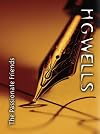
The Passionate Friends
by H. G. Wells
On This Page
Description
Science fiction innovator H. G. Wells held many progressive political and social views, and many of his novels and short stories served as vehicles through which he sought to disseminate his opinions. In The Passionate Friends, which many critics and fans alike regard as one of Wells' best non-science fiction novels, a father passes on some of the wisdom he's gained over the course of his life to his son, much of which has to do with his views on relationships between men and women. In the show more course of the story, Wells presents readers with a staunchly independent heroine who was decades ahead of her time.. show less
Tags
Recommendations
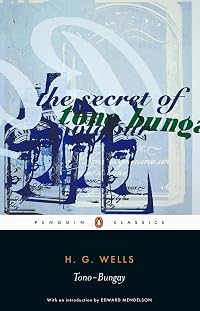


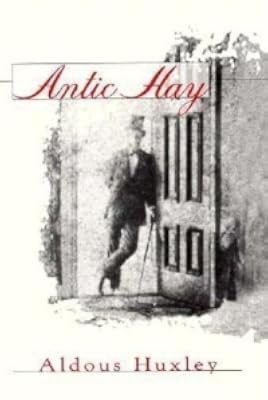


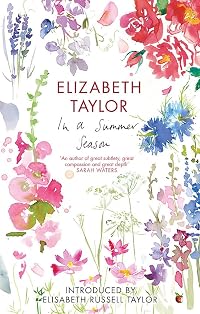
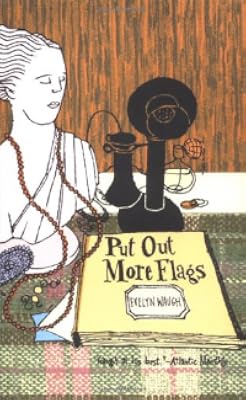










Member Recommendations


Member Reviews
This is a slow mover, slower even than many of Wells' other social novels, but the time it takes is appropriate to the story it tells. It's ultimately a sad novel, though it strives to uplift at the same time.
The Passionate Friends (1913) is one of three books Wells wrote about social justice and feminism, along with Marriage (1912) and The Wife of Sir Isaac Harman (1914). I'm reading them backwards myself, but I'm not sure that matters.
The Passionate Friends explores the relationship between Stephen and Mary. Mary's desire for independence leads her to reject marrying Stephen, since he's below her in stature. She can't see who she could have the freedom she craves if she were to become a housewife; it's impossible to imagine Stephen show more doing the tasks she'd be expected to do if they married. Stephen is a fairly traditional Edwardian gentleman, not opposed to feminsim in principle but unable to grasp the fundamentals and how they affect him. His intense jealousy as Mary marries a rather bland but wealthy man, who is willing to cede her the freedom she craves, demonstrates this. Of course, this is not true freedom, and when Mary and Stephen are discovered in an affair her huband revokes her privileges.
I found Mary's fumblings for independence fascinating and quite sad, since she sees no other options open to her but to marry as well as she can. Stephen, like many of Wells' characters, is deeply flawed in his blindness to her motivations. Though he is the narrator (the novel is written as a memoir for Stephen's son to read and learn from), it is obvious he is not a reliable narrator when it comes to Mary. He remains oblivious to the hints she drops about her 'untimely but very feminine illness' that occured shortly after they were forced apart, for example, and both he and her husband couch their love of her time terms of possessing her. No matter how much she objects to this, neither can imagine loving her without possessing her, without reducing her to the status of an object to be admired. Stephen is somewhat redeemed by the fact he is telling this story in the hopes his son will avoid his mistakes, and to continue Stephen's question for global understanding. Though Stephen struggles to recognise that this global understanding is an understanding between men, I think the underlying message of the novel is that it cannot be just between men, but must make an effort to include women as well.
As with 'The Wife of Sir Isaac Harman', the male characters struggle to understand the female, and their narration reflects this. However, one gets the impression Wells' very definitely understands his female characters and their motivations, and using the technique of the unreliable narrator in order to bring his ideas across subtly. Like trying to persuade your boss that your brilliant idea is actually theirs, so they'll implement, so Wells persuades the reader that the fact they understand the motivations of the female characters is due entirely to their own intelligence, not his. show less
The Passionate Friends (1913) is one of three books Wells wrote about social justice and feminism, along with Marriage (1912) and The Wife of Sir Isaac Harman (1914). I'm reading them backwards myself, but I'm not sure that matters.
The Passionate Friends explores the relationship between Stephen and Mary. Mary's desire for independence leads her to reject marrying Stephen, since he's below her in stature. She can't see who she could have the freedom she craves if she were to become a housewife; it's impossible to imagine Stephen show more doing the tasks she'd be expected to do if they married. Stephen is a fairly traditional Edwardian gentleman, not opposed to feminsim in principle but unable to grasp the fundamentals and how they affect him. His intense jealousy as Mary marries a rather bland but wealthy man, who is willing to cede her the freedom she craves, demonstrates this. Of course, this is not true freedom, and when Mary and Stephen are discovered in an affair her huband revokes her privileges.
I found Mary's fumblings for independence fascinating and quite sad, since she sees no other options open to her but to marry as well as she can. Stephen, like many of Wells' characters, is deeply flawed in his blindness to her motivations. Though he is the narrator (the novel is written as a memoir for Stephen's son to read and learn from), it is obvious he is not a reliable narrator when it comes to Mary. He remains oblivious to the hints she drops about her 'untimely but very feminine illness' that occured shortly after they were forced apart, for example, and both he and her husband couch their love of her time terms of possessing her. No matter how much she objects to this, neither can imagine loving her without possessing her, without reducing her to the status of an object to be admired. Stephen is somewhat redeemed by the fact he is telling this story in the hopes his son will avoid his mistakes, and to continue Stephen's question for global understanding. Though Stephen struggles to recognise that this global understanding is an understanding between men, I think the underlying message of the novel is that it cannot be just between men, but must make an effort to include women as well.
As with 'The Wife of Sir Isaac Harman', the male characters struggle to understand the female, and their narration reflects this. However, one gets the impression Wells' very definitely understands his female characters and their motivations, and using the technique of the unreliable narrator in order to bring his ideas across subtly. Like trying to persuade your boss that your brilliant idea is actually theirs, so they'll implement, so Wells persuades the reader that the fact they understand the motivations of the female characters is due entirely to their own intelligence, not his. show less
I was surprised by how much I liked this as it is considered to be one of Wells' lesser novels. It's written as though it were a letter from a father to his adult son, explaining the path of his life and the affair he had. I found of the character of Lady Mary to be most interesting and perhaps the most radical of all Wells' heroines - a woman who didn't want to be a wife or mother, who wanted independence, her own money, space, beautiful clothes, and to make an impact. There was simply to place for her on earth in 1913 and there not be yet.
It's hard to give an honest review of The Passionate Friends without plot spoilers aplenty. Suffice it to say that IMHO the ending of this pre-WWI novel is tremendously disappointing.
Wells writes well [!] and he understands the way to structure "the narrative arc" in a novel of appropriate length. The Passionate Friends is not too long, nor too short. There are a lot of elements in the novel that are interesting from the perspective of a historian - it provides a coherent, cogent perspective upon the point of view of a progression non-orthodox socialist in 1913, its year of publication, on the eve of the cataclysm of World War I. And it serves as a reminder that while Wells was in many way a prophetic visionary, he is also identifiable show more as a man of the lower middle classes born in 1866, unable to escape the semi-misogynistic views of his youth and young adulthood.
The paperback edition I read - from the Hogarth Press released in 1986 - contains an excellent introduction by Victoria Glendinning. She "gets" Wells, I think. show less
Wells writes well [!] and he understands the way to structure "the narrative arc" in a novel of appropriate length. The Passionate Friends is not too long, nor too short. There are a lot of elements in the novel that are interesting from the perspective of a historian - it provides a coherent, cogent perspective upon the point of view of a progression non-orthodox socialist in 1913, its year of publication, on the eve of the cataclysm of World War I. And it serves as a reminder that while Wells was in many way a prophetic visionary, he is also identifiable show more as a man of the lower middle classes born in 1866, unable to escape the semi-misogynistic views of his youth and young adulthood.
The paperback edition I read - from the Hogarth Press released in 1986 - contains an excellent introduction by Victoria Glendinning. She "gets" Wells, I think. show less
https://fromtheheartofeurope.eu/the-passionate-friends-by-h-g-wells/
Stephen Stratton and Lady Mary Christian have a love affair immediately before and after she marries someone else; eventually Mary’s husband Justin finds out and they part, leaving Stephen free to marry the much less stressful Rachel, while he carries on his important work of Changing The World; after a few years Mary and Stephen strike up a deeply friendly but chaste correspondence; and then the novel ends in unexpected and somewhat jarring disaster.
I liked a lot of this, in particular the idea that your former lover can actually become a good friend who does not threaten your current relationship, a rather positive model for transcending one’s emotional history; show more so I felt rather betrayed by the tragic ending, which seemed to suggest that Wells himself didn’t actually think this is really possible in real life. Wells probably had a lot more experience of trying this sort of balancing act than most people, so I guess that he was writing about what he knew. I note that of the two film adaptations, one (1922) keeps the tragedy and one (1949) does not.
There’s also a brief section set in Ireland, where Stephen goes in search of Mary at one point, which I think is maybe the first time I have seen any serious mention of Ireland in Wells’ writings. It rains dismally throughout that one short chapter. Stephen spends more time, more vividly described, in South Africa during the Boer War.
A subplot is Stephen’s plan to create a single World Government, apparently the first time that Wells set this idea out so clearly. I was a bit bored by the lengthy discourses on political theory and society, though interested that Wells mainly puts these in Mary’s mouth rather than Stephen’s. show less
Stephen Stratton and Lady Mary Christian have a love affair immediately before and after she marries someone else; eventually Mary’s husband Justin finds out and they part, leaving Stephen free to marry the much less stressful Rachel, while he carries on his important work of Changing The World; after a few years Mary and Stephen strike up a deeply friendly but chaste correspondence; and then the novel ends in unexpected and somewhat jarring disaster.
I liked a lot of this, in particular the idea that your former lover can actually become a good friend who does not threaten your current relationship, a rather positive model for transcending one’s emotional history; show more so I felt rather betrayed by the tragic ending, which seemed to suggest that Wells himself didn’t actually think this is really possible in real life. Wells probably had a lot more experience of trying this sort of balancing act than most people, so I guess that he was writing about what he knew. I note that of the two film adaptations, one (1922) keeps the tragedy and one (1949) does not.
There’s also a brief section set in Ireland, where Stephen goes in search of Mary at one point, which I think is maybe the first time I have seen any serious mention of Ireland in Wells’ writings. It rains dismally throughout that one short chapter. Stephen spends more time, more vividly described, in South Africa during the Boer War.
A subplot is Stephen’s plan to create a single World Government, apparently the first time that Wells set this idea out so clearly. I was a bit bored by the lengthy discourses on political theory and society, though interested that Wells mainly puts these in Mary’s mouth rather than Stephen’s. show less
This novel was pretty rough to get through. I didn't feel attached to any of it and it was an arduous journey just to follow through the motions of reading it. Overall, I wouldn't recommend this- even for people who are huge fans of Wells. It missed the mark entirely.
1.5 stars.
1.5 stars.
Ratings
Members
- Recently Added By
Author Information

1,552+ Works 108,783 Members
H. G. Wells was born in Bromley, England on September 21, 1866. After a limited education, he was apprenticed to a draper, but soon found he wanted something more out of life. He read widely and got a position as a student assistant in a secondary school, eventually winning a scholarship to the Royal College of Science in South Kensington, where show more he studied biology. He graduated from London University in 1888 and became a science teacher. He also wrote for magazines. When his stories began to sell, he left teaching to write full time. He became an author best known for science fiction novels and comic novels. His science fiction novels include The Time Machine, The War of the Worlds, The Wonderful Visit, The Island of Doctor Moreau, The Invisible Man, The First Men in the Moon, and The Food of the Gods. His comic novels include Love and Mr. Lewisham, Kipps: The Story of a Simple Soul, The History of Mr. Polly, and Tono-Bungay. He also wrote several short story collections including The Stolen Bacillus, The Plattner Story, and Tales of Space and Time. He died on August 13, 1946 at the age of 79. (Bowker Author Biography) show less
Some Editions
Work Relationships
Has the adaptation
Common Knowledge
- Original publication date
- 1913
- Important places
- South Africa; Surrey, England, UK; Switzerland
- Important events
- Second Boer War (1899-10-11 | 1902-05-31)
- Related movies
- The Passionate Friends (1922 | IMDb); The Passionate Friends (1949 | IMDb)
Classifications
Statistics
- Members
- 119
- Popularity
- 269,321
- Reviews
- 5
- Rating
- (3.29)
- Languages
- English, Hungarian
- Media
- Paper, Ebook
- ISBNs
- 39
- ASINs
- 8