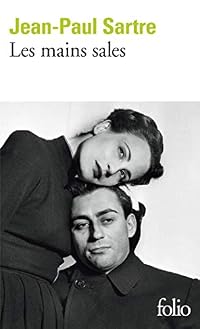
Dirty Hands
by Jean-Paul Sartre
On This Page
Description
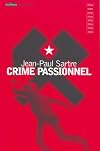
''A highly entertaining political thriller.the play shows where that peculiarly Gallic combinations of sex, politics and suspense has its origins' (Michael Billington, Guardian) Crime Passionnel reflects Sartre's fascination with the mentality and morality of Communism in its story of a young Party member assigned to shoot a deviationist. It was first staged in 1948.''Tags
Recommendations























Member Reviews
I gave this 5 stars simply because of how much I connected to Hugo, not because of the particularly unique truths or incredible literary qualities, though it was solid in those areas as well
This was an absolutely thrilling play by Sartre. The characters are so vivid and lifelike and the plot, involving the murder of an important party leader, is completely engaging and riveting. This is a fine play, with great philosophical considerations throughout, that touches on the nature of politics itself. Sartre really outdid himself with this one. I was completely spell-bound throughout the entire play and the ending is a hoot to boot!
5 stars- definitely no less!
5 stars- definitely no less!
French play with political background. Very interesting construction - it reads like a fable or an alegory (like 1984 or Brave New World - though with a much more limited scope). Meaningful context and thought-provoking dialogues. A cornerstone of existentialism.
Play French
L'action se situe en Illyrie, pays imaginaire d'Europe centrale. En dépit de ses origines bourgeoises, Hugo intègre un parti communiste qui tente de lutter contre le nazisme, et pour gagner la reconnaissance et la confiance de ses pairs, doit accepter une mission délicate : l'assassinat d'Hoederer, un dirigeant du parti accusé de collusion avec la bourgeoisie. Il devient son secrétaire, et découvre peu à peu un homme amical qui le prend sous son aile. Hoederer justifie son action : le résultat compte plus que les moyens pour y parvenir. Hugo le tue néanmoins, mais parce qu'il le découvre enlacé avec sa femme. Après deux ans en prison, Hugo se déclare « non récupérable » face à ses camarades, qui ont depuis fait show more d'Hoederer un héros et adopté sa ligne de conduite. show less
Dec 20, 2010French
JB-8
Jan 15, 2025Catalan
Ratings
Members
- Recently Added By
Lists

Fictional European countries
58 works; 2 members

My Play Collection
769 works; 3 members

2024-2025 Ezra Klein Guest Recommendations
213 works; 5 members
Author Information

Sartre is the dominant figure in post-war French intellectual life. A graduate of the prestigious Ecole Normale Superieure with an agregation in philosophy, Sartre has been a major figure on the literary and philosophical scenes since the late 1930s. Widely known as an atheistic proponent of existentialism, he emphasized the priority of existence show more over preconceived essences and the importance of human freedom. In his first and best novel, Nausea (1938), Sartre contrasted the fluidity of human consciousness with the apparent solidity of external reality and satirized the hypocrisies and pretensions of bourgeois idealism. Sartre's theater is also highly ideological, emphasizing the importance of personal freedom and the commitment of the individual to social and political goals. His first play, The Flies (1943), was produced during the German occupation, despite its underlying message of defiance. One of his most popular plays is the one-act No Exit (1944), in which the traditional theological concept of hell is redefined in existentialist terms. In Red Gloves (Les Mains Sales) (1948), Sartre examines the pragmatic implications of the individual involved in political action through the mechanism of the Communist party and a changing historical situation. His highly readable autobiography, The Words (1964), tells of his childhood in an idealistic bourgeois Protestant family and of his subsequent rejection of his upbringing. Sartre has also made significant contributions to literary criticism in his 10-volume Situations (1947--72) and in works on Baudelaire, Genet, and Flaubert. In 1964 he was awarded the Nobel Prize in Literature and refused it, saying that he always declined official honors. (Bowker Author Biography) show less
Some Editions
Series
Belongs to Publisher Series
Gallimard, Soleil (33)
Le livre de poche (0010)
Work Relationships
Is contained in
Has the adaptation
Has as a student's study guide
Common Knowledge
- Canonical title
- Dirty Hands
- Original title
- Les mains sales; Les Mains sales
- Alternate titles
- Les mains sales. Pièces en 7 tableaux; Crime Passionnel
- Original publication date
- 1948
- Related movies
- Dirty Hands (1951 | IMDb); Dirty Hands (1989 | IMDb)
- Dedication
- A Dolorès
- Original language
- French
Classifications
Statistics
- Members
- 853
- Popularity
- 31,840
- Reviews
- 6
- Rating
- (3.83)
- Languages
- 11 — Dutch, English, French, German, Greek, Italian, Norwegian (Bokmål), Farsi/Persian, Portuguese, Spanish, Swedish
- Media
- Paper, Ebook
- ISBNs
- 33
- ASINs
- 36