
On This Page
Description
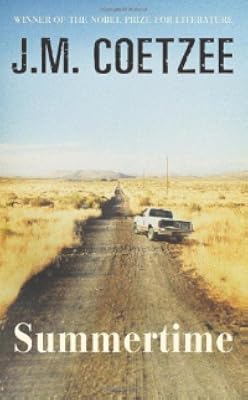
In this autobiographical novel, a young English biographer is researching a book about the late South African writer John Coetzee, focusing on Coetzee in his thirties, at a time when he was living in a rundown cottage in the Cape Town suburbs with his widowed father--a time, the biographer is convinced, when Coetzee was finding himself as a writer.Tags
Recommendations






Member Recommendations
by kiwidoc
Member Reviews
Summertime is the third fictionalized memoir about the young Coetzee, after Boyhood and Youth. It describes his life in South Africa from 1972-77, when he returns to South Africa after completing graduate studies in the US.
The famous writer John Coetzee, winner of the Nobel Prize, has recently died in Australia. Vincent, a British historian, reads Coetzee's papers and memoirs, and interviews several people that were friends and lovers of Coetzee from 1972-77.
The interviewees' descriptions of the young Coetzee, who is in his mid to late thirties and lives with his ailing father outside of Cape Town, are harsh and unflattering. Most describe him as socially inept and repressed, a "soft" man who has no sexual appeal to women, one whose show more lovemaking is "autistic" and focused more on atmosphere and music than on the woman that he is with.
The novel ends as it begins, with fragments written by the author, as Coetzee must decide whether to remain with his dying father, whom he does not love, or pursue other opportunities. The reader is left with the impression that another memoir will pick up the story from there.
This was a very enjoyable, brave, but peculiar read. I assume that most of the accounts written about Coetzee are based on fact, though I would assume that the characters are fictional. The stories are humorous but often made me cringe, and I frequently had the impression of vultures picking over a dead carcass and complaining about how bad the meat of the dead animal tasted. I'm curious about Coetzee's motivation in writing such a harshly critical story about himself. He, of course, is very much alive, though he continues to live as a recluse in Australia. I doubt that any biographer of Coetzee could write anything more harsh about him, and perhaps he wants to be the one to definitively tell his story, in his own peculiar way. show less
The famous writer John Coetzee, winner of the Nobel Prize, has recently died in Australia. Vincent, a British historian, reads Coetzee's papers and memoirs, and interviews several people that were friends and lovers of Coetzee from 1972-77.
The interviewees' descriptions of the young Coetzee, who is in his mid to late thirties and lives with his ailing father outside of Cape Town, are harsh and unflattering. Most describe him as socially inept and repressed, a "soft" man who has no sexual appeal to women, one whose show more lovemaking is "autistic" and focused more on atmosphere and music than on the woman that he is with.
The novel ends as it begins, with fragments written by the author, as Coetzee must decide whether to remain with his dying father, whom he does not love, or pursue other opportunities. The reader is left with the impression that another memoir will pick up the story from there.
This was a very enjoyable, brave, but peculiar read. I assume that most of the accounts written about Coetzee are based on fact, though I would assume that the characters are fictional. The stories are humorous but often made me cringe, and I frequently had the impression of vultures picking over a dead carcass and complaining about how bad the meat of the dead animal tasted. I'm curious about Coetzee's motivation in writing such a harshly critical story about himself. He, of course, is very much alive, though he continues to live as a recluse in Australia. I doubt that any biographer of Coetzee could write anything more harsh about him, and perhaps he wants to be the one to definitively tell his story, in his own peculiar way. show less
I am always drawn to interview books, either collections of interviews previously published in newspapers or magazines and books that consist on a long or collected essays with an author. In Summertime Coetzee uses interviews together with notebooks as the main narrative mode, which I think constitutes and interesting innovation in writing a novel.
The materials in the book consist of notebooks by Coetzee, Notebooks 1972-1975, some undated fragments and five interviews with people deemed important in the life of Coetzee. In some sense this is an autobiographical novel, but in true post-modern fashion hardly anything is reliable.
Firstly, the Coetzee of the novel resembles the author J.M. Coetzee but is not the 'real man' or not 'the same show more man'. Then, too, to what extent can we say that writing about anyone in their past are the same man?
The interviewer, who is supposedly collecting material to write an autobiography on Coetzee, does no appear to be a reliable narrator. At times, he seems hostile, and intrusive. He seems to be obsessed by Coetzee, but not necessarily in the most sympathetic way. The interviewees wonder why they are selected. It seems the biographer is biased in some peculiar way.
We never read the finished biography. It isn't even clear if the purported biography was ever written. Given the biographer's bias we must probably be thanful for that. On the other hand, one must wonder what image the reader can make of Coetzee from reading the raw materials. Is it possible to create a positive image based on these interviews? Which questions are asked, which are not? And which or how are questions answered.
The novel raises many questions about the literary process as well as history itself. It is probably one of Coetzee's best novels. show less
The materials in the book consist of notebooks by Coetzee, Notebooks 1972-1975, some undated fragments and five interviews with people deemed important in the life of Coetzee. In some sense this is an autobiographical novel, but in true post-modern fashion hardly anything is reliable.
Firstly, the Coetzee of the novel resembles the author J.M. Coetzee but is not the 'real man' or not 'the same show more man'. Then, too, to what extent can we say that writing about anyone in their past are the same man?
The interviewer, who is supposedly collecting material to write an autobiography on Coetzee, does no appear to be a reliable narrator. At times, he seems hostile, and intrusive. He seems to be obsessed by Coetzee, but not necessarily in the most sympathetic way. The interviewees wonder why they are selected. It seems the biographer is biased in some peculiar way.
We never read the finished biography. It isn't even clear if the purported biography was ever written. Given the biographer's bias we must probably be thanful for that. On the other hand, one must wonder what image the reader can make of Coetzee from reading the raw materials. Is it possible to create a positive image based on these interviews? Which questions are asked, which are not? And which or how are questions answered.
The novel raises many questions about the literary process as well as history itself. It is probably one of Coetzee's best novels. show less
A quirky and interesting conceit: Coetzee imagines himself as dead, with a researcher interviewing associates from a specific period of his life (1972-1975) for a biography of the writer. The book (not so much novel as third person auto-fiction) is structured mainly around these 'interviews' and supposed snippets from Coetzee's own notebooks of the period. It sounds very clumsy as a structure, doesn't it, yet it works surprisingly well, and there is a real zing in some of the interviews, especially with ex-lovers and those he wanted to be lovers, who are all disparaging to a degree of the 'great writer'. In his deliberately unflattering self-portrait Coetzee seems to be giving the lie to assumptions that charisma exudes from every pore show more of those who produce great work.
If I have a problem with the book, it is the nagging doubt about the way he places himself as the subject, not only in 'Summertime' but in his earlier quasi-autobiographical 'Boyhood' and 'Youth'. Even though he distorts the mirror with self-effacement, there is still something almost creepily egotistical about the image in the glass. show less
If I have a problem with the book, it is the nagging doubt about the way he places himself as the subject, not only in 'Summertime' but in his earlier quasi-autobiographical 'Boyhood' and 'Youth'. Even though he distorts the mirror with self-effacement, there is still something almost creepily egotistical about the image in the glass. show less
My second book of the year and my second book where the author has used a device to convince the reader that what they are reading is factual rather than fiction.
When I picked this book up, I assumed it was a straightforward novel, then I think a biography and then I realise it is a fictionalized memoir.
A Mr Vincent is interviewing five people whom he feels had a significant impact or relationship with the renowned author John Coetzee,who is deceased, in preparation for a biography of the author during the years 1972 to 1977. I checked online and discover that Coetzee is very much alive.
However each interview is sufficiently engaging and builds a portrait of a lonely man, who struggles with relationships, especially with women.
He show more does not fit the traditional mould of an Afrikaner male, lacking physical strength and presence.
What the book seems to portray is how the author perceives himself emotionally, socially and politically as there are many discrepancies in relation to his actual personal life. During this period J.M. Coetzee was married with two children, whereas in the book he is a single man living with his elderly father.
This book was shortlisted for the ManBooker prize in 2009. show less
When I picked this book up, I assumed it was a straightforward novel, then I think a biography and then I realise it is a fictionalized memoir.
A Mr Vincent is interviewing five people whom he feels had a significant impact or relationship with the renowned author John Coetzee,who is deceased, in preparation for a biography of the author during the years 1972 to 1977. I checked online and discover that Coetzee is very much alive.
However each interview is sufficiently engaging and builds a portrait of a lonely man, who struggles with relationships, especially with women.
He show more does not fit the traditional mould of an Afrikaner male, lacking physical strength and presence.
What the book seems to portray is how the author perceives himself emotionally, socially and politically as there are many discrepancies in relation to his actual personal life. During this period J.M. Coetzee was married with two children, whereas in the book he is a single man living with his elderly father.
This book was shortlisted for the ManBooker prize in 2009. show less
I read this one because it was the shortest book I had left on the to-read shelf while waiting for the next part of my Booker longlist order to arrive. I was surprised by just how much I enjoyed it - I have read a lot of Coetzee and this is one of his wittiest, not least because his portrait of himself in the 70s refracted by an imaginary biographer and five interviewees is not a flattering one.
The five witnesses are bookended by two sets of notebook extracts (I am not sure whether these are real or fictional but suspect the latter). The interviewees are Julia, a married woman with whom the young writer has a brief affair, Margot, a cousin, Adriana, a Brazilian widow who is the mother of one of his pupils, Martin, a fellow university show more lecturer and Sophie, a French university colleague with who he has another affair. The first two are almost novella length, the rest are much shorter. The writer comes across as stubborn, driven and incapable of relating to the women he meets, and rather out of place in the conformist society of white South Africa. I suspect a degree of self-deprecating caricature, but that makes the book much more entertaining to read. show less
The five witnesses are bookended by two sets of notebook extracts (I am not sure whether these are real or fictional but suspect the latter). The interviewees are Julia, a married woman with whom the young writer has a brief affair, Margot, a cousin, Adriana, a Brazilian widow who is the mother of one of his pupils, Martin, a fellow university show more lecturer and Sophie, a French university colleague with who he has another affair. The first two are almost novella length, the rest are much shorter. The writer comes across as stubborn, driven and incapable of relating to the women he meets, and rather out of place in the conformist society of white South Africa. I suspect a degree of self-deprecating caricature, but that makes the book much more entertaining to read. show less
The celebrated novelist John Coetzee is dead and a non-descript journalist named Vincent endeavors to write a biography of a brief, but pivotal, period of his life. To this end, Vincent scours the writer’s diaries and travels the world to interview the few people still alive who knew Coetzee well in the mid-1970s, a time when he had returned home to South Africa following a turbulent stay in the United States to live with his aged father. That is the premise of this remarkably inventive book by the very much alive J.M. Coetzee.
A lot of people, I suspect, have engaged in the occasional conceit of constructing—or at least imagining—their own obituary. What better way to control and influence how others perceive the record of your show more life’s achievements and shortcomings? Few of us, though, actually take the chance to do that, which is one of the things that makes this work so fascinating.
What I found to be particularly compelling about the book—which is the third volume of what is probably best described as the author’s fictionalized autobiography—is the unflattering way in which the protagonist is portrayed. Throughout the interviews with his relatives, past lovers, and professional colleagues, John Coetzee comes off as being both aloof and uncomfortable with normal human interactions and emotions. He was not a bad man, but rather one who found it almost impossible to bring his rigid and sometimes naïve views of society, politics, and relationships down to a level where he was able to empathize with the immediate emotional needs of another real person.
The most interesting question posed by the book is how a man so incapable of developing affecting connections with the most important people in his life came to understand humanity well enough to become a great novelist, winning, in fact, a Nobel Prize for Literature? If the biographer Vincent actually existed, this would be a central dilemma that would undoubtedly demand some sort of resolution. However, J.M. Coetzee seems content to leave this crucial aspect of his dead hero’s life unexplained, save the occasional hints from past events. Indeed, as one of John Coetzee’s former lovers reminisces: “I know he had many admirers…[b]ut in all the time I was with him I never had the feeling I was with an exceptional person, a truly exceptional human being. It is a harsh thing to say, I know, but regrettably it is true.”
It is hard to say what the real author’s motivation was in creating this work—e.g., Does he truly view himself in such a negative light or was he trying to beat his critics to the eventual punch and have a laugh at their expense? Is this just another creative exercise in historical fiction?—but ultimately his reasons do not matter. This is ingenious and engaging story-telling that rewards the reader from beginning to end. show less
A lot of people, I suspect, have engaged in the occasional conceit of constructing—or at least imagining—their own obituary. What better way to control and influence how others perceive the record of your show more life’s achievements and shortcomings? Few of us, though, actually take the chance to do that, which is one of the things that makes this work so fascinating.
What I found to be particularly compelling about the book—which is the third volume of what is probably best described as the author’s fictionalized autobiography—is the unflattering way in which the protagonist is portrayed. Throughout the interviews with his relatives, past lovers, and professional colleagues, John Coetzee comes off as being both aloof and uncomfortable with normal human interactions and emotions. He was not a bad man, but rather one who found it almost impossible to bring his rigid and sometimes naïve views of society, politics, and relationships down to a level where he was able to empathize with the immediate emotional needs of another real person.
The most interesting question posed by the book is how a man so incapable of developing affecting connections with the most important people in his life came to understand humanity well enough to become a great novelist, winning, in fact, a Nobel Prize for Literature? If the biographer Vincent actually existed, this would be a central dilemma that would undoubtedly demand some sort of resolution. However, J.M. Coetzee seems content to leave this crucial aspect of his dead hero’s life unexplained, save the occasional hints from past events. Indeed, as one of John Coetzee’s former lovers reminisces: “I know he had many admirers…[b]ut in all the time I was with him I never had the feeling I was with an exceptional person, a truly exceptional human being. It is a harsh thing to say, I know, but regrettably it is true.”
It is hard to say what the real author’s motivation was in creating this work—e.g., Does he truly view himself in such a negative light or was he trying to beat his critics to the eventual punch and have a laugh at their expense? Is this just another creative exercise in historical fiction?—but ultimately his reasons do not matter. This is ingenious and engaging story-telling that rewards the reader from beginning to end. show less
'portrait of the author as an outsider'
By sally tarbox on 9 Aug. 2012
Format: Paperback
Set in the future after his death, Coetzee imagines a biographer interviewing a handful of people who figured in his life.( Are they fictional creations or based on real individuals?)
We get an insight into their own lives - the young housewife who has a fling with him to get even with a cheating husband; the cousin living a tough life in the Karroo; the Brazilian mother whose daughter he tutors.
The picture they give of Coetzee is of a melancholy, solitary and gauche character, not outstanding at his teaching work; one is even dismissive of his writing.
The interviews are supplemented by extracts supposedly from Coetzee's own notebooks. There is a show more gradual build-up, layer on layer, of negative experiences - never loved by Julia; criticized by his favourite cousin for wanting to live apart from his father and for not being married (and soon she forgets his problems altogether when more pressing concerns arise); rejected by Adriana who feels he's stalking her; ex-colleague and lover Sophie says she didn't read all his works ('I lost interest')
By the end when he's living with his sick, elderly father and contemplating methods of suicide, one sees how life has brought him to this.
I didn't ENJOY this book, but it's well written and has an interesting and unique construction. show less
By sally tarbox on 9 Aug. 2012
Format: Paperback
Set in the future after his death, Coetzee imagines a biographer interviewing a handful of people who figured in his life.( Are they fictional creations or based on real individuals?)
We get an insight into their own lives - the young housewife who has a fling with him to get even with a cheating husband; the cousin living a tough life in the Karroo; the Brazilian mother whose daughter he tutors.
The picture they give of Coetzee is of a melancholy, solitary and gauche character, not outstanding at his teaching work; one is even dismissive of his writing.
The interviews are supplemented by extracts supposedly from Coetzee's own notebooks. There is a show more gradual build-up, layer on layer, of negative experiences - never loved by Julia; criticized by his favourite cousin for wanting to live apart from his father and for not being married (and soon she forgets his problems altogether when more pressing concerns arise); rejected by Adriana who feels he's stalking her; ex-colleague and lover Sophie says she didn't read all his works ('I lost interest')
By the end when he's living with his sick, elderly father and contemplating methods of suicide, one sees how life has brought him to this.
I didn't ENJOY this book, but it's well written and has an interesting and unique construction. show less
Members
- Recently Added By
Published Reviews
ThingScore 58
As long as one character speaks, Coetzee's masterful style is on display. But when there is dialogue between investigator and interviewee, the contrivance becomes all too evident: There is no real exchange and no discernable setting.
added by Shortride
Now we have Summertime, the third in Coetzee's ongoing volumes of more or less fictionalised memoir that began with Boyhood, continued with Youth and are subtitled Scenes from Provincial Life.
These volumes are not to be taken as literal truth, a fact underlined by the way in Summertime one John Coetzee, a famous Nobel prize-winning novelist, is dead and an Englishman who never met him is show more attempting to write a biography of him on the basis of interviews with a number of women who had an effect on his development.
The last part of the book is made up of extracts from his journal entries focused on his ageing and ailing father, who appears intermittently in the preceding pages as a frail and constricting figure. The account of the father has, in a way nothing else in this book does, an overwhelming poignancy.
Much of this weird book is a meditation on the absurdity of the fame that is the surface noise of a hypothetical immortality. Then there's the grief that throws it all away and in doing so throws it into high relief. show less
These volumes are not to be taken as literal truth, a fact underlined by the way in Summertime one John Coetzee, a famous Nobel prize-winning novelist, is dead and an Englishman who never met him is show more attempting to write a biography of him on the basis of interviews with a number of women who had an effect on his development.
The last part of the book is made up of extracts from his journal entries focused on his ageing and ailing father, who appears intermittently in the preceding pages as a frail and constricting figure. The account of the father has, in a way nothing else in this book does, an overwhelming poignancy.
Much of this weird book is a meditation on the absurdity of the fame that is the surface noise of a hypothetical immortality. Then there's the grief that throws it all away and in doing so throws it into high relief. show less
added by justjim
Who is JM Coetzee? In one sense the answer is obvious: world-famous novelist and writer, twice winner of the Man Booker, winner of the Nobel prize for literature. But in another sense “JM Coetzee” is a persona created by the author, especially in his volumes of “fictionalised memoir”. The first of these, Boyhood, describes the character’s upbringing in the 1940s and 1950s on a show more bleak housing estate east of Cape Town. Top of his class yet fearing failure, he is gawky, unsocial and eccentric. The second, Youth, follows his glum fortunes in the early 1960s through a wet, foggy London, where, “dull and ordinary”, he nurtures dreams of artistic triumph while toiling as an IBM programmer. Literary success, he believes, will be linked with success as a lover, once he encounters the “Destined One”: the woman to inspire him. But his sexual entanglements, though surprisingly frequent, prove messy, sordid, embarrassing or boring. He is not, it seems, “built for fun”.
Now the third volume of the trilogy, Summertime, focuses on his return to South Africa, covering 1972 to 1977 when he was “finding his feet as a writer”. Like Boyhood and Youth, it refers to “Coetzee” in the third person (“He is the product of a damaged childhood”), thus distancing the autobiographical element. But it adds a startling new dimension of literary artifice: the deployment of a postmortem biographer. For Coetzee, we learn, has died in Australia. An English researcher, Vincent, who never met him, is interviewing five figures crucial to his life in the years when he started to publish. Four of them are women, including two former lovers. Supposed transcripts of their interviews make up most of the book. The rest comprises extracts, real or invented, from Coetzee’s contemporary notebooks. show less
Now the third volume of the trilogy, Summertime, focuses on his return to South Africa, covering 1972 to 1977 when he was “finding his feet as a writer”. Like Boyhood and Youth, it refers to “Coetzee” in the third person (“He is the product of a damaged childhood”), thus distancing the autobiographical element. But it adds a startling new dimension of literary artifice: the deployment of a postmortem biographer. For Coetzee, we learn, has died in Australia. An English researcher, Vincent, who never met him, is interviewing five figures crucial to his life in the years when he started to publish. Four of them are women, including two former lovers. Supposed transcripts of their interviews make up most of the book. The rest comprises extracts, real or invented, from Coetzee’s contemporary notebooks. show less
added by kidzdoc
Lists

Best African Books
126 works; 46 members

Booker Prize
491 works; 62 members

Man Booker Prize Longlist 2009
13 works; 2 members

Booker Prize Shortlist: Titles Not Yet Read
161 works; 4 members

Books Read in 2018
4,360 works; 110 members
Author Information

111+ Works 42,161 Members
J.M. Coetzee's full name is John Michael Coetzee. Born in Cape Town, South Africa, in 1940, Coetzee is a writer and critic who uses the political situation in his homeland as a backdrop for many of his novels. Coetzee published his first work of fiction, Dusklands, in 1974. Another book, Boyhood, loosely chronicles an unhappy time in Coetzee's show more childhood when his family moved from Cape Town to the more remote and unenlightened city of Worcester. Other Coetzee novels are In the Heart of the Country and Waiting for the Barbarians. Coetzee's critical works include White Writing and Giving Offense: Essays on Censorship. Coetzee is a two-time recipient of the Booker Prize and in 2003, he won the Nobel Literature Award. (Bowker Author Biography) J. M. Coetzee's books include "Boyhood", "Dusklands", "In the Heart of the Country", "Waiting for the Barbarians", "Life & Times of Michael K", "Foe", & "The Master of Petersburg". A professor of general literature at the University of Cape Town, Coetzee has won many literary awards, including the CNA Prize (South Africa's premier literary award), the Booker Prize (twice), the Prix Etranger Femina, the Jerusalem Prize, the Lannan Literary Award, & The Irish Times International Fiction Prize. (Publisher Provided) show less
Some Editions
Awards and Honors
Awards
Distinctions
Notable Lists
Series

Belongs to Publisher Series
Otavan kirjasto (228)
Work Relationships
Is contained in
Common Knowledge
- Canonical title*
- Zomertijd
- Original title
- Summertime
- Alternate titles
- Summertime: Scenes from Provincial Life
- Original publication date
- 2009-08-13
- People/Characters
- John Coetzee
- Important places
- Cape Town, Western Cape, South Africa
- First words
- In yesterday's Sunday Times, a report from Francistown in Botswana. Sometime last week, in the middle of the night, a car, a white American model, drove up to a house in a residential area. Men wearing balaclavas jumpe... (show all)d out, kicked down the front door, and began shooting. When they had done with shooting they set fire to the house and drove off. From the embers the neighbors dragged seven charred bodies: two men, three women, two children.
- Last words
- (Click to show. Warning: May contain spoilers.)It used to be that he, John, had too little employment. Now that is about to change. Now he will have as much employment as he can handle, as much and more. He is going to have to abandon some of his personal projects and be a nurse. Alternatively if he will not be a nurse, he must announce to his father: I cannot face the prospect of ministering to you day and night. I am going to abandon you. Goodbye. One or the other: there is no third way.
- Original language*
- Engels
*Some information comes from Common Knowledge in other languages. Click "Edit" for more information.
Classifications
Statistics
- Members
- 1,392
- Popularity
- 16,966
- Reviews
- 51
- Rating
- (3.80)
- Languages
- 16 — Catalan, Czech, Danish, Dutch, English, Finnish, French, German, Galician, Greek, Hebrew, Italian, Portuguese, Serbian, Spanish, Swedish
- Media
- Paper, Audiobook, Ebook
- ISBNs
- 47
- ASINs
- 17