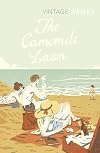
The Camomile Lawn
by Mary Wesley
On This Page
Description
International Bestseller: A novel of youthful love and loss and "a powerful evocation of the war years" in England (The Guardian).On a hot August evening in 1939, cousins Oliver, Calypso, Polly, Walter, and Sophy spent one last night together, celebrating the end of summer, at the home of their aunt and uncle. Now, forty years later, as the motley cast of characters drive to the funeral of one of their own, they recall how important that night truly was—and all that came after.
From show more Oliver, whose desperation to prove himself in war ended up as his downfall, to Calypso, whose flirtations landed her in an unlikely marriage with even less likely results, to Sophy, whose secrets from that night haunted her for the rest of her life, each of them recalls the twisted paths of love and betrayal they walked as the country came apart around them under the coming shadow of World War II.
Mary Wesley masterfully interweaves tragedy and humor in this "extraordinarily accomplished and fast-moving" novel, presenting a tale of both the world at large and the dalliances, allegiances, and losses of her expertly crafted characters (Financial Times).
. show less
Tags
Recommendations






















Member Reviews
Ar first I thought this was a light period piece, a novel of manners set in that ever-enticing milieu -- the British upper class. But as it progresses it turns into something deeper, darker, and certainly sexier. Most of the book is set in England during WWII, though the main narrative is interspersed with scenes around a funeral in the mid-1980's. It follows a dozen people; five young cousins, three men with whom they are involved, their aunt and uncle, and a pair of Jewish refugees. The permutations and combinations within this group are many, various, and sometimes startling. And so are the ways they confront the desperate perils of the war, and the more gradual pains of growing older. A terrific read: makes me want to read more by show more the same author. show less
I have the 1992 miniseries on DVD, but hadn't thought to read Mary Wesley's novel until I found a copy in the library. In praise of the adaptation, there is little difference between the printed and screen versions, and I couldn't help but imagine Jennifer Ehle as Calypso, Felicity Kendal as Helena, and that guy with the bushy eyebrows as Max while reading.
The novel itself is a quick read, mostly dialogue but with some insightful statements ('She felt they had briefly exchanged the truth and grown closer') and vivid descriptions of London during the Second World War ('She walked up to the Row, shabby and sad, robbed of its railings'). Calypso, Polly, Walter, Oliver and Sophy are young cousins who spend every summer at their uncle's show more clifftop house in Cornwall, until the fateful declaration of war in 1939. Then the story moves to London. Everybody seems to be sleeping with everyone else, irregardless of ties family or marriage, because 'we all lived intensely' and 'if we were in love it was acute'. I found some of the female characters - the superficial Calypso, and independent Polly - more sympathetic than others, and the male characters not at all, apart from maybe Hector. The whole cast is very middle class and difficult to relate to, but great fun to read about. Ironically, the only let down in the whole book is the 'modern day' narrative frame, with everyone meeting at the old house in Cornwall for a funeral, which I found rather contrived and boring compared to the free love and tangled relationships of the past.
An enjoyable vignette of another time and place, and I will definitely read more of Mary Wesley's writing. show less
The novel itself is a quick read, mostly dialogue but with some insightful statements ('She felt they had briefly exchanged the truth and grown closer') and vivid descriptions of London during the Second World War ('She walked up to the Row, shabby and sad, robbed of its railings'). Calypso, Polly, Walter, Oliver and Sophy are young cousins who spend every summer at their uncle's show more clifftop house in Cornwall, until the fateful declaration of war in 1939. Then the story moves to London. Everybody seems to be sleeping with everyone else, irregardless of ties family or marriage, because 'we all lived intensely' and 'if we were in love it was acute'. I found some of the female characters - the superficial Calypso, and independent Polly - more sympathetic than others, and the male characters not at all, apart from maybe Hector. The whole cast is very middle class and difficult to relate to, but great fun to read about. Ironically, the only let down in the whole book is the 'modern day' narrative frame, with everyone meeting at the old house in Cornwall for a funeral, which I found rather contrived and boring compared to the free love and tangled relationships of the past.
An enjoyable vignette of another time and place, and I will definitely read more of Mary Wesley's writing. show less
This was an unexpectedly good read. Mary Wesley presented another side of war - how people tried to live their lives normally during wartime. Unlike Louis de Bernieres' The Dust that Falls from Dreams which is similar in background, The Camomile Lawn is a much niftier read, and one that slightly pulls your heartstrings at how hard the characters are trying to live their lives. What you have to get used to is the quick change of perspectives and scenes without warning, and you have to find your bearings on where the plot is at.
Conventional upper-middle class cousins and friends embark on unconventional sex and love life once World War II disrupts the social order. Written in the Nineteen Eighties, this story sometimes seems to act as a plea to readers to remember that baby-boomers were not the first cohort to flout sexual mores. Ms Wesley would insist it was 1939 when the revolution happened.
There's a disappointing lack of character development for such a large cast, except perhaps for the wilful Calypso; and the split in narrative between the war years, and a funeral in the Eighties doesn't help the coherence.
There's a disappointing lack of character development for such a large cast, except perhaps for the wilful Calypso; and the split in narrative between the war years, and a funeral in the Eighties doesn't help the coherence.
This is told in 2 timeframes, one prior to and early in WW2, the other sometimes in the 80s (guess) when those present in the first time frame reconvene for a funeral of one of their number. It's interesting device, showing the story as it evolved, as well as in retrospect. There's much we learn from looking back at the same events that is maybe not entirely clear initially.
I'm not sure that the slightly incestuous relationships were necessarily indicative of the experience of every one during the war, but it certainly brings out the impact it had on people's lives. At the start of the story, 4 cousins come down to stay with their aunt & uncle and the youngest cousin. They are close knit, they exist as a small group and that was show more entirely convincing. As a depiction of the outbreak of war, it's beautifully done, the moon lit dinner party versus the threatening clouds that hover all around. It deals with life, love, relationships, sex (rather a lot, but at least its not graphic).
It was a nice book to listen too. part of the mind wants to fill in the 40 odd years in the middle. show less
I'm not sure that the slightly incestuous relationships were necessarily indicative of the experience of every one during the war, but it certainly brings out the impact it had on people's lives. At the start of the story, 4 cousins come down to stay with their aunt & uncle and the youngest cousin. They are close knit, they exist as a small group and that was show more entirely convincing. As a depiction of the outbreak of war, it's beautifully done, the moon lit dinner party versus the threatening clouds that hover all around. It deals with life, love, relationships, sex (rather a lot, but at least its not graphic).
It was a nice book to listen too. part of the mind wants to fill in the 40 odd years in the middle. show less
A novel about a group of English cousins at the eve of WWII and what happened to them in the war, with flash forwards to the present day. We see much of the action through the eyes of Sophy, the odd girl out because she's much younger than the others and because of her Anglo-Eurasian race. As in other England at war novels, the war gives these young people opportunities for adventures – sexual ones – that they wouldn't have had in conservative pre-war days. There are some interesting twists in their emotional lives and several of the characters end up in places they never expected to go. I like that one of the women who finds herself behaving unconventionally is a woman in her 40s who had been the model of a good wife. I was show more obscurely pleased that the femme fatale cousin wears the same perfume I do, Mitsouko.
I have some quibbles with some of the plot: there's a dramatic subplot that doesn't go anywhere either plot-wise or emotionally, and nearly every character is revealed to have some sexual quirk. What a family! I had some skepticism about how the story ends, too, but I acknowledge that it’s a door opening to possibilities and not a "they lived happily ever after" false note. show less
I have some quibbles with some of the plot: there's a dramatic subplot that doesn't go anywhere either plot-wise or emotionally, and nearly every character is revealed to have some sexual quirk. What a family! I had some skepticism about how the story ends, too, but I acknowledge that it’s a door opening to possibilities and not a "they lived happily ever after" false note. show less
The story follows a middle-aged couple whose nephews and nieces spend summers with them at their home in Cornwall, location of the eponymous lawn. As war looms in 1939 the cousins realize this may be their last summer together. Although sexually uninhibited to the point of promiscuity, the characters are also repressed in many ways, an interesting but realistic contradiction. Just when it seems the action is going to be all sex and war, Wesley throws in some dark slapstick humour. Most of the story takes place in the war years then interspersed with passages forty years later when the now elderly characters and their offspring attend a funeral and reflect on their lives. For a story that wandered along, seemingly with little happening, show more the ending wrapped up everything very neatly. This was made into a movie that I will definitely seek out. show less
Members
- Recently Added By
Published Reviews
ThingScore 100
Mary Wesley's The Camomile Lawn is instantly seductive. We quickly know, without any laborious feeling that we are being force-fed information, what Helena is like, and what her husband Richard is like, and why. Before we meet them - or before they arrive off the London train - we know about their nephews and nieces, Calypso, Walter, Polly and Oliver, whose stories we shall be following. We show more know about 10-year-old Sophy, and Helena's dislike of her; and we see fortyish Helena in her deckchair through Sophy's eyes, as she perches unseen in the ilex tree. We know the house is on a height above the sea. We know Calypso is breathtakingly beautiful. We know it is the summer of 1939, with war imminent. And all this in two relaxed pages. show less
added by Nickelini
Lists

Best family sagas
244 works; 34 members

A Novel Cure
742 works; 23 members

Julie Parson’s Old Books
52 works; 4 members

Books We Love to Reread
688 works; 296 members
Author Information

25+ Works 4,570 Members
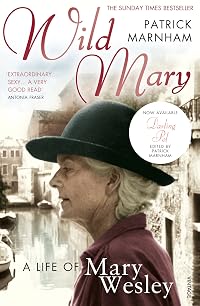
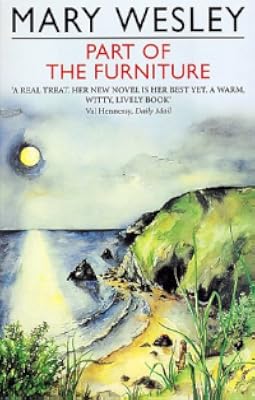
Mary Aline Mynors Farmar was born in Berkshire in 1912. She was the youngest of three children and her father was an army officer, so the family frequently moved. In 1936, she married Lord Swinfen, had two children, and divorced in the early 1940's. During World War II, she fell in love with journalist Eric Siepmann and lived with him for several show more years before they were married, which caused Mary's parents to cut her out of their will in disapproval. When her husband died, she was broke with a teenage son. During the late 1960's, she wrote two books, "Speaking Terms" and "The Sixth Seal," but it wasn't until she was in her seventies that her first major novel was published, "Jumping the Queue." Afterwards, she published "Cammomile Lawn" (1984), which is about love and sex in the British upper middle class and was adapted for television, "Harnessing Peacocks" (1986), which is about a young unwed mother who turns to prostitution to pay for her son's education, and "The Vacillations of Peppy Carew" (1986). Wesley's other titles include "A Sensible Life" (1990), "A Dubious Legacy" (1993), "An Imaginative Experience" (1994) and "Part of the Furniture" (1997). She died of natural causes following a long battle with gout on December 30, 2002. (Bowker Author Biography) show less
Some Editions
Series
Belongs to Publisher Series
Work Relationships
Common Knowledge
- Canonical title*
- Kummelimuru
- Original title
- The Camomile Lawn
- Original publication date
- 1984
- People/Characters
- Oliver Anstey (only child of Sarah Cuthbertson Anstey, Richard Cuthbertson's elder sister); Walter Cuthbertson (son of Martin Cuthbertson, Richard's younger brother); Polly Cuthbertson (daughter of Martin Cuthbertson, Richard's younger brother); Calypso Cuthbertson (later Calypso Grant | only child of Richard Cuthbertson's elder brother John Cuthbertson); Helena Cuthbertson (Aunt Helena, second wife of Richard); Richard Cuthbertson (Uncle Richard) (show all 14); Sophy (illegitimate orphaned daughter of Richard's late half-sister); Max Erstweiler (Austrian refugee); Monika Erstweiler (wife of Max); David Floyer (son of Vicar); Paul Floyer (son of Vicar); Hector Grant; Tony Wood; Hamish Grant
- Important places
- Cornwall, England, UK; London, England, UK
- Important events
- World War II
- Related movies
- The Camomile Lawn (1992 | IMDb)
- Dedication
- To James Hale
- First words
- Helena Cuthbertson picked up the crumpled Times by her sleeping husband and went to the flower room to iron it.
- Last words
- (Click to show. Warning: May contain spoilers.)Driving towards Helston Sophy uneasily remembered the old adage: 'Be careful what you wish for, for it will surely come true.'
- Blurbers
- Seymour-Smith, Martin; Hill, Susan
*Some information comes from Common Knowledge in other languages. Click "Edit" for more information.
Classifications
Statistics
- Members
- 913
- Popularity
- 29,270
- Reviews
- 22
- Rating
- (3.71)
- Languages
- 11 — Danish, Dutch, English, Estonian, Finnish, French, German, Italian, Lithuanian, Spanish, Swedish
- Media
- Paper, Audiobook, Ebook
- ISBNs
- 40
- ASINs
- 16