
Nickel and Dimed: On (Not) Getting By in America
by Barbara Ehrenreich
On This Page
Description
This engrossing piece of undercover reportage is a New York Times best-seller. With nearly a million copies in print, Nickel and Dimed is a modern classic that deftly portrays the plight of America's working-class poor. Author Barbara Ehrenreich decides to see if she can scratch out a comfortable living in blue-collar America. What she discovers is a culture of desperation, where workers often take multiple low-paying jobs just to keep a roof overhead.Tags
Recommendations
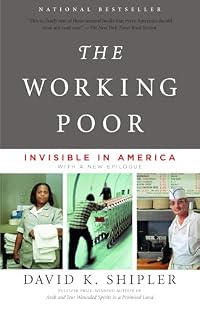
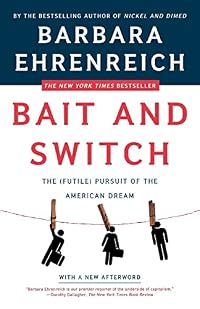

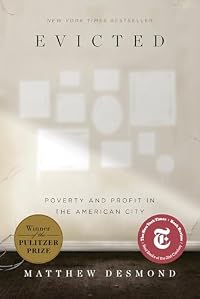



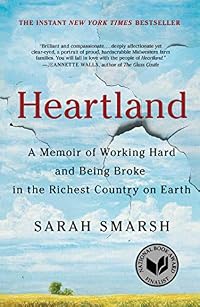
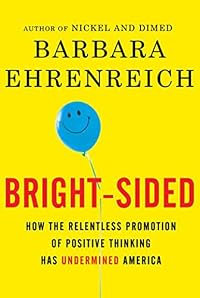
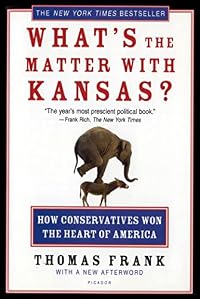
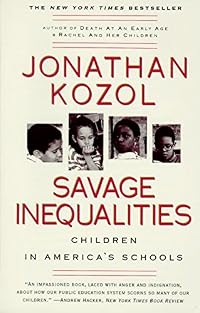
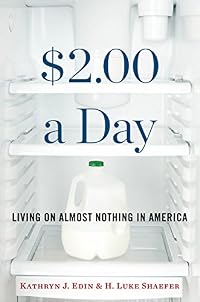



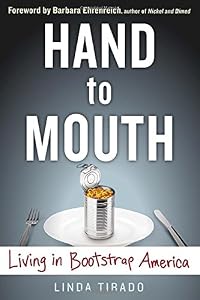

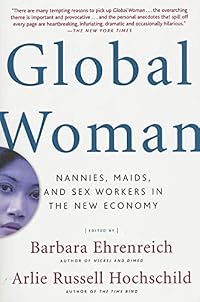

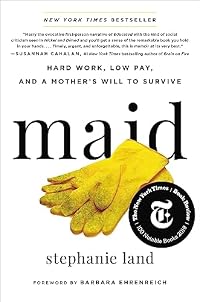



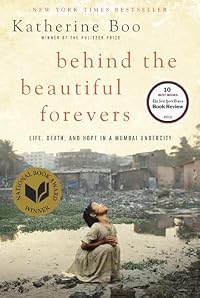

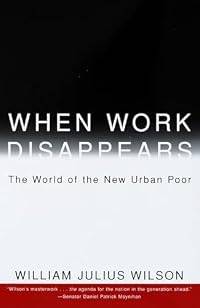

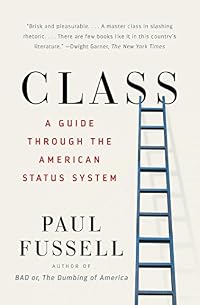



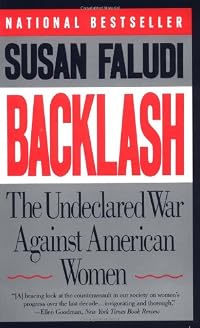

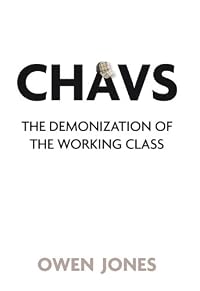



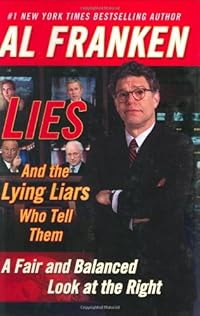
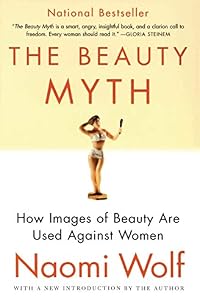




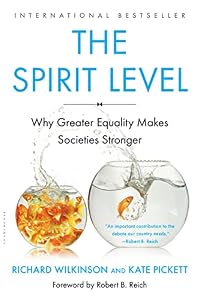


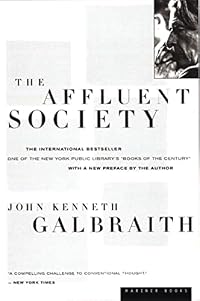

Member Recommendations
4leschats Both deal with the cyclical nature of poverty and its ability to trap people.
50
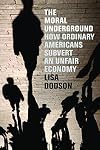
zhejw In the 1990s, Barbara Ehrenreich goes "undercover" to discover how low wage workers (don't) get by. In the next decade, Lisa Dodson tells the stories of some such workers and their children, but focuses her time on those who supervise and serve them, subverting the system to help.
30
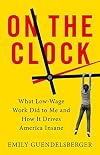
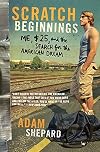

Euryale Thompson's work focuses more on the nature of low wage work and the ways immigrants are segregated in certain industries or departments, rather than on housing conditions or whether the wages are sufficient for survival.
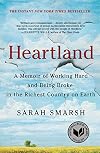

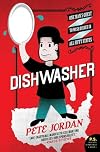
Othemts A pair of books that show the conditions for the worker in America's least desirable jobs.
11

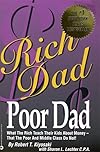
Rich Dad, Poor Dad: What the Rich Teach Their Kids About Money That the Poor and Middle Class Do Not! by Robert T. Kiyosaki
readysetgo An opposing view to the fatalistic tone of this book.
03
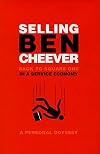
nessreader Both about middle class writers adrift in the service economy and being miserable there.
Member Reviews
Revisiting a book from my 100 Favorite Books of All Time list to see if it still holds up.
In the wake of Clinton Administrations slashing of social safety nets in the 1990s, writer Barbara Ehrenreich decided to do an experiment using undercover participatory journalism. She worked in a series of low wage jobs over several months each in Florida, Maine, and Minnesota to see if it was possible to pay for housing, food, and other necessities. She went to the latter two states because as a white person who speaks English as a first language she found that in a lot of places in the United States these were advantages that automatically got her better paying work. The results are not surprising in that she struggled to make ends even with the show more strictest budgeting.
This book shouldn't have to exist. There are millions of low-wage workers who could tell us their experiences if we only listened so a more privileged person like Ehrenreich shouldn't have to go undercover. But since the book exists, it does serve as a proxy for how low-wage jobs are destructive to the bodies of workers who suffer great indignities while remaining largely invisible to society at large. Ehrenreich is particularly observant of hiring practices rituals such as personality tests and drug tests that serve to emphasize the worker's mean status. She also makes interesting observations about how the maid service she worked for trained employees to clean in a manner that was more
Sadly, this book remains highly relevant over 20 years later. In fact, when Ehrenreich discusses her wages she's often getting the same hourly rate paid to low-wage workers today despite the costs of housing and other necessities skyrocketing in that time. As we are living through the Great Resignation and the largest labor organizing drive in decades, hopefully we will begin to see the conditions described in this book fading into history.
Favorite Passages:
In the wake of Clinton Administrations slashing of social safety nets in the 1990s, writer Barbara Ehrenreich decided to do an experiment using undercover participatory journalism. She worked in a series of low wage jobs over several months each in Florida, Maine, and Minnesota to see if it was possible to pay for housing, food, and other necessities. She went to the latter two states because as a white person who speaks English as a first language she found that in a lot of places in the United States these were advantages that automatically got her better paying work. The results are not surprising in that she struggled to make ends even with the show more strictest budgeting.
This book shouldn't have to exist. There are millions of low-wage workers who could tell us their experiences if we only listened so a more privileged person like Ehrenreich shouldn't have to go undercover. But since the book exists, it does serve as a proxy for how low-wage jobs are destructive to the bodies of workers who suffer great indignities while remaining largely invisible to society at large. Ehrenreich is particularly observant of hiring practices rituals such as personality tests and drug tests that serve to emphasize the worker's mean status. She also makes interesting observations about how the maid service she worked for trained employees to clean in a manner that was more
Sadly, this book remains highly relevant over 20 years later. In fact, when Ehrenreich discusses her wages she's often getting the same hourly rate paid to low-wage workers today despite the costs of housing and other necessities skyrocketing in that time. As we are living through the Great Resignation and the largest labor organizing drive in decades, hopefully we will begin to see the conditions described in this book fading into history.
Favorite Passages:
I make no claims for the relevance of my experiences to anyone else's, because there is nothing typical about my story. Just bear in mind, when I stumble, that this is in fact the best- case scenario: a person with every advantage that ethnicity and education, health, and motivation can conder attempting, in a time of exuberant prosperity, to survive in the economy's lower depths." - pp. 9-10
It would be nice if someone would read this sad-eyed crowd the Sermon on the Mount, accompanied by a rousing commentary on income inequality and the need for a hike in the minimum wage. But Jesus makes his appearance here only as a corpse; the living man, the wine-guzzling vagrant and precocious socialist, is never once mentioned, nor anything he ever had to say. Christ crucified rules, and it may be that the true business of modern Christianity is to crucify him again and an again so that he can never get a word out of his mouth." pp. 68-69
What you don't necessarily realize when you start selling your time by the hour is that what you're really selling is your life.show less
It may be nearly 25 years old and the numbers may have changed, but the problems remain the same. This was a terrific experience on audiobook - Cristine McMurdo Wallis had the perfect tone and voice to match Ehrenreich's journey to try and survive on minimum wage in various states.
It's heartbreaking to hear all the nonsense she had to deal with but, more importantly, what millions have to deal with on a daily basis just to survive. Any unexpected expense or medical issue will completely ruin them and the book does not shy away from pulling punches on how larger corporations and business owners will do ANYTHING to entice workers but raise wages despite massive profits.
It's a timeless, muckracking, brave and thought provoking piece of show more journalism. I think the author recognizes that she came nowhere close to the reality of minimum wage workers considering she had a car, a family to go back to, a degree and a starting cash reserve to help her through. show less
It's heartbreaking to hear all the nonsense she had to deal with but, more importantly, what millions have to deal with on a daily basis just to survive. Any unexpected expense or medical issue will completely ruin them and the book does not shy away from pulling punches on how larger corporations and business owners will do ANYTHING to entice workers but raise wages despite massive profits.
It's a timeless, muckracking, brave and thought provoking piece of show more journalism. I think the author recognizes that she came nowhere close to the reality of minimum wage workers considering she had a car, a family to go back to, a degree and a starting cash reserve to help her through. show less
No big surprises here, but still a horrifying look at the problem of the working poor in America. After going "undercover" as an unskilled worker, Ehrenreich discovers that it's just about impossible to pay for housing on $6 to $7 an hour. Ehrenreich is careful to point that her circumstances--having money in the bank to go back to, being able to pay for a doctor when she contracts a skin ailment rather than having to rely on the emergency room, being able to call it quits before she's forced to live in her car, and even having a car to begin with--make her experiences very different from those of people who don't have such resources to fall back on. The epilogue was particularly valuable in providing a broader economic and sociological show more perspective on why wages don't rise even when there's a shortage of unskilled labor, why the underpaid don't unionize, why people who are working full time or more are still living in poverty, and why poverty is so easily ignored by the better-off. show less
Nickel and Dimed documents Barbara Ehrenreich's attempt to be financially solvent as a blue-collar service industry worker. In the process she stares down the same dirty road as millions of Americans, cleaning homes and hotels, waiting tables, and working at Wal-Mart. She relates a story which would make a cultural anthropologist proud, and deftly avoids being preachy in the process. I suspect there are writers who would bargain their souls to be able to write with such simply clarity and to make humor and gravity sit together so easily in the same paragraph. If you are interested in social issues, this book will confirm your suspicions and possibly incite you to activism. I would, however, recommend this book to almost anyone, because show more it is primarily a book about people - a topic which never gets old. show less
I find this book to be incredibly offensive. It's written by the upper middle class for the upper middle class and comes off as condescending, in my opinion. (This, of course, makes me wonder how our studies of "third world" women would appear to them. We are dabblers in their world, can we really understand?)
Ehrenreich's refusal to give up her entitlements (and indeed her endowments) makes it so she doesn't have to truly experience poverty. She discusses the poverty line in the Evaluation but she only complains that it measures something arbitrary; she doesn't note that what it does not measure are exactly those things that enabled her to walk out of a job when she was upset. She doesn't need the salary, she has other things to fall show more back on.
From personal experience I have to say that she got quite a bit wrong. In the Introduction she wonders why when she comes out to some of her coworkers they are neither surprised nor upset, instead only ask her if this means she won't be returning for her next shift. She thinks this is because (a) writing is thought of as a hobby, not a job and (b) that she wasn't successful at fooling them. What she does not ever realize is that they ask that question because that is their primary concern. Someone is going to have to cover that shift and it could be them. It could be a godsend because they need the extra money or it could be a disaster because switched shifts means switched transportation/childcare/and a host of other issues Ehrenreich doesn't seem to acknowledge until the Evaluation.
I've worked some of those jobs. I've been told that bathroom breaks take me away from my desk and therefore interfere with the work of the business. I've stood on my feet for 11 hour shifts snatching a dinner break on my feet in a corner of the crowded back room. I know that single mother who supports herself and three children on what she makes from working at a convenience store and a gas station and who faces financial ruin if she has to take time off because her middle son is sick. I've had my purse searched every day at the end of every shift despite my years of good work. I've been "honey" and "sweetie" and paid more than I could afford in order to meet a frequently changing dress code.
One thing that particularly bothered me was when Ehrenreich did not stand up for George, the dishwasher who was accused of theft. She compares working at this restaurant to being in a POW camp and uses that to excuse her lack of courage. She's wrong. The fault was hers, not the job. Plenty of us have seen our coworkers falsely accused and plenty of us have stood up. Don't blame the poor and the oppressed for your own failings. show less
Ehrenreich's refusal to give up her entitlements (and indeed her endowments) makes it so she doesn't have to truly experience poverty. She discusses the poverty line in the Evaluation but she only complains that it measures something arbitrary; she doesn't note that what it does not measure are exactly those things that enabled her to walk out of a job when she was upset. She doesn't need the salary, she has other things to fall show more back on.
From personal experience I have to say that she got quite a bit wrong. In the Introduction she wonders why when she comes out to some of her coworkers they are neither surprised nor upset, instead only ask her if this means she won't be returning for her next shift. She thinks this is because (a) writing is thought of as a hobby, not a job and (b) that she wasn't successful at fooling them. What she does not ever realize is that they ask that question because that is their primary concern. Someone is going to have to cover that shift and it could be them. It could be a godsend because they need the extra money or it could be a disaster because switched shifts means switched transportation/childcare/and a host of other issues Ehrenreich doesn't seem to acknowledge until the Evaluation.
I've worked some of those jobs. I've been told that bathroom breaks take me away from my desk and therefore interfere with the work of the business. I've stood on my feet for 11 hour shifts snatching a dinner break on my feet in a corner of the crowded back room. I know that single mother who supports herself and three children on what she makes from working at a convenience store and a gas station and who faces financial ruin if she has to take time off because her middle son is sick. I've had my purse searched every day at the end of every shift despite my years of good work. I've been "honey" and "sweetie" and paid more than I could afford in order to meet a frequently changing dress code.
One thing that particularly bothered me was when Ehrenreich did not stand up for George, the dishwasher who was accused of theft. She compares working at this restaurant to being in a POW camp and uses that to excuse her lack of courage. She's wrong. The fault was hers, not the job. Plenty of us have seen our coworkers falsely accused and plenty of us have stood up. Don't blame the poor and the oppressed for your own failings. show less
It's been years since I first read this book, yet I still refer to it often. The amount of effort involved in keeping a minimum wage job going in America, and the failure of the world's biggest economy to provide for it's citizens in any meaningful way, still leave me filled with gratitude that I live in a country with it's roots more firmly in socialism than capitalism.
Still looking forward to going to a tent revival as a form of entertainment one day!
Still looking forward to going to a tent revival as a form of entertainment one day!
A lot has changed in the past twenty years, but I am impressed with the initiative this woman took to enter the low wage workforce, in her late fifties, to learn from the inside what it means to try to make a living on minimum wage or little more. These days, I think the situation for those living in poverty is even more critical, as it is harder now to even find a full time position in many low wage jobs. But even those with full time jobs, at the lowest wage threshold, are unable to live on such little income even with multiple jobs, overpriced substandard housing, and overcrowded homes.
What stands out most to me, though, is the author's assertion that the "'working poor'. . . are in fact the major philanthropists of our society. show more They neglect their own children so that the children of others will be cared for; they live in substandard housing so that other homes will be shiny and perfect; they endure privation so that inflation will be low and stock prices high." This reminds me of statistics that show how those with the lowest incomes give the most, percentage-wise, in charity -- makes me think of the widow's mite.
When will the upper classes realize that those who work the hardest in our society are living with the least benefits: no health care or even regular, healthy meals; negative and often incorrect stereotypes of low intelligence, laziness, drug and alcohol abuse; substandard and highly overpriced housing even as affordable housing is being bought out by the upper classes in order to build higher priced housing and ammenities for the middle and upper classes. I have been blessed in my own circumstances, and there are many more who are in worse shape than I. They are not all lazy, alcoholic, drug addicts, any more than I am. One day, my education might well pay off in a better job, higher income and a better standard of living, even in a society where a college degree is increasingly undervalued in the workforce; but millions don't even have that much. show less
What stands out most to me, though, is the author's assertion that the "'working poor'. . . are in fact the major philanthropists of our society. show more They neglect their own children so that the children of others will be cared for; they live in substandard housing so that other homes will be shiny and perfect; they endure privation so that inflation will be low and stock prices high." This reminds me of statistics that show how those with the lowest incomes give the most, percentage-wise, in charity -- makes me think of the widow's mite.
When will the upper classes realize that those who work the hardest in our society are living with the least benefits: no health care or even regular, healthy meals; negative and often incorrect stereotypes of low intelligence, laziness, drug and alcohol abuse; substandard and highly overpriced housing even as affordable housing is being bought out by the upper classes in order to build higher priced housing and ammenities for the middle and upper classes. I have been blessed in my own circumstances, and there are many more who are in worse shape than I. They are not all lazy, alcoholic, drug addicts, any more than I am. One day, my education might well pay off in a better job, higher income and a better standard of living, even in a society where a college degree is increasingly undervalued in the workforce; but millions don't even have that much. show less
Members
- Recently Added By
Published Reviews
ThingScore 100
We have Barbara Ehrenreich to thank for bringing us the news of America's working poor so clearly and directly, and conveying with it a deep moral outrage and a finely textured sense of lives as lived.
added by readysetgo
Lists

LT picks: Blue Books
197 works; 44 members
The 99% -- Most Readable Non-Fiction
37 works; 8 members

Non-Fiction Worth Reading
1,015 works; 260 members

The Guardian's 100 best books of the 21st century
100 works; 21 members

Unread books
1,063 works; 87 members

Banned Books Week 2014
268 works; 63 members

100 New Classics
101 works; 13 members

2022
17 works; 1 member

Macmillan Publishers
129 works; 3 members

Maybe This Year? Books to Look Forward To
407 works; 9 members

Read in 2021
25 works; 1 member

Shaykh Hamza's Book Recommendations
439 works; 3 members
Best Book Club Selections
26 works; 8 members

My List
302 works; 1 member

SHOULD Read Books!
354 works; 9 members

Club Read's Recommended Nonfiction Written by Women
618 works; 30 members

NYT 100 best books of 21st C
100 works; 31 members
Our Favorite Banned Books
138 works; 122 members

The Complete Rory Gilmore Reading List
506 works; 5 members

.
184 works; 1 member

Books Read in 2010
631 works; 11 members

Books Read in 2017
4,248 works; 130 members

My TBR Challenge Leftovers
22 works; 1 member

KIB Non-Fiction Book Cloud
41 works; 1 member
Adult Books for YA Readers
194 works; 6 members

Blue Pyramid 1,276 Best Books of All Time
1,248 works; 32 members

Five star books
1,755 works; 108 members

Literary Works Read in College
316 works; 15 members
Banned or Challenged Books
400 works; 37 members

My Year Spent Doing Something Stupid so I Could Write This Book
31 works; 5 members

Income Inequality
20 works; 4 members

2000s decade
85 works; 7 members

Books Featured on Gilmore Girls
307 works; 21 members

Female Author
1,235 works; 67 members

B-B to Get
131 works; 1 member
Author Information

35+ Works 22,826 Members
Barbara Ehrenreich is the author of "Blood Rites"; "The Worst Years of Our Lives"; "Fear of Falling", which was nominated for a National Book Critics Circle Award, & eight other books. A frequent contributor to Time, Harper's, Esquire, The New Republic, Mirabella, The Nation, The New York Magazine, she lives near Key West, Florida. (Publisher Fact show more Sheets) Political activist and writer Barbara Ehrenreich was born in Butte, Montana on August 26, 1941. She studied physics at Reed College and graduated in 1963. She received a Ph.D. in Cell Biology from Rockefeller University in 1968. Rather than pursuing a career in science, however, she decided to focus on social change. Ehrenreich has written columns and contributed articles to publications including Time Magazine, The Progressive, The New York Times, Mother Jones, The Atlantic Monthly, Ms, The New Republic, Harper's Magazine, and The Nation. She taught essay writing at the Graduate School of Journalism at the University of California, Berkeley in 1998 and 2000. Ehrenreich has written many books, with 2001's Nickel and Dimed: On (Not) Getting by in America and 2005's Bait and Switch, The (Futile) Pursuit of the American Dream both becoming New York Times bestsellers. Nickel and Dimed examines working-class poverty, while Bait and Switch discusses white-collar unemployment. Her next bestseller was in 2014 with Living With a Wild God: A Nonbeliever's Search for the Truth about Everything. In 1998 Ehrenreich was named Humanist of the Year by the American Humanist Association, and she received the Nation Institute/Puffin Foundation Prize for Creative Citizenship in 2004. (Bowker Author Biography) show less
Some Editions
Awards and Honors
Awards
Distinctions
Notable Lists
Series
Belongs to Publisher Series
Work Relationships
Is contained in
Has the adaptation
Has as a student's study guide
Common Knowledge
- Canonical title
- Nickel and Dimed: On (Not) Getting By in America (Not)
- Original title
- Nickel and dimed. Undercover in low-wage USA
- Original publication date
- 2001
- People/Characters
- Barbara Ehrenreich; Lewis Lapham
- Important places
- Walmart (Minneapolis, Minnesota, USA); Key West, Florida, USA; Portland, Maine, USA; Minneapolis, Minnesota, USA; USA; Florida, USA (show all 8); Maine, USA; Minnesota, USA
- First words
- Mostly out of laziness, I decide to start my low-wage life in the town nearest to where I actually live, Key West, Florida, which, with a population of about 25,000 is elbowing its way up to the status of a genuine city.
- Last words
- (Click to show. Warning: May contain spoilers.)But the sky will not fall, and we will all be better off for it in the end.
- Blurbers
- Davis, Mike; Terkel, Studs; Labaton, Viven; Duneier, Mitchell; Miller, Laura; Klein, Naomi (show all 8); Kozol, Jonathan; Schor, Juliet
- Original language
- English
- Canonical DDC/MDS
- 305.569092; 331.23
- Canonical LCC
- HD4918
Classifications
- Genres
- Sociology, General Nonfiction, Nonfiction, Biography & Memoir
- DDC/MDS
- 305.569092 — Social sciences Social sciences, sociology & anthropology Groups of people People by social and economic levels Lower, alienated, excluded classes Poor people History, geographic treatment, biography
- LCC
- HD4918 — Social sciences Industries. Land use. Labor Industries. Land use. Labor Labor. Work. Working class Wages
- BISAC
Statistics
- Members
- 11,742
- Popularity
- 751
- Reviews
- 231
- Rating
- (3.74)
- Languages
- 14 — Chinese, Dutch, English, Finnish, French, German, Italian, Korean, Norwegian (Bokmål), Norwegian, Polish, Spanish, Swedish, Portuguese (Portugal)
- Media
- Paper, Audiobook, Ebook
- ISBNs
- 57
- UPCs
- 3
- ASINs
- 29