Small Wars
by Sadie Jones
On This Page
Description
Fresh off her triumphantly assured debut novel The Outcast, award-winning author Sadie Jones has again delivered a quiet masterpiece in Small Wars. Set on the colonial, war-torn island of Cyprus in 1956, Jones tells the story of a young solider, Hal Treherne, and the effects of this "small war" on him, his wife, Clara, and their family. Reminiscent of classic tales of love and war such as The English Patient and Atonement, Jones's gripping novel also calls to mind the master works of show more Virginia Woolf and their portrayal of the quiet desperation of a marriage in crisis. Small Wars is at once a deeply emotional, meticulously researched work of historical fiction and a profound meditation on war-time atrocities committed both on and off the battlefield. show lessTags
Recommendations



























Member Reviews
Images of torture and terror from Iraq, Afghanistan, and Guantanamo have slid across our tv screens, jumped out of newspapers and magazines, and peppered conversations over the past number of years. How, we wonder, did we come to this, this unacceptable and horrifying state of affair? Has civilization broken down so badly that we can turn a blind eye to this sort of thing unless, and only unless, it is thrust into our common consciousness? Surely tacit approval was not granted. We can not have so lost our moral compass, especially compared to the civilized and relatively humane generations who have waged war before us, can we? Unfortunately, this isn't the case. Not that we have gone so misguided, but that the generations before us show more weren't just as ruthless and willing to step over the line. War is hell in more ways than one and its damages can be counted in far more than casualty numbers. Loss of innocence, moral breakdown, and silent complicity are all terrible, soul destroying by-products that have been a part of war as long as war has been a part of mankind.
Major Hal Treherne is posted to Cyprus during the 1950's and is joined by his wife Clara and their twin toddler daughters. His war is not to be the enormous consuming war of their fathers, World War II, instead, his war is to be the small war of waning colonialism on this tiny island so vital to the Middle East. He is mostly happy with his command although he longs for more important action than sweeping the local villages for EOKA terrorists. Eventually this vague dissatisfaction starts to seep into his heretofore charmed marriage. Meanwhile, his wife Clara must master herself and her fears about this posting and perhaps her very unsuitability to be an army wife, only relaxing once the family is safely housed on base.
But isolated, violent events occur to shatter the false sense of security for the Treherne family and Hal and Clara react diametrically opposite to each other in the face of these disturbing happenings. At first Hal is exhilerated and blind to Clara's fear and feelings. As he learns more though, Hal's conception of duty and his sense of right and wrong are tested beyond endurance. He is torn between his duty to his country and the men with whom he serves and his own conscience and as he struggles, his life with Clara erodes and becomes unrecognizable until both halves of him, public and private are at the breaking point.
This is a fascinating look at the psychological strain of war and how essentially good people react to it. It counts the damage to intimacy and goodness. Jones allows her characters to judge the scenes they see and hear about without much authorial intrusion at all. Her characters are strong, even when they are crumbling, and they illustrate the timelessness of those news pieces that reach us and so horrify us today. The writing is tight and well-done. The tension slowly grows as the story continues but it grows unevenly, as it would in war: longer stretches of less watchfulness interspersed with brief bursts of pulse-pounding events. The characters are easy to sympathize with as they wrestle with their duties and desires. All in all, a sensitive and powerful story and one I'd highly recommend. show less
Major Hal Treherne is posted to Cyprus during the 1950's and is joined by his wife Clara and their twin toddler daughters. His war is not to be the enormous consuming war of their fathers, World War II, instead, his war is to be the small war of waning colonialism on this tiny island so vital to the Middle East. He is mostly happy with his command although he longs for more important action than sweeping the local villages for EOKA terrorists. Eventually this vague dissatisfaction starts to seep into his heretofore charmed marriage. Meanwhile, his wife Clara must master herself and her fears about this posting and perhaps her very unsuitability to be an army wife, only relaxing once the family is safely housed on base.
But isolated, violent events occur to shatter the false sense of security for the Treherne family and Hal and Clara react diametrically opposite to each other in the face of these disturbing happenings. At first Hal is exhilerated and blind to Clara's fear and feelings. As he learns more though, Hal's conception of duty and his sense of right and wrong are tested beyond endurance. He is torn between his duty to his country and the men with whom he serves and his own conscience and as he struggles, his life with Clara erodes and becomes unrecognizable until both halves of him, public and private are at the breaking point.
This is a fascinating look at the psychological strain of war and how essentially good people react to it. It counts the damage to intimacy and goodness. Jones allows her characters to judge the scenes they see and hear about without much authorial intrusion at all. Her characters are strong, even when they are crumbling, and they illustrate the timelessness of those news pieces that reach us and so horrify us today. The writing is tight and well-done. The tension slowly grows as the story continues but it grows unevenly, as it would in war: longer stretches of less watchfulness interspersed with brief bursts of pulse-pounding events. The characters are easy to sympathize with as they wrestle with their duties and desires. All in all, a sensitive and powerful story and one I'd highly recommend. show less
I have to confess that the novel had me hooked even before I started: as a child, my military family was stationed in the Mediterranean for some years, our first overseas posting. It was wonderful and a little traumatic -- some of our best and worst memories. The locational setting of Small Wars, the military family at the story's center, and the era (late '50s) immediately appealed to me and I was so excited to read this novel.
My expectations were met and surpassed.
I really had two reactions with this book: one, an intense sense of nostalgia when I started (as Jones so perfectly captured that sort of numb exhaustion that comes from arriving in a foreign country so alien it's impossible to process); and two, a gripping need to finish show more the story because I had to know what happened.
There's a sparse, almost polite feel to the writing that feels both very British and very dated -- in a good way. It's like reading a novel from the '50s with that sort of painful restraint that is beautiful and maddening. There's just so much unspoken it makes one wiggle with discomfort and sadness; the burden of expectation and the understanding of one's role just weighs on the characters, on the reader.
Jones has said in interviews that the current conflicts in Iraq and Afghanistan provided the inspiration for this novel and I was a bit apprehensive about thin caricatures of military life or sweeping judgement. Instead, this very deft novel explores the challenge of duty and the obligation of a soldier, the impact of decisions made for the 'greater good' and the fallout when one has to come home after participating in unimaginable cruelty. I found myself empathizing with all the characters, even at their worst, even when I wanted so badly for the story to go in another direction. An absolutely moving war novel -- even for those who might not typically read war fiction. show less
My expectations were met and surpassed.
I really had two reactions with this book: one, an intense sense of nostalgia when I started (as Jones so perfectly captured that sort of numb exhaustion that comes from arriving in a foreign country so alien it's impossible to process); and two, a gripping need to finish show more the story because I had to know what happened.
There's a sparse, almost polite feel to the writing that feels both very British and very dated -- in a good way. It's like reading a novel from the '50s with that sort of painful restraint that is beautiful and maddening. There's just so much unspoken it makes one wiggle with discomfort and sadness; the burden of expectation and the understanding of one's role just weighs on the characters, on the reader.
Jones has said in interviews that the current conflicts in Iraq and Afghanistan provided the inspiration for this novel and I was a bit apprehensive about thin caricatures of military life or sweeping judgement. Instead, this very deft novel explores the challenge of duty and the obligation of a soldier, the impact of decisions made for the 'greater good' and the fallout when one has to come home after participating in unimaginable cruelty. I found myself empathizing with all the characters, even at their worst, even when I wanted so badly for the story to go in another direction. An absolutely moving war novel -- even for those who might not typically read war fiction. show less
I loved this book. Mainly set in occupied Cyprus in the late 1950’s, its subject is a young couple: Hal, a bright young officer who hasn’t been taught to have any kind of real emotional life, and Clara, his young and dutiful wife.
The book divides itself between looking at Hal, appalled and yet brutalised by the conflict he is a part of, and Clara, bored, frightened and powerless. As Hal's military involvement increases, the couple become increasingly unable to communicate. Cyprus itself is beautifully evoked, but it casts no spell over the protagonists.
I was unconvinced by the faltering reconciliation at the end of the book, but as an examination of Englishness, and the effects of war on everyone involved, as well as a portrait of show more a country I’ve never visited, it was a gripping and involving read. show less
The book divides itself between looking at Hal, appalled and yet brutalised by the conflict he is a part of, and Clara, bored, frightened and powerless. As Hal's military involvement increases, the couple become increasingly unable to communicate. Cyprus itself is beautifully evoked, but it casts no spell over the protagonists.
I was unconvinced by the faltering reconciliation at the end of the book, but as an examination of Englishness, and the effects of war on everyone involved, as well as a portrait of show more a country I’ve never visited, it was a gripping and involving read. show less
I loved this novel from beginning to end, and sped through the near 500 pages in 24 hours. Everything about it was terrific - the unusual setting of the Greek Cypriot unrest against British occupation in Cyprus, the subtle tension built up around the military action and the ensuing psychological fallout, and the pinpoint observations of the slow rot setting into what had been a perfect marriage.
Jones is an amazing writer: her prose is so descriptive and her plots so cleverly executed I almost forget I'm reading at all.
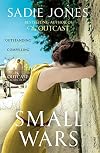
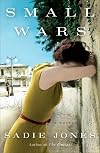
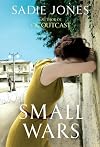
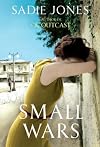
A perfect holiday read spoilt only by the terrible cover which makes me think of mass market romance books.
5 stars - practically perfect.
Jones is an amazing writer: her prose is so descriptive and her plots so cleverly executed I almost forget I'm reading at all.
A perfect holiday read spoilt only by the terrible cover which makes me think of mass market romance books.
5 stars - practically perfect.
Set in 1956 Cyprus, just prior to the start of the Suez Crisis, this story really packs quite the punch. What I found amazing is how well Jones balances the emotional roller coaster ride of the plot with the more subdued, rather understated prose. The raw emotional energy of Hal and Clara is there, lashing like an electric current, but constrained in a stoic English facade of repression and lack of honest communication. The story is multifaceted as Jones bares to the reader the inner thoughts, emotions and turmoil of her main characters. The story vividly captures the growing unrest of Cypriates under colonial British rule of the time period and the rising terrorist activities of EOKA (Ethniki Organosis Kyprion Agoniston) which the show more British were struggling to contain. The narrator, Stephen Hoye, does an amazing job, making it easy for me to understand the emotions of Hal and Clara. Sadly, the ending fell flat for me, rather anticlimactic compared to the prior bits and left me at a loss as to how I felt about the story. I found Hal to be a rather frustrating character and even felt compelled to reach out and slap him across the face at one point, which I won't go into because that would mean revealing spoilers. Suffice to say, it is a well crafted story that really gets under the skin of its main characters, giving the reader much to contemplate. show less
“This sick fear was new to him; like shame, it had been unknown. Now he was well acquainted with both.” (348)
Major Hal Treherne is a young, dedicated soldier who has risen impressively through the ranks. Thirsting for action, he does not hesitate to accept a transfer from Europe to the Mediterranean in 1956. He, his wife Clara, and their two young children relocate from Germany to Cyprus. Their timing is certainly amendable to action: the island is in the midst of the Emergency. The British are defending their colony from the Cypriots who are battling for union with Greece.
Of course, there is nothing small about war, even a “small war.” Hal, like most soldiers, is changed by atrocity. And Clara grows fearful of the world she show more is living in. Doubt, fear, betrayal, and shame threaten to derail their marriage.
“She was hot and panicking and felt imaginary Cypriot eyes upon her. She had started to feel like that all the time now. When she was in her bedroom she imagined them watching her house, when she was opening her front door she imagined tripwires across it and had begun to check, without letting anyone see she was doing it. Whenever she got into the car, part of her was expecting it to blow up. Every sound she heard had both a benign and a sinister interpretation, and she would have to remind herself to keep to the real world and not be drawn into her fear completely, not let it overtake her.” (154)
Small Wars is eminently readable, so much so that I didn’t want to put it down. In addition to being a haunting depiction of the Cyprus Emergency and a marriage in crisis, it raises bold questions which resonate acutely about our contemporary world view and, even less flattering, about the moral superiority with which we righteously defend our ruthless assault on “terrorists.” Jones is quickly becoming a favourite author. Small Wars, like The Outcast before it, is highly recommended.
“History doesn’t end. Places that are fought over are always fought over, and will always be fought over, and there will never be an end to it, and each conflict is just adding to the heap of conflicts that no one can remember starting and no one will ever, ever finish.” (82) show less
Major Hal Treherne is a young, dedicated soldier who has risen impressively through the ranks. Thirsting for action, he does not hesitate to accept a transfer from Europe to the Mediterranean in 1956. He, his wife Clara, and their two young children relocate from Germany to Cyprus. Their timing is certainly amendable to action: the island is in the midst of the Emergency. The British are defending their colony from the Cypriots who are battling for union with Greece.
Of course, there is nothing small about war, even a “small war.” Hal, like most soldiers, is changed by atrocity. And Clara grows fearful of the world she show more is living in. Doubt, fear, betrayal, and shame threaten to derail their marriage.
“She was hot and panicking and felt imaginary Cypriot eyes upon her. She had started to feel like that all the time now. When she was in her bedroom she imagined them watching her house, when she was opening her front door she imagined tripwires across it and had begun to check, without letting anyone see she was doing it. Whenever she got into the car, part of her was expecting it to blow up. Every sound she heard had both a benign and a sinister interpretation, and she would have to remind herself to keep to the real world and not be drawn into her fear completely, not let it overtake her.” (154)
Small Wars is eminently readable, so much so that I didn’t want to put it down. In addition to being a haunting depiction of the Cyprus Emergency and a marriage in crisis, it raises bold questions which resonate acutely about our contemporary world view and, even less flattering, about the moral superiority with which we righteously defend our ruthless assault on “terrorists.” Jones is quickly becoming a favourite author. Small Wars, like The Outcast before it, is highly recommended.
“History doesn’t end. Places that are fought over are always fought over, and will always be fought over, and there will never be an end to it, and each conflict is just adding to the heap of conflicts that no one can remember starting and no one will ever, ever finish.” (82) show less
A story about wars indeed, but in no way small.
Hal is a British soldier promoted to Major posted in Cyprus to fight EOKA, a paramilitary association against the British rule of Cyprus. It's 1956 and Hal has never seen action, so he takes this post eagerly wanting to put in practise everything he's learnt in the base.
His wife Clara and their two baby daughters join him in Cyprus after two months and while she struggles to "fit in" and make a home out of this foreign place, Hal and his men start their duty searching for suspects and interrogating them trying to prevent more terrorist attacks.
As weeks go by, Hal starts to realise that what seemed to be an under control situation is in fact a constant strain between what's morally right show more and wrong and when he finally dares to speak about it to his superiors he is disappointed in the unfairness of the system and the detached coldness he finds in some of his men.
An escalating tension is starting to build up in him, a tension which will affect his relationship with Clara and his daughters, a small war within himself and another one with his family, and a foreboding feeling engulfs the reader as the story advances.
This is not a novel to take lightly and Sadie Jones makes an excellent job out of it. Like in her previous novel, The Outcast (which is one of my favourites ever), she manages to create real characters with human conflicts and faults and to portray convincing relationships between them without the need of excessive dialogue. In this book, the images described and the silences tell you all you need to know. No flourishing, no superfluous conversations, just raw feelings and impotence and guilt. And an important message, there are no winners in wars, and no good or bad men, only humans trying to cope with life the best they can and dealing with the consequences of their own actions. Sad, but true.
You'll find yourself swallowing compulsively while reading on and wondering how a story like this can have a happy ending.
But like life, this book is full of surprises, and not all of them sour.
If you're undecided, just pick it up and start reading, you will forget about the rest. show less
Hal is a British soldier promoted to Major posted in Cyprus to fight EOKA, a paramilitary association against the British rule of Cyprus. It's 1956 and Hal has never seen action, so he takes this post eagerly wanting to put in practise everything he's learnt in the base.
His wife Clara and their two baby daughters join him in Cyprus after two months and while she struggles to "fit in" and make a home out of this foreign place, Hal and his men start their duty searching for suspects and interrogating them trying to prevent more terrorist attacks.
As weeks go by, Hal starts to realise that what seemed to be an under control situation is in fact a constant strain between what's morally right show more and wrong and when he finally dares to speak about it to his superiors he is disappointed in the unfairness of the system and the detached coldness he finds in some of his men.
An escalating tension is starting to build up in him, a tension which will affect his relationship with Clara and his daughters, a small war within himself and another one with his family, and a foreboding feeling engulfs the reader as the story advances.
This is not a novel to take lightly and Sadie Jones makes an excellent job out of it. Like in her previous novel, The Outcast (which is one of my favourites ever), she manages to create real characters with human conflicts and faults and to portray convincing relationships between them without the need of excessive dialogue. In this book, the images described and the silences tell you all you need to know. No flourishing, no superfluous conversations, just raw feelings and impotence and guilt. And an important message, there are no winners in wars, and no good or bad men, only humans trying to cope with life the best they can and dealing with the consequences of their own actions. Sad, but true.
You'll find yourself swallowing compulsively while reading on and wondering how a story like this can have a happy ending.
But like life, this book is full of surprises, and not all of them sour.
If you're undecided, just pick it up and start reading, you will forget about the rest. show less
Members
- Recently Added By
Published Reviews
ThingScore 50
In her excellent second novel (after The Outcast), Jones sets a couple down in turbulent 1956 Cyprus as the Cypriots seek union with Greece and resist British rule. British army major Hal Treherne is dispatched to Cyprus, taking along his wife, Clara, and their young twin girls. There, they fight separate, but equally maddening, battles—Clara as an army wife with babies in an increasingly show more dangerous land, and Hal on the front lines where, yearning for firefights, he is instead haunted by his lack of control when torture and rape occur at the hands of his own men. While Hal dodges mortal danger, Clara tries to keep the homefront together, struggling to remain supportive of him as she remains isolated with the twins and he is tormented by the violence he witnesses. After Clara narrowly avoids death, Hal makes a split-second decision with powerful implications for their future. The narrative is excruciatingly tense and also graced with real emotion as a marriage is pushed to the brink and loyalties are stretched and broken. It's the perfect mix of poignant and harrowing. show less
added by VivienneR
Sadie Jones's first novel, The Outcast, was a devastating portrait of family damage in a postwar climate of numbness and repression. An unusually confident debut, it combined elegant, understated prose with a raw emotional charge to become that rare thing: a critically applauded bestseller. It's a hard act to follow, and while her second novel again examines love, duty, shame and violence show more against the backdrop of the 50s, it widens out from the domestic war zone to military conflict in Cyprus. Small Wars is commendably ambitious, but also a thinner, more mannered work than its predecessor. It strips away the social codes and agreed lies of army, family and marriage, but finds little behind them. show less
added by fannyprice
Lists

Books Read in 2015
3,298 works; 129 members
Author Information

7+ Works 3,229 Members
Some Editions
Awards and Honors
Awards
Common Knowledge
- Canonical title
- Small Wars
- Original title
- Small Wars
- Original publication date
- 2009
- People/Characters
- Hal Treherne; Clara Treherne
- Important places
- Cyprus; Buckinghamshire, England, UK
- Epigraph
- Almighty God, whose son Jesus Christ, the Lord of all life, came not to be served but to serve, help us to be masters of ourselves that we may be the servants of others and teach us to Serve To Lead, through the same Jesus Ch... (show all)rist, Our Lord, Amen.
The Collect of RMA Sandhurst
- Yet when we came back, late, from the Hyacinth garden, Your arms full, and your hair wet, I could not Speak, and my eyes failed, I was neither Living nor dead, and I knew nothing, Looking into the heart of light, the silenc... (show all)e.
T.S. Eliot, The Waste Land - Dedication
- For Tim Boyd
- First words
- An English rain was falling onto the instruments of the band, onto their olive green uniforms and the uniforms of the cadets as they marched.
- Last words
- (Click to show. Warning: May contain spoilers.)They examined one another and there was no barrier, no sea, no act committed, not so much as a pane of glass between them; not even air, it felt to him. He travelled her face slowly, and returning to her eyes, saw that she was smiling at him.
- Blurbers
- Chevalier, Tracy
Classifications
Statistics
- Members
- 417
- Popularity
- 73,807
- Reviews
- 40
- Rating
- (3.66)
- Languages
- 7 — Danish, Dutch, English, French, German, Norwegian (Bokmål), Swedish
- Media
- Paper, Audiobook, Ebook
- ISBNs
- 30
- ASINs
- 6