On This Page
Description
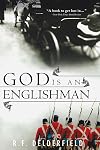
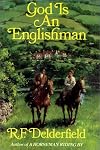
From master author R. F. Delderfield, the first in the beloved classic God Is an Englishman series. The first novel in the epic God Is an Englishman series, this book is a stirring saga of England in the 19th century, as the Industrial Revolution takes hold, forever changing the landscape of England and her people. Adam Swann, scion of an army family, returns home in 1858 after service with Her Majesty's army in the Crimea and India, determined to build his fortune in the dog-eat-dog world show more of Victorian commerce. Swann is soon captivated by Henrietta, the high-spirited daughter of a local mill owner. As Swann works to build his name, he and Henrietta share adventures, reversal, and fortune. A beloved novel by a beloved author, God Is an Englishman is a treasure both for Delderfield fans and the growing legion of fans of historical fiction. show lessTags
Recommendations











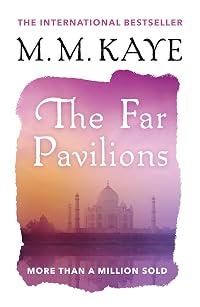


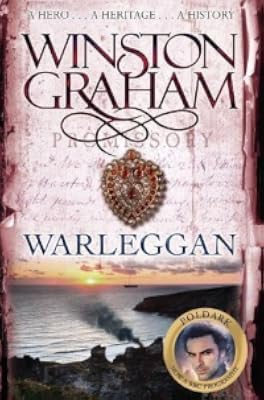

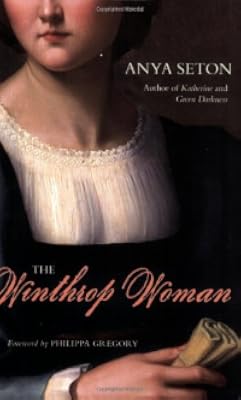
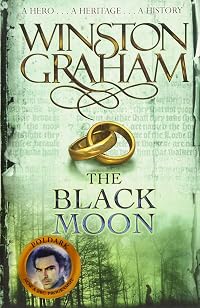









Member Recommendations
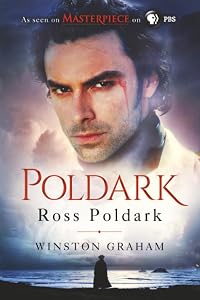
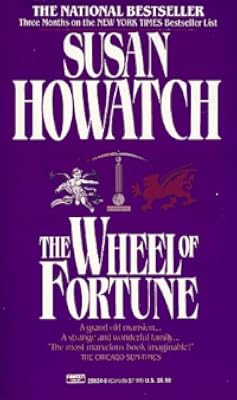
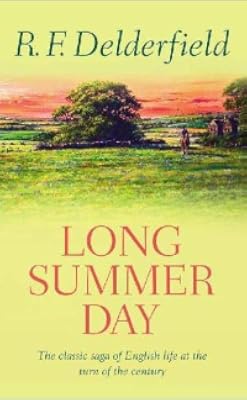
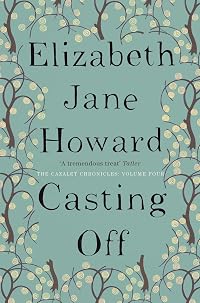
arctangent The first of another family saga set in the turbulent times of mid-19th century Britain, with the Industrial Revolution and all the social and economic upheaval that results.
Member Reviews
I decided to sample Delderfield after finishing the Poldark series and having withdrawal symptoms. I wanted another family I could sink my teeth into and become completely involved in. This novel was set in the same time frame as Poldark, but actually covers completely different issues, so I stopped comparing the two and just settled down to enjoy this story as a thing apart. That worked out fine, because there is a lot to enjoy here.
Adam Swann is a very interesting and smart character and his aims to build his own place in the world are a kind of microcosm of how industry and entrepreneurism changed the world in the mid-1800s. His feisty wife, Henrietta, adds another dimension to both this man and the story, and Delderfield peoples the show more novel with a supporting cast that feels real and substantial. While there are sections in which the building of Swann-on-Wheels, Adam’s business, can become a little laborious, the understanding of it is essential to understanding the characters and their lives.
There is an incident in the book that involves a train crash, and it turns out Charles Dickens is on the train. I happen to know that this was a significant event in Charles Dickens’ life, so I liked the touch of reality that lent to the situation. I am always pleased when fiction and history can cross paths seamlessly. I suspect that this novel is a very well-researched narrative and that life as described here is very akin to what life in 1860’s England would have been.
I have the second book in the series winging its way to me, so I am not done with the Swanns. I seldom select a “series” of books, I usually prefer my stories in one sweet volume, however, I am feeling a nice bit of satisfaction knowing that I have not closed the final page on Adam and company. show less
Adam Swann is a very interesting and smart character and his aims to build his own place in the world are a kind of microcosm of how industry and entrepreneurism changed the world in the mid-1800s. His feisty wife, Henrietta, adds another dimension to both this man and the story, and Delderfield peoples the show more novel with a supporting cast that feels real and substantial. While there are sections in which the building of Swann-on-Wheels, Adam’s business, can become a little laborious, the understanding of it is essential to understanding the characters and their lives.
There is an incident in the book that involves a train crash, and it turns out Charles Dickens is on the train. I happen to know that this was a significant event in Charles Dickens’ life, so I liked the touch of reality that lent to the situation. I am always pleased when fiction and history can cross paths seamlessly. I suspect that this novel is a very well-researched narrative and that life as described here is very akin to what life in 1860’s England would have been.
I have the second book in the series winging its way to me, so I am not done with the Swanns. I seldom select a “series” of books, I usually prefer my stories in one sweet volume, however, I am feeling a nice bit of satisfaction knowing that I have not closed the final page on Adam and company. show less
Adam Swann is a soldier, but he’s sick of fighting. Left for dead on a battlefield in India, Adam opens his eyes to spot a ruby necklace, the means for funding his dreams. When he recovers from his illness, he heads to England and decides to start a shipping company after taking the advice of a railroad man and exploring England on his horse. On his way home, he spots a young girl, half-undressed and washing in a puddle. This is Henrietta Rawlinson, daughter of a cotton giant, fleeing from an arranged marriage that makes her feel ill. Adam takes her with him, marries her, and launches Swann-on-Wheels, their brainchild. As the company grows and expands, so do the couple’s fortunes, and this novel is their epic story.
I want to start show more off by saying that this book took me a week to read but I loved every minute of it. I read a few smaller books in between, but I just adored spending so much time in Victorian England. I felt like I lived in Adam and Henrietta’s world and could understand their issues and problems but also cheer for them to push forward, move past whatever problems they were having, and succeed at everything. This is the kind of book that becomes a favorite, at least for me, because I love huge complex stories like this.
Since this novel was originally written in 1970, I assumed it would feel dated, but it really doesn’t. Even its treatment of women is open-minded; Edith remarks that women could rule companies very easily, were they given a chance, and then Henrietta actually does take the reins of leadership and proves herself an astonishingly capable woman both at home and at work. This may be a bit anachronistic for the mid-19th century, but having smart female characters to care about makes this an immeasurably better novel than it would have been otherwise. I felt a little uneasy with the fact that Henrietta’s character changes because Adam pushes it to do so, but as the novel progressed it became clear that he’d just given her an opportunity rather than actually pushing her at all; that was just how he thought of it.
I loved, loved, loved that this was set in Victorian England and didn’t just focus on London, but the entire country, and more so that specific issues are highlighted and addressed. For example, the use of children as chimney sweeps was a huge dilemma, and it’s brought right home here. The novel also includes workers’ strikes and the changing attitude towards employment going on around this time. The Swanns do have a comparatively cushy life, but we see how hard Adam works and his financial difficulties, so it is vastly different in feel than a book focusing on the aristocracy, for example. We even have mention of the Civil War in the USA and how it affected production in England; there is a sense of history here as historical events happen with Adam and Henrietta and their managers on what feels like the forefront of a new England. It’s a heady feeling; it’s a heady book.
If I had to say one negative thing about the book, though, it would mainly be that the setting up of Adam’s company does bog down at times. The beginning of the book took me much longer because it was more about the logisitics of his company than about the people in the book. I enjoyed the detail about setting up a company and being introduced to all the secondary characters, but I would have been happier with less. By contrast, I loved the sections about the main characters that followed, and once the business got off the ground the book sped much more quickly. I had at first set myself a goal of reading 50 pages each day, but by page 200 I knew I couldn’t go that slowly.
God Is an Englishman was a delightful, absorbing, utterly fascinating read. I could happily have kept on reading more. This is the start of a series, so while this book ended in a nice solid fashion, I know I’m going to seek out the rest of the series as soon as I can. show less
I want to start show more off by saying that this book took me a week to read but I loved every minute of it. I read a few smaller books in between, but I just adored spending so much time in Victorian England. I felt like I lived in Adam and Henrietta’s world and could understand their issues and problems but also cheer for them to push forward, move past whatever problems they were having, and succeed at everything. This is the kind of book that becomes a favorite, at least for me, because I love huge complex stories like this.
Since this novel was originally written in 1970, I assumed it would feel dated, but it really doesn’t. Even its treatment of women is open-minded; Edith remarks that women could rule companies very easily, were they given a chance, and then Henrietta actually does take the reins of leadership and proves herself an astonishingly capable woman both at home and at work. This may be a bit anachronistic for the mid-19th century, but having smart female characters to care about makes this an immeasurably better novel than it would have been otherwise. I felt a little uneasy with the fact that Henrietta’s character changes because Adam pushes it to do so, but as the novel progressed it became clear that he’d just given her an opportunity rather than actually pushing her at all; that was just how he thought of it.
I loved, loved, loved that this was set in Victorian England and didn’t just focus on London, but the entire country, and more so that specific issues are highlighted and addressed. For example, the use of children as chimney sweeps was a huge dilemma, and it’s brought right home here. The novel also includes workers’ strikes and the changing attitude towards employment going on around this time. The Swanns do have a comparatively cushy life, but we see how hard Adam works and his financial difficulties, so it is vastly different in feel than a book focusing on the aristocracy, for example. We even have mention of the Civil War in the USA and how it affected production in England; there is a sense of history here as historical events happen with Adam and Henrietta and their managers on what feels like the forefront of a new England. It’s a heady feeling; it’s a heady book.
If I had to say one negative thing about the book, though, it would mainly be that the setting up of Adam’s company does bog down at times. The beginning of the book took me much longer because it was more about the logisitics of his company than about the people in the book. I enjoyed the detail about setting up a company and being introduced to all the secondary characters, but I would have been happier with less. By contrast, I loved the sections about the main characters that followed, and once the business got off the ground the book sped much more quickly. I had at first set myself a goal of reading 50 pages each day, but by page 200 I knew I couldn’t go that slowly.
God Is an Englishman was a delightful, absorbing, utterly fascinating read. I could happily have kept on reading more. This is the start of a series, so while this book ended in a nice solid fashion, I know I’m going to seek out the rest of the series as soon as I can. show less
God Is an Englishman is the first book in this wonderful saga about the Swann family. Adam Swann, a 31-year-old cavalryman in the service of Queen Victoria’s army, decides to break off with his family’s military tradition and gives up his soldierly life in lieu of starting anew in England as a businessman. The road ahead of him will not be easy, as old sentiments still prevail where people making a living in a new, industrial England are looked down on and someone like Adam, giving up his army career is thought foolish. Adam Swann persists in his desire to be his own boss and not spent his life serving somebody else, even if it’s the Crown of England. In his struggles to become a respectable and successful owner of a show more horse-carriage business, he has a few supporters, including his young wife, Henrietta and, surprisingly, his own father. The readers follow Adam and his personal and business lives for nine years. These are very tumultuous years for England as well. It is the 19th century, the country changes from an agricultural one into an industrial empire, with railroads ruling the transportation, mills, mines and factories replacing the farms and Adam Swann takes on a daring project of using horses as his road to success.
I thoroughly enjoyed God Is an Englishman, so much so that even before I finished it, I went and got part two (Theirs Was the Kingdom). It’s not an easy read by any means, but very captivating and really a requirement for anyone who wants to read more about one of the most important periods in England’s history. Some might say that it’s reminiscent of Dickens’s books but I should say that probably only in the time set. Through Delderfield’s book I got a hopeful outlook, not a grim one. True, it’s still England where poverty is on the rise, where child exploitation flourishes but it’s also England where one doesn’t have to belong to royalty in order to become well-off, successful and if they’re persistent enough, respected. ‘Common’ people now have a chance to have careers and to be truly in charge of their lives. I must say that I liked this approach and I just was riveted by Adam Swann and by the whole process of him starting from a scratch and, despite unexpected failures and ‘bumps ‘, holding on to what he believed and never losing sight of what Adam deemed as success.
That’s one great part of God Is an Englishman. Another one is the multitude of characters, bad, good and just average, but they all change, they all grow and, as a reader, you really have your pick in which ones are going to be your favorites. Mine was Henrietta, Adam’s wife. I think she grew the most throughout the novel. She changed so much but still somehow retained her youthful innocence despite some occurrences that would turn many into bitter, prematurely old women. Henrietta and Adam’s marriage is not an easy one, some would even say it’s doomed from the beginning, but yet again, Delderfield just serves us this happy story, with both parties fulfilling their dreams, among the turmoil of their times. Don’t get me wrong, it isn’t a ‘happily-ever-after Cinderella’ story but an uplifting one nonetheless, despite the many problems that could endanger both Adam’s and Henrietta’s happiness.
I say that if you’re a ‘saga junkie’, if you are even remotely interested in the history of England and want to meet people, who in the end you feel are your friends or at least next door neighbors, God Is an Englishman and you will be a perfect match. show less
I thoroughly enjoyed God Is an Englishman, so much so that even before I finished it, I went and got part two (Theirs Was the Kingdom). It’s not an easy read by any means, but very captivating and really a requirement for anyone who wants to read more about one of the most important periods in England’s history. Some might say that it’s reminiscent of Dickens’s books but I should say that probably only in the time set. Through Delderfield’s book I got a hopeful outlook, not a grim one. True, it’s still England where poverty is on the rise, where child exploitation flourishes but it’s also England where one doesn’t have to belong to royalty in order to become well-off, successful and if they’re persistent enough, respected. ‘Common’ people now have a chance to have careers and to be truly in charge of their lives. I must say that I liked this approach and I just was riveted by Adam Swann and by the whole process of him starting from a scratch and, despite unexpected failures and ‘bumps ‘, holding on to what he believed and never losing sight of what Adam deemed as success.
That’s one great part of God Is an Englishman. Another one is the multitude of characters, bad, good and just average, but they all change, they all grow and, as a reader, you really have your pick in which ones are going to be your favorites. Mine was Henrietta, Adam’s wife. I think she grew the most throughout the novel. She changed so much but still somehow retained her youthful innocence despite some occurrences that would turn many into bitter, prematurely old women. Henrietta and Adam’s marriage is not an easy one, some would even say it’s doomed from the beginning, but yet again, Delderfield just serves us this happy story, with both parties fulfilling their dreams, among the turmoil of their times. Don’t get me wrong, it isn’t a ‘happily-ever-after Cinderella’ story but an uplifting one nonetheless, despite the many problems that could endanger both Adam’s and Henrietta’s happiness.
I say that if you’re a ‘saga junkie’, if you are even remotely interested in the history of England and want to meet people, who in the end you feel are your friends or at least next door neighbors, God Is an Englishman and you will be a perfect match. show less
This book has apparently stood the test of time. While I read it, I had no idea that it had been written 30 years ago. The historic details are magnificent, as is Delderfield's sense of English geography. The story is rather simple and predictable however. And the characters are too perfect. No character in this book is ever in danger of knowing failure, and to me, that detracts from their depth.
Although its size is formidable, R.F. Delderfield's God Is an Englishman is worth almost every page. First in the Swann saga, written in 1970 and recently reprinted by Sourcebooks, this is a novel of beginnings.
Adam Swann is a British military officer in India that has lost his taste for the service. His fortune is made when he recovers a beautiful and highly-valued ruby necklace after a battle. He takes the booty and makes for home, determined to start a new life -- one with a purpose other than domination and warfare. A chance meeting with a railway man prompts him to choose his new business -- a horse-and-cart transport company that services those areas of England that the railways have left behind. He sets out to survey the land show more and, again by chance, comes across a runaway teen who will become his wife. The novel then follows the growth of Adam and Henrietta's marriage and family and the building of his business. Both are tested and strengthened through times of gain and loss.
This large book (over 600 pages) covers a mere nine years in the life of Adam Swann. Though a few passages seemed repetitive, the bulk of the book is fresh and well-written. There are many topics addressed from the nobility of the tradesman to the role of women in Victorian England. Also, if you aren't familiar with the geography of Great Britain when you start this book, you will have a much better understanding of it by the end! The only thing I regret not doing is pulling out a map while I read so that I could better understand some of the territorial discussions. There is obviously also quite a bit of history in the narrative including the death of Prince Albert, the passage of the first British labor laws and a certain incident at Staplehurst that any fans of Dickens will know about.
http://webereading.com/2009/09/they-stormed-out-of-dustcloud-in-solid.html show less
Adam Swann is a British military officer in India that has lost his taste for the service. His fortune is made when he recovers a beautiful and highly-valued ruby necklace after a battle. He takes the booty and makes for home, determined to start a new life -- one with a purpose other than domination and warfare. A chance meeting with a railway man prompts him to choose his new business -- a horse-and-cart transport company that services those areas of England that the railways have left behind. He sets out to survey the land show more and, again by chance, comes across a runaway teen who will become his wife. The novel then follows the growth of Adam and Henrietta's marriage and family and the building of his business. Both are tested and strengthened through times of gain and loss.
This large book (over 600 pages) covers a mere nine years in the life of Adam Swann. Though a few passages seemed repetitive, the bulk of the book is fresh and well-written. There are many topics addressed from the nobility of the tradesman to the role of women in Victorian England. Also, if you aren't familiar with the geography of Great Britain when you start this book, you will have a much better understanding of it by the end! The only thing I regret not doing is pulling out a map while I read so that I could better understand some of the territorial discussions. There is obviously also quite a bit of history in the narrative including the death of Prince Albert, the passage of the first British labor laws and a certain incident at Staplehurst that any fans of Dickens will know about.
http://webereading.com/2009/09/they-stormed-out-of-dustcloud-in-solid.html show less
I was not sure what to expect of this book, but when I received it and saw how large it was, I was certainly surprised. I was further surprised by how engrossing a book it actually was. Giving a plot outline really doesn't convey how good of a book this is, but I'll go ahead and try anyway.
God Is an Englishman tells the story of Adam Swann and his rise to prominence in London in the 1860's. His story begins when he makes the decision to end his career as a soldier and begin his life as a businessman, at the age of thirty-one. His chosen field of commerce is transportation, where he decides to fill the gap that the great trains of that era cannot. At the same time that he is establishing his business, he meets Henrietta, and from their show more first meeting he is captivated by her. Although she is much younger than him, she is a strong-willed woman, and circumstances conspire to create a situation in which he marries her after only knowing her for a few months. Thus begins the story of not only their life together, but the story of the newly formed Swann-on-Wheels transportation company.
The historical detail in this book is truly fascinating. Even when Delderfield is going through details that should be tedious - train schedules, shipping and transportation issues - he makes it interesting. Adam Swann is a fantastic character, one that you love to root for. And I loved following his marriage and family life, as he and Henrietta grow to know and truly love each other throughout the years. This is the first book in a trilogy, one I am going to have to follow through the rest of the series. show less
God Is an Englishman tells the story of Adam Swann and his rise to prominence in London in the 1860's. His story begins when he makes the decision to end his career as a soldier and begin his life as a businessman, at the age of thirty-one. His chosen field of commerce is transportation, where he decides to fill the gap that the great trains of that era cannot. At the same time that he is establishing his business, he meets Henrietta, and from their show more first meeting he is captivated by her. Although she is much younger than him, she is a strong-willed woman, and circumstances conspire to create a situation in which he marries her after only knowing her for a few months. Thus begins the story of not only their life together, but the story of the newly formed Swann-on-Wheels transportation company.
The historical detail in this book is truly fascinating. Even when Delderfield is going through details that should be tedious - train schedules, shipping and transportation issues - he makes it interesting. Adam Swann is a fantastic character, one that you love to root for. And I loved following his marriage and family life, as he and Henrietta grow to know and truly love each other throughout the years. This is the first book in a trilogy, one I am going to have to follow through the rest of the series. show less
1432 God Is an Englishman, by R. F. Delderfield (read 24 Jan 1977) While I liked Delderfield's nonfiction I never felt his novels were something I needed to read. Surprisingly, I was tremendously moved by this book. It tells of Adam Swan, who comes upon a string of rubies in India, comes home to England, decides to go into hauling, meets and weds Henrietta Rawlinson, and sets up his business. Time and again I found the book tremendously moving--often for no obvious reason. My reaction to the two subsequent volumes, Theirs Was the Kingdom, and Give Us This Day, will be in my report on February 1977's reading.
Members
- Recently Added By
Lists

Best family sagas
244 works; 34 members

Books With the Most Memorable Titles
478 works; 158 members
Author Information

52+ Works 5,209 Members
R. F. Delderfield also wrote the novels God Is an Englishman and Theirs Was the Kingdom in the saga of the Swann family
Awards and Honors
Distinctions
Series

Work Relationships
Common Knowledge
- Canonical title
- God Is an Englishman
- Original publication date
- 1970
- People/Characters
- Adam Swann; Henrietta Rawlinson Swann; Sam Rawlinson; Josh Avery
- Important places
- London, England, UK; England, UK; India
- Dedication
- For my wife, May, without whose affection, oceans of coffee and classical records this would never have been finished.
- First words
- They stormed out of the dust cloud in a solid, scurrying mass, horse and foot, in formation; a mob of armed fugitives, with nothing in mind but to escape the hangman or the bayonets of the Highlanders who had rushed the town ... (show all)at first light and now fought their way as far as Ranee's palace.
- Last words
- (Click to show. Warning: May contain spoilers.)It was strange, he thought, that a man who professed to love the open air, and had cherished movement from boyhood, would feel more at home here than anywhere else in the world.
Classifications
Statistics
- Members
- 715
- Popularity
- 39,694
- Reviews
- 10
- Rating
- (3.92)
- Languages
- English, German, Swedish
- Media
- Paper, Audiobook, Ebook
- ISBNs
- 19
- UPCs
- 1
- ASINs
- 18