On This Page
Description
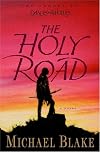
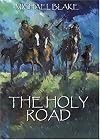
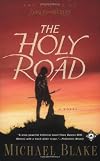
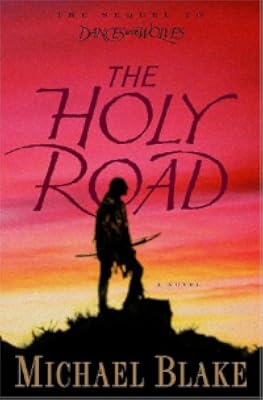
In The Holy Road, sequel to Dances With Wolves, master storyteller Michael Blake at long last continues the saga. Eleven years have passed sub Lieutenant John Dunbar became Dances With Wolves and married Stands With A Fist, a white-born woman raised as a Comanche from early childhood. With their three children, they live peacefully in the village of Ten Bears. But there is unease in the air, caused by increased reports of violent confrontations with white soldiers, who want to drive the show more Comanches onto reservations. Disquiet turns to horror, and then to rage, when a band of white rangers descends on Ten Bear's village, slaughtering half its inhabitants and abducting Stands With A Fist and her infant daughter. The three surviving great warriors - Wind In His Hair, Kicking Bird and Dances With Wolves - decide they must go to war with the white invaders. At the same time, Dances With Wolves realizes that only he can rescue his wife and child. Told with the same sweep, insight, and majesty that have made Dances With Wolves a worldwide phenomenon, The Holy Road is an epic story of courage and honor. show lessTags
Recommendations

















Member Reviews
Written okay, but I guess I'm tired of books that can only relate Native American history by including a white person as a main protagonist. On the positive side, it does portray an interpretation of the experience of the persecution and genocide of Native tribes which might enlighten some readers. However, Blake makes no pretense of portraying any actual history. For example, while Ten Bears was a real Comanche chief who made at least one eloquent transcribed speech, he did not die in Washington. Kicking Bird was Kiowa, not Comanche. While he was both a war leader & a proponent for accepting the reservation, & did die after drinking coffee, other parts of his history were rearranged in this book.
I notice that the Quaker, "Lawrie Tatum" show more was not portrayed using his real name "Thomas Battey" even tho Blake made use of the real names of Native leaders. To be fair, Colonel Ranald MacKenzie's real name & commonly known name (Bad Hand) were used altho, again, historical facts were mixed up.
Some inconsistencies also bothered me.That Ten Bears would have been asphyxiated by extinguishing gas lights in his hotel. To be in character, however, Ten Bears would have slept with his hotel windows open, instead of remaining completely enclosed in the box. He did know how to open windows (p. 276) . Also we are told that when Stands-With-A-Fist was captured, she "defecated any where. I was trying to figure out if this was passive-defiant behavior, and then we learn that Always Walking also made trouble by defecating where ever she was. I'm sure that in a tribal society, people made some choices about defecating, and wouldn't just leave their excrement in the pathways. Maybe that would be possible if there were sufficient dogs or other animals to eat the wastes & keep the area cleaned up. The final major inconsistency is that Dances With Wolves, after only about a dozen years among the tribe, completely forgot how to form English words and had to struggle to make the sounds as one word utterances. My experience in learning a foreign language is that after decades of not using something studied for only 1-2 years I can still recall & pronounce entire phrases. show less
I notice that the Quaker, "Lawrie Tatum" show more was not portrayed using his real name "Thomas Battey" even tho Blake made use of the real names of Native leaders. To be fair, Colonel Ranald MacKenzie's real name & commonly known name (Bad Hand) were used altho, again, historical facts were mixed up.
Some inconsistencies also bothered me.
The Holy Road by Michael Blake is the sequel to Dances With Wolves and further explores the downfall of the North American Plain Indians, in this case, the Comanche. The Plain Indians were located in a very unfortunate place for them. Originally bypassed as the white people travelled through on their way to the gold fields of California and rich farmlands of Oregon, eventually these vast grasslands attracted settlers who wished to set their roots in the prairie heartlands. At the same time the government in Washington was planning on expanding to the Pacific Ocean. The best way to bind the country together was to build a railroad that would connect from sea to sea.
As the Comanche hear about other Indians that are being forced onto show more reservations, they fear what is coming for them and dread the possibility that their way of life will be stripped from them and they will be forced to live according to the white man’s rules. The Comanche nation was a very distinct community ruled by it’s own conventions, customs and societies that, unfortunately was neither understood by or meshed with white people’s idea of government. In those days both sides felt that what could not be understood must change or be wiped out.
In the Holy Road, Blake once again tells the story of the man who came to be known as Dances With Wolves and his wife, captured as a child, Stands With Fist. More than any other Comanche, he knows what the coming of the railroad and the influx of settlers will do to the Indians. Unfortunately, time is not on their side and while he and his two elder children are out hunting, their village is hit by Texas Rangers. The Rangers realize that Stands With Fist is a white woman and take her and her young daughter with them. Dances With Wolves is faced with the difficult task of reuniting his family.
Michael Blake tells an excellent story while at the same time, filling in with broad strokes the bigger picture of one nation crumbing as it must make way for a newer, stronger power. An emotional read but without the closer, personal feel of Dances With Wolves. I do, however, highly recommend both these books to anyone interested in this time period in American history. show less
As the Comanche hear about other Indians that are being forced onto show more reservations, they fear what is coming for them and dread the possibility that their way of life will be stripped from them and they will be forced to live according to the white man’s rules. The Comanche nation was a very distinct community ruled by it’s own conventions, customs and societies that, unfortunately was neither understood by or meshed with white people’s idea of government. In those days both sides felt that what could not be understood must change or be wiped out.
In the Holy Road, Blake once again tells the story of the man who came to be known as Dances With Wolves and his wife, captured as a child, Stands With Fist. More than any other Comanche, he knows what the coming of the railroad and the influx of settlers will do to the Indians. Unfortunately, time is not on their side and while he and his two elder children are out hunting, their village is hit by Texas Rangers. The Rangers realize that Stands With Fist is a white woman and take her and her young daughter with them. Dances With Wolves is faced with the difficult task of reuniting his family.
Michael Blake tells an excellent story while at the same time, filling in with broad strokes the bigger picture of one nation crumbing as it must make way for a newer, stronger power. An emotional read but without the closer, personal feel of Dances With Wolves. I do, however, highly recommend both these books to anyone interested in this time period in American history. show less
Rather a disappointment compared to Dances With Wolves. Blake just tries to do too much in too few pages (although I'm not saying it should have been longer). Dances With Wolves was so good because much time was given to develop the characters and set the scene. I really felt transported when reading it. In this one there is too much action and too many events to allow for any real plot or character development. **SPOILER ALERT** Just about every main character from Dances With Wolves is killed and yet, Blake glazes over their deaths and nobody seems to miss them when they're gone -- including the reader.
Also, there is some sloppy history, though this really isn't a historical fiction novel. One, the depictions of Gen. Sherman, and show more especially Pres. Grant, are complete caricatures. Grant was not the Indian hater that Phil Sheridan was, but you wouldn't know it from this book. Two, when Kicking Bird and Ten Bears visit the White House Blake mentions the "back-skinned slaves" in the room where they meet with Grant. There were never slaves in the White House, much less when Grant was president (after the Civil War!).
All in all, a disappointing follow-up to one of my favorite books. show less
Also, there is some sloppy history, though this really isn't a historical fiction novel. One, the depictions of Gen. Sherman, and show more especially Pres. Grant, are complete caricatures. Grant was not the Indian hater that Phil Sheridan was, but you wouldn't know it from this book. Two, when Kicking Bird and Ten Bears visit the White House Blake mentions the "back-skinned slaves" in the room where they meet with Grant. There were never slaves in the White House, much less when Grant was president (after the Civil War!).
All in all, a disappointing follow-up to one of my favorite books. show less
The opening plot showed some real promise and sucked me in but the author chose to take the political route. He perpetuated the myth that Native Americans are all noble and good and environmentally-minded while white people are pretty much the opposite. He depicted the Commanche (even Dunbar) as incredibly simple-minded and naive. I hear they're wanting to make this one into a sequel of the first movie but that would be a mistake.
When I found out that there was a sequel to "Dances With Wolves" - I was extremely excited and happy. As a movie, DWW was fun to watch and stirred certain parts of my Pagan and Druidic soul. The novel of DWW brought everything into an even clearer focus and made a familiar storyline that much more fun for me. Sadly, "The Holy Road" didn't conjure the same feelings for me - at least not the first two-thirds of the book. Where DWW brought the concepts of daily American Indian life into focus -- THR does nothing of the sort. The storyline meanders through the lives of the major characters from DWW. Nothing sparked the imagination and much of the storyline came off as dull and lacking any spark of the previous story. Even when danger is show more introduced into the storyline for the character Dances With Wolves -- even this is ground into a fine dust of boredom. For me, it wasn't until the final third that the storyline came alive -- especially in the storyline for Ten Bears and Kicking Bird. The last third of the novel was difficult to stop reading...and was a breath of fresh air that echoed on the differences between the world of the White Man and that of the Indian. Had it not been for the last third of the book -- I would have rated this novel as one and a half stars. show less
The first part of the book is great, like the first book was. Then it appears that the author got bored with his story, or else he died and the book was finished by someone else who had no vested interest in the story.
The sequel to [Dances With Wolves] was very disappointing. I felt the author was just capitalizing on the popularity of the earlier work.
Members
- Recently Added By
Author Information

13+ Works 3,250 Members
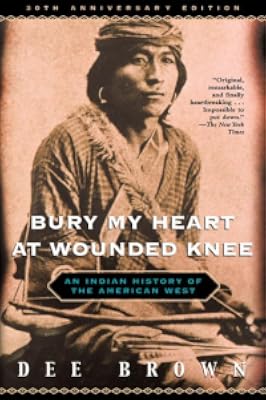
Michael Blake was born Michael Lennox Webb in Fort Bragg, North Carolina on July 5, 1945. He joined the Air Force and was assigned to the public information office and began writing for the base newspaper. He attended the University of New Mexico before going to film school at the University of California, Berkeley. One of his first screenplays, show more Stacy's Knights, was produced in 1983 and starred Kevin Costner. He continued to write scripts for the next several years, but nothing he wrote made it to the screen. After reading Bury My Heart at Wounded Knee by Dee Brown, Blake had the idea for Dances with Wolves. Costner suggested he write a book instead of a screenplay. The book was published in 1988. Blake had just lost his job as a dishwasher when Costner asked him to adapt his own novel into a screenplay. The Dances with Wolves film was released in 1990. Blake received an Academy Award for Best Adapted Screenplay. His other novels included Airman Mortensen and The Holy Road. He died from heart failure on May 2, 2015 at the age of 69. (Bowker Author Biography) show less
Series

Common Knowledge
- Original publication date
- 2001-09-04
- People/Characters
- Dances With Wolves; Kicking Bird; Ten Bears; Wind In His Hair; Smiles A Lot; Mackenzie Ranald "Bad Hand" (show all 7); John J. Dunbar (Dances With Wolves)
- Dedication
- To all the warriors who died. And to those who live on...Marianne, Quanah, Monahsetah, Lozen
- First words
- The scalp was red and thick but what made it especially extraordinary was its great length.
- Last words
- (Click to show. Warning: May contain spoilers.)There was no place else to go.
- Original language
- English
Classifications
Statistics
- Members
- 236
- Popularity
- 138,892
- Reviews
- 8
- Rating
- (3.33)
- Languages
- 7 — Danish, Dutch, English, Finnish, French, German, Italian
- Media
- Paper, Audiobook, Ebook
- ISBNs
- 25
- ASINs
- 5