On This Page
Description
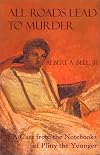
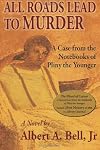
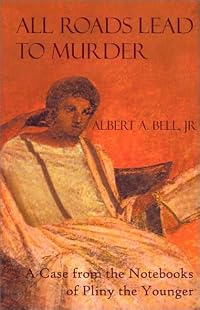
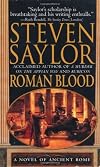
First-century Smyrna comes alive as the scene of a horrific murder. Pliny the Younger, Tacitus, and Luke, travelers in a caravan bound for Rome, become investigators when no Roman magistrates are available. Suspects abound: gamblers, arcane priestesses and Christians. What is the secret of one of the victim'ss own slaves, a beautiful blond, and the German giant shadowing her?Tags
Recommendations







Member Recommendations
Member Reviews
In the year 83 AD, Pliny the Younger and his friend Tacitus are on the way back to Rome from government service in Asia. Travelling with a motley group they arrive in Smyrna, where a member of the party is found dead in the morning with his heart having been cut out. After examining the body with a doctor, Luke, who is travelling with a companion called Timothy, and drawing on the principles he learnt from his uncle and adoptive father, Pliny the Elder, author of the famous "Natural History", Pliny concludes that Cornutus was actually poisoned and his heart cut out some time after his death. Cornutus had a very beautiful slave girl called Chryseis who is in danger of being tortured and killed together with all of Cornutus's other slaves show more if the murderer is not found. Pliny tries to find out who the real murderer is.
There were rather heavy information dumps in the first couple of chapters as the author introduced the world of the first century AD but once the story got going, the author piled on the suspense in a very satisfactory way, with the seamier and more violent sides of Roman life playing graphic roles. At times Pliny's sensibilities did seem a bit too modern to be true, but they are not incompatible with how he appears from his surviving letters. show less
There were rather heavy information dumps in the first couple of chapters as the author introduced the world of the first century AD but once the story got going, the author piled on the suspense in a very satisfactory way, with the seamier and more violent sides of Roman life playing graphic roles. At times Pliny's sensibilities did seem a bit too modern to be true, but they are not incompatible with how he appears from his surviving letters. show less
This is an enjoyable Roman mystery, in large part because of a strong sense of time and place. It features Pliny the Younger along with some other historical characters, and is set in First Century Smyrna. An objectionable Roman has been murdered, and Pliny ends up temporarily in charge of the investigation of his death. The plot at times gets rather overwrought, pulling in Christians, devotees of a mother goddess, politics back in Rome, escaped slaves, and other themes. But the characterization is good -- Pliny emerges as a distinct individual, as do several of the other characters. And the sense of time and place is convincing. Along with togas and witticisms, this is the Roman Empire warts and all, with the horrors of slavery and an show more unfair judicial system brought vividly to life. A good read which makes me want to read the rest of the series. show less
This was the second of Bell's Pliny books I read, and I enjoyed it. The writing is tight, characters appealing, and the research excellent.
I was a bit disappointed in this book. I like what I know of Pliny the Younger (his account of he Vesuvius eruption, the letter on dealing with Christians) and I see the 2nd book in the series got an award, but i found the tone of the book a bit modern in places. Also, it had a slave girl tortured to death which did not seem necessary ti the plot, and another woman raped as well, but Jewish villains. The Biblical Luke and Timothy are characters who provide Pliny with a lot more knowledge about Christianity than he displays in his famous letter.
Ratings
Members
- Recently Added By
Author Information
24 Works 421 Members
Series

Common Knowledge
- Canonical title
- All Roads Lead to Murder
- Original publication date
- 2002-10
- People/Characters
- Pliny the Younger; Tacitus; Luke, the physician; Timothy; Chryseis; Quintus Marcellus Justus (show all 8); Cornelius Tacitus; Gaius Plinius Caecilius Secundus
- Important places
- Smyrna; çIzmir, Turkey
- Dedication
- For the Writer's Group at the Urban Institute for the Contemporary Arts in Grand Rapids, Michigan:
Steve B., Pat, Flannery, Roger, Kathy, Charleen, Lisa, Daphne, Elaine, Amy, Steve P. (the more or less regulars),
<... (show all)br>and others who've heard and commented on various portions
They have made this a better book and me a better writer. - First words
- I saw the slave girl stumble and knew the cup of wine she was carrying was going to land on her master.
- Last words
- (Click to show. Warning: May contain spoilers.)She leaned forward and kissed me lightly on the lips.
- Blurbers
- Whitley, Katerina K.; D'Amato, Barbara; Robinson, Lynda S.; Walsh, Ann Beardsley
- Original language
- English US
Classifications
Statistics
- Members
- 49
- Popularity
- 612,671
- Reviews
- 4
- Rating
- (3.63)
- Languages
- English
- Media
- Paper, Ebook
- ISBNs
- 5
- ASINs
- 1