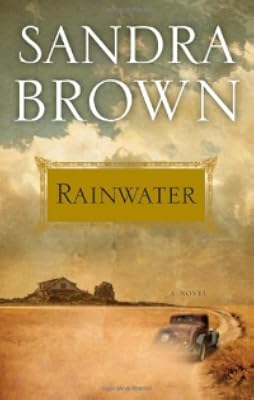
Rainwater
by Sandra Brown 
On This Page
Description
In a time of drought and economic depression in 1934, Ella Barron runs her boardinghouse in Texas while caring for her son, Solly, and responds to the calm influence of one of her boarders, David Rainwater, while facing the tension and uncertainty around her.Tags
Recommendations


































Member Reviews
On the surface, this is the kind of book I would see online, post some snarky, cynical comment about, and then ignore. I'd never even heard of Sandra Brown, but the book was suggested as part of a 'Texas writers' book list, and the synopsis looked ok, and I urgently needed a new read, so I checked it out. Only after I finished did I discover that Sandra Brown is a prolific writer whose novels are mostly of the cloyingly romantic or suspenseful, in a Dateline re-enactment kind of way. She's basically a Texas-based combination of Danielle Steel and Ruth Rendell.
Anyway, I'm glad I didn't know all this when I picked it, because I'd never have even considered reading Rainwater if I had.
This book is sweet. Like, genuinely, authentically show more sweet. Set in Depression-era Texas, its the story of a young, single mother named Ella with a young autistic-coded boy named Solly. Ella runs a boarding house and carries the weight of the world on her shoulders. When a kindly man named Mr. Rainwater moves in, he begins to win over Solly with his gentle friendliness and patience. Before long, Ella starts to rely on Mr. Rainwater, who is written as the perfect 'strong, silent' archetype. I won't spoil the plot because it unfolds so nicely, but suffice it to say that romance develops between them amidst a larger, politically charged context, and underlining it all are Ella's fears around the fate of little Solly and what will happen to him when she's gone.
Honestly, Rainwater is such a well-written novel. I kept waiting for something to offend me socially or politically, but it never came. Instead, I was treated to a very human story driven by characters I could get invested in. The romance was actually romantic. The bittersweet ending was perfect. I loved it, and I'm glad my discriminating mind didn't let this one slip past me.
Sometimes it's ok to take a risk on a book or author you've never heard of. It doesn't always work out well, of course, but when it does - what a treat! show less
Anyway, I'm glad I didn't know all this when I picked it, because I'd never have even considered reading Rainwater if I had.
This book is sweet. Like, genuinely, authentically show more sweet. Set in Depression-era Texas, its the story of a young, single mother named Ella with a young autistic-coded boy named Solly. Ella runs a boarding house and carries the weight of the world on her shoulders. When a kindly man named Mr. Rainwater moves in, he begins to win over Solly with his gentle friendliness and patience. Before long, Ella starts to rely on Mr. Rainwater, who is written as the perfect 'strong, silent' archetype. I won't spoil the plot because it unfolds so nicely, but suffice it to say that romance develops between them amidst a larger, politically charged context, and underlining it all are Ella's fears around the fate of little Solly and what will happen to him when she's gone.
Honestly, Rainwater is such a well-written novel. I kept waiting for something to offend me socially or politically, but it never came. Instead, I was treated to a very human story driven by characters I could get invested in. The romance was actually romantic. The bittersweet ending was perfect. I loved it, and I'm glad my discriminating mind didn't let this one slip past me.
Sometimes it's ok to take a risk on a book or author you've never heard of. It doesn't always work out well, of course, but when it does - what a treat! show less
When I got this book, I did not bother to read the synopsis, after all it is written by the prolific Sandra Brown. Besides, whenever I hear the name Sandra Brown, I think contemporary romance or romantic suspense. Therefore, you can imagine my surprise when I discovered that Rainwater is a historical fiction, which is set in the era of the Great Depression. Although not a genre I gravitate towards, I went ahead and read it. I am so glad I did. It differs from what I am used to from this author. However, the one thing, which remained constant, was the quality of the writing. Ms. Brown’s personality shined through this heart-warming story.
Rainwater is the type of story that will tug at your heartstrings. Although not a romance, it show more features a great love story that will reaffirm your belief in the power of love.
The story introduces Ella Barron and David Rainwater. Ella ran a boarding house in a town called Gilead, during the time of the Great Depression. During this time corruption was rampant, jobs limited, residents were starving due to the poor economic situations and racial tensions ran high. Running the boarding house was her means of supporting herself and her autistic son.
David Rainwater is a cotton broker who suffered financial loss because of the depression. He arrived on her doorstep with a mutual acquaintance seeking to rent a room. She was nor keen on accepting taking on a new boarder, but when she learnt he was dying she reluctantly rent him a room. Little did she know accepting this new boarder would change her life in ways she would never imagine.
Mr. Rainwater is a charming and kind man. Despite Ella’s initial unpleasantness towards him, he remains patient in his dealings with her. I especially loved how he treated her son, Solly. When everyone else treated him as insane and stupid, he handled him with compassion. As a result helped Ella to recognise her son’s true potential. He is a firm believer in standing firm in one’s beliefs no matter the consequences. He showed this trait by his willingness to help the blacks and the whites of Shanty Town in their fight for survival. This he did at great personal risk. Despite, his brave facade it is clear he was scared regarding his health which showed his vulnerability. However, he never allowed his fears to dictate how he lived his life.
My first reaction to Ella was not favourable. However, the more I learnt about her I developed a great appreciation for her. She proved to be a woman of strength. Amidst the struggle of raising an autistic child, in a time when knowledge of autism was non-existent, she still found to offer a helping hand to friends and strangers alike. Despite living in a world where racism was rampant, she never allowed it to determine how she treated those with whom she came in contact. She saw everyone has humans no matter the colour of their skin.
Ella and Mr. Rainwater were developing feelings for each other. Their feelings developed slowly, and they cautiously entered a relationship. This occurred at around eighty percent into the story. As you can imagine their romance was bittersweet given the circumstances surrounding Mr. Rainwater’s health.
Some may consider the story depressing due to the events, but for me it was a reminder of the good and bad things that life has to offer. How we handle the tragedies that come our way determines our mettle. Ella Barron proved, despite the tragedies she encountered she could rise above them and live her life to the fullest.
A thing of note, which some readers may find abhorrent, was the culling and slaughtering of livestock. It was not pretty, but it reflected one of the many tragedies of that era.
Despite my loving this book, I had an issue. I was disappointed with the ending, which felt rushed and which I thought could do with a little more development.
Conclusion/Recommendation
Overall, this was a compelling and heart-wrenching read, which shared one woman’s story of survival, hope and love. Readers will be carried to the time of the Great Depression in this bittersweet tale of love and loss. show less
Rainwater is the type of story that will tug at your heartstrings. Although not a romance, it show more features a great love story that will reaffirm your belief in the power of love.
The story introduces Ella Barron and David Rainwater. Ella ran a boarding house in a town called Gilead, during the time of the Great Depression. During this time corruption was rampant, jobs limited, residents were starving due to the poor economic situations and racial tensions ran high. Running the boarding house was her means of supporting herself and her autistic son.
David Rainwater is a cotton broker who suffered financial loss because of the depression. He arrived on her doorstep with a mutual acquaintance seeking to rent a room. She was nor keen on accepting taking on a new boarder, but when she learnt he was dying she reluctantly rent him a room. Little did she know accepting this new boarder would change her life in ways she would never imagine.
Mr. Rainwater is a charming and kind man. Despite Ella’s initial unpleasantness towards him, he remains patient in his dealings with her. I especially loved how he treated her son, Solly. When everyone else treated him as insane and stupid, he handled him with compassion. As a result helped Ella to recognise her son’s true potential. He is a firm believer in standing firm in one’s beliefs no matter the consequences. He showed this trait by his willingness to help the blacks and the whites of Shanty Town in their fight for survival. This he did at great personal risk. Despite, his brave facade it is clear he was scared regarding his health which showed his vulnerability. However, he never allowed his fears to dictate how he lived his life.
My first reaction to Ella was not favourable. However, the more I learnt about her I developed a great appreciation for her. She proved to be a woman of strength. Amidst the struggle of raising an autistic child, in a time when knowledge of autism was non-existent, she still found to offer a helping hand to friends and strangers alike. Despite living in a world where racism was rampant, she never allowed it to determine how she treated those with whom she came in contact. She saw everyone has humans no matter the colour of their skin.
Ella and Mr. Rainwater were developing feelings for each other. Their feelings developed slowly, and they cautiously entered a relationship. This occurred at around eighty percent into the story. As you can imagine their romance was bittersweet given the circumstances surrounding Mr. Rainwater’s health.
Some may consider the story depressing due to the events, but for me it was a reminder of the good and bad things that life has to offer. How we handle the tragedies that come our way determines our mettle. Ella Barron proved, despite the tragedies she encountered she could rise above them and live her life to the fullest.
A thing of note, which some readers may find abhorrent, was the culling and slaughtering of livestock. It was not pretty, but it reflected one of the many tragedies of that era.
Despite my loving this book, I had an issue. I was disappointed with the ending, which felt rushed and which I thought could do with a little more development.
Conclusion/Recommendation
Overall, this was a compelling and heart-wrenching read, which shared one woman’s story of survival, hope and love. Readers will be carried to the time of the Great Depression in this bittersweet tale of love and loss. show less
Mix up a small town, a dignified stranger, racial tension, an adult bully with arrested development, and a beautiful single mother with an autistic son, and there is plenty of opportunity for conflict. The ending is predictable and inevitable, but the plot carries the reader along anyway.
I was sent a free copy of this book in exchange for a fair review.
This is the first time I've read a Sandra Brown book and romance is not normally my go-to genre but this is claimed to be different from the author's usual fare.
I found it to be a well-crafted story written in an easy to read style which flowed perfectly. I found it really difficult to put down and finished it over two days.
From early on in the book you just know that it isn't going to end happily but by then it has sucked you in to the narrative and even though you feel you know exactly where it is going it still has time to deliver a twist right at the end.
I'm so glad I decided to read this one as it was a welcome change from the usual thrillers and detective novels I show more usually read. show less
This is the first time I've read a Sandra Brown book and romance is not normally my go-to genre but this is claimed to be different from the author's usual fare.
I found it to be a well-crafted story written in an easy to read style which flowed perfectly. I found it really difficult to put down and finished it over two days.
From early on in the book you just know that it isn't going to end happily but by then it has sucked you in to the narrative and even though you feel you know exactly where it is going it still has time to deliver a twist right at the end.
I'm so glad I decided to read this one as it was a welcome change from the usual thrillers and detective novels I show more usually read. show less
It's taken me a couple of days to gather my thoughts for this review and I'm sure I'll still get misty-eyed as I write. The words that come to mind are beautiful, shocking, courageous, heartbreaking, uplifting, tragic, and hopeful. Crazy, right? But yet the author wove a seamlessly beautiful story with incredibly strong characters who live in Gilled Texas during the difficult Depression Era.
The story is rich with history. It's the Summer of 1934 and the Dust Bowl has sunk it's teeth deep into the Central Plains. Ranchers are making heartbreaking decisions about starving cattle, crops are barely producing, families are losing everything they have and being forced to live in shanty towns, and of course, racial tensions are high. In the show more middle of all this strife and tragedy, widowed Ella Barron runs her boarding house and raises her ten year old son, working diligently from sunup to sundown to keep her home. When the local doctor brings a new boarder to her door, she is unaware of just how much this new boarder, Mr. David Rainwater, is going to affect her life and that of the people around her.
Mr. Rainwater won me over very quickly with his polite mannerisms and calm demeanor, although it took Ella a little longer to let down her walls. I can't say much more about him without spoiling the story. Let's just say he was a standout in this book and a true hero.
Ms. Brown continues to surprise me with her writing. I love books with lots of surprises, twists and turns. She does this so well and in a way that does not confuse the reader. The ending of this book was so unexpected that I'm still reeling a bit from it, but I wouldn't have missed reading this story for anything! It has to be one of the best books I've read in years and one I will treasure for many, many more. show less
The story is rich with history. It's the Summer of 1934 and the Dust Bowl has sunk it's teeth deep into the Central Plains. Ranchers are making heartbreaking decisions about starving cattle, crops are barely producing, families are losing everything they have and being forced to live in shanty towns, and of course, racial tensions are high. In the show more middle of all this strife and tragedy, widowed Ella Barron runs her boarding house and raises her ten year old son, working diligently from sunup to sundown to keep her home. When the local doctor brings a new boarder to her door, she is unaware of just how much this new boarder, Mr. David Rainwater, is going to affect her life and that of the people around her.
Mr. Rainwater won me over very quickly with his polite mannerisms and calm demeanor, although it took Ella a little longer to let down her walls. I can't say much more about him without spoiling the story. Let's just say he was a standout in this book and a true hero.
Ms. Brown continues to surprise me with her writing. I love books with lots of surprises, twists and turns. She does this so well and in a way that does not confuse the reader. The ending of this book was so unexpected that I'm still reeling a bit from it, but I wouldn't have missed reading this story for anything! It has to be one of the best books I've read in years and one I will treasure for many, many more. show less
As a diehard fan of Sandra Brown’s work, I couldn’t wait to dig into Rainwater. An historical fiction novel set during the Great Depression, Rainwater is a departure from the romantic suspense for which Brown is most known. I enjoyed it very much. The time period came alive in the storytelling. The main characters were sympathetic while being very strong. The love story at the heart of the novel was more than a romance. It was the story of a deep, intense love involving sacrifice and courage. Brown succeeded in writing an emotional novel without being sappy. She also portrayed racial tensions and economic hardships with a deft hand. It helped that the story was told through flashback by a family member. Having the story narrated show more years after the fact made the tragedies and struggles less immediate and easier to deal with, especially at the book’s conclusion. I was touched by the story and the family devotion and love portrayed therein. show less
This story, inspired by actual events during the Great Depression, takes place in 1934 in the small town of Gilead, Texas. Ella Barron runs a boarding house. Money is tight, yet Ella works hard to keep her place full. She splits her daily time working and caring for her disabled 10-year-old son, Solly. The local doctor brings her a new boarder, David Rainwater, who is dying of cancer.
Once-productive farms in Texas are now barren wastelands. Farmers have gone bankrupt, and for many who remain, the only option left is to ask for federal aid. Roosevelt's Drought Relief Program offers farmers financial help where cattle are purchased at a fair price and hauled away, and the meat is distributed to hungry people nationwide. It's a program show more formed of honorable intentions, yet it’s flawed in its execution. The animals deemed “not worthy for consumption” are shot it place and buried even though homeless families are starving in the same vicinity. As the government trucks arrive at each of the families’ farms, Ella and Mr. Rainwater ride out to see what's happening. Once Mr. Rainwater sees the injustice to the hungry people of the town, he is determined to do something. He is the one who will lead the charge to help them passively fight for the right to feed the hungry.
The central focus of this well-written novel is definitely the classic love story. Ella and Mr. Rainwater are courageous and admirable and you can't help but root for them, even knowing it probably won't be a happy ending. The book touches on a myriad of subjects, including racism, poverty and pacifism. It's a fast read about a horrible time in U. S. history and I found it completely different than other other book the author has written. show less
Once-productive farms in Texas are now barren wastelands. Farmers have gone bankrupt, and for many who remain, the only option left is to ask for federal aid. Roosevelt's Drought Relief Program offers farmers financial help where cattle are purchased at a fair price and hauled away, and the meat is distributed to hungry people nationwide. It's a program show more formed of honorable intentions, yet it’s flawed in its execution. The animals deemed “not worthy for consumption” are shot it place and buried even though homeless families are starving in the same vicinity. As the government trucks arrive at each of the families’ farms, Ella and Mr. Rainwater ride out to see what's happening. Once Mr. Rainwater sees the injustice to the hungry people of the town, he is determined to do something. He is the one who will lead the charge to help them passively fight for the right to feed the hungry.
The central focus of this well-written novel is definitely the classic love story. Ella and Mr. Rainwater are courageous and admirable and you can't help but root for them, even knowing it probably won't be a happy ending. The book touches on a myriad of subjects, including racism, poverty and pacifism. It's a fast read about a horrible time in U. S. history and I found it completely different than other other book the author has written. show less
Members
- Recently Added By
Lists

Favourite Books
1,819 works; 308 members

In or About the 1930s
198 works; 27 members

Books Read in 2010
631 works; 10 members

Tagged Great Depression
23 works; 3 members

BingoDOG - Books About Autism: Fiction
27 works; 14 members

KayStJ's to-read list
1,616 works; 11 members
Historical Romance
12 works; 6 members

Five star books
1,756 works; 108 members

Authors from the United States
245 works; 3 members
Favorite Romance Fiction
247 works; 115 members
Author Information

163+ Works 70,477 Members
Sandra Brown is a LibraryThing Author, an author who lists their personal library on LibraryThing.
Awards and Honors
Distinctions
Work Relationships
Is abridged in
Reader's Digest Select Editions 2010 v04 #310: Villa Mirabella / Rainwater / The First Rule / The Girl Who Chased the Moon by Reader's Digest
Reader's Digest Select Editions 2010: The Scarecrow (M. Connelly) / Rainwater (S. Brown) / Where the Shadows Lie (M. Ridpath) / The Art of Racing in the Rain (G. Stein) by Reader's Digest
Reader's Digest Select Editions: Where the Shadows Lie (M. Ridpath) | Blood Lines (K. Casey) | The Mountain Between Us (C. Martin) | Rainwater (S. Brown) by Reader's Digest
Common Knowledge
- Original publication date
- 2009-11-03
- People/Characters
- Ella Barron; David Rainwater; Solly Barron; Conrad Ellis; Dr. Murdock; Margaret
- Important places
- West Texas, USA; Gilead, Texas, USA
- Important events
- Great Depression
- Dedication
- To Daddy who inspired to story.
And to Mop who inspired me. - First words
- "By any chance, is your pocket watch for sale?"
- Last words
- (Click to show. Warning: May contain spoilers.)"His watch she gave to me."
- Publisher's editor
- Rucci, MarySue
Classifications
Statistics
- Members
- 1,166
- Popularity
- 21,492
- Reviews
- 58
- Rating
- (3.91)
- Languages
- English, German, Indonesian, Portuguese
- Media
- Paper, Audiobook, Ebook
- ISBNs
- 30
- ASINs
- 11