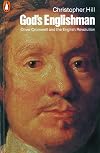
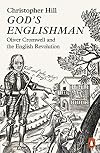
God's Englishman: Oliver Cromwell and the English Revolution
by Christopher Hill
On This Page
Description
A nuanced biography of Oliver Cromwell, breaking down Cromwell's life into different parts- fenland farmer and humble backbencher; stalwart of the good old cause and the New Model Army; key figure of the Commonwealth; and finally Lord Protector. Hill leads the reader unsentimentally through Cromwell's life from his beginnings in Huntingdonshire to his brutal end. Hill brings all his considerable knowledge of the period to bear on the relationships 'God's Englishman' had with God and England. show more Such a detailed understanding of the workings of providence is vital to understanding Cromwell. show lessTags
Recommendations

















Member Reviews
Unfortunately I can’t give this the review it deserves, as I don’t have it with me to refer to. Perhaps this will prove a test of how memorable the contents were? In any event, I’d only read one other book about Cromwell and found this one fascinating. It was published in 1970 (or 1971?) and has remained very readable, with only a couple of slightly dated references. It covers the life of Oliver Cromwell chronologically, before devoting two chapters to his religious beliefs and influence upon historians. Give my scant prior knowledge, I was especially struck by Cromwell’s influence on foreign policy, which amounted to launching the British empire. ‘God’s Englishman’ also conveys how Cromwell operated effectively as a show more negotiator and mediator, conciliating and making vague promises before turning against groups when convenient. He appears to have been very much a pragmatist, believing that god favoured those who got on with the job in hand. The book also draws some fascinating contrasts between the English and French revolutions and the roles of the peasantry/working class therein.
The chapter on how Oliver Cromwell has been interpreted by history was a definite highlight. A conversation between HG Wells and Stalin on the subject of Cromwell is quoted as follows (I cheated by googling this for exact wording):
Touché, Stalin, touché. I only lost the thread of this book slightly at one point in the discussion of religious doctrine, otherwise it was highly enjoyable and thought-provoking. show less
The chapter on how Oliver Cromwell has been interpreted by history was a definite highlight. A conversation between HG Wells and Stalin on the subject of Cromwell is quoted as follows (I cheated by googling this for exact wording):
STALIN: Recall the history of England in the seventeenth century. Did not many say that the old social system had decayed? But did it not, nevertheless, require a Cromwell to crush it by force?
HG WELLS: Cromwell operated on the basis of the constitution and in the name of constitutional order…
STALIN: In the name of the constitution he resorted to violence, beheaded the king, dispersed Parliament, arrested some and beheaded others!
Touché, Stalin, touché. I only lost the thread of this book slightly at one point in the discussion of religious doctrine, otherwise it was highly enjoyable and thought-provoking. show less
"This is the classic life of Cromwell by one of the great radical historians of the English Civil War'A triumph of complex interpretation and delicious prose ... Hill introduced nuance into the character of Cromwell and the nature of his revolution ... the finest of guides to the man of the times" Tristram Hunt, The Guardian.
Ratings
Members
- Recently Added By
Lists

Books in the Bibliography of Contested Continent by Peter Mancall
495 works; 1 member
Author Information

40+ Works 4,725 Members
Christopher Hill was born John Edward Christopher Hill in York, England on February 6, 1912. He attended Balliol College, Oxford University and later became the master of the college from 1965 until his retirement in 1978. In 1940, he was commissioned as a lieutenant in the Oxford and Bucks Light Infantry, before becoming a major in the show more intelligence corps in the Foreign Office from 1943 until the end of World War II. He was a Marxist historian whose work examined the role of economic factors in the events of 17th-century England. His works included The English Revolution 1640, Intellectual Origins of the English Revolution, God's Englishman, Reformation to Industrial Revolution, AntiChrist in 17th-Century England, Milton and the English Revolution, The World of the Muggletonians, The Experience of Defeat, and Liberty Against the Law. He died on February 23, 2003 at the age of 91. (Bowker Author Biography) show less
Series
Belongs to Publisher Series
Common Knowledge
- Original publication date
- 1970
- People/Characters
- Oliver Cromwell; Charles I, King of England, Scotland, and Ireland; Charles II, King of England, Scotland, and Ireland; Thomas Fairfax, 3rd Lord Fairfax of Cameron; Henry Ireton; James VI and I, King of Scots and King of England (show all 12); William Laud, Archbishop of Canterbury; John Lilburne; Edmund Ludlow; Henry Montague, Second Earl of Manchester; John Milton; John Thurloe
- Important places
- England, UK
- Important events
- English Civil War; Barebones Parliament; Battle of Dunbar; Long Parliament; Restoration of the Monarchy; Rump Parliament
- Epigraph
- 'God is decreeing to begin some new and great period... What does he then but reveal himself... as his manner is, first to his Englishmen?'
John Milton, Areopagitica (1644)
'We are English, that is one ... (show all)good fact.'
Oliver Cromwell to Parliament, 17 September 1656 - First words
- Preface
In 1958 I wrote a pamphlet for the Historical Association, to celebrate the tercentenary of Oliver Cromwell's death.
I
Oliver Cromwell lived from 1599 to 1658. During the first forty years of his life a tangled knot of problems was forming which was only to be unravelled, or cut through, in the revolutionary decades 1640-60. - Blurbers
- Wedgwood, C. V.; Kenyon, J. P.
Classifications
- Genres
- History, Nonfiction, Biography & Memoir, General Nonfiction, Religion & Spirituality
- DDC/MDS
- 942.06 — History & geography History of Europe England and Wales England 1603–1714, House of Stuart and Commonwealth periods
- LCC
- DA426 .H49 — History of Europe, Asia, Africa and Oceania Great Britain History of Great Britain England History By period Modern, 1485- Civil War and Commonwealth, 1642-1660
- BISAC
Statistics
- Members
- 532
- Popularity
- 55,845
- Reviews
- 2
- Rating
- (3.69)
- Languages
- English, Portuguese, Spanish
- Media
- Paper, Ebook
- ISBNs
- 10
- ASINs
- 13