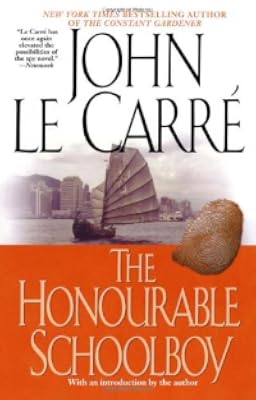
On This Page
Description
"Not a page of this book is without intelligence and grace." -The New York Times The mole has been purged from the Circus, and George Smiley, newly-made chief of the agency, has both rebuilding and revenge in his sights. To fully eradicate the threat, Smiley must trace back the treachery to its very roots. When his investigation leads him to Hong Kong-and what appears to be a dead end-Smiley enlists Jerry Westerby, an international sports journalist and "occasional" Circus asset. In the Far show more East, Westerby will have to untangle a web of corruption spread across a region with a reputation for testing loyalties and allegiances. The Honourable Schoolboy, sequel to the best-selling Tinker Tailor Soldier Spy, continues Smiley's hunt for the Soviet spymaster Karla. With a richly drawn plot and characters that are destined to be "burned on the brain of the reader" (The New York Times), the sixth George Smiley novel serves as both thriller and gripping examination of the costs of espionage. show lessTags
Recommendations









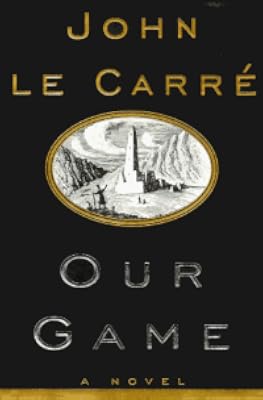
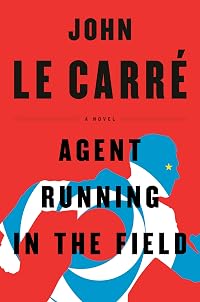









Member Recommendations
Member Reviews
This was my first LeCarre. I think I was sixteen. I loved the writing, the characters, the setting. I didn't have a fucking clue what was going on. The story was too complex, the real-world politics and conflicts utterly beyond me. And yet, I sat in the bus in freezing cold evening eating dry-roasted peanuts and immersed myself in world as alien to me as Middle Earth, more alien, because I knew it was really my world, to which I was an alien, and which completely defeated my comprehension.
Now I think it's an amazing book, the second in a trilogy, about the crumbling of a dreadful old world order and the establishment of a newer, even nastier and darker one. Smiley chases one slender thread from the ruins left by the mole Gerald, show more seeking to redeem and reinvigorate the secret service to which he has devoted his life. Even as he does so, the vultures are circling to snatch it away, and surely he's too canny an operator to be as unaware as he appears. Jerry Westerby is dispatched to Hong Kong to follow the thread, to war-torn Cambodia and Thailand and back, and the moment of triumph is debased with the humanity of his quixotic despair and futility. A bitter, thrilling epic of espionage, that somehow knits together the first and third books depicting Smiley's battles with Karla. show less
Now I think it's an amazing book, the second in a trilogy, about the crumbling of a dreadful old world order and the establishment of a newer, even nastier and darker one. Smiley chases one slender thread from the ruins left by the mole Gerald, show more seeking to redeem and reinvigorate the secret service to which he has devoted his life. Even as he does so, the vultures are circling to snatch it away, and surely he's too canny an operator to be as unaware as he appears. Jerry Westerby is dispatched to Hong Kong to follow the thread, to war-torn Cambodia and Thailand and back, and the moment of triumph is debased with the humanity of his quixotic despair and futility. A bitter, thrilling epic of espionage, that somehow knits together the first and third books depicting Smiley's battles with Karla. show less
Apparently, many people read John Le Carré’s spy novels for a glimpse at what the world of international espionage is really like; in other words, they read them like a kind of journalism about the shady world of Intelligence Services. And there certainly is something to it – we’ve grown used to a more realistic perspective on secret services, but we can still imagine what it must have been like to read a novel like The Spy Who Came In from the Cold for someone whose idea of spy thrillers were Ian Fleming’s James Bond novels. Le Carré profoundly debunked the myths about the spy trade, showing it to be a world not of elegant womanizers lounging in luxurious surroundings, but of middle-aged men holding bureaucratic meetings in show more dull offices, not of noble deeds and lofty aims but of petty infighting and political maneuvering. The novels of Le Carré were filled with detailed descriptions and precise observations, and had authenticity written all over them and thoroughly destroyed any conception of glamour clinging to the spy profession – today, nobody would consider a James Bond novel anything but fantasy.
The Honourable Schoolboy lends itself with particular ease to such a journalistic reading due to the place and time it is set in: a very large part of the novel takes place in Hong Kong and South-East Asia during the retreat of the United States from Vietnam and a lot of room is given to highly atmospheric descriptions of the situation, of the feelings of uncertainty, unrest and frustration pervading the area during that period – making this by far the longest book of Le Carré’s so far. Even though Le Carré’s account is fictional, he appears to have done an impressive amount of research for it, and I doubt any journalistic, presumably non-fictional report could do a better job at painting a picture that is both authentic and immersive.
Therefore, one might consider The Honourable Schoolboy worth reading on those merits alone. But Le Carré’s ambition for this and his other novels does not extend to merely being reportage, this novel, like his previous ones, aims for something more, and I think that it is this which makes them stand out. And this is not just true for the novels’ content but for their form, too – quite often, the apparently realistic exterior of Le Carré’s spy novels conceals inner mechanisms that do not run by the same rules governing realistic narratives but are structurally quite experimental. The Honourable Schoolboy is another example of this – its main thematic concern is with truth and its uses, and the novel’s forms reflects this, even if it is by adding its own distortions in the process.
Towards the end of the novel, one of the characters quotes from a poem by John Donne:
This, even if it comes late in the novel, after its plot and its protagonists have taken many turns about and about, constitutes something like the motto for The Honourable Schoolboy. Indeed the whole novel could be taken as a variation on the poem those lines comes from, Donne’s Satire III, to the point where it feels that one might place both works next to each other and draw in the correspondences. Correspondence is part of the novel’s theme, too, as it is set not just in Asia but has London as a major setting too, and the events in both spheres, while never shown to result from each other immediately, do influence each other in oblique ways that had me think more than once of the Renaissance alchemy concept of correspondence, where things not directly connected still work upon each other by way of mystic similarities. Except, of course, that there is nothing mystical at place here, but the driving forces are mostly political in nature – but not really any less obscure for that.
There is a recurring image in the novel of truth as a small circle or kernel, surrounded by layers upon layers of untruth that grow steadily larger, up to the outer ring which is a vast area of rumour and obfuscation. The novel in fact starts with out rumours, and continues to refer to them, in the plot and by way of its anonymous narrator who tries to pierce through the mist of lies and half-truths surrounding “Operation Dolphin” to arrive at its kernel of truth. And both Jerry Westerby and George Smiley, the novel’s main protagonists, are surrounded by rumours, putting the reader in a very similar position of having to cross through obfuscation to arrive at the truth. A truth that becomes ever more elusive the further the novel proceeds, and it eventually becomes clear that for all its descriptive vividness and journalistic authenticity, the novel lets us see its kernel of truth only through a thick haze of distraction and misinformation. In fact, its undoubtedly brilliant journalistic element might constitute precisely that haze – one can hardly consider it accidental that so much of the novel takes place among journalist and that one of its main protagonists is a journalist who has no scruples to manipulate the truth when it serves his purposes and who in turn is manipulated by his employers in London. By the end of The Honourable Schoolboy it is by no means that there every was any kernel of truth at all, and if there was, it might be impossible to find – but not for epistemological reasons but because it has been so distorted and hidden under layers and layers of obfuscation by political power plays that it is simply gone, and the wanderer, when he takes that last turn that last turn that will take him up to the summit of that hill, finds himself on top of a sheer cliff, stepping off into the air. show less
The Honourable Schoolboy lends itself with particular ease to such a journalistic reading due to the place and time it is set in: a very large part of the novel takes place in Hong Kong and South-East Asia during the retreat of the United States from Vietnam and a lot of room is given to highly atmospheric descriptions of the situation, of the feelings of uncertainty, unrest and frustration pervading the area during that period – making this by far the longest book of Le Carré’s so far. Even though Le Carré’s account is fictional, he appears to have done an impressive amount of research for it, and I doubt any journalistic, presumably non-fictional report could do a better job at painting a picture that is both authentic and immersive.
Therefore, one might consider The Honourable Schoolboy worth reading on those merits alone. But Le Carré’s ambition for this and his other novels does not extend to merely being reportage, this novel, like his previous ones, aims for something more, and I think that it is this which makes them stand out. And this is not just true for the novels’ content but for their form, too – quite often, the apparently realistic exterior of Le Carré’s spy novels conceals inner mechanisms that do not run by the same rules governing realistic narratives but are structurally quite experimental. The Honourable Schoolboy is another example of this – its main thematic concern is with truth and its uses, and the novel’s forms reflects this, even if it is by adding its own distortions in the process.
Towards the end of the novel, one of the characters quotes from a poem by John Donne:
On a huge hill,
Cragged and steep, Truth stands, and he that will
Reach her, about must and about must go,
And what the hill’s suddenness resists, win so.
This, even if it comes late in the novel, after its plot and its protagonists have taken many turns about and about, constitutes something like the motto for The Honourable Schoolboy. Indeed the whole novel could be taken as a variation on the poem those lines comes from, Donne’s Satire III, to the point where it feels that one might place both works next to each other and draw in the correspondences. Correspondence is part of the novel’s theme, too, as it is set not just in Asia but has London as a major setting too, and the events in both spheres, while never shown to result from each other immediately, do influence each other in oblique ways that had me think more than once of the Renaissance alchemy concept of correspondence, where things not directly connected still work upon each other by way of mystic similarities. Except, of course, that there is nothing mystical at place here, but the driving forces are mostly political in nature – but not really any less obscure for that.
There is a recurring image in the novel of truth as a small circle or kernel, surrounded by layers upon layers of untruth that grow steadily larger, up to the outer ring which is a vast area of rumour and obfuscation. The novel in fact starts with out rumours, and continues to refer to them, in the plot and by way of its anonymous narrator who tries to pierce through the mist of lies and half-truths surrounding “Operation Dolphin” to arrive at its kernel of truth. And both Jerry Westerby and George Smiley, the novel’s main protagonists, are surrounded by rumours, putting the reader in a very similar position of having to cross through obfuscation to arrive at the truth. A truth that becomes ever more elusive the further the novel proceeds, and it eventually becomes clear that for all its descriptive vividness and journalistic authenticity, the novel lets us see its kernel of truth only through a thick haze of distraction and misinformation. In fact, its undoubtedly brilliant journalistic element might constitute precisely that haze – one can hardly consider it accidental that so much of the novel takes place among journalist and that one of its main protagonists is a journalist who has no scruples to manipulate the truth when it serves his purposes and who in turn is manipulated by his employers in London. By the end of The Honourable Schoolboy it is by no means that there every was any kernel of truth at all, and if there was, it might be impossible to find – but not for epistemological reasons but because it has been so distorted and hidden under layers and layers of obfuscation by political power plays that it is simply gone, and the wanderer, when he takes that last turn that last turn that will take him up to the summit of that hill, finds himself on top of a sheer cliff, stepping off into the air. show less
Most long novels would benefit from a firmer editorial hand. Anything over 400 pages is suspect. The Honourable Schoolboy is 600 pages or so. It has its merits, but it’s a bloated, indulgent book, like a bad extended director’s cut of Le Carré’s stellar earlier work.
We’re again immersed in the world of the British Secret Service as its head, George Smiley, tries to get one over his Russian nemesis Karla by disrupting some kind of operation in Hong Kong, China, and sundry other countries of the region. Smiley’s main weapon of disruption is a somewhat erratic agent called Jerry Westerby.
The main indulgence is the decision to give equal time to both Smiley’s efforts in London and Westerby’s in the field. We effectively get show more two novels, one a strangely gripping tale of Smiley’s low-key burrowing in files, tense committee meetings, and interviews with sources, the other a strangely ungripping story of Westerby’s Bond-lite traipsing around the South China Sea under tenuous journalistic cover. Either one would have done, preferably the former.
The main bloat seems to come from an author trying a little too hard, in several respects. First, this book perhaps marks the point at which Le Carré is no longer writing from first-hand experience and leaning instead on research and imagination, and so perhaps is laying on rather too thick the spycraft jargon and local atmosphere in a bid to convince us that he still knows what he’s talking about.
Second, where earlier works set scenes and dealt with elisions quickly and neatly, here Le Carré spends ages getting things going (with barbs about journalisms and publishing that again indicate his firm establishment in a different world), and talks round obfuscations by employing a very tricksy and slightly annoying authorial voice to explain in great detail how nobody really knows anything about this particular plot point. It’s like he’s overthinking how to be a writer as opposed to just writing.
Third, the plot is incredibly convoluted—both the plot of the book and the Russian plot that is being uncovered. I suppose we expect that, but again it does feel just a little like there’s too much thought going in to making this as complicated as possible.
The bloat also means that minor problems in Le Carré’s earlier work are amplified. He was always weak with women, for example, but got away with it because they were minor characters. Here, we have a fairly incredible femme fatale type figure playing a key role, getting seasoned spies and hardened criminals into all sorts of trouble by being really very attractive. She’s in the Westerby bits, obviously. In general, there’s an air of the ludicrous in a lot of the Westerby that you don’t find in, for example, The Spy Who Came in From the Cold.
Being a director’s cut, though, all the good stuff is still there—as I say, the book has its merits. The plot is convoluted, but also a marvel of engineering. There are exciting committee meetings. There are good thriller-ish scenes, some good bits in Vietnam. Smiley is great. The air overall is still bleak enough to please the cynic about the spy game. I guess overall I enjoyed it, I just think I would have enjoyed less of it more. show less
We’re again immersed in the world of the British Secret Service as its head, George Smiley, tries to get one over his Russian nemesis Karla by disrupting some kind of operation in Hong Kong, China, and sundry other countries of the region. Smiley’s main weapon of disruption is a somewhat erratic agent called Jerry Westerby.
The main indulgence is the decision to give equal time to both Smiley’s efforts in London and Westerby’s in the field. We effectively get show more two novels, one a strangely gripping tale of Smiley’s low-key burrowing in files, tense committee meetings, and interviews with sources, the other a strangely ungripping story of Westerby’s Bond-lite traipsing around the South China Sea under tenuous journalistic cover. Either one would have done, preferably the former.
The main bloat seems to come from an author trying a little too hard, in several respects. First, this book perhaps marks the point at which Le Carré is no longer writing from first-hand experience and leaning instead on research and imagination, and so perhaps is laying on rather too thick the spycraft jargon and local atmosphere in a bid to convince us that he still knows what he’s talking about.
Second, where earlier works set scenes and dealt with elisions quickly and neatly, here Le Carré spends ages getting things going (with barbs about journalisms and publishing that again indicate his firm establishment in a different world), and talks round obfuscations by employing a very tricksy and slightly annoying authorial voice to explain in great detail how nobody really knows anything about this particular plot point. It’s like he’s overthinking how to be a writer as opposed to just writing.
Third, the plot is incredibly convoluted—both the plot of the book and the Russian plot that is being uncovered. I suppose we expect that, but again it does feel just a little like there’s too much thought going in to making this as complicated as possible.
The bloat also means that minor problems in Le Carré’s earlier work are amplified. He was always weak with women, for example, but got away with it because they were minor characters. Here, we have a fairly incredible femme fatale type figure playing a key role, getting seasoned spies and hardened criminals into all sorts of trouble by being really very attractive. She’s in the Westerby bits, obviously. In general, there’s an air of the ludicrous in a lot of the Westerby that you don’t find in, for example, The Spy Who Came in From the Cold.
Being a director’s cut, though, all the good stuff is still there—as I say, the book has its merits. The plot is convoluted, but also a marvel of engineering. There are exciting committee meetings. There are good thriller-ish scenes, some good bits in Vietnam. Smiley is great. The air overall is still bleak enough to please the cynic about the spy game. I guess overall I enjoyed it, I just think I would have enjoyed less of it more. show less
I and the public know
What all schoolchildren learn,
Those to whom evil is done
Do evil in return. - W.H. Auden
What if you devoted your entire life to something because you thought it was the right thing, the good thing, the moral thing, and then you ended your life wondering if you had been completely wrong? It happens to a lot of people, particularly because things shift on us as the years go by and change in ways we do not notice or acknowledge, and because with age comes wisdom, or if not wisdom, perhaps just clearer vision.
MacArthur famously said, “Old Soldiers never die, they just fade away.” Perhaps the same can be said of old spies, cold wars, and people who live on the fringe of society, just clambering for survival. And, if show more they have not died, but are only faded, can they be restored?
These were some of the thoughts I had while reading this novel, because John le Carre is one of those who sees the underbelly of life, and the betrayals it contains, and does not flinch. The time is 1974-75, Vietnam is falling from the hands of the Americans, Southeast Asia is a hotbed of activity, legal and illegal, the British still exercise control of a sort over Hong Kong, and all the major powers are jockeying for power. The Russians are actively working the Asian world for intelligence, and Karla, Smiley’s nemesis is playing cards that the British and Americans don’t even know he is holding.
Enter George Smiley, an aging British spy, who still carries the moral code and convictions of World War II, but must try to fit that image of the world into a more cynical, less forgiving, reality. He releases into this malestrom a seasoned operative by the name of Jerry Westerby, a man who seems so isolated and lonely that he made me ache, another man who has given his life to an occupation that breeds doubt and insecurity in men who are so seemingly strong and fearless. And, another man who is questioning what it has all been about.
Peter Guilliam sums it up rather well, I thought, and in doing so lays out the basic premise of the entire book:
One day, thought Guillam, as he continued listening, one of two things will happen to George. He’ll cease to care or the paradox will kill him. If he ceases to care, he’ll be half the operator he is. If he doesn’t, that little chest will blow up from the struggle of trying to find the explanation for what we do.
This is the sixth book in the Smiley series, and the second in the Karla Trilogy, and what I have observed in reading them is that George Smiley’s struggle to reconcile the job he does--the terrible consequences that often go with it, the deception and the sacrifices--is constant, never-ending, and personally costly. That he survives at all is miraculous, but he does, because he is the heart and conscience of the Circus, and eventually the heart is needed or the body dies.
One last thought, if anyone can write a more complex, intricate, entangled plot without failing to leave even the slightest element dangling, I have never encountered them. This is a spy novel, of course, but it is oh so much more. When you close the book, you will not leave the characters or the story behind, and you will see parallels all around you in our own society, in the duplicitousness of government, in the way some people play chess with other people’s lives, in the way sometimes everyone loses. show less
What all schoolchildren learn,
Those to whom evil is done
Do evil in return. - W.H. Auden
What if you devoted your entire life to something because you thought it was the right thing, the good thing, the moral thing, and then you ended your life wondering if you had been completely wrong? It happens to a lot of people, particularly because things shift on us as the years go by and change in ways we do not notice or acknowledge, and because with age comes wisdom, or if not wisdom, perhaps just clearer vision.
MacArthur famously said, “Old Soldiers never die, they just fade away.” Perhaps the same can be said of old spies, cold wars, and people who live on the fringe of society, just clambering for survival. And, if show more they have not died, but are only faded, can they be restored?
These were some of the thoughts I had while reading this novel, because John le Carre is one of those who sees the underbelly of life, and the betrayals it contains, and does not flinch. The time is 1974-75, Vietnam is falling from the hands of the Americans, Southeast Asia is a hotbed of activity, legal and illegal, the British still exercise control of a sort over Hong Kong, and all the major powers are jockeying for power. The Russians are actively working the Asian world for intelligence, and Karla, Smiley’s nemesis is playing cards that the British and Americans don’t even know he is holding.
Enter George Smiley, an aging British spy, who still carries the moral code and convictions of World War II, but must try to fit that image of the world into a more cynical, less forgiving, reality. He releases into this malestrom a seasoned operative by the name of Jerry Westerby, a man who seems so isolated and lonely that he made me ache, another man who has given his life to an occupation that breeds doubt and insecurity in men who are so seemingly strong and fearless. And, another man who is questioning what it has all been about.
Peter Guilliam sums it up rather well, I thought, and in doing so lays out the basic premise of the entire book:
One day, thought Guillam, as he continued listening, one of two things will happen to George. He’ll cease to care or the paradox will kill him. If he ceases to care, he’ll be half the operator he is. If he doesn’t, that little chest will blow up from the struggle of trying to find the explanation for what we do.
This is the sixth book in the Smiley series, and the second in the Karla Trilogy, and what I have observed in reading them is that George Smiley’s struggle to reconcile the job he does--the terrible consequences that often go with it, the deception and the sacrifices--is constant, never-ending, and personally costly. That he survives at all is miraculous, but he does, because he is the heart and conscience of the Circus, and eventually the heart is needed or the body dies.
One last thought, if anyone can write a more complex, intricate, entangled plot without failing to leave even the slightest element dangling, I have never encountered them. This is a spy novel, of course, but it is oh so much more. When you close the book, you will not leave the characters or the story behind, and you will see parallels all around you in our own society, in the duplicitousness of government, in the way some people play chess with other people’s lives, in the way sometimes everyone loses. show less
Warning: The first paragraph of this review contains potential spoilers for Tinker, Tailor, Soldier, Spy.
A great follow-up to Tinker Tailor Soldier Spy, and quite possibly easier to follow. (I say "quite possibly" because that was the case for me personally.) In the wake of "The Fall", as The Circus calls the exposure of a Soviet double agent within their ranks, George Smiley is appointed head of the Circus and is tasked with cleaning up the fallout. Upon learning that his nemesis Karla has set up a "gold seam" (a secret bank account) based in Hong Kong, Smiley sends the titular character, Jerry Westerby, into action.
Naturally, as befits a spy novel, there's a lot of intrigue and second-guessing and trying to outwit the "Cousins" (aka show more the CIA), just as much as or perhaps more than the outwitting of the KGB. The novel is also peopled with colourful characters, such as the eloquent old newspaper reporter Craw, jovial and resourceful Jerry, the persistent and highly knowledgeable Connie Sachs, and of course Smiley himself.
Le Carré has an excellent knack for describing these characters and indeed the story as a whole. For example, he says of Connie that she "had the affectation of assuming everything was alive and potentially recalcitrant", and deftly illustrates the extreme car-friendliness of an area by saying that "[a]t Star Heights, pedestrians were in bad taste." (Another quote I was quite fond of was the bit about the "remains of a ham sandwich that had died of old age.")
The story held my attention fairly consistently throughout -- I never wanted to put it down, even when my brain was overflowing with all the information and description I was taking in. The ending delivered a punch to the gut (I literally sat there with my mouth hanging open at one point) and was overall satisfying from a narrative standpoint. It would make an excellent film, I think, especially now that Tinker Tailor is on the big screen. show less
A great follow-up to Tinker Tailor Soldier Spy, and quite possibly easier to follow. (I say "quite possibly" because that was the case for me personally.) In the wake of "The Fall", as The Circus calls the exposure of a Soviet double agent within their ranks, George Smiley is appointed head of the Circus and is tasked with cleaning up the fallout. Upon learning that his nemesis Karla has set up a "gold seam" (a secret bank account) based in Hong Kong, Smiley sends the titular character, Jerry Westerby, into action.
Naturally, as befits a spy novel, there's a lot of intrigue and second-guessing and trying to outwit the "Cousins" (aka show more the CIA), just as much as or perhaps more than the outwitting of the KGB. The novel is also peopled with colourful characters, such as the eloquent old newspaper reporter Craw, jovial and resourceful Jerry, the persistent and highly knowledgeable Connie Sachs, and of course Smiley himself.
Le Carré has an excellent knack for describing these characters and indeed the story as a whole. For example, he says of Connie that she "had the affectation of assuming everything was alive and potentially recalcitrant", and deftly illustrates the extreme car-friendliness of an area by saying that "[a]t Star Heights, pedestrians were in bad taste." (Another quote I was quite fond of was the bit about the "remains of a ham sandwich that had died of old age.")
The story held my attention fairly consistently throughout -- I never wanted to put it down, even when my brain was overflowing with all the information and description I was taking in. The ending delivered a punch to the gut (I literally sat there with my mouth hanging open at one point) and was overall satisfying from a narrative standpoint. It would make an excellent film, I think, especially now that Tinker Tailor is on the big screen. show less
The second volume in le Carre's fabled Karla spy trilogy, [b:The Honourable Schoolboy|18990|The Honourable Schoolboy|John le Carré|https://i.gr-assets.com/images/S/compressed.photo.goodreads.com/books/1348762526l/18990._SY75_.jpg|79986] is a significant departure from the five Smiley books leading up to it. It's the longest of all the Smiley novels, and the only one where the action takes place outside of Europe.
The plot centers on people and events in Southeast Asia, and Hong Kong in particular. In the mid-1970s the area was a cauldron of conflict, pitting East against West, communism (both the Russian and Chinese varieties) against capitalism/democracy, and factions vs factions within individual countries.
Once again the core of the show more plot is a mole planted, this time in China, decades before by Karla, the Soviet counterpart to Smiley, head of the Circus, the British Secret Service. In the previous volume Smiley had unmasked a Karla mole hidden deep in the Circus, but by then serious damage had been done, and Smiley is now charged with restoring the honor of the organization he has cherished his entire life.
But the effort to identify the mole and leverage his position is only part of the story le Carré wants to tell here. Another is to describe the feel of Southeast Asia at the time, something he does vividly. Although I'd known a fair amount about area, whether from reading current events or history, I found a new appreciation for the day to day existence of the innocent local residents, treated as pawns going back even before French colonization.
The last part is an exploration of the extent to which it is possible for a spy, professional or "semi-pro", to disassociate from normal human connections. This is actually an expansion of an idea le Carré introduced in [b:The Spy Who Came In from the Cold|19494|The Spy Who Came In from the Cold|John le Carré|https://i.gr-assets.com/images/S/compressed.photo.goodreads.com/books/1327719782l/19494._SY75_.jpg|1177001]. In that case the relationship was more tender, it seems to me, than in this book, where an overwhelming lust seems to be the driving force.
All in all another extremely satisfying offering from the Master of the espionage tale. Three more to go in the Smiley series - I should be able to make my goal of finishing them by year end. show less
The plot centers on people and events in Southeast Asia, and Hong Kong in particular. In the mid-1970s the area was a cauldron of conflict, pitting East against West, communism (both the Russian and Chinese varieties) against capitalism/democracy, and factions vs factions within individual countries.
Once again the core of the show more plot is a mole planted, this time in China, decades before by Karla, the Soviet counterpart to Smiley, head of the Circus, the British Secret Service. In the previous volume Smiley had unmasked a Karla mole hidden deep in the Circus, but by then serious damage had been done, and Smiley is now charged with restoring the honor of the organization he has cherished his entire life.
But the effort to identify the mole and leverage his position is only part of the story le Carré wants to tell here. Another is to describe the feel of Southeast Asia at the time, something he does vividly. Although I'd known a fair amount about area, whether from reading current events or history, I found a new appreciation for the day to day existence of the innocent local residents, treated as pawns going back even before French colonization.
The last part is an exploration of the extent to which it is possible for a spy, professional or "semi-pro", to disassociate from normal human connections. This is actually an expansion of an idea le Carré introduced in [b:The Spy Who Came In from the Cold|19494|The Spy Who Came In from the Cold|John le Carré|https://i.gr-assets.com/images/S/compressed.photo.goodreads.com/books/1327719782l/19494._SY75_.jpg|1177001]. In that case the relationship was more tender, it seems to me, than in this book, where an overwhelming lust seems to be the driving force.
All in all another extremely satisfying offering from the Master of the espionage tale. Three more to go in the Smiley series - I should be able to make my goal of finishing them by year end. show less
The Honourable Schoolboy is an epic, sprawling mess of a novel that doesn't quite deliver the payoff it promises those willing to invest in its near 700 page length. As in Tinker Tailor and Smiley's People (the other two novels making up the so-called Karla Trilogy, of which this is the second), le Carre narrates the events of the book as a sort of controlled retrospective, deliberately withholding information from the reader until the end. Here, however, the technique starts to grate due to the huge number of characters and sub-plots which le Carre introduces, as well as a staggering amount of backstory coloring events in the present. I appreciate not having a story spelt out for me in clear linear terms as much as the next man, but I show more found keeping track of everything more than a little overwhelming here.
Which isn't to say I didn't enjoy it. What The Honourable Schoolboy lacks in tightness it makes up for in sheer visceral thrills. This is a roller coaster of a book, and one of the most action packed offerings you're ever likely to get from le Carre. After years of novels set in bleak Cold War Europe the exotic backdrops of Laos, Hong Kong and Cambodia come as something of a welcome change. Le Carre really seems to be having fun here, and in place of jaded Cold Warriors and trench coated defectors we get a suitably motley assortment of drink-sodden ex-pats, glamour seeking whores and crazed dope-running mercenaries. Lots of echoes of Greene, Conrad, even a bit of Fleming. Throw in a multi-millionaire Chinese businessman and his sinister bodyguard and the similarities to a certain Mr Bond become even more apparent. It's still recognizably a le Carre novel, though quite a departure from what he had written up till that point. (subsequent novels would of course show that le Carre was as capable of writing first-rate thrillers as the more slow-burning stuff that first earned him his name)
Ultimately though, there's just far too much going on for even a 700 page novel to really do justice, and while le Carre does his best to tie up all the threads there's an underlying sense of dissatisfaction at the end. Too many characters are whisked on stage only to be whisked off a second later, their job done. Were these merely bland cutouts, ciphers or whatnot it wouldn't be so bad, but they're not, and it's this wonderful detail that informs even the smallest of bit-parters that paradoxically makes the book so frustrating to read. There's a whole world here and its surface has only barely been scraped by the close of things.
Pick it up if you want more vintage le Carre, but don't expect the heady brilliance of his other better known works.
Oh, one more thing. Though nominally a part of the Smily vs Karla trilogy, neither Smiley nor his shadowy nemesis play much of a central role here. In fact, aside from a few token mentions, Karla is almost wholly absent from any of the events in the novel. You could quite conceivably skip this novel (as the TV series did) with minimal impact on the overall story arc present in both Tinker Tailor and Smiley's People. show less
Which isn't to say I didn't enjoy it. What The Honourable Schoolboy lacks in tightness it makes up for in sheer visceral thrills. This is a roller coaster of a book, and one of the most action packed offerings you're ever likely to get from le Carre. After years of novels set in bleak Cold War Europe the exotic backdrops of Laos, Hong Kong and Cambodia come as something of a welcome change. Le Carre really seems to be having fun here, and in place of jaded Cold Warriors and trench coated defectors we get a suitably motley assortment of drink-sodden ex-pats, glamour seeking whores and crazed dope-running mercenaries. Lots of echoes of Greene, Conrad, even a bit of Fleming. Throw in a multi-millionaire Chinese businessman and his sinister bodyguard and the similarities to a certain Mr Bond become even more apparent. It's still recognizably a le Carre novel, though quite a departure from what he had written up till that point. (subsequent novels would of course show that le Carre was as capable of writing first-rate thrillers as the more slow-burning stuff that first earned him his name)
Ultimately though, there's just far too much going on for even a 700 page novel to really do justice, and while le Carre does his best to tie up all the threads there's an underlying sense of dissatisfaction at the end. Too many characters are whisked on stage only to be whisked off a second later, their job done. Were these merely bland cutouts, ciphers or whatnot it wouldn't be so bad, but they're not, and it's this wonderful detail that informs even the smallest of bit-parters that paradoxically makes the book so frustrating to read. There's a whole world here and its surface has only barely been scraped by the close of things.
Pick it up if you want more vintage le Carre, but don't expect the heady brilliance of his other better known works.
Oh, one more thing. Though nominally a part of the Smily vs Karla trilogy, neither Smiley nor his shadowy nemesis play much of a central role here. In fact, aside from a few token mentions, Karla is almost wholly absent from any of the events in the novel. You could quite conceivably skip this novel (as the TV series did) with minimal impact on the overall story arc present in both Tinker Tailor and Smiley's People. show less
Members
- Recently Added By
Published Reviews
ThingScore 25
A retired missionary and his daughter, a Hong Kong policeman, an Italian orphan, an English schoolmaster, an American narcotics agent, a slovenly Kremlinologist, a mad bodyguard, the quite splendid Craw -- all are burned on the brain of the reader. If they are not marooned in loneliness, their cynicism corrodes or they go blank when there are no explanations, only helicopters. Loneliness, in show more fact, rather than betrayal, is the leitmotif. It is the leper's bell around their necks. They have only themselves to be true to, and they are no longer sure who they are. Not a page of this book is without intelligence and grace. Not a page fails to suggest that we carry around with us our own built-in heart of darkness. show less
added by John_Vaughan
The Honourable Schoolboy brings the second sequence to a heavy apotheosis. A few brave reviewers have expressed doubts about whether some of the elements which supposedly enrich le Carré later manner might not really be a kind of impoverishment, but generally the book has been covered with praise - a response not entirely to be despised, since The Honourable Schoolboy is so big that it takes show more real effort to cover it with anything. At one stage I tried to cover it with a pillow, but there it was, still half visible, insisting, against all the odds posed by its coagulated style, on being read to the last sentence...
Smiley's fitting opponent is Karla, the KGB's chief of operations. Smiley has Karla's photograph hanging in his office, just as Montgomery had Rommel's photograph hanging in his caravan. Karla, who made a fleeting physical appearance in the previous novel, is kept offstage in this one - a sound move, since like Moriarty he is too abstract a figure to survive examination. But the tone of voice in which le Carré talks about the epic mental battle between Smiley and Karla is too sublime to be anything but ridiculous. 'For nobody, not even Martello, quite dared to challenge Smiley's authority.' In just such a way T. E. Lawrence used to write about himself. As he entered the tent, sheiks fell silent, stunned by his charisma. show less
Smiley's fitting opponent is Karla, the KGB's chief of operations. Smiley has Karla's photograph hanging in his office, just as Montgomery had Rommel's photograph hanging in his caravan. Karla, who made a fleeting physical appearance in the previous novel, is kept offstage in this one - a sound move, since like Moriarty he is too abstract a figure to survive examination. But the tone of voice in which le Carré talks about the epic mental battle between Smiley and Karla is too sublime to be anything but ridiculous. 'For nobody, not even Martello, quite dared to challenge Smiley's authority.' In just such a way T. E. Lawrence used to write about himself. As he entered the tent, sheiks fell silent, stunned by his charisma. show less
added by SnootyBaronet
Lists

Best Spy Fiction
153 works; 102 members
Best Espionage (Fiction)
55 works; 20 members

Folio Society
831 works; 53 members

Julie Parson’s Old Books
52 works; 4 members

Books Set on Islands
190 works; 24 members

Books Read in 2023
5,638 works; 147 members

Publisher's Weekly Bestsellers - Part II - 1940 - 1979
355 works; 5 members

Book wishlist
78 works; 1 member

Reading LIst
648 works; 1 member

Global Reads: Books Set in East Asia
139 works; 12 members

Books - Le Carre, John: George Smiley
10 works; 1 member
Author Information

212+ Works 99,185 Members
David John Moore Cornwell was born in Poole, Dorsetshire, England in 1931. He attended Bern University in Switzerland from 1948-49 and later completed a B.A. at Lincoln College, Oxford. He taught at Eton from 1956-58 and was a member of the British Foreign Service from 1959 to 1964. He writes espionage thrillers under the pseudonym John le Carré. show more The pseudonym was necessary when he began writing, in the early 1960s because, at that time, he held a diplomatic position with the British Foreign Office and was not allowed to publish under his own name. When his third book, The Spy Who Came in from the Cold, became a worldwide bestseller in 1964, he left the foreign service to write full time. His other works include Call for the Dead; A Murder of Quality; Tinker, Tailor, Soldier, Spy; The Honourable Schoolboy; and Smiley's People. He has received numerous awards for his writing, including the Grand Master Award from the Mystery Writers of America in 1986 and the Diamond Dagger from the Crime Writers Association in 1988. In 2011 he accepted the Goethe Medal. And in 2020, he accepted the Olof Palme Prize. Ten of his books have been adapted for television and motion pictures including The Spy Who Came in from the Cold, The Russia House, The Constant Gardener, A Most Wanted Man, and Our Kind of Traitor. Le Carré's memoir, The Pigeon Tunnel: Stories from my Life, became a New York Times bestseller in 2016. In 2019, he published a spy thriller, Agent Running in the Field. John Le Carré died on December 12, 2020 from pneumonia at the age of 89. (Bowker Author Biography) John le Carre was born in 1931. After attending the univesities of Berne and Oxford, he spent five years in the British Foreign Service. He's the author of eighteen novels, translated into twenty-five languages. He lives in England. (Publisher Provided) show less
Some Editions
Awards and Honors
Awards
Distinctions
Notable Lists
Series


Work Relationships
Is contained in
Has the adaptation
Has as a student's study guide
Common Knowledge
- Canonical title*
- Sota ilman sankareita
- Original title
- The Honourable Schoolboy
- Original publication date
- 1977-01-01
- People/Characters
- George Smiley; Jerry Westerby; Peter Guillam; Connie Sachs; Sam Collins; Karla (show all 14); Doc di Salis; Elizabeth Worthington; Drake Ko; Nelson Ko; Tiny Ricardo; Charlie Marshall; Fawn; Enderby
- Important places
- London, England, UK; Hong Kong; Vientiane, Laos; Phnom Penh, Cambodia; Saigon, South Vietnam; Battambang, Cambodia
- Important events
- Cold War
- Epigraph
- I and the public know
What all schoolchildren learn,
Those to whom evil is done
Do evil in return.
-W.H. Auden - Dedication
- For Jane, who bore the brunt, put with my presence and absence alike, and made it all possible.
- First words
- Afterwards, in the dusty little corners where London's secret servants drink together, there was argument about where the Dolphin case history should really begin.
- Quotations*
- Γενιές γέννιουνται στις φυλακές χρεωστών και ξοδεύουν τη ζωή τους εξαγοράζοντας την ελευθερία τους.
- Last words
- (Click to show. Warning: May contain spoilers.)And nor does Guillam, for George's sake.
- Blurbers
- Leonard, John; Ansen, David
- Original language
- English
*Some information comes from Common Knowledge in other languages. Click "Edit" for more information.
Classifications
- Genres
- Fiction and Literature, Suspense & Thriller, General Fiction
- DDC/MDS
- 823.914 — Literature & rhetoric English & Old English literatures English fiction 1900- 1901-1999 1945-1999
- LCC
- PZ4 .L4526 — Language and Literature Fiction and juvenile belles lettres Fiction and juvenile belles lettres Fiction in English
- BISAC
Statistics
- Members
- 4,522
- Popularity
- 3,259
- Reviews
- 81
- Rating
- (3.83)
- Languages
- 16 — Chinese, Danish, Dutch, English, Estonian, Finnish, French, German, Greek, Hungarian, Italian, Norwegian (Bokmål), Portuguese, Russian, Spanish, Swedish
- Media
- Paper, Audiobook, Ebook
- ISBNs
- 123
- UPCs
- 1
- ASINs
- 69